
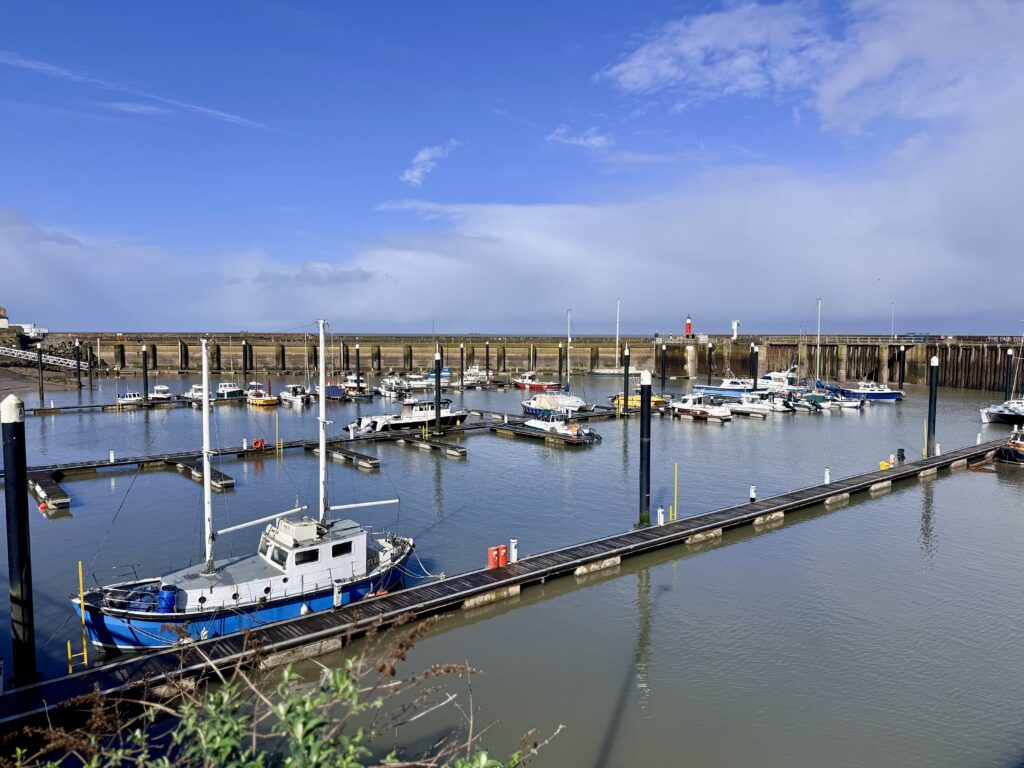
Looking for things to do in Watchet, Somerset? This guide covers what to see, where to stay and how to plan your visit.
Watchet is one of the smallest harbour towns on the Bristol Channel, yet it has a remarkable history and a distinctive atmosphere for those who take time to explore.
Set between the Quantock Hills and the edge of Exmoor National Park, the town looks out across Bridgwater Bay towards the coast of Wales. Watchet sits at the bottom of a natural valley, with streets climbing the hillside above the harbour and some narrow lanes leading down to the marina and the small cast-iron Watchet Harbour Lighthouse at the end of the pier.
For centuries, Watchet was a busy working port. Ships exported iron ore from the Brendon Hills, brought coal from South Wales and supported a thriving papermaking industry along the Washford River. Today, the harbour has a very different character, with a lively marina filled with sailing boats and leisure craft, particularly during the summer months. Although commercial shipping has gone, the town’s industrial past remains visible in its museums, harbour layout and railway heritage.
Although smaller than nearby seaside resorts such as Minehead, Burnham-on-Sea or Weston-super-Mare, Watchet offers something completely different. It is a proper Westcountry harbour town and visitors come for its maritime history, independent shops, coastal scenery and easy access to some of the most interesting landscapes in Somerset. The town is also a stop on the West Somerset Railway, where, in season, heritage steam trains regularly arrive beside the harbour.
Watchet, Somerset at a Glance
⚓ Best for: Harbour views, maritime history, coastal walks, independent shops, steam railway trips and exploring the quieter side of the Somerset coast.
⭐ Known for: Its historic harbour and marina, West Somerset Railway, East Quay arts centre, maritime heritage and connections with the West Somerset Mineral Railway.
📍 Top attractions: Watchet Harbour and Marina, East Quay, Watchet Boat Museum, Market House Museum, the Ancient Mariner and Yankee Jack statues, Daw’s Castle and the West Somerset Railway.
🆓 Best free things to do: Walk around the harbour, explore East Quay, follow the coast path, climb to Daw’s Castle, browse Market Street, visit the Victorian Pleasure Ground or walk part of the old Mineral Line.
👨👩👧👦 Good for families: Steam train trips on the West Somerset Railway, exploring the harbour, fossil hunting along the coast and nearby attractions including Tropiquaria.
🥾 Good for walking: Daw’s Castle, the Mineral Line, the King Charles III England Coast Path and the coastal route towards Blue Anchor and Minehead.
🏖️ Nearest sandy beach: Blue Anchor Bay is a few miles west of Watchet, with a long stretch of sand and shingle and wide views across the Bristol Channel.
⏱️ Time to allow: Half a day is enough to explore the harbour, museums, shops and East Quay, but allow a full day if you want to include a longer walk or steam railway trip.
🚆 Getting around: Watchet is compact and the harbour, marina, shops, museums and railway station are all within easy walking distance. The West Somerset Railway and local buses are useful for exploring further along the coast.
🅿️ Parking: Several public car parks are close to the harbour and marina, including long-stay parking. Some spaces suitable for motorhomes are also available.
🛏️ Where to stay: Watchet has small hotels, pubs, B&Bs, self-catering cottages and unusual accommodation at East Quay. There are also holiday parks and campsites around Watchet and Blue Anchor.
📍 Nearby highlights: Blue Anchor, Dunster, Minehead, Washford, the Quantock Hills and Exmoor National Park are all easy to combine with a visit to Watchet.
💡 Our tip: Don’t just stop at the harbour. Walk up to Daw’s Castle for views along the coast, spend some time around East Quay and explore the independent shops around Market Street. Watchet is small enough to explore on foot, but there is considerably more here than first appears.
Planning your visit? Continue to the best things to do in Watchet, Watchet Harbour and Marina, getting to Watchet, places to eat and drink or places to stay in Watchet.
- Watchet, Somerset at a Glance
- Why Visit Watchet?
- Where is Watchet?
- Map of Watchet
- The History of Watchet
- Things to Do in Watchet, Somerset
- Watchet Town Centre: Shops, Markets & Things to Do
- How to Get to Watchet and Travel Around
- Where to Eat & Drink in Watchet
- Where to Stay in Watchet: Best Watchet Hotels, B&Bs and Places to Stay
- Weather in Watchet, Somerset: When to Visit
- Practical Information for Visiting Watchet, Somerset
- Watchet FAQs
- Is Watchet Worth Visiting?
Disclosure: Some of the outbound links on this page are affiliate links to sites that we use and would genuinely recommend. Using them doesn’t cost you extra, but it does help support this free guide. We also provide links to other sites where we believe their inclusion may be helpful to you.
Why Visit Watchet?
Watchet may be small, but it offers a surprising amount for visitors interested in coastal scenery, local character and quieter harbour towns in Somerset.
For those exploring West Somerset, Watchet suits both short visits and longer stays, with easy access to the wider coast, the Quantock Hills and Exmoor National Park. Nearby places such as Dunster, Minehead and Blue Anchor are all within easy reach, while the West Somerset Railway adds extra appeal, particularly for visitors arriving by heritage train.
One of Watchet’s biggest strengths is its atmosphere. Outside the busiest summer weeks, the town has a genuine West Country feel that is becoming increasingly rare along popular coastlines. Visitors can wander around the marina, browse independent shops, explore small museums or simply watch the tide change across Bridgwater Bay.
The creative community has also brought new life to the harbour area. At East Quay, a striking arts centre beside the marina, visitors will find exhibitions, studios, independent shops and a café overlooking the water.
For those looking for a quieter alternative to the larger seaside resorts of Somerset, Watchet offers history, character and coastal scenery, with sandy beaches such as Blue Anchor and Minehead only a short distance away.
Where is Watchet?
Watchet is on the North Somerset coast between Minehead and Bridgwater, overlooking the wide tidal waters of the Bristol Channel.
The town lies close to the western edge of the Quantock Hills and only a short distance from Exmoor National Park. Its position between coast and countryside makes it a useful base for exploring a surprisingly varied part of Somerset.
Distances by car from nearby towns:
• Minehead – around 20 minutes
• Bridgwater – around 30 minutes
• Taunton (and the M5 motorway) – around 45 minutes
Watchet is also one of the stations on the West Somerset Railway, the longest heritage railway in England. Steam and diesel trains run between Minehead and Bishops Lydeard through some of Somerset’s most attractive countryside.
For many visitors, arriving by steam train is probably the best way to get to the town.
Map of Watchet
The History of Watchet
Watchet is a harbour town with over 1,000 years of history.
The settlement developed as an early Saxon port and even had its own mint, producing silver coins that have been discovered far beyond Somerset, including in Scandinavia. This suggests that Watchet was already connected to wider trading networks during the early medieval period.
During the reign of King Alfred the Great, Watchet formed part of a chain of fortified settlements known as burhs, established to defend England’s coastline against Viking raids.
The most prominent defensive site was Daw’s Castle, an Iron Age hillfort on the cliffs west of the town. Archaeological evidence suggests the hillfort was reused and strengthened in the late ninth century as part of Alfred’s coastal defence system. From this high vantage point, defenders could watch the Bristol Channel for approaching ships and warn nearby settlements.
As the medieval period progressed, Watchet developed into a modest trading port. Coastal vessels moved goods between Somerset, Wales and ports around the Irish Sea, while local fishermen worked the shallow tidal waters of Bridgwater Bay.
Iron ore, ships and the Mineral Railway
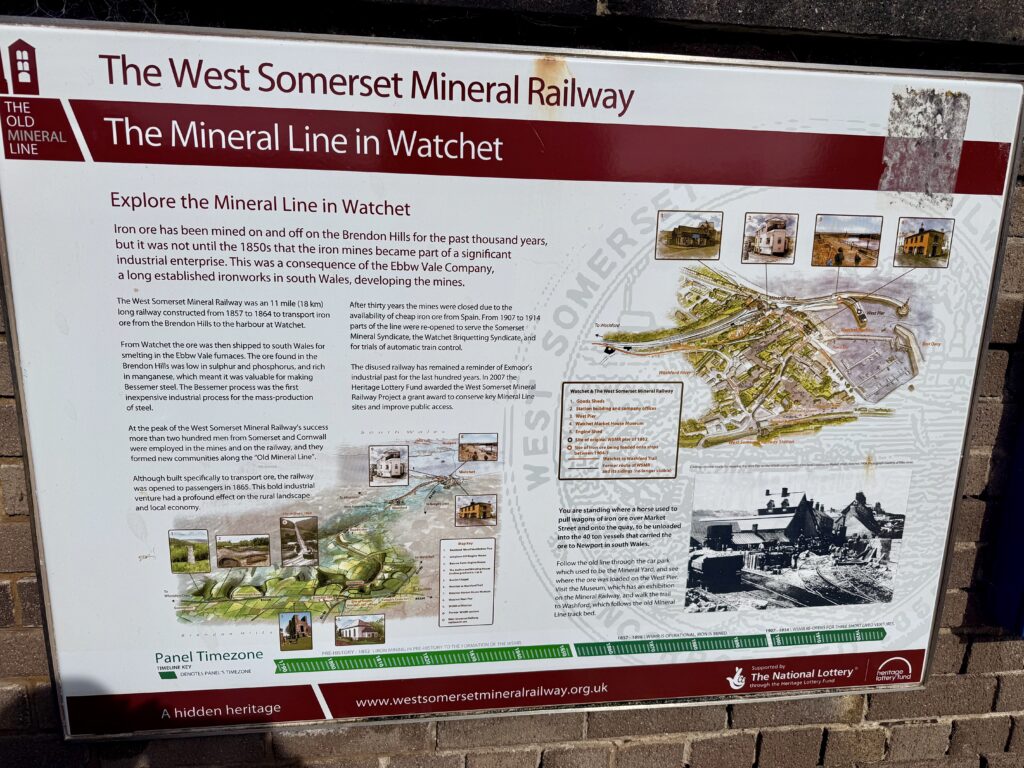
Watchet is known for its connections to iron mining in the Brendon Hills, just inland from the coast.
Iron ore had been extracted from the hills for centuries, but large-scale mining began in the nineteenth century when industrial demand increased.
To transport the ore efficiently to the coast, the West Somerset Mineral Railway was built between 1857 and 1864. The line ran around eleven miles from Brendon Hill near Ralegh’s Cross down to Watchet harbour, where wagons carrying iron ore descended steep gradients to reach the port.
From here, the ore was loaded onto ships and transported across the Bristol Channel to the ironworks of South Wales, particularly Ebbw Vale, one of the great centres of steel production during the Industrial Revolution.
The ore from the Brendon Hills was especially valuable because of its chemical composition. Its relatively high manganese content made it suitable for the Bessemer steelmaking process, which allowed the rapid mass production of steel.
At the peak of the railway’s activity, hundreds of workers were employed in the mines and along the railway.
Although the Mineral Railway closed in the late nineteenth century, parts of its route can still be followed today as walking paths and heritage trails around Watchet and towards Washford.
The Wansbrough Paper Mill
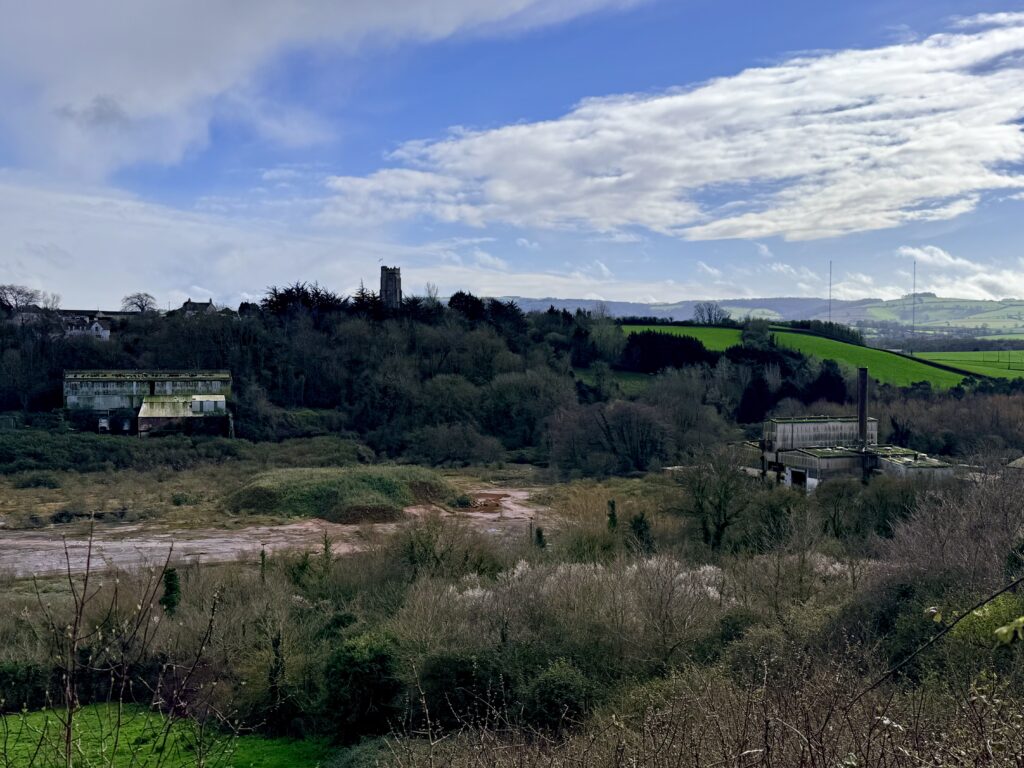
For much of the twentieth century, another industry shaped everyday life in Watchet: papermaking.
The Wansbrough Paper Mill, located along the Washford River just outside the town, became one of the largest employers in West Somerset.
Papermaking in the area dates back several centuries. Early production relied on water-powered mills using recycled linen rags to produce paper pulp.
In 1846, the mill was purchased by local businessman John Wansbrough, whose family expanded the business significantly.
Over time, the factory modernised, moving from water-powered machinery to steam-powered production. Raw materials such as wood pulp and rags arrived through the harbour, while coal from South Wales powered the mill’s boilers.
Another important material was esparto grass, imported from Spain and North Africa and widely used in nineteenth-century papermaking.
At its height, the mill employed more than 600 workers, and many families in Watchet had several generations working there.
Papermaking continued in Watchet well into the twenty-first century, although the industry had changed significantly from its early years. The final paper machine at the Wansbrough Paper Mill stopped in December 2015, bringing to an end around 360 years of papermaking in the town and the loss of one of West Somerset’s long-standing industrial employers.
Watchet Harbour and Watchet Marina
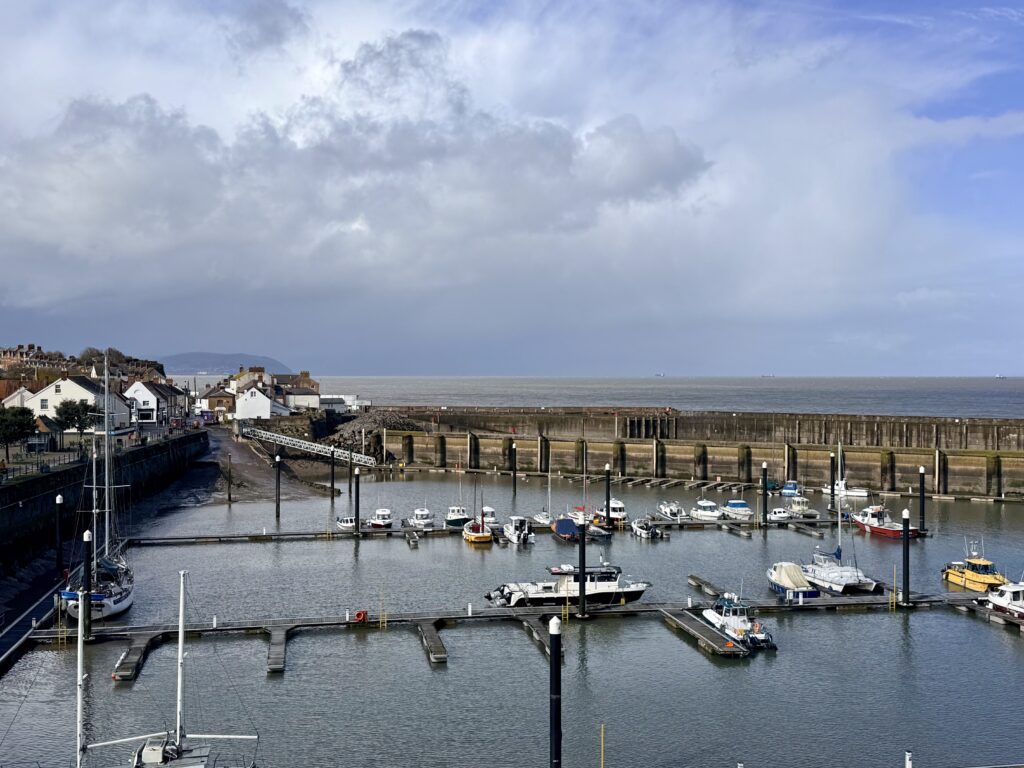
Managed by Western Marinas, the harbour remains the focal point of Watchet.
Today, the marina is filled with fishing boats, yachts, and leisure craft, creating a lively, ever-changing scene along the waterfront. At the harbour entrance, the small cast-iron lighthouse stands as one of Watchet’s most recognisable landmarks, guiding vessels in and out of the marina.
In earlier centuries, this was a far busier commercial port. Ships carried iron ore from the Brendon Hills across the Bristol Channel to the ironworks of South Wales, while coal, timber and agricultural goods were regularly traded between coastal ports. Some vessels travelled much further, with records showing voyages to Ireland and even across the Atlantic to Newfoundland and Canada.
The harbour also supported a thriving local fishing industry. Flat-bottomed boats known as flatners were particularly well suited to the shallow waters and wide mudflats of the Bristol Channel and Bridgwater Bay, allowing fishermen to operate where deeper vessels could not.
Watchet’s coastline has long inspired writers and artists. The poet Samuel Taylor Coleridge, who lived nearby at Nether Stowey in the late eighteenth century, is widely believed to have drawn inspiration from this area while writing The Rime of the Ancient Mariner. Today, a statue of the Ancient Mariner stands close to the harbour, adding a distinctive cultural touch to the waterfront.
In the summer months, the harbour takes on a relaxed, sociable atmosphere. Cafés, galleries and small independent shops line the marina, making it an enjoyable place to pause, explore and watch the boats come and go.
Yankee Jack and Watchet’s maritime culture
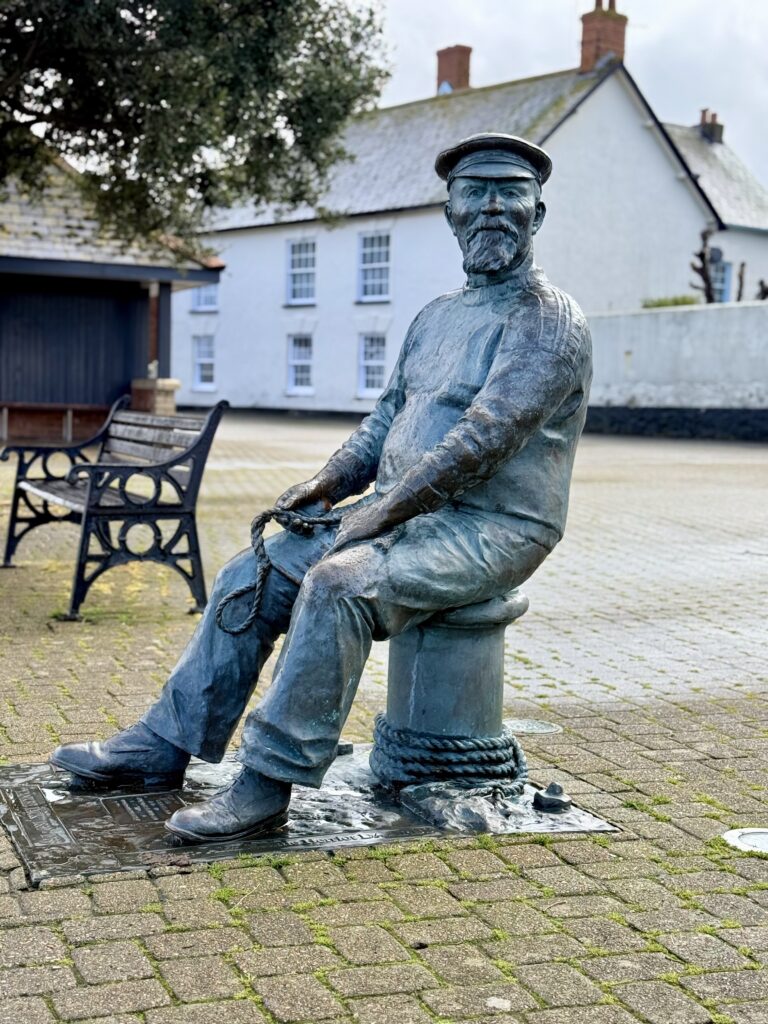
One of Watchet’s most colourful figures was John Short, known locally as “Yankee Jack.”
Born in 1839, he spent decades working on sailing ships around the world. During the American Civil War, some of the vessels he sailed on reportedly ran the Union blockade, which earned him his unusual nickname.
Yankee Jack became well known locally for singing traditional sea shanties, the rhythmic songs once used by sailors to coordinate work aboard sailing ships. In 1914, he was recorded by folk music collectors Cecil Sharp and Sir Richard Terry, who documented many of the songs he remembered and helped preserve them for the folk music revival.
Thanks to their work, traditional shanties such as Rio Grande, A-Roving and Shenandoah were preserved and later revived in the twentieth-century folk music movement.
A statue of Yankee Jack now stands on Watchet’s esplanade.
Victorian Watchet and the Pleasure Ground
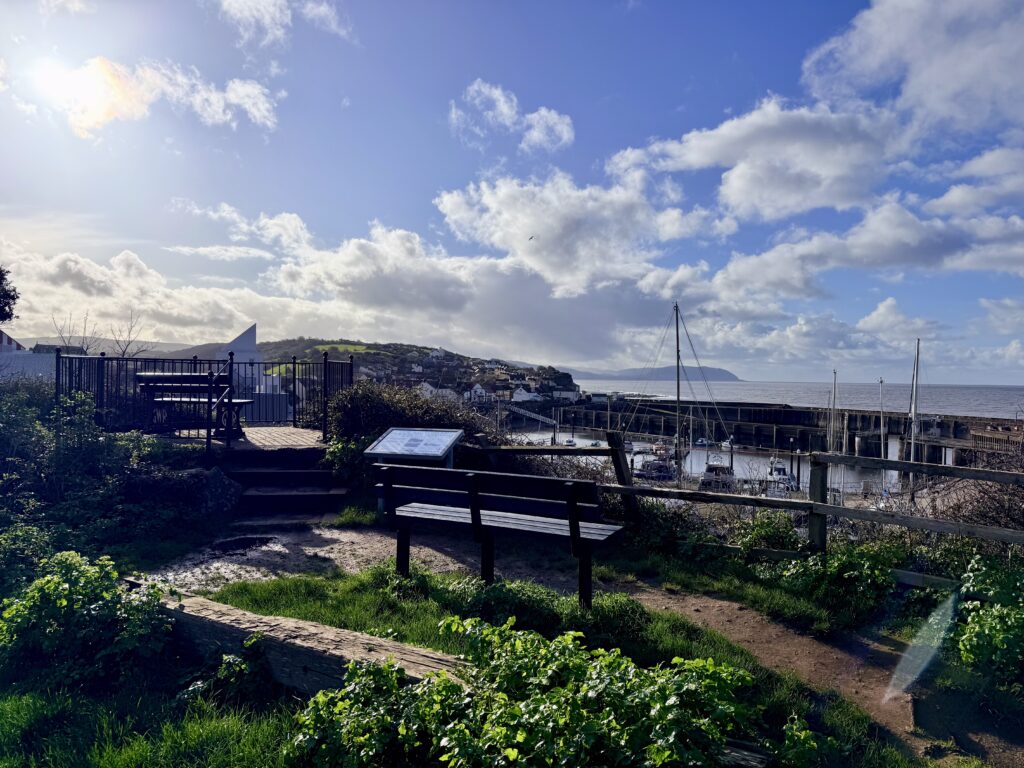
During the Victorian period, Watchet began to develop modest seaside attractions, helped by the arrival of the West Somerset Railway from Taunton in 1862, which made the harbour town easier to reach.
An area near the harbour known as the Pleasure Ground became a place where visitors could stroll and enjoy views across the water. It can still be visited today, reached by a short walk from the east side of the marina or by following a signposted path for about five minutes from the railway station.
Artists were also drawn to the harbour and coastline. The painter J. M. W. Turner visited Watchet in 1811 while travelling along the Bristol Channel coast, and the dramatic landscape inspired several sketches made during his journey.

Things to Do in Watchet, Somerset

Watchet may be one of the smallest harbour towns on the Bristol Channel, but visitors will quickly discover there is plenty to see and do both in the town itself and along the surrounding Somerset coast.
A visit to Watchet usually begins at the harbour. The busy marina sits at the centre of the town, with fishing boats, sailing yachts and leisure craft arriving and leaving with the tide. Walking along the harbour walls gives wide views across Bridgwater Bay towards Wales, and on calm days it is possible to stroll right to the end of the pier.
From the harbour, it is easy to explore the rest of the town on foot. Within a few minutes’ walk are several of Watchet’s main attractions, including museums, historic buildings and viewpoints overlooking the Bristol Channel.
Along the quayside, you will find statues that reflect the town’s maritime traditions, including the Ancient Mariner, inspired by Samuel Taylor Coleridge’s poem The Rime of the Ancient Mariner, and the statue of the local sailor and sea-shanty singer “Yankee Jack”.
Nearby is one of the town’s most unusual historic features, the Watchet Court Leet lock-up, a small stone building once used as a temporary prison cell. The Court Leet itself dates back to Saxon times and was responsible for maintaining law and order in the town, collecting fines and harbour dues. Remarkably, the traditional court still meets each year ceremonially at the Bell Inn.
A short distance from the harbour are two small museums that help tell the story of Watchet’s past. The Watchet Boat Museum, located in a former railway goods shed from 1862, explains the maritime history of Bridgwater Bay and the distinctive flat-bottomed boats once used along the coast. Nearby, the Market House Museum explores the town’s wider history, including its mining, railway and papermaking industries.
Just beside the marina stands East Quay, a striking modern arts centre that has added a new cultural dimension to the harbour. The building hosts exhibitions, studios and workshops, and its café offers views across the marina.
Beyond the harbour, some of the most rewarding experiences in Watchet involve exploring the surrounding landscape.
A popular Watchet walk leads up to Daw’s Castle, the Iron Age hillfort that stands on the cliffs west of the town. The site was later reused during the Saxon period as part of King Alfred’s coastal defence system. Today, only earthworks remain, but the cliff-top location offers excellent views across the Bristol Channel and along the Somerset coast.
From Daw’s Castle, it is possible to continue a short distance along Cleeve Hill Road before descending back towards Watchet along a steep but well-maintained footpath. The route gives wide views across the harbour, the Washford Valley and the site of the former paper mill.
Another interesting walk follows part of the route of the West Somerset Mineral Railway, which once carried iron ore from the Brendon Hills to Watchet harbour. Sections of the line now form the Mineral Line trail, a walking route that runs for around two miles between Watchet and Washford.
Watchet is also on the King Charles III England Coast Path, which follows the shoreline of the Bristol Channel, linking Minehead to the start of the South West Coast Path. You can read about this section and see a map in our Watchet to Minehead walking guide.
For a shorter outing, the sandy beach at Blue Anchor Bay lies just a few miles away and can be reached along the coast path or (potentially on foot) by quiet country lanes or the coast path.
Visitor note: Cleeve Hill Road closure
The road over Cleeve Hill, linking Watchet with Blue Anchor and the A39, is currently closed following a landslip affecting the coastal cliffs. While this has affected local travel, Watchet remains easy to reach from the A39.
Parking around the harbour is better than in many small coastal towns, with several public car parks close to the marina and even spaces for motorhomes. During our visit the public facilities were clean and well maintained, making the town easy to explore.
With less through traffic passing the harbour and town centre, Watchet can feel noticeably calmer and more relaxed, particularly outside the busiest summer weeks.
The slower pace suits the town well. Walking routes such as the path to Daw’s Castle, the Mineral Line trail and sections of the King Charles III England Coast Path make it easy to discover the harbour, coastline and surrounding hills on foot.
23 Things to Do in Watchet and the Surrounding Area
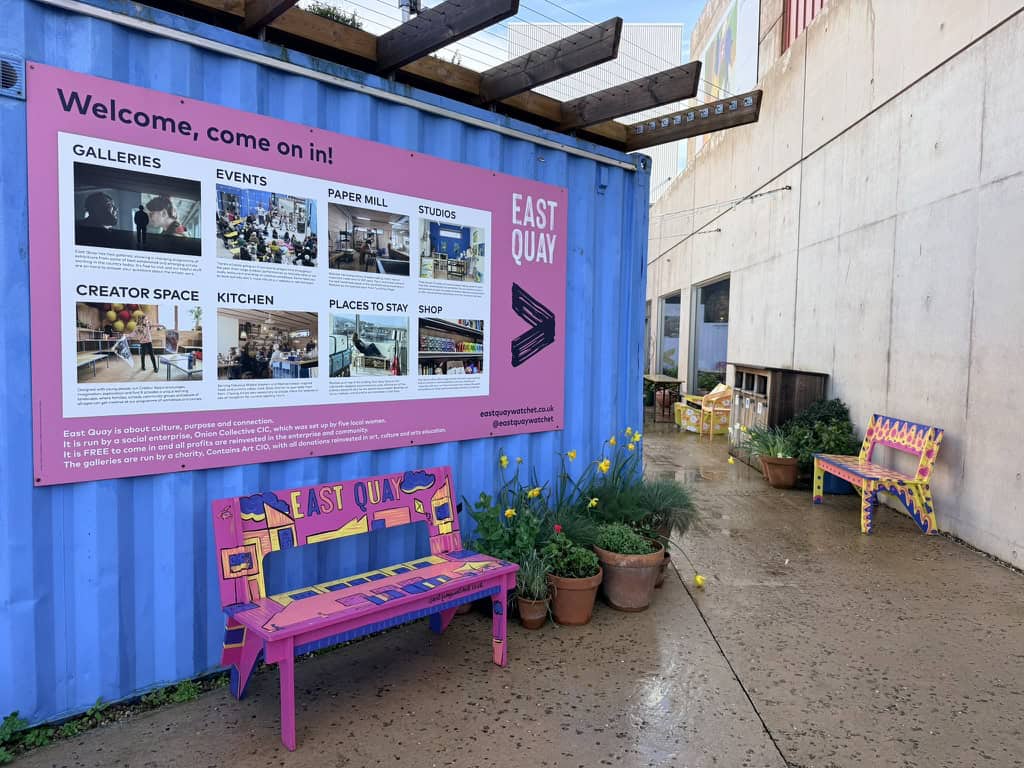
1. Walk around Watchet Harbour
The harbour and marina form the centre of the town. Fishing boats, sailing yachts and leisure craft fill the marina, while the harbour walls provide wide views across the Bristol Channel towards Wales. It is one of the best places to stroll and watch the changing tide.
2. Visit East Quay
East Quay is a modern arts centre beside the harbour that has become one of Watchet’s most distinctive buildings. It hosts exhibitions, artists’ studios, events and workshops, with a café overlooking the marina.
3. See the Ancient Mariner statue
Close to the harbour stands the statue of the Ancient Mariner, inspired by Samuel Taylor Coleridge’s poem The Rime of the Ancient Mariner. Coleridge lived nearby at Nether Stowey, and the Bristol Channel coastline helped inspire his work.
4. Visit the Watchet Boat Museum
Located in a former railway goods shed dating from 1862, this small museum and visitor centre explores the maritime history of Bridgwater Bay. Displays explain how flat-bottomed “flatner” boats were used along the Somerset coast.
5. Explore the Market House Museum
This small museum in Market Street tells the story of Watchet’s harbour, mining industry and papermaking heritage through local artefacts and displays.
6. See the statue of Yankee Jack
The statue commemorates John Short, known locally as “Yankee Jack”, a sailor who preserved traditional sea shanties that were later recorded by folk music collectors.
7. Walk to Daw’s Castle
Just above the town stands Daw’s Castle, an Iron Age hillfort later strengthened during the Saxon period. The cliff-top site offers wide views across the Bristol Channel and along the Somerset coast.
8. Ride the West Somerset Railway
Watchet station lies on the West Somerset Railway, the longest heritage railway in England. Steam trains run between Bishops Lydeard and Minehead, passing through beautiful countryside and coastal landscapes.
9. Follow part of the Mineral Line trail
This walking route traces the path of the old West Somerset Mineral Railway, which once carried iron ore from the Brendon Hills to Watchet harbour.
10. Visit the Watchet Court Leet lock-up
A small stone building near the harbour that once served as a temporary prison cell and symbol of the town’s historic local court.
11. Browse the shops in Market Street
Watchet has a small collection of independent shops, galleries and cafés where visitors can browse local crafts and artwork.
12. Explore the Victorian Pleasure Ground
This green space near the harbour was laid out during the Victorian era for seaside visitors and remains a pleasant place to relax.
13. Walk along the harbour walls
On calm days, visitors can walk along the harbour walls to the end of the pier for views across the Bristol Channel.
14. Watch the sunset over the Bristol Channel
The harbour and esplanade provide excellent places to watch the sun set across the water towards Wales.
15. Walk the coast towards Blue Anchor
A scenic coastal walk leads west towards Blue Anchor Bay, one of the nearest sandy beaches to Watchet.
16. Search for fossils along the shoreline
The cliffs between Watchet and Blue Anchor contain fossil-rich Jurassic rocks, and walkers often search the beach for ammonites and other remains.
17. Visit Dunster Castle and village
Just a short drive from Watchet lies the medieval village of Dunster, dominated by Dunster Castle and its gardens. The cobbled streets and historic buildings make it one of Somerset’s most attractive villages.
18. Explore Minehead and the South West Coast Path
The seaside town of Minehead lies a few miles west of Watchet and marks the starting point of the South West Coast Path. It has a long promenade, beaches and access to Exmoor.
19. Visit Tropiquaria Zoo and Aquarium
A few miles east of Watchet at Washford, Tropiquaria is a small wildlife park and aquarium housed in a striking former 1930s BBC radio transmitting station. The site includes reptiles, tropical fish, birds and small mammals.
20. Visit Steart Marshes Nature Reserve
East of Watchet lies Steart Marshes, one of the largest coastal wetland restoration projects in England. The reserve offers walking routes and excellent birdwatching.
21. Visit Butlin’s Minehead Resort
Just a short drive from Watchet, Butlin’s Minehead is one of the best known holiday resorts in the South West. The large seaside complex hosts family entertainment, shows, swimming pools and seasonal events. Even for visitors not staying on site, Minehead itself offers a long promenade, beach and access to the South West Coast Path.
22. Walk the King Charles III England Coast Path
Watchet lies directly on the King Charles III England Coast Path, which follows the coastline around England. The stretch between Watchet and Minehead is particularly scenic, passing cliffs, wooded valleys and wide views across the Bristol Channel.
23. Visit Washford village
A short distance inland from Watchet, the village of Washford makes a worthwhile addition to your visit. Set along the West Somerset Railway, it has a quieter, more rural feel than the harbour town. From here, you can explore part of the old Mineral Line route, which once carried iron ore from the Brendon Hills to Watchet, now forming a peaceful walking route through the countryside.
Watchet Town Centre: Shops, Markets & Things to Do
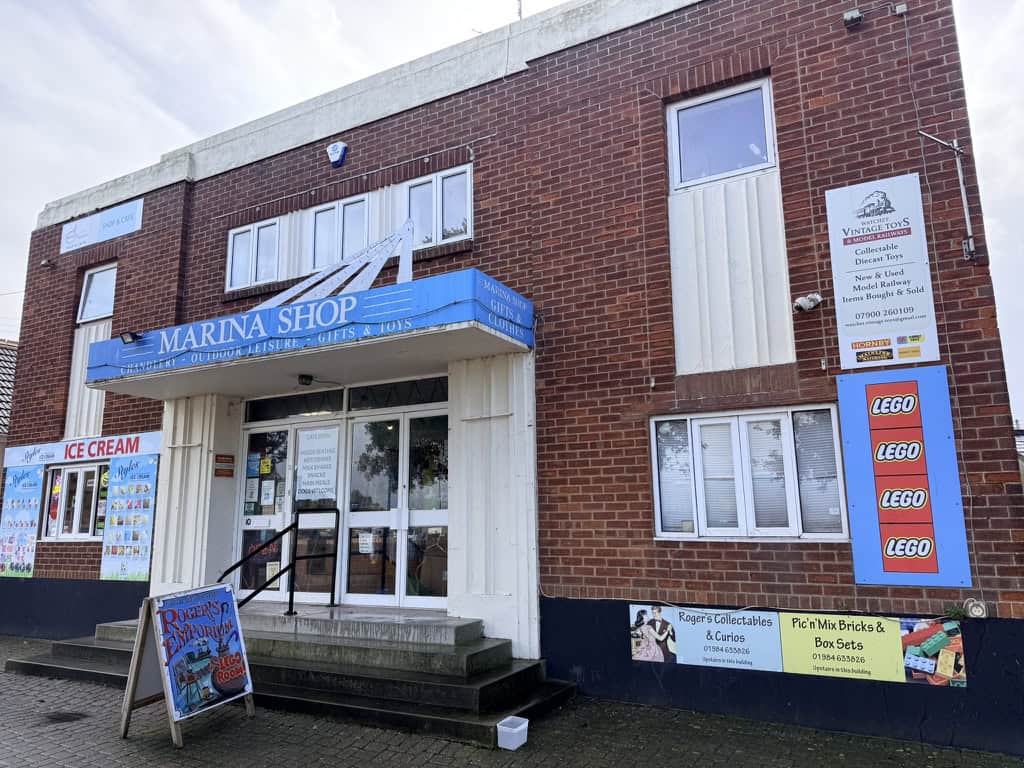
Despite its modest size, Watchet has a good range of everyday shops and services. Around Market Street and the harbour, you will find gift shops, galleries, antiques and independent stores, along with a Co-op, hairdressers and other useful local retailers for essentials.
One place we think is particularly worth seeking out is The Marina Shop near the harbour. Downstairs, you will find the usual beach goods, gifts and a range of seaside essentials, along with a small café that, in season, also serves ice cream.
Upstairs is Rogers’s Collectables and Antiques, along with other traders, an eclectic space filled with curiosities, antiques and collectables. There are also secondhand records, books, and a large selection of secondhand LEGO sets, including a popular pick-and-mix LEGO counter, making it well worth a visit for collectors and families alike. We spent an interesting half hour browsing there and even sheltered briefly from a passing rain shower.
Another highlight near the harbour is East Quay. We particularly liked the café here, with indoor and outdoor seating overlooking the marina, making it a good place to sit and watch the boats come and go.
With good parking in Watchet, seasonal transport links, independent shops and cultural spaces all within a short walk of the marina, Watchet makes an easy base for exploring West Somerset, Exmoor, Minehead and Dunster.
How to Get to Watchet and Travel Around
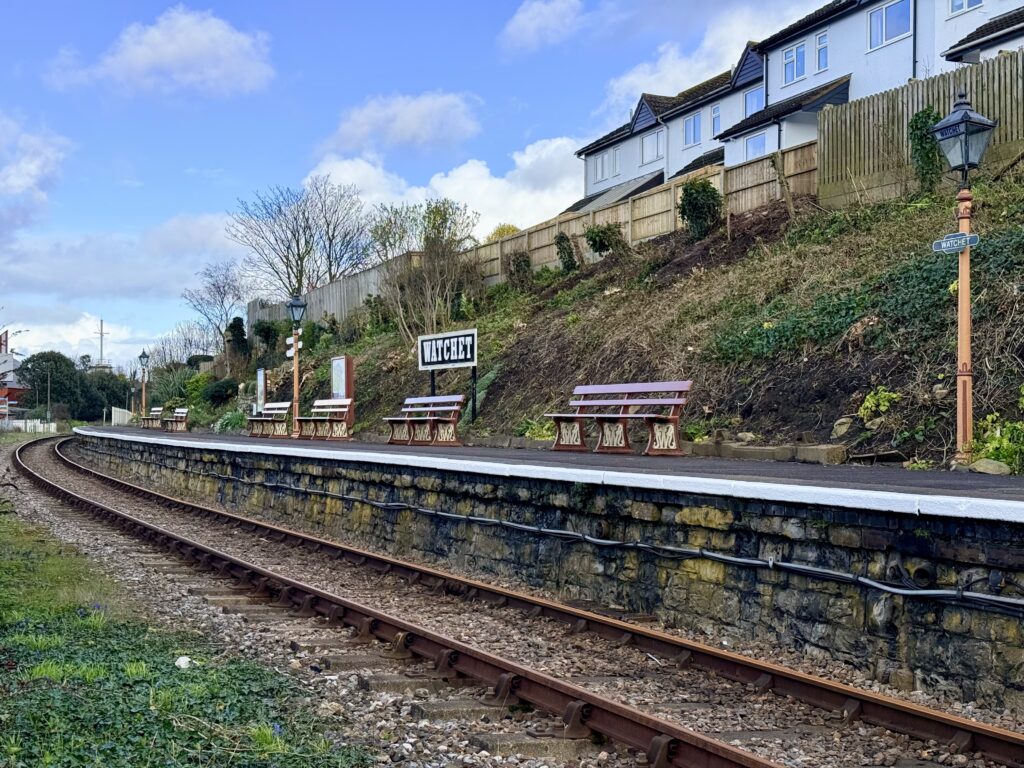
Watchet is relatively easy to reach compared with many small coastal towns in West Somerset. The town lies just off the A39 between Minehead and Bridgwater, with clear signposted access down into the harbour valley. Visitors approaching from inland Somerset or the A358 from Taunton can follow the A39 west via Williton to reach Watchet. For those arriving by car, the town makes a convenient stop when exploring the Somerset coast, Exmoor and the Quantock Hills.
Parking provision in Watchet is generally better than in many small harbour towns. Several public car parks are located close to the harbour and marina, including long-stay parking within a short walk of the town centre. Spaces can become busy during the summer months and on sunny weekends, but turnover is usually good, and visitors can normally find somewhere to park within a few minutes of the harbour.
Watchet is also a practical stop for travellers touring the coast in motorhomes or campervans, with some suitable parking spaces available near the harbour. Public toilets are located nearby and were clean and well-maintained during our visit.
Visitors arriving by public transport also have good options. Watchet station is on the West Somerset Railway, the longest heritage railway in England. Steam and diesel trains run between Minehead and Bishops Lydeard, where connections can be made (by bus) to the national rail network at Taunton.
For everyday public transport, the First Bus 28 service runs along the A39, linking Watchet with Minehead, Williton, Bridgwater and Taunton, where there is a connection to the mainline railway network. The route is particularly useful for walkers exploring the coast path, allowing one-way walks along the Bristol Channel before returning by bus.
Where to Eat & Drink in Watchet
Watchet’s dining options are quite varied, reflecting its character as a small harbour town rather than a large seaside resort. Around the marina, Market Street and the harbour front, you’ll find a mix of cafés, traditional pubs and independent places to eat, many within a short walk of the waterfront.
Several cafés overlook the harbour and marina, making them popular places to stop for coffee, breakfast or a light lunch while watching the boats come and go with the tide. During our visit, the café at East Quay stood out as a particularly pleasant place to sit, with both indoor and outdoor seating and excellent views across the harbour.
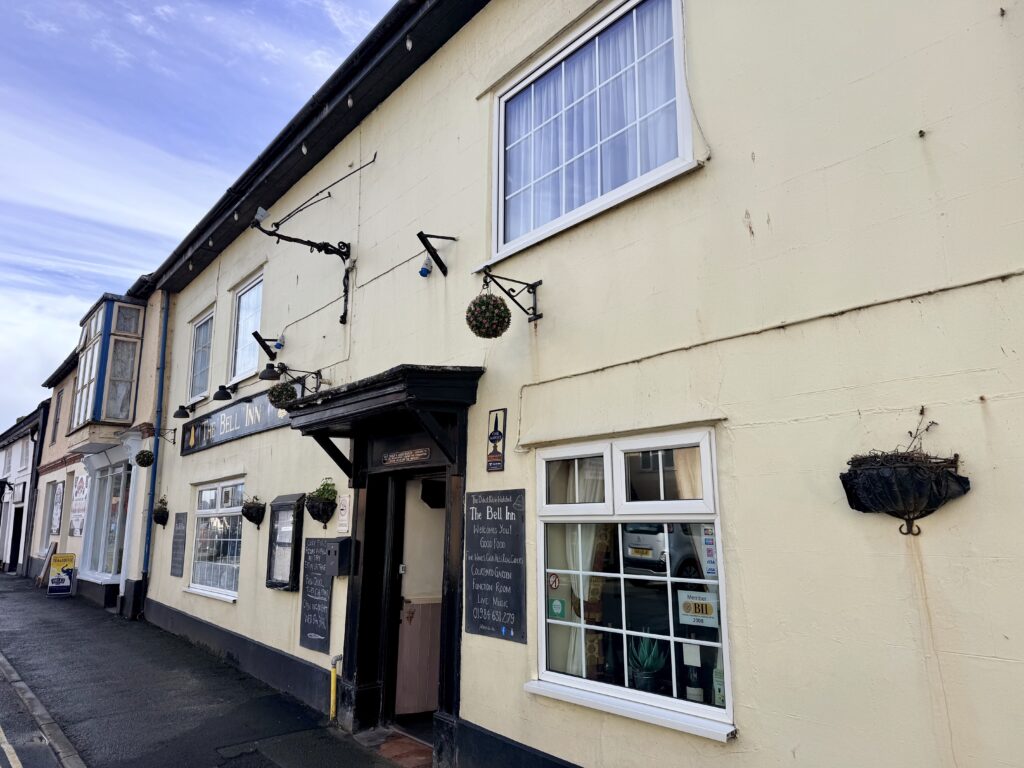
We particularly enjoyed lunch at The Bell Inn, a traditional pub in the centre of Watchet with a long history connected to the town’s Court Leet. It proved welcoming, friendly and warm, serving freshly cooked, reasonably priced pub food and drink. The atmosphere felt genuinely local and relaxed, making it a good place to pause during a visit to the town.
Other places frequently recommended by visitors include The Star Inn, another traditional pub near the harbour, and Pebbles Tavern, known for its real ales and local ciders, with a relaxed atmosphere and the option to enjoy fish and chips from a nearby chippy. Small cafés and takeaway outlets around Market Street and the harbour also provide casual options for snacks and light meals.
Traditional fish and chips remain a classic choice in Watchet, with several takeaway counters and cafés offering this seaside staple.
Although the range of places to eat is naturally smaller than in nearby resorts such as Minehead, there is still enough choice for most visitors. During the summer months, the harbour area in particular can feel lively in the evenings as visitors and locals gather in the town’s pubs and cafés.
For visitors staying longer, nearby towns such as Minehead, Dunster and Williton offer a wider choice of restaurants, gastropubs and hotel dining rooms, all within a short drive.
As with most tourist destinations, standards can vary. During busy holiday periods, it can be sensible to book ahead for evening meals, and many visitors find it helpful to check recent reviews before choosing where to eat. Platforms such as TripAdvisor can be useful for comparing ratings and identifying places that consistently perform well.
Where to Stay in Watchet: Best Watchet Hotels, B&Bs and Places to Stay
Accommodation in Watchet is naturally more limited than in larger seaside resorts, but visitors will still find a good range of places to stay, from small hotels, pubs and B&Bs to self-catering options, campsites and some unusual modern accommodation overlooking the harbour.
An interesting and unusual place to stay in Watchet is East Quay, the contemporary arts centre beside the marina. Built into the striking harbour-side building are a number of imaginative accommodation pods, designed by artists and architects. These unusual rooms look out across the marina and Bristol Channel and offer a memorable alternative to conventional hotel rooms. We really liked the look of them during our visit, and the views across the harbour are excellent, though sadly our own trip to Watchet was just a day visit.
Other options in the centre of Watchet include The Georgian House, which, with its period features and decor, looked absolutely stunning, even from the outside and The West Somerset Hotel, a pub with restaurant and rooms.
Elsewhere in the town, visitors will find several small guesthouses and places to stay within historic buildings close to the harbour, along with self-catering cottages and apartments. Options include Harbour Cottage, close to the waterfront, and Anchorage, a self-catering property with sea views.
A short distance from Watchet, there are also several campsites, caravan parks and holiday parks, ideal for exploring the coast and nearby Exmoor. Popular options in the area include Doniford Bay Holiday Park near Watchet, run by Haven, and Hoburne Blue Anchor Holiday Park, which is a quieter holiday park in Blue Anchor Bay on the Somerset coast, between Minehead and Watchet, with direct access to the beach and views across the Bristol Channel towards Wales. It’s popular with families, touring caravan users, dog owners and people exploring Exmoor or the West Somerset Railway.
As with most tourist destinations, it is worth checking recent guest reviews before booking. Platforms such as TripAdvisor and Booking.com can help identify accommodation that consistently receives excellent feedback. During the summer months and holiday periods, it is advisable to book ahead, though outside the main season, Watchet and the surrounding area often offer good availability and a relaxed atmosphere.
Weather in Watchet, Somerset: When to Visit
Watchet enjoys a mild coastal climate, with generally moderate temperatures throughout the year. Summers are often warm without being extreme, while winters tend to be relatively mild compared with inland areas. Its position on the Bristol Channel means conditions can change quickly, with sea breezes and occasional coastal winds.
For a reliable forecast, check BBC Weather Watchet or the Met Office before planning your visit. You can also view current conditions along the coast using nearby Watchet webcams, which are useful for checking sea and harbour conditions in real time. For Watchet tide times, we recommend the free Easy Tide service from the UK Admiralty.
Practical Information for Visiting Watchet, Somerset
- 🛍️ Shops & Supermarkets – A small but useful selection of shops around Market Street and the harbour, including a Co-op convenience store, gift shops, galleries, antiques and everyday services. Larger supermarkets can be found in nearby Minehead, Williton and Bridgwater.
- 🏥 Nearest Hospital – Minehead Community Hospital, Luttrell Way, Minehead TA24 6DF. The hospital has an urgent treatment centre for minor injuries and illnesses. For full emergency services, the nearest major hospital is Musgrove Park Hospital, Parkfield Drive, Taunton TA1 5DA.
- 🚔 Nearest Police Station – Policing is provided by Avon and Somerset Police. The nearest police station is Minehead Police Station, Seahorse Centre, Stephenson Road, Minehead TA24 5EB.
- 💊 Pharmacies – A pharmacy is located in the centre of Watchet, with additional chemists available in nearby Minehead and Williton.
- ✈️ Nearest Airport – Bristol Airport, approximately 45 miles away, with domestic and international flights.
- 🚆 Railway Station – Watchet Station on the West Somerset Railway heritage line, running steam and diesel trains between Minehead and Bishops Lydeard.
- 🚌 Bus Services – The First Bus 28/28A service runs along the A39 corridor linking Watchet with Minehead, Williton, Bishops Lydeard and Taunton.
- 🅿️ Car Parks – Several public car parks are located close to the harbour and marina, including long-stay parking within a short walk of the town centre. Some spaces suitable for motorhomes are also available.
- ⛽ Petrol & EV Charging – Petrol stations and EV charging points are available in nearby Williton and Minehead.
- 💵 Banks & ATMs – Cash machines are available in Watchet, including at the Co-op. Cash withdrawals and everyday banking services are also available at the Post Office.
- 📮 Post Office – Swain Street Drop + Collect Post Office, 26–27 Swain Street, Watchet TA23 0AD.
- 🚻 Public Toilets – Public toilets are available near the harbour and marina.
- 🚶 Tourist Information – Seasonal visitor information is available at the Watchet Boat Museum near the harbour.
Other Helpful Links
- Booking.com – for most accommodation needs. Look out for options that include free cancellation.
- Easy Tide – Free UK tidal prediction service, providing tidal data and tide times for the current day and 6 days into the future.
- Expedia – good for flights and packages.
- Get Your Guide – find and book things to see. Includes unusual things to do.
- Hostelworld – Hostel-focused booking platform that fosters backpack connections.
- MetOffice – Weather forecasts from the UK official meteorological office.
- National Express – UK-based coach operator providing long-distance bus services
- Omio – Book travel tickets by comparing trains, buses and planes in one search.
- Rental Cars – to search out and book hire cars.
- Rome2Rio – Great for comparing local transport options (and for locating bus stops).
- Ticketmaster – What’s On – Major Events – Venues – Bookings
- Trainline.com – our go-to online platform for booking train and bus tickets, offering route planning, price comparisons, seat reservations, and ticket sales.
- Traffic England – for live traffic updates on major roads.
- Traveline SW – Comprehensive public transport information from A to B by bus, coach, train, ferry in South West England and Great Britain.
- TripAdvisor – for reviews of… pretty much everything. Our go-to before booking anything.
- Vrbo – Great for self-catering and vacation holiday home rentals.
Watchet FAQs
Is Watchet worth visiting?
Yes. Watchet is an interesting small harbour town on the Somerset coast, with a marina, museums, coastal walks, industrial heritage and easy access to Exmoor, Dunster and Minehead.
What is Watchet known for?
Watchet is known for its historic harbour, the West Somerset Railway, Daw’s Castle, the Ancient Mariner connection, its maritime past and the former Wansbrough Paper Mill. It is also known for East Quay, a contemporary arts centre beside the marina.
Does Watchet have a beach?
Watchet does not have a large sandy beach in the way that Minehead or Blue Anchor do. The shoreline below the town is rocky and tidal, with mudflats exposed at low tide. For sand, Blue Anchor Bay and Minehead are the nearest beaches.
Can you walk to Daw’s Castle from Watchet?
Yes. Daw’s Castle can be reached on foot from Watchet and is one of the best short walks from the harbour. The route climbs uphill but rewards walkers with wide views across the Bristol Channel and the Somerset coast.
Can you get to Watchet by train?
Yes. Watchet has a station on the West Somerset Railway heritage line. Steam and diesel trains run between Minehead and Bishops Lydeard in season. Watchet is not on the national rail network, so visitors arriving by mainline train usually travel via Taunton and then continue by bus or heritage railway.
Is Watchet good for a day trip?
Yes. Watchet is a good choice for a day trip, with the harbour, East Quay, the Boat Museum, Market House Museum and Daw’s Castle all within easy reach. It is also easy to combine with nearby places such as Dunster, Minehead or Blue Anchor.
Where can you park in Watchet?
Watchet has several public car parks close to the harbour and marina, including long-stay options within a short walk of the town centre. Parking is generally easier than in many small coastal towns, although it can get busier during summer weekends and holidays.
Is Watchet suitable for motorhomes?
Watchet can be a practical stop for motorhome visitors, with parking provision better than in many small harbour towns and some spaces suitable for larger vehicles. It is worth arriving early in busy periods.
Can you walk from Watchet to Minehead?
Yes. Watchet lies on the King Charles III England Coast Path, and the walk west towards Minehead is particularly scenic. It passes coastal cliffs, wooded valleys and wide views across the Bristol Channel.
Can you find fossils in Watchet?
Yes. The cliffs around Watchet contain fossil-bearing Jurassic rocks. Walkers sometimes find ammonites and other fossils along the shoreline, particularly after storms or high tides. Fossils can be found both west of the town towards Blue Anchor and east of Watchet around Helwell Bay. Always check tide times or seek local advice before exploring the shoreline, as the Bristol Channel has one of the largest tidal ranges in the world.
What are the best things to do near Watchet?
Popular nearby attractions include Dunster Castle, Minehead, Blue Anchor Bay, Exmoor National Park, the Quantock Hills, Tropiquaria Zoo and Aquarium at Washford and Steart Marshes Nature Reserve further east along the coast.
Is East Quay worth visiting?
Yes. East Quay is one of Watchet’s most distinctive attractions, with exhibitions, artists’ studios, workshops, a café overlooking the marina and unusual accommodation pods built into the building.
Is Watchet easy to reach by road?
Yes. Watchet lies just off the A39 between Minehead and Bridgwater, and visitors approaching from inland Somerset or Taunton can reach the town via the A358 and A39.
Is Watchet Worth Visiting?
Yes. Watchet may not have the wide promenades or sandy beaches of larger seaside resorts, but that is part of its appeal. On this visit, the town felt easy to explore, with convenient parking near the West Somerset Railway station, clean facilities and helpful information boards. The harbour area had a noticeably relaxed atmosphere, helped in part by reduced through traffic following the closure of Cleeve Hill on the B3191. This has created a calmer, more pedestrian-friendly setting around the marina and streets. The harbour remains the focal point, and we particularly enjoyed East Quay, where contemporary architecture, galleries and a café overlook the water. The independent shops added to the experience, especially The Marina Shop and the eclectic Rogers’s Collectables and Antiques upstairs.
Elsewhere, Watchet retains the feel of a genuine working town, with a selection of small retailers, galleries and traditional pubs. We enjoyed lunch at The Bell Inn, a welcoming and characterful spot, and several other cafés and pubs looked equally inviting. Even early in the season, the town’s history is clearly presented through information boards around the harbour, hinting at its past as a busy port. For visitors exploring the Somerset coast, Watchet offers a slightly different experience, combining maritime heritage, coastal scenery and creative spaces with a slower, more relaxed pace that rewards time spent wandering, browsing, and simply watching the tide come and go.
Over to you … have you recently travelled to South West England? What worked for you? What advice would you give to others? Please leave your comments below or join in the discussion in our Facebook Group.
New to South West England or returning after a while? Start with our ‘Travel Basics’ – quick guides packed with tips to help you plan your trip.

