
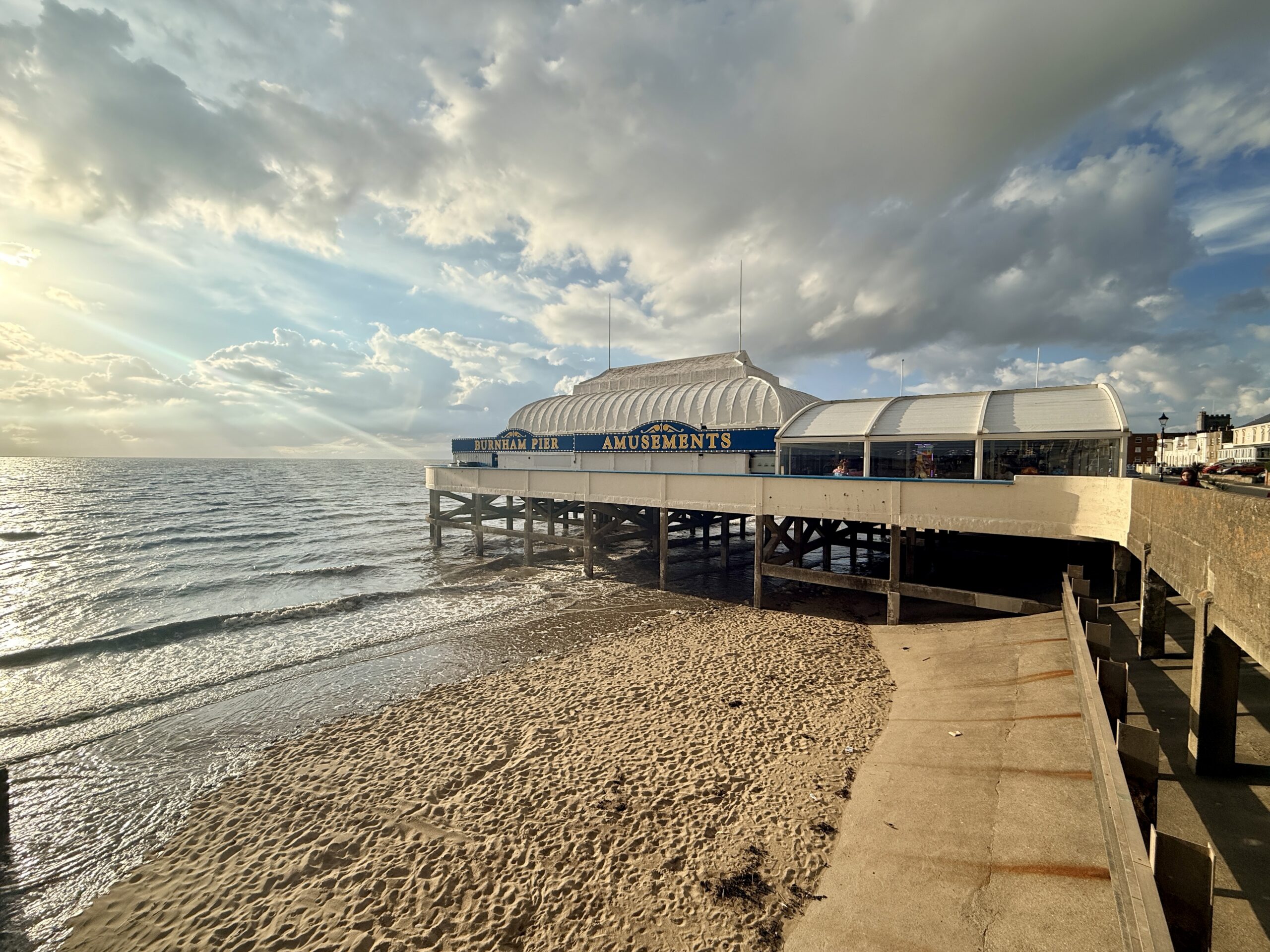
Burnham-on-Sea is a traditional seaside town on the Somerset coast, known for its beach, Esplanade, compact pier and distinctive Low Lighthouse. Facing the Bristol Channel and Bridgwater Bay, it combines familiar seaside attractions with enormous tides, open coastal scenery and easy access to the Somerset Levels.
We visit Burnham regularly on local day trips and have particularly enjoyed winter beach walks with our dog. While researching this guide, we returned to explore the town and coastline in greater detail, alongside several visits to nearby Brean, Brean Down and the Brean Down Way.
If you are looking for things to do in Burnham-on-Sea, highlights include walking along the Esplanade, seeing the Low Lighthouse, exploring Apex Park and continuing north towards Berrow and Brean. The town centre also has independent shops, cafés, pubs and practical facilities within easy walking distance of the seafront.
This complete Burnham-on-Sea visitor guide covers the beach and main attractions, where to eat and stay, shops, parking, public transport and what visitors should know about swimming and the tide. The beach deserves particular caution at low water, when large expanses of mud are exposed, but that changing landscape is also a defining part of Burnham’s character. The station is approximately a mile and a half from the seafront, with local buses connecting the station and town.

Burnham-on-Sea at a Glance
Planning a visit to Burnham-on-Sea? These are the essential details, with links to more information throughout this guide.
📍 Location
Somerset coast, beside the Bristol Channel and close to Highbridge.
⭐ Best known for
Its Low Lighthouse, enormous tides, mudflats, coastal views and Esplanade.
🏖️ Beach
Best for walking, photography and coastal views. Read about Burnham-on-Sea beach and safety.
🏊 Swimming
We do not recommend swimming from Burnham’s main beach. Nearby Berrow and Brean are better options.
🐕 Dogs
Dogs are allowed in designated areas, but restrictions vary by location and season. Check the signs when you arrive.
🚆 Nearest station
Highbridge and Burnham, about 1.5 miles from the seafront. See travel information.
🅿️ Parking
Council pay and display car parks are available near Pier Street, the Esplanade and town centre.
📅 Best time to visit
Summer for seasonal facilities, or spring, autumn and winter for quieter coastal walks. Read our seasonal advice.
Our highlights: walk the Esplanade, see the Low Lighthouse, explore Apex Park and visit Brean Down.
Important: Never cross the exposed mudflats to reach the sea. Check the Burnham-on-Sea tide times and follow local warning signs.
Disclosure: Some of the outbound links on this page are affiliate links to sites that we use and would genuinely recommend. Using them doesn’t cost you extra, but it does help support this free guide. We also link to other sites we think may be helpful.
- Burnham-on-Sea at a Glance
- Map of Burnham-on-Sea
- A Brief History of Burnham-on-Sea
- Things to Do and Attractions in Burnham-on-Sea, Somerset
- Things to Do Near Burnham-on-Sea
- Burnham-on-Sea Town Centre and Shops
- What's On in Burnham-on-Sea: Events and Seasonal Highlights
- How to Get to Burnham-on-Sea by Car, Train and Bus
- Where to Eat and Drink in Burnham-on-Sea
- Where to Stay in Burnham-on-Sea
- Weather in Burnham-on-Sea: Best Time to Visit
- Practical Information for Visiting Burnham-on-Sea, Somerset
- Is Burnham-on-Sea Worth Visiting
- Burnham-on-Sea FAQs
Map of Burnham-on-Sea
A Brief History of Burnham-on-Sea
Burnham-on-Sea developed where the Somerset Levels meet Bridgwater Bay and the Bristol Channel. Rivers, tidal flooding, and centuries of drainage shaped the low-lying landscape around the town, creating the distinctive network of fields and rhynes seen today.
The coast has always presented challenges for shipping. Shifting sandbanks, mudflats and powerful tides made navigation difficult, particularly for vessels approaching the River Parrett and the historic port of Bridgwater.
Burnham’s first purpose-built lighthouse, now known as the Round Tower, was established in 1801. It was replaced in 1832 by the High and Low Lighthouses, which worked together as leading lights to guide vessels through the safe channel. The wooden Low Lighthouse, standing on nine legs on the foreshore, remains active and is now Burnham’s best-known landmark.
The arrival of the Somerset Central Railway in 1858 helped Burnham develop as a seaside destination. Trains continued beyond the station to a long jetty, where passengers could connect with steamers crossing the Bristol Channel. The town centre station closed to regular passengers in 1951, although excursion trains continued until 1962.
During the early twentieth century, Burnham’s seafront was redeveloped with a reinforced concrete sea wall, a broad Esplanade, and a pleasure pier. These features, together with the beach and lighthouses, shaped the traditional coastal town visitors see today.

Things to Do and Attractions in Burnham-on-Sea, Somerset
Many of the best things to do in Burnham-on-Sea are free and within walking distance of the town centre. The beach, Low Lighthouse, Esplanade and pier form the heart of a visit, while Apex Park, the Somerset Levels and nearby Brean Down provide opportunities for walking, cycling and wildlife watching.
In our experience, Burnham is best enjoyed as a coastal town rather than a conventional swimming destination. It is also a good place to visit outside the main summer season, particularly for walkers, dog owners and wildlife enthusiasts. Allow time to explore the seafront, but also look beyond it towards the quieter landscapes around Berrow, Brean and Bridgwater Bay. Wrap up warmly, though, as the wind coming off the Bristol Channel can make it feel surprisingly chilly.
Burnham-on-Sea Beach
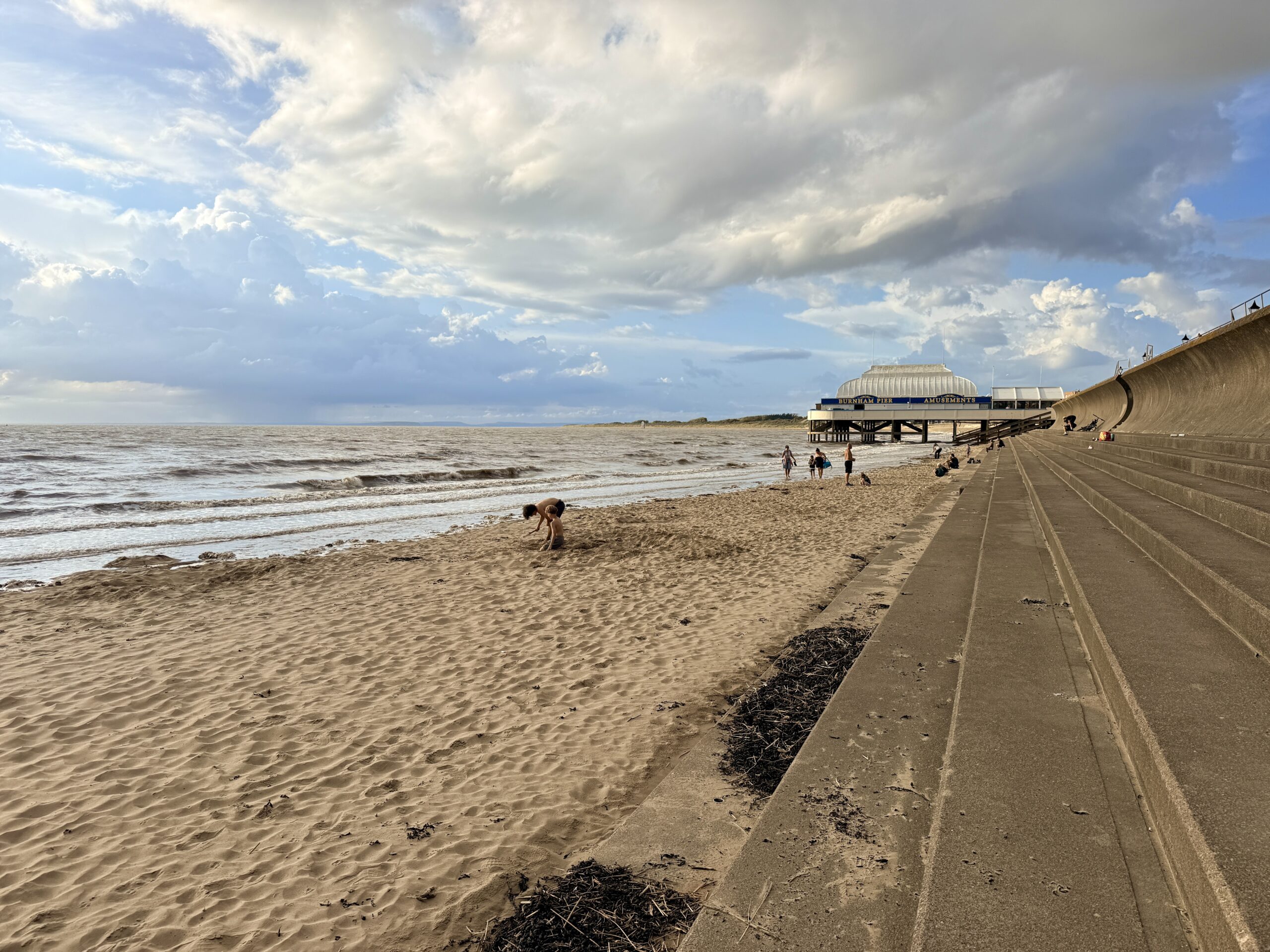
Burnham’s beach changes dramatically with the tide. At high water, the sea reaches close to the wall, and there are wide views across the Bristol Channel. At low tide, it retreats a remarkable distance, exposing a vast expanse of sand and mud across the bay.
The landscape’s scale can be striking, with enormous skies and an open, almost wild shoreline. Distances are deceptive, however, and visitors should never attempt to cross the mudflats to reach the distant water.
Much of the exposed foreshore is estuarine mud mixed with sand rather than firm, dry beach. It can cling to boots, paws and clothing, while the ground closer to the River Parrett becomes softer and more unpredictable, with channels and areas of deeper mud.
We know the beach reasonably well, but it can still catch us out. During a winter walk close to the sea wall, I managed to get a boot firmly stuck and ended up with a cold, muddy foot. It was a useful reminder that apparently firm ground can be deceptive and that the warning signs are there for good reason.
Somerset Council advises visitors not to walk out towards the sea at low tide because of the risk of sinking mud. Burnham Jetty is no longer a designated bathing water and permanent advice against bathing applies, while the RNLI describes Burnham’s main beach as permanently red-flagged. Strong lateral currents around the jetty and areas of deep, shifting mud present further hazards. Burnham’s main beach is therefore not somewhere we recommend for swimming.
If swimming or a more conventional day on the sand is your priority, our guide to beaches near Weston-super-Mare compares Burnham with nearby Berrow, Brean, Weston Beach and Marine Lake.
Burnham-on-Sea Esplanade and Seafront
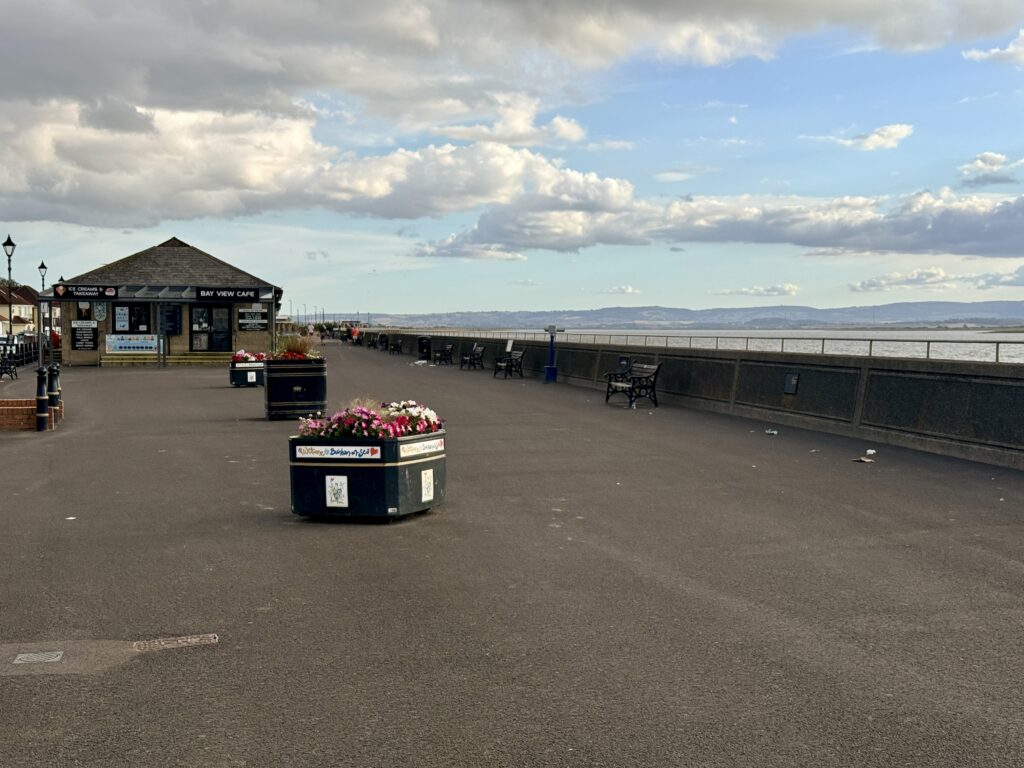
Burnham-on-Sea Esplanade runs beside the beach and forms the centre of the town’s seafront. The level promenade is well suited to a relaxed walk, with open views across the Bristol Channel and easy access to the pier, beach and town centre.
Along the central section are traditional amusement arcades, fish and chip shops, cafés, a bandstand and small green spaces. Public toilets, beachside showers and nearby parking make this one of the most convenient parts of Burnham for families and day visitors.
Ramps at intervals provide access between the Esplanade and the beach. One unusual feature is National Cycle Network Route 33, also known locally as the Stop Line Way, which heads north along the beach through Berrow towards Brean. This section is tide-dependent and becomes impassable around high tide, so cyclists and walkers should check the tide times and follow local signs before setting out.
We enjoy walking along the Esplanade, particularly outside the busiest summer months, when there is more space to appreciate the coastline. Its substantial concrete sea wall reflects Burnham’s exposure to high tides, storm surges and flooding. Although the defences are functional rather than decorative, they provide an accessible route along the seafront and help protect the low-lying town and surrounding Somerset Levels.
Burnham-on-Sea Pier

Burnham-on-Sea Pier is commonly described as Britain’s shortest pier. Rather than extending far across the beach, it consists mainly of an Edwardian pavilion standing on concrete piles beside the Esplanade.
The pavilion formed part of the redevelopment of Burnham’s seafront, which began in 1911 with the construction of a reinforced concrete sea wall and broad promenade. Built between 1911 and 1914, it was the first concrete seaside pier of its kind in Europe. Plans to extend it were never completed, leaving only the shoreward pavilion and giving Burnham its unusual claim to fame.
The building retains distinctive Edwardian features, and its design has been compared with the style of Isambard Kingdom Brunel’s railway stations at Bristol Temple Meads and Bath Spa. Today, the pavilion contains amusement machines, refreshments and small shops. It is modest compared with the Grand Pier at nearby Weston-super-Mare, but remains a familiar focal point on Burnham’s seafront.
This was not Burnham’s first pier-like structure. A separate 278-metre jetty was constructed further south in 1857 to serve commercial traffic and passenger steamers crossing the Bristol Channel. The first passenger service mentioned on the Esplanade heritage panel ran between Barry and Cardiff on the Iron Duke in 1858, allowing travellers to connect with the railway at Burnham. The arrival of the Severn Tunnel later reduced the need for these cross-channel connections.
Part of the old jetty survives near the South Esplanade. It now plays an important role in launching Burnham’s rescue boats and should not be confused with the shorter pleasure pier and pavilion in the centre of the seafront.
A serious fire damaged around half of the pavilion on 5 August 2021. The pier reopened three days later, initially with part of the building cordoned off. Opening hours for its amusements and refreshments can vary, so check locally before making a special journey.
Burnham-on-Sea Low Lighthouse

Burnham-on-Sea’s wooden Low Lighthouse is one of Somerset’s most distinctive coastal landmarks. Built in 1832, it stands on nine wooden legs and remains an active navigation light, although visitors cannot go inside.
The lighthouse is especially popular with photographers. At low tide, wet sand and shallow pools can create striking reflections, while early morning and evening light often silhouette the structure against the open horizon. We particularly enjoy the sense of space here, with views stretching across Bridgwater Bay and the Bristol Channel.
Take care if walking towards the lighthouse. The apparently firm surface can give way to softer mud, and the tide changes quickly. Check the tide times, follow local warning signs and avoid crossing exposed mud to reach the water.
Burnham-on-Sea Rescue Services: BARB and the RNLI
Burnham-on-Sea has an unusual maritime rescue presence, reflecting the realities of its coastline. Wide mudflats, shifting channels and one of the highest tidal ranges in the world mean that no single rescue craft can deal with every situation. As a result, the town is served by both the Burnham Area Rescue Boat and an RNLI lifeboat station, working alongside HM Coastguard.
Burnham Area Rescue Boat (BARB)
The Burnham Area Rescue Boat, known as BARB, is an independent local charity established in 1992. Its most distinctive rescue craft are hovercraft, which can travel across mud, sand and shallow water where boats and ordinary vehicles would struggle.
The need for a hovercraft becomes understandable when the tide goes out. Vast areas of mud are exposed, and walkers, dogs and vehicles can become stuck or be cut off by the returning water. BARB’s hovercraft can launch directly from the beach and reach casualties across these difficult surfaces.
The BARB station stands on the seafront near the Esplanade. It is an operational rescue base rather than a conventional visitor attraction, although the hovercraft can sometimes be seen during training, open days and community events.
Burnham-on-Sea Lifeboat (RNLI)
Burnham-on-Sea’s lifeboat history began in 1836, when a lifeboat was provided following a local shipping disaster. The RNLI took responsibility for the station in 1866, but it closed in 1930 after motor lifeboats were stationed at Minehead and Weston-super-Mare.
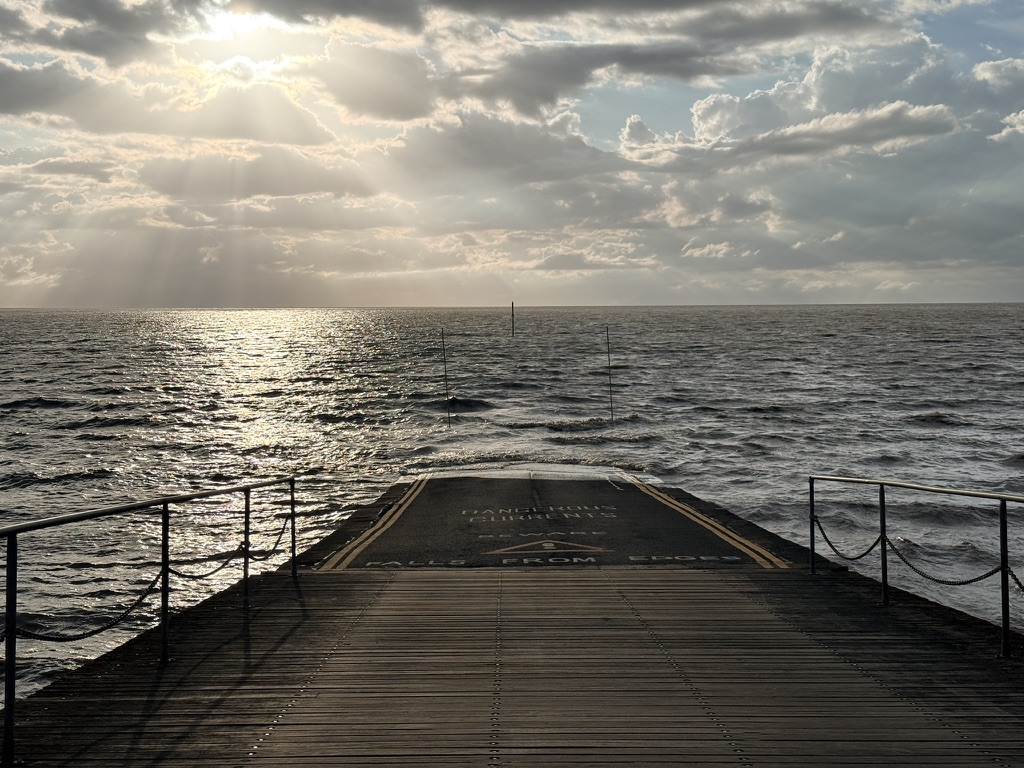
The RNLI returned to Burnham in December 2003, with the present station officially opening in May 2004. Its volunteer crew operates two inshore lifeboats suited to rescues in Bridgwater Bay and along the Somerset coast.
The lifeboats are launched from the surviving section of Burnham’s old railway and steamer jetty near the South Esplanade. They frequently work alongside BARB’s hovercraft and HM Coastguard, with each service bringing different capabilities to the shallow water, mudflats and fast-moving tides around Burnham.
Birdwatching Around Burnham-on-Sea

Burnham-on-Sea sits beside Bridgwater Bay, where extensive mudflats, salt marsh and tidal channels provide feeding and resting areas for large numbers of birds. At low tide, visitors may see oystercatchers, curlews, redshanks, shelducks and gulls feeding across the exposed shore.
Autumn and winter are particularly rewarding, when migratory waders and wildfowl arrive around the estuary. The sheer scale of the mudflats means birds can be some distance away, so binoculars are useful. The Esplanade and beach provide accessible viewpoints, but visitors should remain close to the sea wall rather than walking onto the mud.
Stert Island and the mouth of the River Parrett are important wildlife areas south of Burnham. On the opposite side of the estuary, WWT Steart Marshes is about a 35-minute drive away and has walking trails, hides, and viewing points overlooking salt marsh, freshwater wetlands, and grassland.
Further north, the dunes and shoreline around Berrow and Brean support additional coastal wildlife. Brean Down provides higher viewpoints across Bridgwater Bay and is particularly enjoyable when combined with a walk along the coast.
Visit Brean Down

Brean Down rises above the coast around six miles north of Burnham-on-Sea and provides one of the best viewpoints in this part of Somerset. Managed by the National Trust, the limestone headland extends into the Bristol Channel and reaches almost 100 metres at its highest point.
We have visited Brean Down several times while exploring this coastline. The climb from the beach is steep, but the summit rewards the effort with views towards Burnham, Weston-super-Mare, the Somerset Levels, South Wales and the islands of Steep Holm and Flat Holm. At the seaward end are the remains of Brean Down Fort, built during the nineteenth century and used again during the Second World War.
Our separate guide to Brean Down covers the walking routes, parking, facilities, history and what to expect from the climb.
You can also reach Brean from Burnham via National Cycle Network Route 33, known locally as the Stop Line Way. This section follows the beach through Berrow and is impassable around high tide, so check the tide times before setting out. From Brean, the route connects with the Brean Down Way, which continues towards Weston-super-Mare via the River Axe and Uphill. Our guide explains the route, surfaces, distances and public transport options for returning after a one-way walk or ride.
Cycle Around Burnham-on-Sea

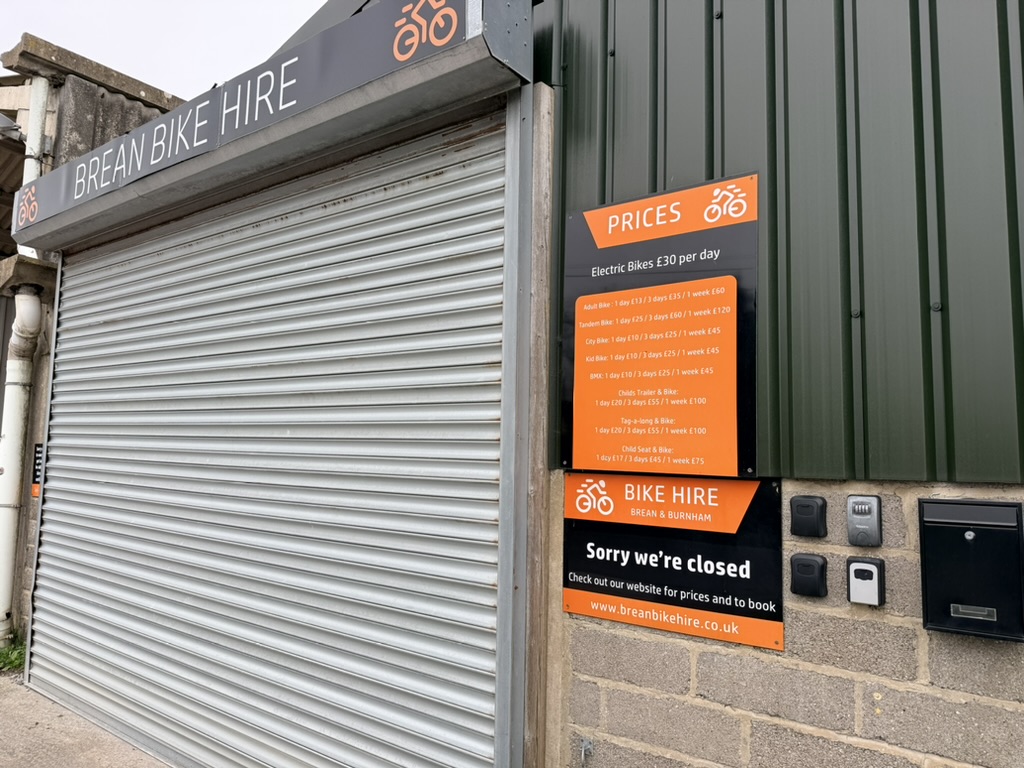
You can hire bikes nearby, especially during the main season. Brean Bike Hire operates near Diamond Farm in Brean and offers bikes for adults and children, with delivery available to Burnham-on-Sea and other locations across Somerset. The same business operates Bicycle Shack in Burnham, which specialises in new and used bikes, spare parts, repairs and servicing.
Brean Hire Centre at Unity offers pedal bikes and electric bikes, as well as mobility scooters and other mobility equipment. Further inland, Wedmore Bike Hire provides hybrid and electric bikes for exploring the Somerset Levels and Mendip area. Opening times and availability can vary outside the main season, so check directly and reserve bikes in advance where possible.
The flat landscape around Burnham, Highbridge and the Somerset Levels is well suited to relaxed cycling. Shorter rides can combine the Esplanade, Apex Park and Highbridge, while quieter lanes across the Levels provide options for longer days away from the busy seafront.
Apex Park, Burnham-on-Sea
Apex Leisure and Wildlife Park covers approximately 42 acres between Burnham-on-Sea and Highbridge. It was created on former clay workings, whose flooded pits now form the lakes at the park’s heart.
A circuit of the main lake takes around 30 minutes and provides an easy change of scenery from the seafront. The park also has a woodland walk, a large children’s play area, a skate park, an outdoor gym, a dog agility area, and a fishing lake, alongside open grass suitable for picnics and informal games.
The lakes, reed beds and surrounding grassland attract ducks, swans, moorhens and other wildlife. This makes Apex Park a good option for families, dog walkers and anyone seeking a quieter walk away from the beach.
Free parking, picnic tables and public toilets are available beside the Marine Drive entrance. Seasonal catering may also be available, although visitors should not rely on it outside the main summer period.
Things to Do Near Burnham-on-Sea

Burnham is a useful base for exploring the wider Somerset coast. Nearby Berrow and Brean have long sandy beaches that are generally better suited to swimming and paddling than Burnham’s main beach. Brean Down offers one of the best coastal walks and viewpoints in the area, while the Brean Down Way provides a walking and cycling route towards Weston-super-Mare.
Other things to do near Burnham-on-Sea include visiting the attractions, shops and seafront covered in our complete Weston-super-Mare visitor guide, watching wildlife at WWT Steart Marshes and exploring the villages, wetlands and quiet lanes of the Somerset Levels. Our guide to beaches near Weston-super-Mare compares Burnham, Berrow, Brean and other nearby places for a day beside the sea.
Burnham-on-Sea Town Centre and Shops
Burnham-on-Sea town centre begins just behind the Esplanade, with the High Street only a few minutes’ walk from the beach and pier. It is a practical, compact centre rather than a major shopping destination, but it has a useful mixture of independent businesses and familiar national retailers.
The High Street and surrounding streets contain cafés, bakeries, charity shops, gift shops, pharmacies and everyday services. Independent shops remain an important part of the town centre, with businesses selling books, crafts, clothing, homeware and traditional seaside goods.
Tesco and Aldi provide convenient food shopping within Burnham, while Asda and Lidl are available in nearby Highbridge. A large B&M on Pier Street, close to the Esplanade, also sells groceries, homeware, pet supplies, toys and seasonal goods. Together, these shops make the area practical for visitors staying in self-catering accommodation, caravans or holiday parks.
The town centre is close enough to combine with the beach and Esplanade without moving the car. We would allow time for a relaxed look around rather than visiting solely to shop, perhaps stopping for coffee, lunch, or fish and chips before returning to the seafront.
Several council car parks are located around Pier Street, including spaces behind B&M, but these are generally pay-and-display rather than free visitor parking. Always check the current charges and restrictions when you arrive.
What’s On in Burnham-on-Sea: Events and Seasonal Highlights

Burnham-on-Sea hosts a varied programme of community events throughout the year. Spring and summer bring food festivals, classic vehicles and free outdoor music, while autumn is dominated by one of Somerset’s spectacular illuminated carnivals.
Regular highlights include eat:Burnham-on-Sea, which fills the town centre with local food and drink producers, and the Burnham Classic Vehicle Show, when vintage and classic vehicles are displayed around the High Street. Manor Gardens also hosts free concerts and family events during the warmer months.
The largest event is the Highbridge and Burnham-on-Sea Carnival, part of the Somerset carnival circuit. Illuminated carts, performers and marching groups travel through the town after dark, attracting large crowds. A seafront fireworks display is normally held around the same weekend. In 2026, the fireworks are scheduled for 6 November, followed by the carnival on 9 November.
Christmas lights, seasonal markets and community entertainment provide further reasons to visit during November and December. Dates, routes and parking arrangements can change, so always check the organiser’s latest information before travelling.
For more confirmed festivals, shows and seasonal activities, see our regularly updated guide to what’s on in South West England.

How to Get to Burnham-on-Sea by Car, Train and Bus

Burnham-on-Sea is close to the M5 and can be visited without a car, although having a car is handy if you want to explore Brean, the Somerset Levels and other places nearby.
Getting to Burnham-on-Sea by Car
Burnham-on-Sea is around three miles from Junction 22 of the M5. This makes it easily accessible from Bristol, South Wales, Birmingham and the Midlands, although journey times can vary considerably during summer weekends and holiday periods.
Several council car parks are available near the Esplanade and town centre. Charges and restrictions vary, so check the signs when you arrive.
Getting to Burnham-on-Sea by Train
Burnham-on-Sea does not have its own town centre railway station. The nearest is Highbridge and Burnham, approximately one and a half miles from the seafront.
Great Western Railway services connect the station with Bristol Temple Meads, Weston-super-Mare, Bridgwater and Taunton. Some trains continue to or originate from destinations including Cardiff and Exeter, although passengers may need to change depending on the service.
The walk from the station to Burnham town centre takes roughly 30 minutes. Local buses and taxis provide alternatives for passengers with luggage or limited mobility.
Getting to Burnham-on-Sea by Bus
The number 20 bus links Burnham-on-Sea with Berrow, Brean, Weston General Hospital and Weston-super-Mare. This is particularly useful for visitors walking one way along the coast or exploring Brean without a car. Service levels can vary between summer and winter.
The 21A provides connections towards Bridgwater and Taunton, while other local services link Burnham with Highbridge and surrounding communities. Check current timetables before travelling, particularly on Sundays and public holidays.
Burnham itself is compact and largely flat. The beach, pier, Esplanade and town centre are all within easy walking distance of one another, so most visitors will not need transport once they arrive.
Where to Eat and Drink in Burnham-on-Sea

Burnham-on-Sea has a good choice of cafés, pubs, restaurants and takeaways, with many concentrated around the High Street, Pier Street and Esplanade. Traditional seaside food is easy to find, including fish and chips, cooked breakfasts, cream teas and ice cream.
For a meal in the town centre, La Vela Ristorante serves Italian food on Abingdon Street, while The Railway offers familiar pub meals close to the High Street. The Rosewood, on Love Lane, is a family-friendly pub with an outdoor play area.
Closer to the sea, Bay View Café is conveniently positioned on the Esplanade for breakfasts, drinks and light meals with views across the Bristol Channel. Star Fish Bar is one of several options for takeaway fish and chips, while Chatterbox Café and The Galley Café serve breakfast and café-style dishes in the town.
We recommend checking recent reviews, menus and opening times before choosing where to eat. Some independent cafés and seafront businesses reduce their hours outside the main holiday season, while restaurants may require booking on busy summer evenings.
Browse current Burnham-on-Sea restaurant listings on TripAdvisor.
Where to Stay in Burnham-on-Sea
Burnham-on-Sea offers hotels, pubs with rooms, holiday parks, caravan sites, and self-catering accommodation. Staying near the Esplanade is convenient for the beach and town centre, while the holiday parks around Burnham, Berrow and Brean generally offer more facilities for families.
Hotels and Pubs with Rooms
Check prices and reviews for The Royal Clarence Hotel, Burnham’s only hotel directly opposite the beach. Its seafront position is convenient for the Esplanade, pier and town centre.
The Victoria Hotel is a traditional pub with a small number of rooms on Victoria Street, a short walk from the promenade. It can suit visitors looking for straightforward accommodation close to the centre of town.
Dunstan House Inn combines a pub and restaurant with six bedrooms. Some rooms welcome dogs, making it worth considering for visitors planning coastal walks with their pet.
Holiday Parks and Caravan Sites
Holiday parks form a significant part of Burnham’s accommodation offer. Compare prices and reviews for Haven Burnham-on-Sea Holiday Village, a large park offering caravans and lodges, plus swimming pools, entertainment, and family activities. It normally opens between March and November.
Several more holiday parks and caravan sites are located north of the town around Berrow and Brean. Golden Sands Holiday Park is one option for visitors who want to stay close to Brean Beach and use the area as a base for family attractions and coastal walks.
Self Catering Accommodation
Apartments, cottages and privately rented caravans provide more flexibility for longer stays. These can be particularly well suited to families, dog owners and visitors using Burnham as a base for exploring Brean Down, the Somerset Levels and Bridgwater Bay.
Location matters when comparing properties. Accommodation near the Esplanade is convenient for the beach and town centre, while places farther north may provide easier access to Berrow, Brean and their more suitable swimming beaches.
Compare Burnham-on-Sea Accommodation
Prices and availability change considerably between summer holidays and quieter periods. Compare recent reviews, location, parking arrangements and cancellation terms before booking.
Search Burnham-on-Sea accommodation and current prices with Booking.com or use the accommodation map below to compare available places close to the beach and town centre.
Weather in Burnham-on-Sea: Best Time to Visit

Burnham-on-Sea is exposed to winds from the Bristol Channel, which can make the seafront feel considerably colder than the forecast suggests.
Summer brings the warmest weather and the widest choice of seasonal facilities. We also enjoy Burnham during spring, autumn and winter, when the beach is quieter and particularly appealing for walkers, dog owners and wildlife enthusiasts.
Bring a windproof or waterproof layer, even during warmer months, and check the Met Office forecast for Burnham-on-Sea before travelling.
The tide also makes a considerable difference to the beach, so check the current Burnham-on-Sea tide times below.
Burnham-on-Sea Tide Times
Practical Information for Visiting Burnham-on-Sea, Somerset
- 🛍️ Shops & Supermarkets – A mix of national chains and independents in the town centre, with larger supermarkets including Tesco, Asda and Lidl on the edge of town
- 🏥 Nearest Hospital – Bridgwater Community Hospital, Bower Lane, Bridgwater TA6 4GU; the nearest major hospital with full A&E is Musgrove Park Hospital, Taunton
- 🚔 Nearest Police Station – Burnham-on-Sea Police Station, Love Lane
- 💊 Pharmacies – Several located in the town centre including Boots and independent chemists
- ✈️ Nearest Airport – Bristol Airport, around 20 miles away
- 🚆 Railway Station – Highbridge & Burnham Station on the Bristol–Exeter line
- 🚌 Bus Services – Regular routes connect Burnham with Weston-super-Mare, Bridgwater, Taunton and surrounding villages
- 🅿️ Car Parks – Multiple council and private car parks in town and along the seafront
- ⛽ Petrol & EV Charging – Petrol stations and charging points available in and around the town
- 💵 Banks & ATMs – Cash machines available in the town centre and at supermarkets
- 📮 Post Office – Located on the High Street in the town centre
- 🚻 Public Toilets – Available along the Esplanade and in the town centre
- 🚶 Tourist Information – South Esplanade, Burnham-on-Sea TA8 1BU
Other Helpful Links
- Booking.com – for most accommodation needs. Look out for options that include free cancellation.
- Easy Tide – Free UK tidal prediction service, providing tidal data and tide times for the current day and 6 days into the future.
- Expedia – good for flights and packages.
- GetYourGuide – Find and book things to see. Includes unusual things to do.
- Hostelworld – Hostel-focused booking platform that fosters connections among backpackers.
- MetOffice – Weather forecasts from the UK’s official meteorological office.
- National Express – UK-based coach operator providing long-distance bus services
- Omio – Book travel tickets by comparing trains, buses and planes in one search.
- Rental Cars – to search out and book hire cars.
- Rome2Rio – Great for comparing local transport options (and for locating bus stops).
- Ticketmaster – What’s On – Major Events – Venues – Bookings
- Trainline.com – our go-to online platform for booking train and bus tickets, offering route planning, price comparisons, seat reservations, and ticket sales.
- Traffic England – for live traffic updates on major roads.
- Traveline SW – Comprehensive public transport information from A to B by bus, coach, train, and ferry in South West England and Great Britain.
- TripAdvisor – for reviews of… pretty much everything. Our go-to before booking anything.
- Vrbo – Great for self-catering and vacation holiday home rentals.
Is Burnham-on-Sea Worth Visiting
Yes. Burnham-on-Sea is worth visiting, although it is not a typical sandy seaside resort.
The very large tides, wide mudflats and changing shoreline mean it is less suited to swimming and paddling than some other beaches. At low tide, the coast can feel exposed, particularly in unsettled weather.
However, this is also what gives Burnham-on-Sea its character. The coastline feels open and spacious, with constantly changing views influenced by the tide and the light across Bridgwater Bay.
Burnham-on-Sea can be busy in summer because of its large holiday parks, but in our view it suits walking, birdwatching and quieter coastal visits better than traditional beach holidays. It also works well as a base, with holiday parks in Burnham, Berrow and Brean, and good access from South Wales, the Midlands and London.
For visitors who enjoy wide landscapes and a less conventional seaside setting, Burnham-on-Sea offers something a little different on the Somerset coast.
Burnham-on-Sea FAQs
Answers to frequently asked questions about Burnham-on-Sea beach, swimming, things to do, transport and visiting the town.
What are the best things to do in Burnham-on-Sea?
The best things to do in Burnham-on-Sea include walking along the Esplanade, seeing the Low Lighthouse, visiting the pier, exploring Apex Park and watching wildlife around Bridgwater Bay. Brean Down, Berrow Beach and the Somerset Levels are also within easy reach.
What is Burnham-on-Sea beach like?
Burnham-on-Sea beach has a sandy upper section, but the sea retreats a remarkable distance at low tide and exposes extensive sand and mudflats. It is best suited to walking, coastal views and photography rather than swimming.
Can you swim at Burnham-on-Sea?
We do not recommend swimming from Burnham-on-Sea’s main beach. The RNLI describes the beach as permanently red-flagged because of strong lateral currents and areas of deep, shifting mud, while permanent advice against bathing applies at Burnham Jetty. Somerset Council recommends nearby Brean and Berrow for swimming and paddling instead.
Is it safe to walk on Burnham-on-Sea beach at low tide?
Stay on the firm upper beach and never cross the exposed mudflats to reach the distant sea. Deep mud and tidal channels can be difficult to recognise, even where the surface appears firm. Check the tide times and follow all local warning signs.
What free things can you do in Burnham-on-Sea?
Many of Burnham’s main attractions are free. You can walk along the Esplanade, see the Low Lighthouse, explore the beach safely, visit Apex Park and watch birds around Bridgwater Bay. Walking or cycling towards Berrow and Brean is another inexpensive way to explore the coast.
What is there to do in Burnham-on-Sea town centre?
Burnham-on-Sea town centre has independent shops, cafés, pubs, bakeries and everyday services. The High Street is only a few minutes’ walk from the beach and pier, making it easy to combine shopping or lunch with a walk along the seafront.
Is Burnham-on-Sea worth visiting?
Yes, particularly if you enjoy coastal walking, big skies, wildlife and traditional seaside towns. Burnham is less suitable for a conventional swimming holiday, but its Low Lighthouse, enormous tides, Esplanade and surrounding landscapes give it a distinctive character.
What is Burnham-on-Sea known for?
Burnham-on-Sea is best known for its wooden Low Lighthouse, extensive mudflats, large tidal range, Esplanade and unusually short pier. It is also home to BARB’s rescue hovercraft and an RNLI lifeboat station.
Are dogs allowed on Burnham-on-Sea beach?
Dogs are banned throughout the year between the jetty and pavilion. They are also prohibited from May to September between the jetty and yacht club and between the pavilion and Maddocks Slade. North of Maddocks Slade, dogs are allowed throughout the year but must be kept under control or on a lead. Always check the signs when you arrive.
What is the Burnham-on-Sea Low Lighthouse?
The Low Lighthouse is the distinctive wooden lighthouse standing on nine legs on Burnham’s foreshore. Built in 1832, it remains an active navigation light and is one of the most photographed landmarks on the Somerset coast.
How do I get to Burnham-on-Sea by train?
The nearest railway station is Highbridge and Burnham, approximately one and a half miles from the seafront. Trains connect it with Bristol, Weston-super-Mare, Bridgwater and Taunton, with some services continuing farther afield. From the station, continue by bus, taxi or on foot.
Can I visit Burnham-on-Sea without a car?
Yes. Travel by train to Highbridge and Burnham and continue into town by bus, taxi or on foot. The number 20 bus also connects Burnham with Berrow, Brean and Weston-super-Mare. The beach, pier, Esplanade and town centre are close enough to explore on foot.
What are the best things to do near Burnham-on-Sea?
Nearby places include Brean Down, Berrow and Brean beaches, Weston-super-Mare and the Somerset Levels. You can also walk or cycle the Brean Down Way or visit WWT Steart Marshes.
Where is Apex Park and is it worth visiting?
Apex Park lies between Burnham-on-Sea and Highbridge. Its lakes, walking paths, children’s play area, outdoor gym and wildlife habitats make it a good choice for families, walkers, dog owners and anyone seeking a quieter alternative to the seafront.
When is the best time to visit Burnham-on-Sea?
Summer offers the warmest weather and the widest choice of seasonal facilities. Spring and early autumn are particularly good for walking and cycling, while winter is quieter and atmospheric. The Bristol Channel wind can make the seafront feel chilly at any time of year.
Where can I check Burnham-on-Sea tide times and weather?
Check the tide and weather panel in this guide before visiting the beach. Burnham has a very large tidal range, so conditions and the appearance of the beach change considerably throughout the day. Tide predictions do not replace local warning signs or safety advice.
Where is Burnham-on-Sea?
Burnham-on-Sea is on the Somerset coast beside the Bristol Channel. It lies close to Highbridge, the mouth of the River Parrett and the River Brue, approximately three miles from Junction 22 of the M5.
What are the best things to do in Burnham-on-Sea?
The best things to do in Burnham-on-Sea include walking along the Esplanade, seeing the Low Lighthouse, visiting the pier, exploring Apex Park and watching wildlife around Bridgwater Bay. Brean Down, Berrow Beach and the Somerset Levels are also within easy reach.
What is Burnham-on-Sea beach like?
Burnham-on-Sea beach has a sandy upper section, but the sea retreats a remarkable distance at low tide and exposes extensive sand and mudflats. It is best suited to walking, coastal views and photography rather than swimming.
Can you swim at Burnham-on-Sea?
We do not recommend swimming from Burnham-on-Sea’s main beach. The RNLI describes it as permanently red flagged because of water quality, strong lateral currents and areas of deep, shifting mud. Somerset Council recommends nearby Brean and Berrow for swimming and paddling instead.
Is it safe to walk on Burnham-on-Sea beach at low tide?
Stay on the firm upper beach and never cross the exposed mudflats to reach the distant sea. Deep mud and tidal channels can be difficult to recognise, even where the surface appears firm. Check the tide times and follow all local warning signs.
What free things can you do in Burnham-on-Sea?
Many of Burnham’s main attractions are free. You can walk along the Esplanade, see the Low Lighthouse, explore the beach safely, visit Apex Park and watch birds around Bridgwater Bay. Walking or cycling towards Berrow and Brean is another inexpensive way to explore the coast.
What is there to do in Burnham-on-Sea town centre?
Burnham-on-Sea town centre has independent shops, cafés, pubs, bakeries and everyday services. The High Street is only a few minutes’ walk from the beach and pier, making it easy to combine shopping or lunch with a walk along the seafront.
Is Burnham-on-Sea worth visiting?
Yes, particularly if you enjoy coastal walking, big skies, wildlife and traditional seaside towns. Burnham is less suitable for a conventional swimming holiday, but its Low Lighthouse, enormous tides, Esplanade and surrounding landscapes give it a distinctive character.
What is Burnham-on-Sea known for?
Burnham-on-Sea is best known for its wooden Low Lighthouse, extensive mudflats, large tidal range, Esplanade and unusually short pier. It is also home to BARB’s rescue hovercraft and an RNLI lifeboat station.
Are dogs allowed on Burnham-on-Sea beach?
Dogs are banned throughout the year between the jetty and pavilion. They are also prohibited from May to September between the jetty and yacht club and between the pavilion and Maddocks Slade. North of Maddocks Slade, dogs are allowed throughout the year but must be kept under control or on a lead. Always check the signs when you arrive.
What is the Burnham-on-Sea Low Lighthouse?
The Low Lighthouse is the distinctive wooden lighthouse standing on nine legs on Burnham’s foreshore. Built in 1832, it remains an active navigation light and is one of the most photographed landmarks on the Somerset coast.
How do I get to Burnham-on-Sea by train?
The nearest railway station is Highbridge & Burnham, approximately one and a half miles from the seafront. Trains connect it with Bristol, Weston-super-Mare, Bridgwater and Taunton, with some services continuing farther afield. From the station, continue by bus, taxi or on foot.
Can I visit Burnham-on-Sea without a car?
Yes. Travel by train to Highbridge & Burnham and continue into town by bus, taxi or on foot. The number 20 bus also connects Burnham with Berrow, Brean and Weston-super-Mare. The beach, pier, Esplanade and town centre are close enough to explore on foot.
What are the best things to do near Burnham-on-Sea?
Nearby places include Brean Down, Berrow and Brean beaches, Weston-super-Mare and the Somerset Levels. You can also walk or cycle the Brean Down Way or visit the wetlands at WWT Steart Marshes.
Where is Apex Park and is it worth visiting?
Apex Park lies between Burnham-on-Sea and Highbridge. Its lakes, walking paths, children’s play area, outdoor gym and wildlife habitats make it a good choice for families, walkers, dog owners and anyone seeking a quieter alternative to the seafront.
When is the best time to visit Burnham-on-Sea?
Summer offers the warmest weather and the widest choice of seasonal facilities. Spring and early autumn are particularly good for walking and cycling, while winter is quieter and atmospheric. The Bristol Channel wind can make the seafront feel chilly at any time of year.
Where can I check Burnham-on-Sea tide times and weather?
Check the tide and weather panel in this guide before visiting the beach. Burnham has a very large tidal range, so conditions and the appearance of the beach change considerably throughout the day. Tide predictions do not replace local warning signs or safety advice.
Where is Burnham-on-Sea?
Burnham-on-Sea is on the Somerset coast beside the Bristol Channel. It lies close to Highbridge, the mouth of the River Parrett and the River Brue, approximately three miles from Junction 22 of the M5.
Over to you … have you recently travelled to South West England? What worked for you? What advice would you give to others? Please leave your comments below or join in the discussion in our Facebook Group.
New to South West England or returning after a while? Start with our ‘Travel Basics’ – quick guides packed with tips to help you plan your trip.

