

Weston-super-Mare beaches are surprisingly varied. There is the broad sweep of sand beside the Grand Pier, a restored marine lake for swimming, quieter shores at Uphill and Sand Bay and, a little further away, the enormous beaches running past Brean and Berrow towards Burnham-on-Sea.
We’ve explored much of this coastline ourselves, and where you go really depends on the sort of day you have in mind. Weston is hard to beat for a classic seaside day, Marine Lake gives swimmers somewhere to take the plunge when the Bristol Channel is a long way out, while Sand Bay offers a quieter setting for walking and dogs. Brean and Berrow bring seemingly endless sand, dunes and plenty of room to spread out.
There is also a wilder option. Beyond Sand Bay, Sand Point and Middle Hope feel a world away from Weston’s promenade and amusements, with rocky shores, open headland and far-reaching views across the Bristol Channel.
Before heading onto any of these beaches, however, it is important to understand the local tides. The Bristol Channel has an exceptionally large tidal range. At low water, the sea can be a considerable distance from shore, exposing soft sand and dangerous mud. Warning signs are there for good reason: never follow the water out across the mudflats.
Planning more than a beach day? Our complete guide to Weston-super-Mare covers the Grand Pier, Marine Lake, museums, walks, places to eat and practical information for visiting the town.
Weston-super-Mare Beaches at a Glance
From Weston’s main seafront to Sand Bay, Brean and Berrow, each beach suits a slightly different kind of day. Here’s the quick comparison.
Weston Beach
Best for: Pier, sand and a classic seaside day
Dogs: Seasonal restrictions on the central beach
Swimming: Tide dependent
Marine Lake
Best for: Swimming and paddling when the sea is out
Dogs: No dogs, except assistance dogs
Swimming: Water retained all day; no lifeguard
Uphill Sands
Best for: Quieter shore, nature reserve and walking
Dogs: Year-round dog-friendly section
Swimming: Tide dependent
Sand Bay
Best for: Dogs, coastal walks and a quieter setting
Dogs: Allowed all year on the beach
Swimming: Possible, but not our first choice
Sand Point & Middle Hope
Best for: Wild scenery and headland walks
Dogs: Welcome with care around livestock and cliffs
Swimming: Not somewhere we recommend for swimming
Brean Beach
Best for: Families, huge expanses of sand and Brean Down
Dogs: Allowed all year
Swimming: Good bathing-water classification; seasonal lifeguards
Berrow Beach
Best for: Dunes, long walks and open sand
Dogs: Allowed all year
Swimming: Good bathing-water classification
Burnham-on-Sea
Best for: Promenade, cafés, town and Low Lighthouse
Dogs: Restrictions vary by section
Swimming: Main beach not recommended for bathing
Disclosure: Some of the outbound links on this page are affiliate links to sites that we use and would genuinely recommend. Using them doesn’t cost you extra, but it does help support this free guide. We also link to other sites we believe may be helpful to you. We also participate in the Amazon Associates Programme. As an Amazon Associate, we earn from qualifying purchases.
- Weston-super-Mare Beaches at a Glance
- When Is the Best Time to Visit?
- Weston-super-Mare Tide Times
- Beach Safety
- 1. Weston-super-Mare Beach
- 2. Marine Lake
- 3. Uphill Sands
- 4. Sand Bay
- 5. Sand Point, Middle Hope and Middle Hope Beach
- 6. Brean Beach
- 7. Berrow Beach
- 8. Burnham-on-Sea Beach
- Which Beach Near Weston-super-Mare Should You Choose?
- Visiting the Beaches Without a Car
- Best Dog-Friendly Beaches Near Weston-super-Mare
- Where Is Best for Swimming?
- Can You Walk from Weston-super-Mare to Brean?
- Staying Near the Beaches
- Before You Go
- Frequently Asked Questions About Weston-super-Mare Beaches
When Is the Best Time to Visit?
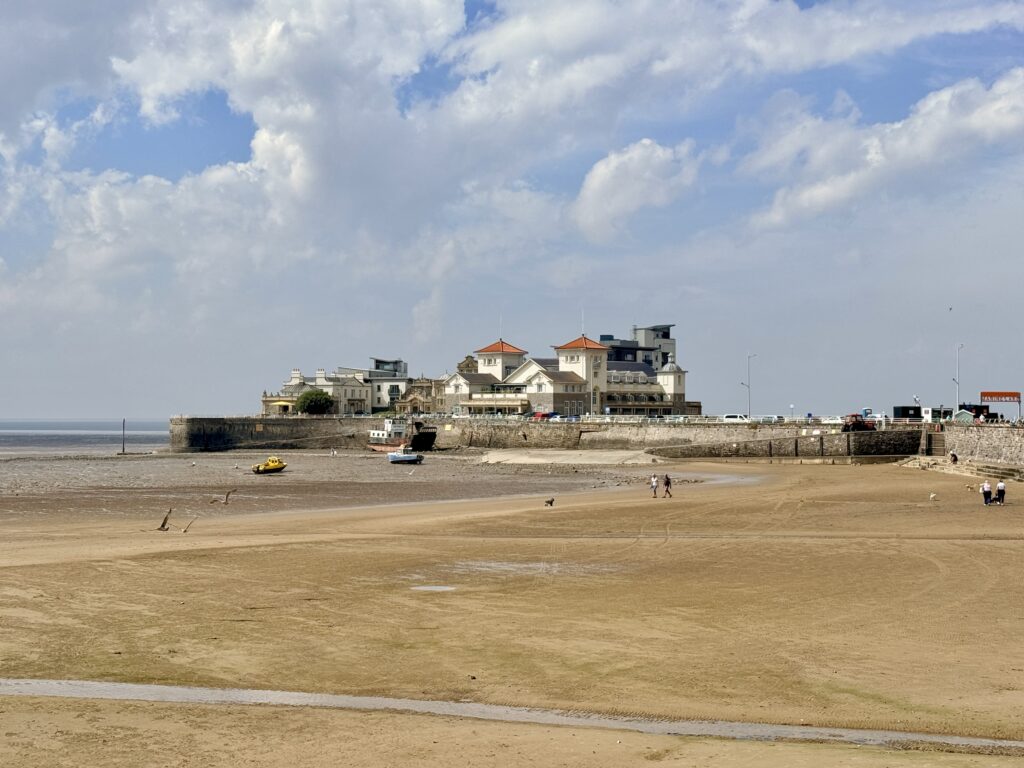
These beaches are worth visiting year-round, although the experience changes noticeably with the seasons.
Spring is particularly good for walking, with longer days, fewer visitors than midsummer and plenty of activity along the coast. Summer brings the busiest beach days, warmer weather, seasonal facilities and RNLI lifeguard cover at selected locations.
Autumn is often excellent for long walks around Sand Bay, Brean, Berrow and Sand Point, and seasonal dog restrictions begin to ease. Winter is much quieter and can be wonderfully atmospheric on a clear day, although strong winds, wet weather and short daylight hours deserve more careful planning.
Bus timetables, cafés, beach parking and other facilities can change between summer and winter, so it is always worth checking before a longer journey.
Weston-super-Mare Tide Times
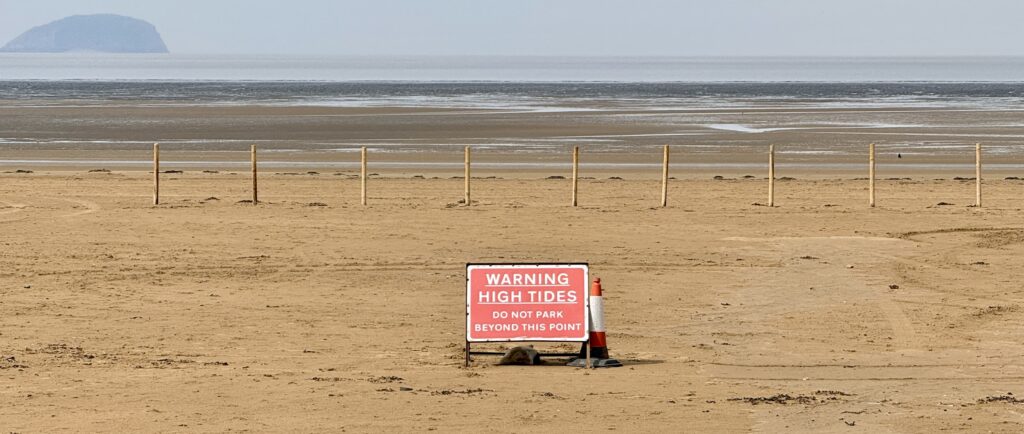
Weston-super-Mare has one of the world’s largest tidal ranges. The funnel shape of the Bristol Channel concentrates the incoming tide as it narrows towards the Severn Estuary, creating a dramatic difference between high and low water. As a result, Weston-super-Mare tides can completely transform the beach: at low tide, the sea retreats far across Weston Bay, while at high tide it comes much closer to the promenade.
If you’re planning to swim, paddle or spend time on the beach, check the latest Weston-super-Mare tide times before setting out. Never walk out across the exposed mud to reach the water at low tide, and remember that the incoming tide can move quickly.
Beach Safety

This stretch of coast requires a little more thought about the tide than many beach destinations.
As the water recedes, large areas of Weston Bay and the coast towards Burnham become exposed. Ground that appears firm can quickly turn into soft, deep mud. We know from experience how deceptive it can be: on a careful winter walk along this coast, one of us still managed to get a boot firmly stuck!
It was more inconvenient than serious, but a useful reminder not to underestimate the conditions. The mud can be considerably deeper further out, while the incoming tide brings another risk. Stay on the firm upper beach, follow local warning signs and never walk across the mudflats in an attempt to reach the water.
Somerset Council warns visitors at Brean and Berrow not to walk out to the sea at low tide, and similar warnings are displayed at Weston and Burnham. Around Brean Down, there is also a risk of the incoming tide cutting off the small coves beneath the headland.
The RNLI provides seasonal lifeguard cover at Brean Beach and Burnham-on-Sea Beach, usually during the main summer period. Patrol dates and times can change each year, so check the current RNLI information before travelling and never assume a lifeguard will be present. At Brean, swim between the red and yellow flags when lifeguards are on duty. Burnham’s main beach is permanently red-flagged and should not be treated as a swimming beach.
The RNLI also recommends learning its Float to Live technique. If you get into difficulty in the water, float on your back until you can control your breathing. In a coastal emergency, dial 999 or 112 and ask for the Coastguard.
1. Weston-super-Mare Beach
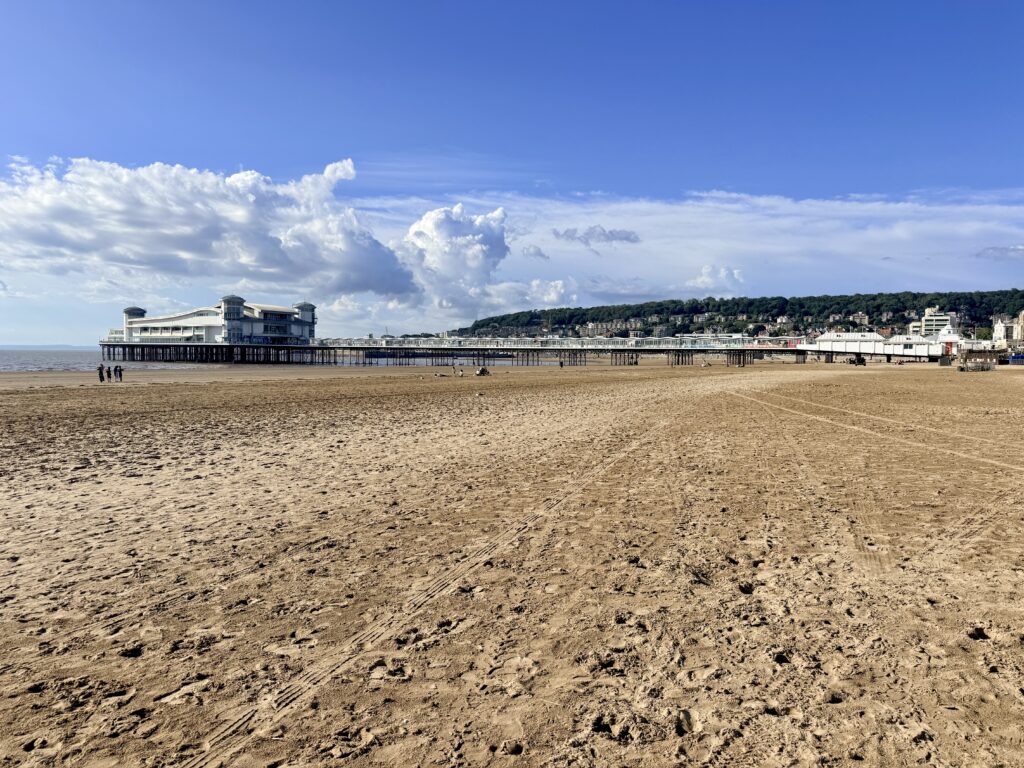
Go here for: Families, the Grand Pier, easy facilities and a full seaside day.
Weston’s main beach is where sand, promenade and resort meet. The Grand Pier dominates the central seafront, with cafés, restaurants, fish and chips, amusement arcades and shops all within a few minutes’ walk.
The upper shore provides plenty of room for sandcastles and games, and the traditional donkey rides remain a familiar summer sight. Unlike several places further along the coast, you don’t need a car once you arrive.
If you want to combine a few hours on the sand with the pier and other attractions, this is the obvious place to start. Our Weston-super-Mare visitor guide has much more on what to see, where to eat and how to spend a full day or weekend in town.
Getting there
Weston-super-Mare railway station is within walking distance of the seafront, making this the easiest beach in the guide to reach without a car. The town also has a bus interchange serving local and regional routes.
🚞 Check train times and fares to Weston-super-Mare
Drivers have a good choice of paid seafront car parks, with additional beach parking available when conditions permit.
Accessibility
North Somerset Council provides a free beach-friendly wheelchair for visitors who may find it difficult to use a conventional wheelchair on the sand. You can book it in advance for two-hour sessions, subject to availability. Check the council’s beach wheelchair information for current booking arrangements.
Beach huts
There are nine council beach huts on the promenade at Royal Sands. These are rented annually rather than as day-hire beach huts. See North Somerset Council’s beach hut information for current availability and details.
BBQs
BBQs are normally permitted on Weston Beach, but they must be raised off the ground, kept away from buildings and other fire hazards, and completely extinguished afterwards. All equipment, charcoal and rubbish must be removed from the beach, and BBQs are not permitted near the dunes. Check North Somerset Council’s beach safety information before your visit.
Dogs
Dog rules depend on which part of the seafront you visit.
North Somerset Council’s dog rules allow dogs on the beach year-round between the Grand Pier and Knightstone Island and from Royal Sands south towards Uphill. On the central section between the Grand Pier and Royal Sands, dogs are excluded from 1 May to 30 September between 9 am and 7 pm.
Dogs should be kept on a lead on the promenade.
Swimming and safety
Weston looks remarkably different depending on the tide. Around high water, the water within the Bristol Channel reaches much closer to the promenade. Several hours later, the sea may appear to have almost disappeared.
Don’t cross the exposed mud in pursuit of the water. Signs on the beach warn of soft sand and sinking mud at low tide.
Weston Main’s latest annual Environment Agency bathing-water classification is Poor, with official advice against bathing. Water quality can vary, however, and North Somerset Council provides current bathing-water quality information during the bathing season. If getting into the water is an important part of your visit, Marine Lake may be the better option.
If you are staying overnight, you’ll find a wide choice of seafront hotels, guesthouses and apartments within walking distance.
Our view: Come here when you want a day at the seaside rather than simply somewhere to lay out a towel. For peace and open coastline, Sand Bay, Berrow or Middle Hope feel very different.
2. Marine Lake
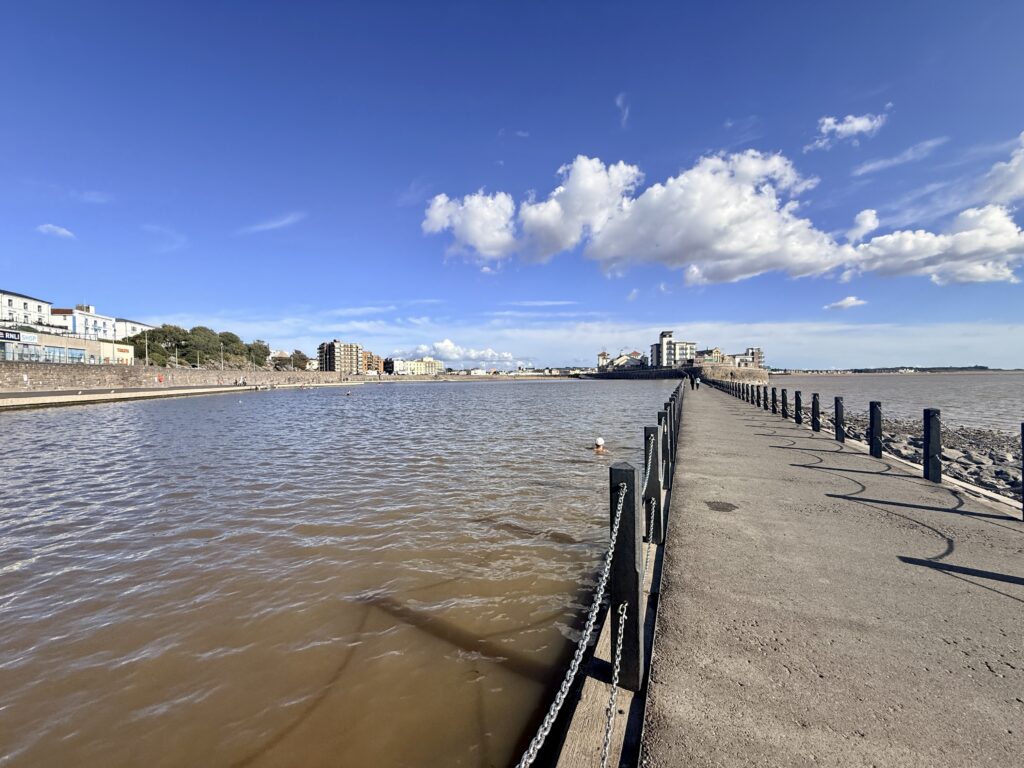
Go here for: Outdoor swimming, paddling, and water access when the main tide is out.
At the northern end of Weston’s seafront, Marine Lake solves one of the resort’s most obvious problems: what do you do when the sea is a mile away?
A causeway encloses the lake and retains seawater as the Bristol Channel recedes. Higher tides periodically overtop the structure and replenish it.
After improvement works, Marine Lake reopened in May 2026 and is open for outdoor swimming and non-powered watersports year-round.
Getting there
Marine Lake is walkable from central Weston and the railway station, so there is little reason to make a separate car journey if you are already visiting the town.
For drivers, use the seafront parking around Knightstone and Marine Parade rather than looking for a dedicated lake car park.
Dogs
Dogs, other than assistance dogs, are not permitted on the lake beach, lower apron or in the water. A public right of way crosses the causeway.
Swimming and safety
Having permanent water doesn’t make Marine Lake a supervised swimming pool. There is no lifeguard service, depths vary, and swimmers need to judge conditions for themselves.
Most of the edge is less than a metre deep, although depths change and the area close to the causeway is deeper. Follow the safety notices displayed around the lake.
Our view: For anyone asking “where can I swim in Weston when the tide is out?”, Marine Lake is the best answer.
3. Uphill Sands
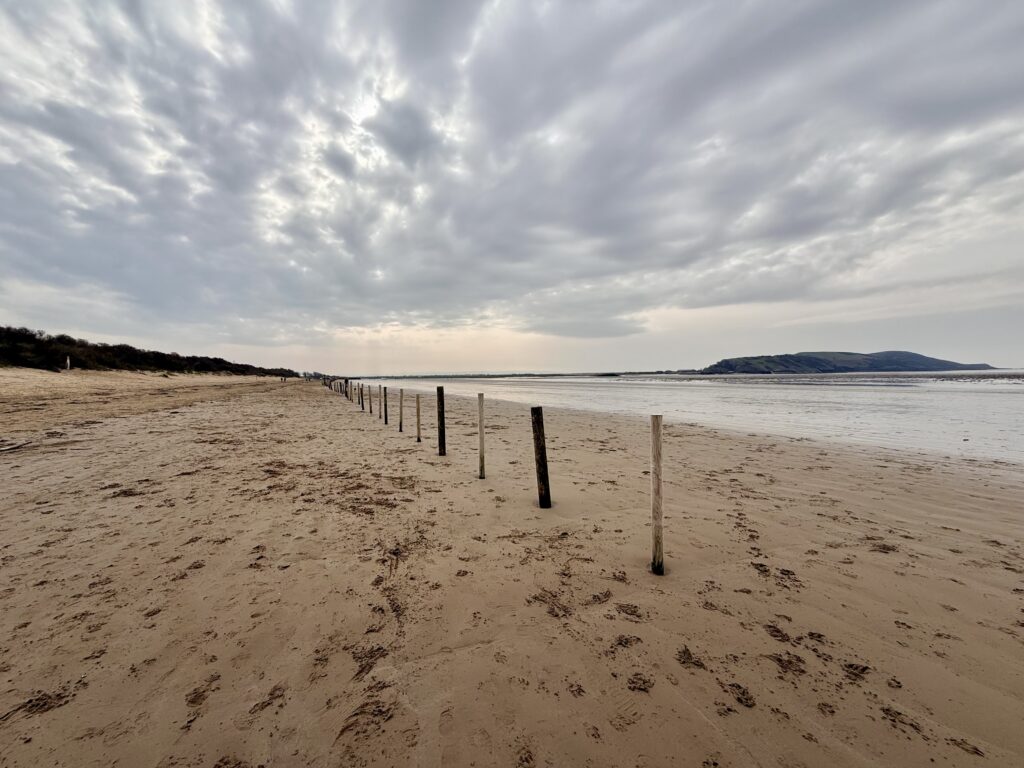
Go here for: A less developed end of Weston Bay, dogs and coastal walking.
Follow the seafront south and Weston gradually changes character. By the time you reach Uphill, the Grand Pier and amusement arcades feel some distance away.
The sand remains broad and open, but the backdrop is greener, and the mouth of the River Axe lies just beyond. Uphill Local Nature Reserve, the village and the hill above give you plenty to explore if you don’t want to spend the whole day beside the water.
This is also where the coast joins the Brean Down Way, an approximately eight-mile walking and cycling route from Weston through Uphill and across the Levels towards Brean Down.
Getting there
Uphill can be reached on foot from Weston along the seafront, or by local bus. First Bus route 20 links Weston with Uphill before continuing towards Brean, Berrow and Burnham-on-Sea.
Services vary through the year, so check the current timetable rather than relying on a fixed frequency.
If driving, North Somerset Council operates a large paid beach car park at Uphill Sands on Links Road, although access and availability can be affected by the tide.
Windsports
The stretch of beach between Royal Sands and Uphill includes Weston’s designated WindZone for activities including kite buggies, land sailing and mountain boarding. Access is regulated, with membership and insurance requirements applying to users. Check North Somerset Council’s WindZone information before bringing specialist equipment.
Dogs
The southern section between Royal Sands and Uphill is open to dogs year-round.
Swimming and safety
Swimming follows the same tidal patterns found elsewhere in Weston Bay. When the water is out, don’t cross the mud trying to reach it.
Our view: Uphill is a useful middle ground. You’re still close to Weston, but the setting is noticeably less developed, and it is easy to combine the shore with a proper walk. Uphill Local Nature Reserve is well worth exploring too. Make the short but fairly steep climb to Uphill Beacon for excellent views across Weston Bay, over the Levels and towards Brean Down.
4. Sand Bay
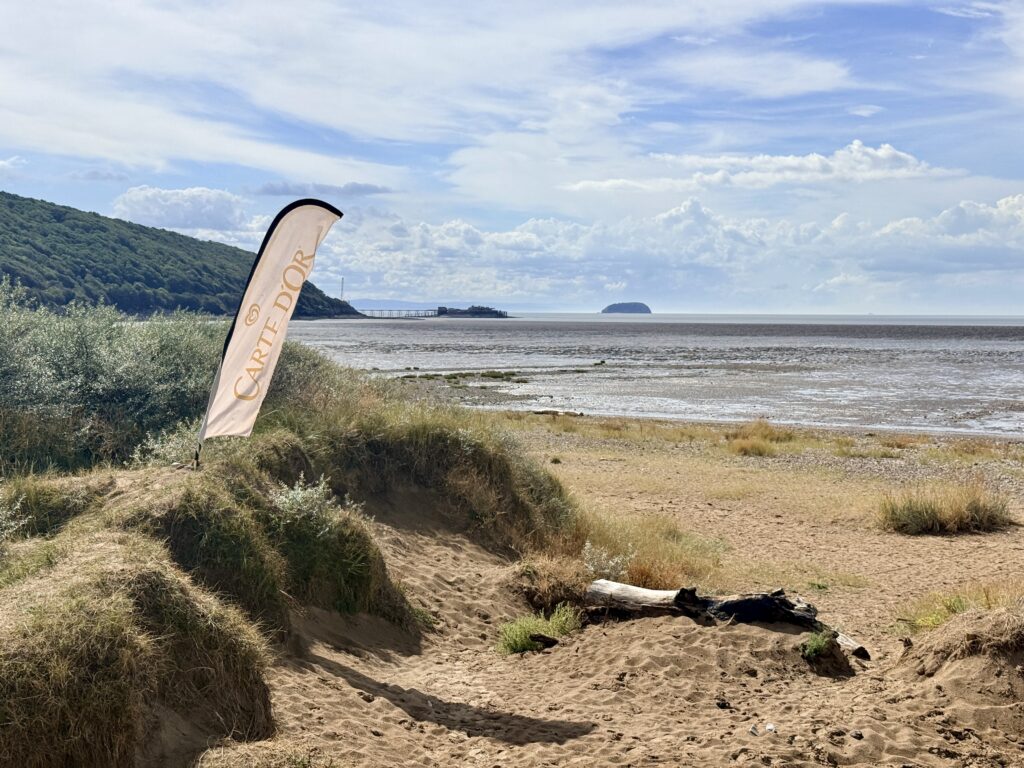
Go here for: Dog walking, coastal scenery, wildlife and getting away from the resort.
Only a couple of miles north of central Weston, Sand Bay feels surprisingly separate from the town.
Instead of a pier and busy promenade, there is a long shore edged by dunes, saltmarsh and open countryside. Sand Point rises at its northern end, while Worlebury Hill separates the bay from Weston.
Getting there
First Bus route 1 links Weston-super-Mare with Sand Bay via Birnbeck Pier and Kewstoke, making this one of the easiest quieter beaches to visit without driving.
There are also two North Somerset Council car parks near the shore, at Beach Road and Sand Road by the bus terminus.
At the time of our most recent visit, the signs showed £1.10 for one hour, £2.10 for two hours and £3.10 for the day. Check the current tariff when you arrive.
Dogs
Sand Bay is a good option for dog owners because dogs are allowed on the beach year-round.
Dogs are not allowed on the dunes, however, so follow the local signs.
Walking and swimming
The England Coast Path and North Somerset Tidal Trail pass through the area, making Sand Bay as useful for walking as it is for a beach visit. From here you can continue north towards Sand Point and Middle Hope.
We wouldn’t come specifically for swimming. The water retreats a considerable distance and the coast shares the tidal characteristics of the wider Bristol Channel.
Marine Lake is easier if getting into the water is your main aim, while Brean offers a designated bathing water further south.
Our view: Sand Bay is our pick for a relaxed beach walk near Weston, especially with a dog.
5. Sand Point, Middle Hope and Middle Hope Beach
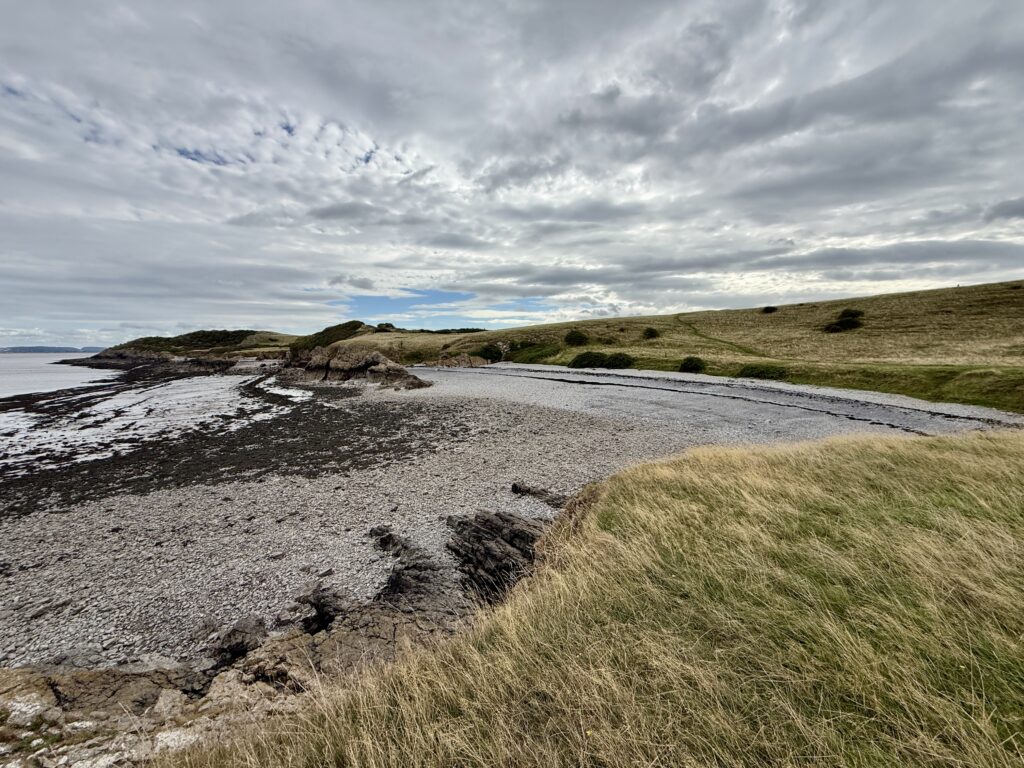
Go here for: Wild coastal scenery, headland walks and a complete change from Weston seafront.
Continue beyond Sand Bay and the landscape changes again.
Sand Point and Middle Hope form a prominent headland extending into the Bristol Channel. This isn’t a conventional sandy beach destination. The attraction here is the combination of rocky shore, grassland, cliffs and expansive views.
The headland is cared for by the National Trust and forms part of a Site of Special Scientific Interest. Our first-hand Sand Point and Middle Hope circular walk includes the complete route, map, parking information and the history of the headland.
Getting there
No bus drops you directly at the headland. The practical public transport option is to use the Weston to Sand Bay or Kewstoke service and continue on foot.
Drivers can use the National Trust car park at Sand Point. At the time of writing, parking costs £5 for non-members and is free for National Trust members. If the car park is full, do not park along Beach Road or in the passing places because these are needed for emergency access.
If walking from Sand Bay, allow enough time for the return journey and remember that daylight disappears quickly during winter.
Dogs
Dogs can accompany you, but this is countryside as well as coastline. Livestock may be grazing, and there are cliffs, steep slopes and important wildlife habitats. The National Trust asks visitors to keep dogs on leads at all times.
Swimming and safety
We wouldn’t suggest Sand Point or Middle Hope for swimming. Come for the landscape, rocky shoreline and walking rather than a conventional day on the sand.
The paths are rougher than the promenade and sandy beaches elsewhere in this guide. There are uneven sections, steep slopes and exposed cliff edges, so suitable footwear matters throughout the year.
Our view: Go here if you searched for Weston-super-Mare beaches but actually want somewhere wild and scenic.
6. Brean Beach
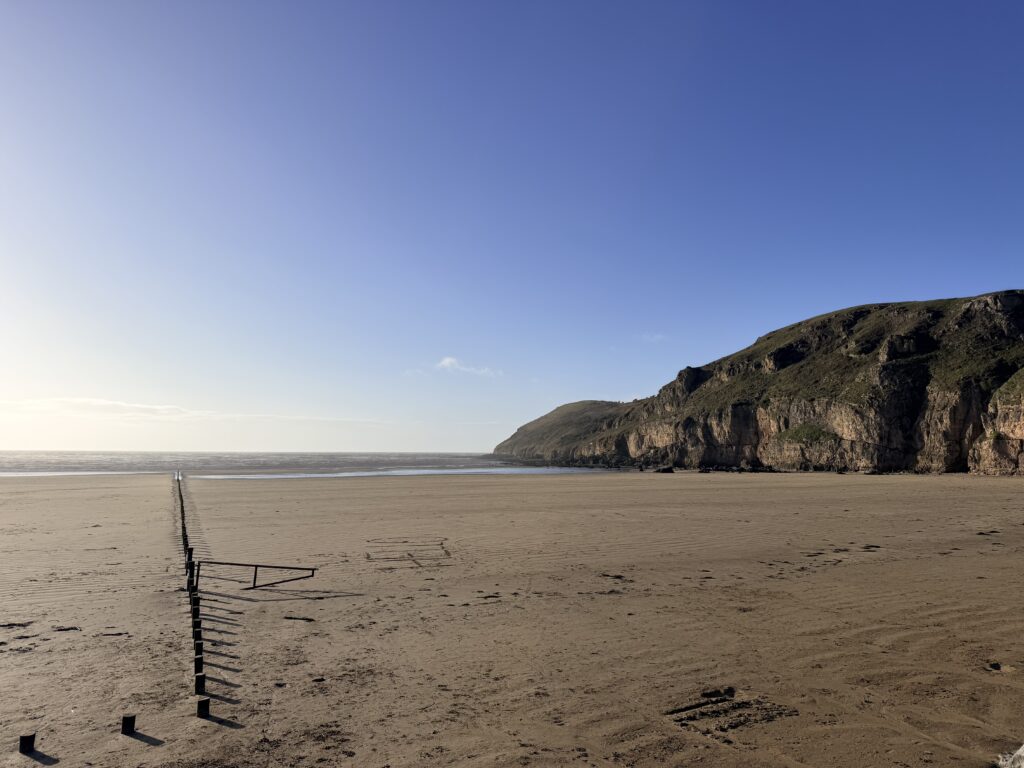
Go here for: Miles of sand, families, dogs, summer lifeguards and Brean Down.
South of Weston, Brean opens out into one of Somerset’s great expanses of sand.
Brean Down rises dramatically at its northern end, while the shore continues south towards Berrow. The scale is immediately obvious when you arrive.
Brean village and the surrounding holiday parks provide cafés, entertainment and places to stay, so this is not an isolated stretch of coastline despite its size.
Getting there
First Bus route 20 runs from Weston-super-Mare through Brean, with stops including Brean Village Hall and Brean Leisure Park, before continuing to Berrow and Burnham.
That makes a car-free day at Brean quite practical, particularly if you combine the bus with a walk.
You can also reach the area on foot or by bicycle using the Brean Down Way from Weston.
Drivers can park on designated parts of Brean Beach when access is open. Opening depends on tides and conditions, seasonal charges apply, and a 15mph speed limit is enforced. A National Trust car park at the northern end of the beach, at the foot of Brean Down, is also convenient for combining the beach with a walk over Brean Down. It can fill quickly on busy summer weekends, so it’s sensible to arrive earlier in the day.
Never drive onto the mudflats.
Accessibility
Vehicle access onto designated parts of Brean Beach can reduce the distance between the car and the sand when the beach entrance is open, although the sandy surface itself may be difficult for conventional wheelchairs. At nearby Brean Down, the National Trust has an accessible route and all-terrain mobility scooters available to hire in advance. See the National Trust’s accessibility information for Brean Down for current details.
Beach activities
Brean is also used for horse riding, power kiting, land yachting and kite buggies, although restrictions apply. Some activities are limited to members of recognised clubs and organised meetings, while jet skis are not permitted at Brean or Berrow. Check Somerset Council’s beach and water safety information before bringing specialist equipment.
Dogs
Dogs are welcome year-round, provided they are kept under proper control or on a lead.
If you continue onto Brean Down, the National Trust asks owners to use leads because of livestock, wildlife and cliff edges.
Swimming and safety
Brean is a designated bathing water, and Somerset Council says the Environment Agency currently classifies it as Good.
The sea is generally much easier to reach around high tide. Once the tide goes out, extensive mudflats are exposed, and you should never attempt to walk out across them to reach the distant water.
RNLI lifeguards patrol during the main summer season. In 2026, cover ran daily from 4 July until 6 September between 10 am and 6 pm.
The RNLI also warns about deep shifting mud and the speed of the incoming tide. Around Brean Down, small coves can become cut off.
Walk up Brean Down
At the northern end of the beach, Brean Down rises to around 97 metres above the Bristol Channel.
Our Brean Down walk guide covers the steps, alternative routes, fort, parking and viewpoints in detail.
Brean also has one of the largest concentrations of holiday parks and self-catering accommodation on this part of the coast.
Our view: Brean is the strongest all-rounder south of Weston if you want a large sandy beach, room for the dog, family facilities and seasonal lifeguard cover.
7. Berrow Beach
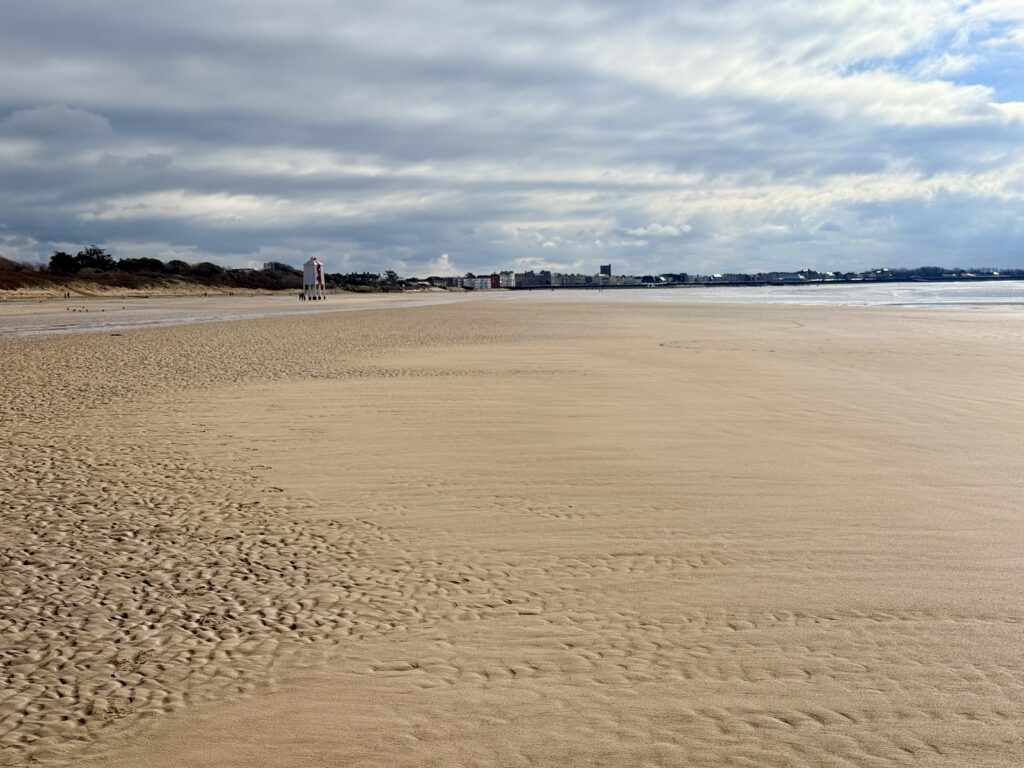
Go here for: Dunes, long walks, dogs and a less developed stretch of sand.
There isn’t an obvious point where Brean suddenly becomes Berrow. The sand simply carries on southwards, but the surroundings gradually become more natural.
Behind the shore lies Berrow Dunes Local Nature Reserve, a substantial dune system that gives this section of coast a very different backdrop from Weston.
Getting there
Route 20 also serves Berrow between Brean and Burnham-on-Sea, giving the village a direct bus connection with Weston.
If driving, vehicles can use designated parts of Berrow Beach while access is open. Parking is also available near Berrow Dunes when the beach gates are closed.
Accessibility
Vehicle access onto designated parts of Berrow Beach can reduce the distance between the car and the shore when the beach entrance is open, but the sandy surface and pedestrian access may still be difficult for wheelchair users. Somerset Council identifies disabled beach access points at nearby Burnham-on-Sea for visitors unable to use the pedestrian access at Berrow or Brean. See Somerset Council’s beach and water safety information for current access information.
Dogs
Dogs are allowed on Berrow Beach year-round, provided they remain under control or on a lead.
With miles of sand and fewer resort attractions, it is one of the easiest places in the area for a long walk with a dog.
Swimming and safety
Like neighbouring Brean, Berrow is a designated bathing water with a current “Good” Environment Agency classification.
Plan around the tide. Once the water has gone out, dangerous mud is exposed beyond the firmer upper shore.
At low tide, the remains of the SS Nornen, a Norwegian sailing ship wrecked at Berrow in 1897, can sometimes be seen protruding from the sand. It is one of the beach’s more unusual sights, but don’t attempt to walk out across the mudflats to reach it.
If you want to stay close by, look at accommodation in Brean, Berrow or Burnham rather than limiting your search to Weston.
Our view: Berrow gives you much of Brean’s scale with a stronger sense of dunes and open coast.
8. Burnham-on-Sea Beach
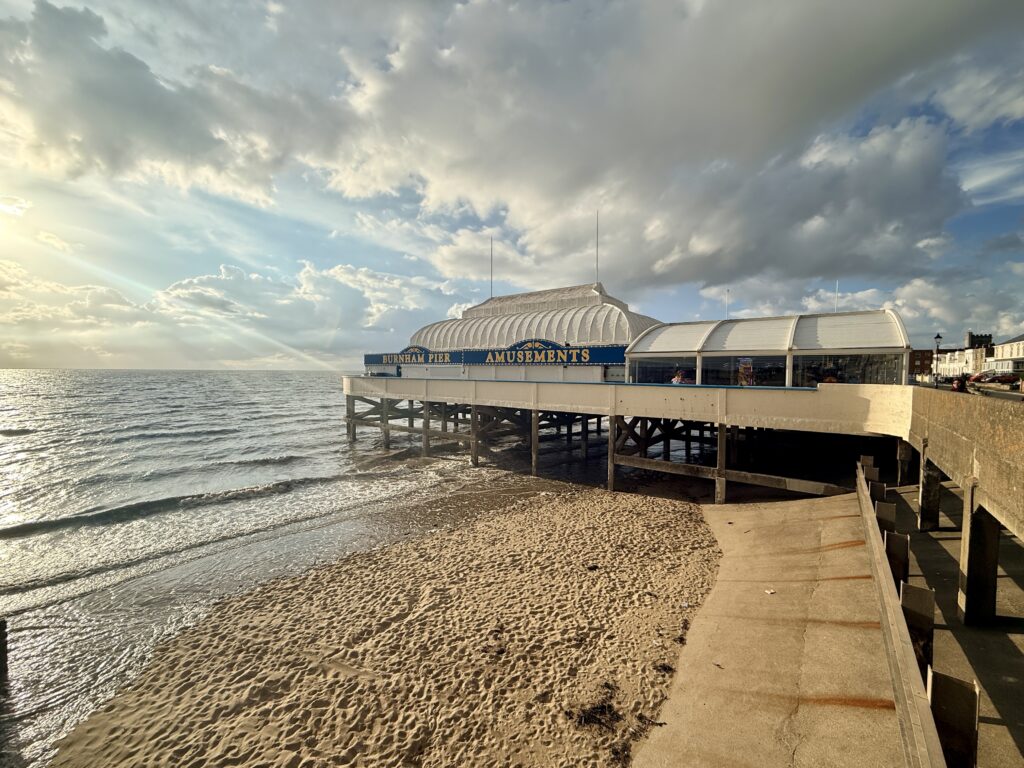
Go here for: A smaller seaside town, the Esplanade, cafés and the Low Lighthouse.
Burnham sits at the southern end of this long run of coastline. Its broad Esplanade, shops, cafés and sandy shore give it more in common with Weston than neighbouring Berrow.
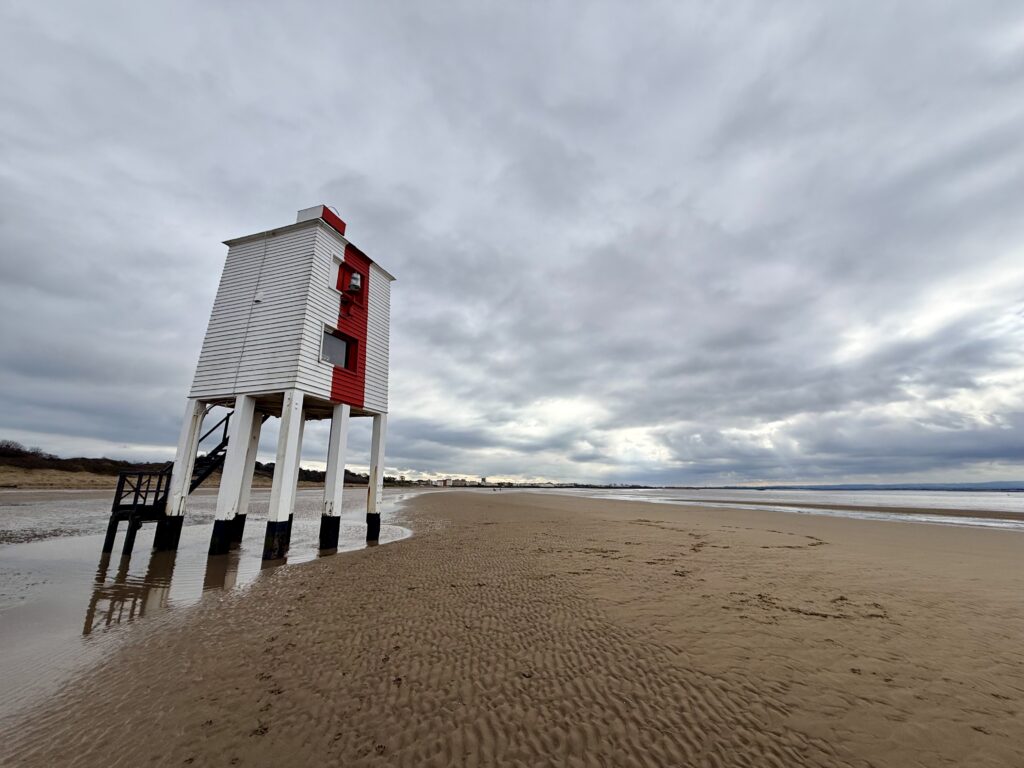
One of its most recognisable sights is the Low Lighthouse, the wooden structure standing on legs on the beach north of the town centre.
Our Burnham-on-Sea visitor guide covers the lighthouse, pier, walks, parking and other things to see around town.
Getting there
Route 20 runs directly between Weston-super-Mare and Burnham-on-Sea via Uphill, Brean and Berrow. Current timetables show services throughout the day, although the frequency varies by day and season.
Burnham also has town and seafront parking within walking distance of the beach.
Accessibility
Burnham’s wide, level Esplanade makes it one of the easier places along this stretch of coast to enjoy sea views without going onto the sand. Parking is available along the Esplanade, and nearby, and Somerset Council identifies disabled access points to the beach. Its Accessible Coast information also includes accessible routes and mobility equipment around Burnham-on-Sea.
Dogs
Rules change by beach section and time of year. Dogs are prohibited year-round between the jetty and pavilion, with seasonal restrictions on adjoining areas.
Further north, beyond Maddocks Slade towards Berrow, dogs are welcome year-round if kept under control or on a lead.
Swimming and safety
Burnham-on-Sea’s main beach is not a place we recommend for swimming. Permanent advice against bathing is in place at Burnham Jetty, which is no longer designated as a bathing water. Somerset Council says the nearby rivers can affect water quality and recommends further up the coast at Berrow and Brean for swimming and paddling instead.
The RNLI describes Burnham’s main beach as permanently red-flagged. Other hazards include strong lateral currents around the jetty and areas of deep, shifting mud as the tide falls.
RNLI lifeguards provide seasonal cover at Burnham, but that should not be taken to mean the beach is suitable for bathing. Their role also includes warning visitors about conditions and helping people who get into difficulty.
Burnham has guesthouses, small hotels, holiday parks and self-catering accommodation, and staying here puts Berrow and Brean within easy reach.
Our view: Burnham is better considered as a seaside town and coastal walking destination than a swimming beach. Come for the promenade, Low Lighthouse and town, and head to Berrow or Brean if getting into the sea is important to your plans.
Which Beach Near Weston-super-Mare Should You Choose?

If you want the classic Weston experience, stay on Weston-super-Mare Beach, where the pier, promenade, food and attractions are all close at hand. Marine Lake is the practical answer when swimming matters but the main tide is out.
For somewhere calmer without travelling far, Uphill and Sand Bay both make good alternatives. Sand Bay is especially appealing with a dog, while Uphill connects easily with the nature reserve and Brean Down Way.
Head to Sand Point and Middle Hope for walking and wild coastal scenery rather than a conventional beach day.
South of Weston, Brean has the broadest appeal for families and acres of sand. It is also the starting point for our walk over Brean Down to the fort. Berrow is less developed and particularly attractive for dunes, dogs and longer walks.
Finally, Burnham-on-Sea provides another proper seaside town to explore. Our Burnham-on-Sea guide is useful if you plan to make a day of it, but its central beach shouldn’t be chosen for bathing.
Visiting the Beaches Without a Car

A surprisingly large part of this coastline can be explored without a car, with Weston-super-Mare making a good base for public transport.
Weston-super-Mare railway station has direct services from Bristol Temple Meads, with connections from further afield. From Bristol, the X1 bus also provides a direct link to Weston-super-Mare.
Arriving by air is possible too. The A3 Weston Airport Flyer runs directly between Bristol Airport and Weston-super-Mare, calling at Cleeve, Congresbury and Worle on the way.
Once in Weston, the main beach and Marine Lake are within walking distance of the railway station and town centre. Route 1 heads north to Sand Bay, while route 20 travels south through Uphill, Brean and Berrow to Burnham-on-Sea.
Bus routes and timetables can change, so check the latest services with First Bus before travelling.
For walkers and cyclists, the Brean Down Way provides another car-free option between Weston and Brean.
Best Dog-Friendly Beaches Near Weston-super-Mare
For easy year-round access, consider Sand Bay, Brean or Berrow. All three allow dogs year-round, although owners remain responsible for keeping them under control.
Weston also has year-round dog-friendly sections, but seasonal restrictions apply to the central shore. Marine Lake doesn’t permit dogs other than assistance dogs.
If heading onto Sand Point, Middle Hope, or Brean Down, remember these are wildlife and grazing areas, as well as places to walk. Follow signs and use a lead around livestock or wherever requested.
Where Is Best for Swimming?
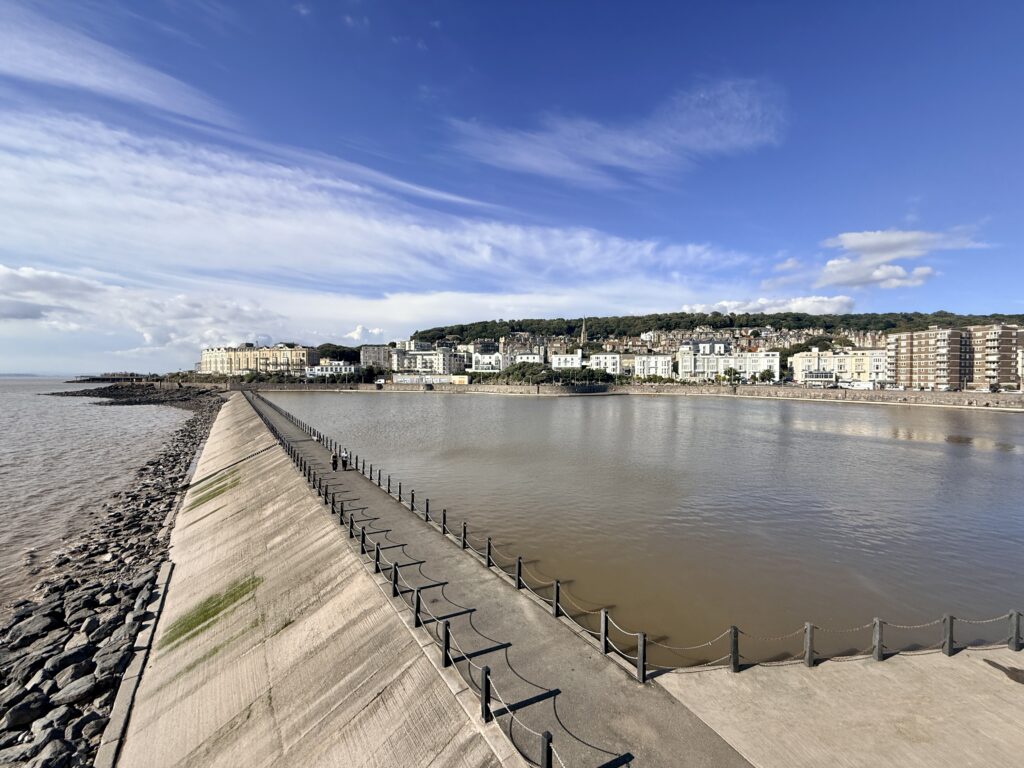
Marine Lake is the easiest answer if you simply want to know that there will be water when you arrive. Its retained seawater avoids the problem of Weston’s enormous tidal movement, although there is no lifeguard.
For open-sea swimming, Brean and Berrow are designated bathing waters currently classified as Good by the Environment Agency. The tide still governs access, and RNLI lifeguards are on duty at Brean during the main summer season.
Weston’s main beach is best used for sand, the promenade, and traditional seaside activities rather than swimming. Weston Main’s latest annual Environment Agency bathing-water classification is Poor, with official advice against bathing. Water quality can vary, however, and North Somerset Council provides current bathing-water quality information during the bathing season.
Marine Lake is the more dependable option for entering the water, although it is unsupervised.
Do not plan to bathe at Burnham Jetty, where permanent advice against swimming is in place.
Can You Walk from Weston-super-Mare to Brean?
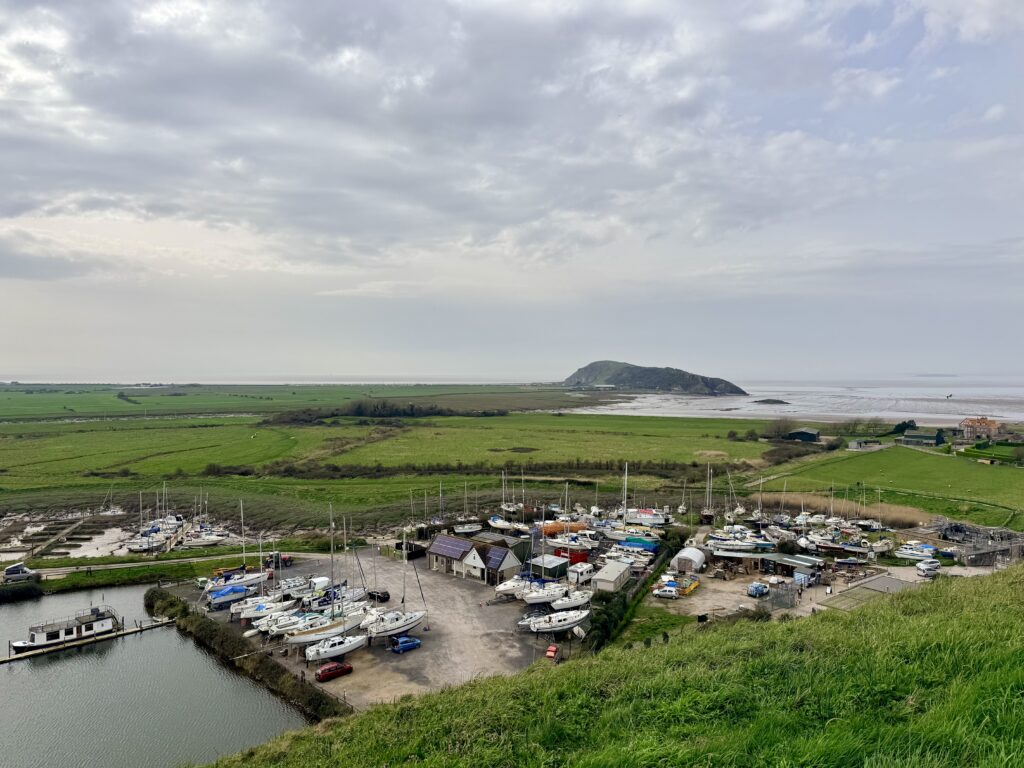
Yes. The Brean Down Way links Weston-super-Mare with Brean Down via Uphill and the River Axe.
The route is around eight miles and is largely flat, although reaching the top of Brean Down involves a substantial climb. You can walk or cycle it, and our guide covers the route, surfaces, facilities, and transport options.
Don’t assume you can simply follow the water’s edge all the way. Tides, mud and the River Axe make the recognised route the sensible option.
Once you reach Brean, you can continue with our separate Brean Down walk to climb the headland and visit the fort.
Staying Near the Beaches
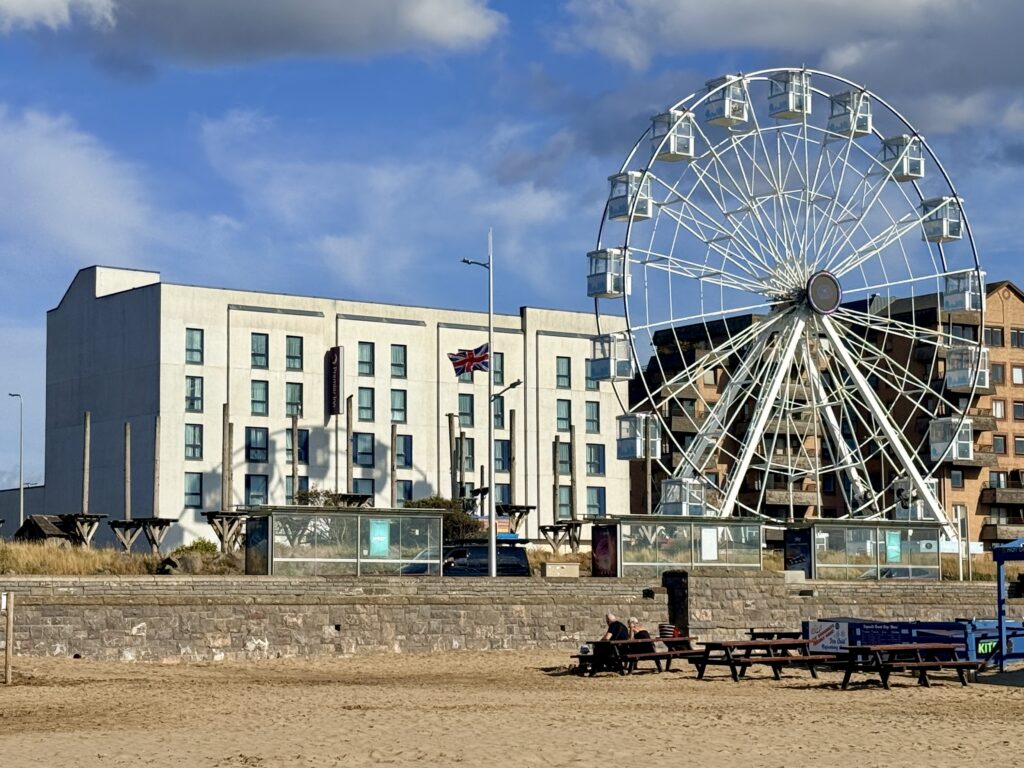
Where you stay can make quite a difference if you are planning a few days on this part of the Somerset coast.
Weston-super-Mare has the widest range of hotels, guesthouses and apartments and is the easiest base without a car.
Brean and Berrow suit visitors who want long sandy beaches, holiday parks and self-catering accommodation close at hand.
Burnham-on-Sea is a smaller base with its own shops and restaurants, plus quick access north to Berrow and Brean.
If you’re undecided, compare our Weston-super-Mare visitor guide with our Burnham-on-Sea guide before booking.
Before You Go
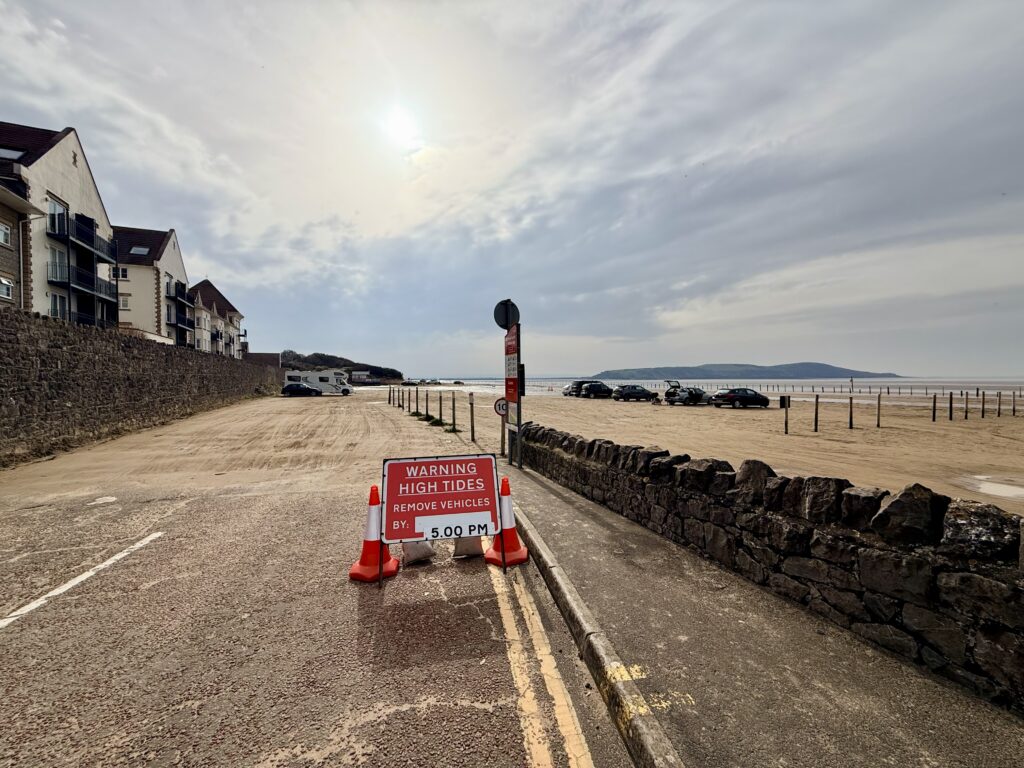
Check the tide, weather, bus timetable and any current beach notices before setting off. Conditions on this coast can look completely different within a few hours.
If you’re swimming at an RNLI lifeguarded beach, stay between the red and yellow flags and follow the lifeguards’ instructions. If someone is in difficulty at sea, alert a lifeguard or call 999 or 112 and ask for the Coastguard rather than entering the water yourself.
Supporting the RNLI helps fund lifeboat crews, lifeguards and water-safety work around the UK coast. You can also find the RNLI’s latest beach safety advice and learn its potentially lifesaving Float to Live technique before heading to the coast.
Frequently Asked Questions About Weston-super-Mare Beaches
Quick answers to some of the most common questions about beaches in and around Weston-super-Mare.
What is the nicest beach near Weston-super-Mare?
It depends on what you want from the day. Sand Bay is our choice for a quieter beach close to Weston, especially for walking and dogs. Brean has an enormous sandy beach with family facilities nearby, while Weston-super-Mare Beach is best if you want the Grand Pier, promenade, cafés and other seaside attractions.
What is the closest beach to Weston-super-Mare?
Weston-super-Mare Beach is immediately beside the town centre and promenade. Marine Lake is at the northern end of the seafront, while Uphill Sands lies towards the southern end of Weston Bay. Sand Bay is only a few miles from central Weston.
Does Weston-super-Mare have a sandy beach?
Yes. Weston-super-Mare has a broad sandy beach stretching along the seafront. The Bristol Channel has a very large tidal range, however, so at low tide the water can be a considerable distance from the promenade. Never walk out across exposed mud trying to reach the sea.
Which is better, Weston-super-Mare or Burnham-on-Sea?
Weston-super-Mare is the larger resort, with the Grand Pier, Marine Lake, more attractions and a wider choice of places to eat and stay. Burnham-on-Sea is smaller and quieter, with its Esplanade and distinctive Low Lighthouse. For sea swimming, Brean or Berrow are better options than central Burnham.
Which Weston-super-Mare beaches are dog friendly?
Sand Bay, Brean and Berrow allow dogs throughout the year, subject to owners keeping them under control. Weston Beach also has year-round dog-friendly sections, although seasonal restrictions apply to the central section. Dogs, other than assistance dogs, are not permitted at Marine Lake.
Are dogs allowed on Weston-super-Mare Beach?
Yes, but the rules depend on the section and time of year. Dogs on Weston-super-Mare Beach are allowed year-round between the Grand Pier and Knightstone Island and from Royal Sands south towards Uphill. On the central section between the Grand Pier and Royal Sands, dogs are not allowed from 1 May to 30 September between 9 am and 7 pm. Dogs should also be kept on a lead on the promenade.
Which beaches near Weston-super-Mare are best for swimming?
Marine Lake is useful when Weston’s main tide is out because it retains seawater, although there is no lifeguard. For open-sea swimming, Brean and Berrow are designated bathing waters currently classified as Good by the Environment Agency. Always check the tide and local conditions before entering the water. Burnham’s main beach should not be treated as a swimming beach.
Can you park on Brean Beach?
Yes. Vehicles can park on designated parts of Brean Beach when access is open. Opening depends on tides and conditions, seasonal charges apply and there is a 15mph speed limit. Never drive onto the mudflats. There is also a National Trust car park at the foot of Brean Down.
Which beaches near Weston-super-Mare are wheelchair accessible?
Accessibility varies between beaches. North Somerset Council provides a free beach-friendly wheelchair for Weston Beach, which can be booked in advance. Brean and Berrow allow vehicle access onto designated areas of the beach when conditions permit, although sand can still be difficult for conventional wheelchairs. Burnham-on-Sea has a wide, level Esplanade and disabled beach access points, while the National Trust provides accessible options and all-terrain mobility equipment at nearby Brean Down.
Can you visit Weston-super-Mare beaches without a car?
Yes. Weston Beach and Marine Lake are within walking distance of Weston-super-Mare railway station. First Bus route 1 serves Sand Bay, while route 20 links Weston with Uphill, Brean, Berrow and Burnham-on-Sea. Services can change, so check the latest timetable before travelling.
What is the best time of year to visit Weston-super-Mare beaches?
The beaches can be visited throughout the year. Spring and summer are best for traditional beach days and seasonal facilities, while autumn and winter are often quieter for walking and dog-friendly visits. Lifeguard cover, bus services, parking arrangements and some facilities can vary with the season.
Over to you … have you recently travelled to South West England? What worked for you? What advice would you give to others? Please leave your comments below or join in the discussion in our Facebook Group.
New to South West England or returning after a while? Start with our ‘Travel Basics’ – quick guides packed with tips to help you plan your trip.

