

Torquay is one of Devon’s best-known seaside resorts and the largest town on the English Riviera. Set around a sheltered harbour on the northern side of Tor Bay, it combines sandy beaches, palm-lined gardens, Victorian villas, family attractions and some of South Devon’s finest coastal scenery.
The town is more varied than its traditional resort image suggests. Around the harbour, you will find boat trips, cafés, restaurants and views across the marina. Torre Abbey Sands and the seafront provide the classic beach experience, while Wellswood, Meadfoot and Ilsham feel quieter and more residential. Inland, Cockington offers thatched cottages and woodland walks, while Babbacombe has clifftop views, a historic cliff railway and several of Torquay’s best family attractions.
Torquay also has a remarkable cultural and geological story. Agatha Christie was born here in 1890, Kents Cavern preserves evidence of some of Britain’s earliest human inhabitants, and the surrounding coastline forms part of the English Riviera UNESCO Global Geopark.
This complete Torquay visitor guide covers the best things to do, the town’s beaches and coastal walks, where to park, places to eat, accommodation, nearby days out and practical information for planning your visit.
Disclosure: Some of the outbound links on this page are affiliate links to sites that we use and would genuinely recommend. Using them doesn’t cost you extra, but it does help support this free guide. We also provide links to other sites that we believe may be helpful to you.
- Torquay at a Glance
- Map of Torquay
- A Brief History of Torquay
- Best Things to Do in Torquay
- Torquay Town Centre, Harbour and Shopping
- What's On in Torquay
- Places to Visit Near Torquay
- How to Get to Torquay and Travel Around
- Parking in Torquay: A Quick Guide
- Where to eat in Torquay
- Where to Stay in Torquay
- Torquay Weather and the Best Time to Visit
- Practical Information for Visiting Torquay
- Torquay FAQs
- Is Torquay worth visiting?
Map of Torquay
A Brief History of Torquay
Torquay’s history reaches much further back than the arrival of seaside tourism. The limestone around Kents Cavern contains evidence of prehistoric animals and early humans, while the wider Torbay coastline records hundreds of millions of years of geological change.
For much of its later history, Torquay was a small settlement associated with fishing, farming and the medieval Torre Abbey. Its transformation began during the Napoleonic Wars, when naval officers and their families stayed around Tor Bay. During the nineteenth century, the mild climate and sheltered position encouraged wealthy visitors to winter here for their health.
The railway reached Torquay in 1859, making the resort far more accessible. Hotels, villas, gardens and entertainment venues followed, and the town became one of the most fashionable resorts on the south coast. Its palm trees, elaborate buildings and views across Tor Bay helped create the ‘English Riviera’ identity still used today.
Torquay is also inseparable from Agatha Christie. She was born in the town in 1890 and spent much of her early life here. Places around the harbour, seafront and wider Torbay area influenced her life and writing, while her former holiday home at Greenway, beside the River Dart, is now cared for by the National Trust.
Best Things to Do in Torquay
The best things to do in Torquay range from harbour walks and beaches to prehistoric caves, museums and family attractions. Some are concentrated around the seafront, but several highlights require a bus, a car journey, or an energetic walk.
Explore Torquay Harbour and the Marina

Torquay Harbour is the natural starting point for a first visit. Fishing boats, leisure craft and visiting yachts share the water, while cafés, restaurants and bars occupy the surrounding streets. The inner harbour is compact and easy to explore on foot, with benches and open views across Tor Bay.
Walk around Beacon Quay for views across the marina and towards Paignton and Brixham. In summer, the harbourside becomes one of the busiest parts of Torquay, particularly when boat trips and events are operating. Early morning and evening are often more relaxed.
A statue of Agatha Christie and her dog Peter, unveiled beside the harbour in 2025, provides a modern focal point and an appropriate starting place for exploring the writer’s connections with the town.
Visit Beacon Cove
A short walk from Torquay Harbour, Beacon Cove is a small, sheltered shingle beach with a promenade overlooking the water. Once used as a ladies’ bathing cove, it was a favourite swimming place of Agatha Christie. In her autobiography, Christie recalled an occasion when she struggled in the swell while swimming towards a raft with her nephew on her shoulders, before both were rescued by the attendant responsible for the bathing huts. Access to the beach is down a winding path and over large steps, while the entrance gate is opened and locked at seasonal times.
Relax on Torre Abbey Sands
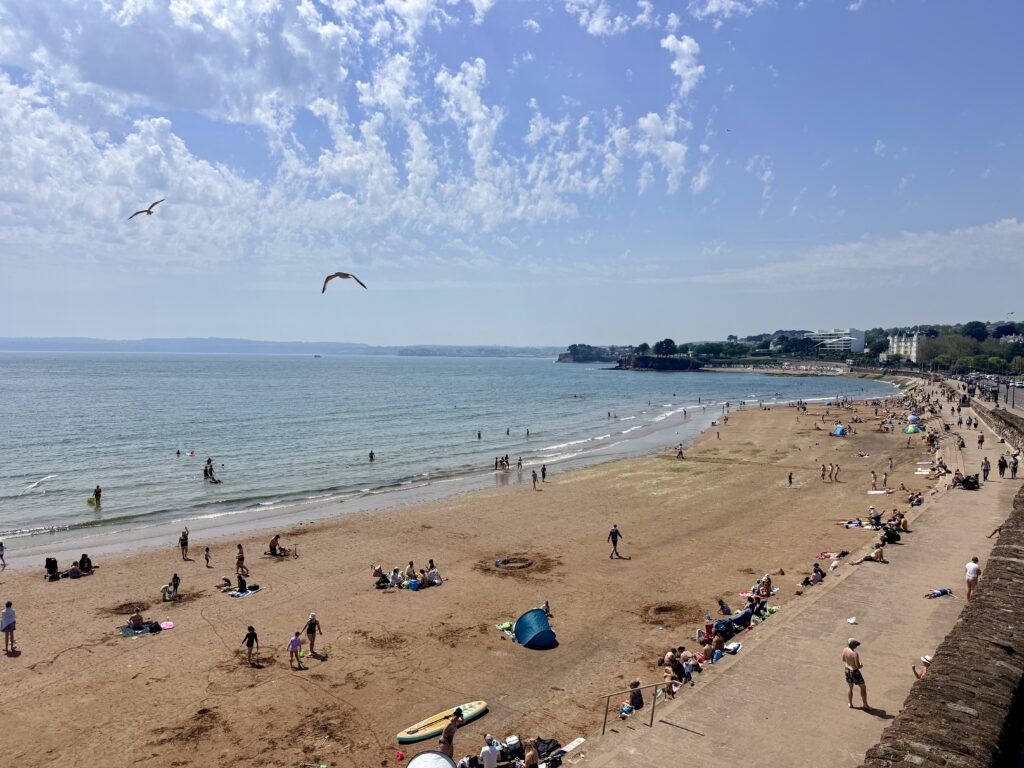
Torre Abbey Sands is Torquay’s principal town beach. Its broad sweep of sand lies between the harbour and railway station, close to cafés, gardens, hotels and visitor facilities. The sheltered setting and easy access make it a practical choice for families and anyone wanting a traditional beach day without travelling beyond the centre.
The beach is tidal, so the amount of sand changes through the day. Check tide times if swimming or planning a longer stay. During warm summer weather, this is one of Torquay’s busiest areas, so arriving early is sensible.
Walk through Princess Gardens and along the seafront

Princess Gardens link Torquay Harbour with Torre Abbey Sands and provide one of the resort’s easiest level walks. Created on reclaimed land immediately west of the harbour, they were Torquay’s first public gardens. Princess Louise laid the foundation stone in May 1890, and the gardens, designed by John Batt Dyer, opened in June 1894.
Palm trees, colourful flower beds, lawns and views across the harbour create the relaxed resort atmosphere for which the English Riviera is known. Features include a Grade II-listed fountain, sunken gardens, and the Cenotaph, designed by Sir Reginald Blomfield in memory of local people who died during the First World War. The Princess Theatre stands beside the gardens and hosts touring musicals, comedy, concerts and family productions throughout the year.
For a higher viewpoint, follow the paths and steps through Royal Terrace Gardens, commonly known as Rock Walk. The gardens climb the cliffs of Waldon Hill above the seafront, with Mediterranean planting and viewpoints overlooking Princess Gardens, Torquay Harbour and the wider bay towards Berry Head.
Rock Walk reopened in October 2010 following an extensive three-year restoration that cleared vegetation, created new paths and exposed parts of the limestone cliff. The gardens are illuminated after dark, but their steep paths and numerous steps make them unsuitable for some visitors. Those seeking a level route should remain on the seafront through Princess Gardens.
Go underground at Kents Cavern

Kents Cavern is one of Europe’s most important prehistoric cave sites and one of Torquay’s best all-weather attractions. Guided tours pass through chambers formed in Devonian limestone, revealing stalagmites, stalactites and evidence of Ice Age animals and early humans.
The cave is both a Scheduled Monument and a Site of Special Scientific Interest. Archaeological discoveries include prehistoric tools, animal remains and a human jawbone regarded as one of the earliest modern human fossils found in north-west Europe. Tours explain these discoveries and the pioneering work of Victorian excavator William Pengelly.
Temperatures underground remain fairly constant, making the cavern a welcome choice on both hot and wet days. The route is relatively accessible for a showcave, though it includes uneven surfaces and nine shallow steps. Tours can become busy during the school holidays, so booking is advisable.
The attraction is easy to visit by public transport. I travelled from Torquay on the number 22 bus, which stops on Babbacombe Road near Kents Cavern. The Stagecoach route operates between South Devon College, Paignton, Torquay and St Marychurch, although visitors should always check the latest timetable before travelling.
Parking arrangements and offers can vary, with free parking sometimes included. Free roadside spaces are also nearly always available nearby on Ilsham Road.
The cavern’s Firestone Kitchen is worth allowing time for before or after a tour. Overlooking the Ilsham Valley, it serves breakfasts, brunch dishes, light lunches, cakes and drinks, with indoor seating and a balcony for fine weather. The café welcomes visitors who are not taking a cave tour and is also dog friendly.
Opposite Kents Cavern is Stoodley Meadow Community Café, another option for breakfast, lunch, tea and cake. It is in Stoodley Knowle Meadow, a 4.6-acre community-managed wildflower space and park with a children’s play area, accessible toilets and seasonal displays.
From the meadow it is only a short walk to Anstey’s Cove, one of Torquay’s quieter hidden beaches. The small shingle cove lies beneath wooded cliffs and feels surprisingly secluded, although reaching the beach involves approximately 100 steps and a steep slope.
Discover Torre Abbey

Torre Abbey is a museum, art gallery and historic site housed within a former medieval abbey founded in 1196. Its surviving buildings, ruins and collections reveal more than 800 years of religious, social and local history.
The gardens are a major part of the visit and well worth visiting. They include glasshouses, a medieval garden, a walled garden and the Agatha Christie Potent Plants collection, which features plants associated with poisons appearing in Christie’s novels. Family activities, temporary exhibitions and seasonal events add further reasons to visit.
Torre Abbey is close to the seafront and railway station, making it easy to combine with Torre Abbey Sands and a walk around the harbour.
Visit the Riviera International Centre
The Riviera International Centre is Torquay’s main conference, events and leisure complex. It hosts exhibitions, concerts, conventions and community events throughout the year, so check the programme to see what is taking place during your visit.
Families can use the Waves Leisure Pool, which features a wave machine, a flume, a beach-style entrance, and children’s water play features. Public swimming sessions vary, making it worth checking the timetable before arriving. The centre also has a gym and exercise studios.
The Aqua Lounge provides a place to eat or stop for coffee, with breakfasts, light meals, children’s dishes, cakes, and refreshments. Its pirate-themed soft play area includes a slide, a ball pool, and a sensory section for children under eight. The café is dog-friendly and has a south-facing terrace overlooking Torre Abbey Gardens and the bay.
The centre is next to Torre Abbey and approximately ten minutes’ walk from Torquay railway station. Its location makes it easy to combine with Torre Abbey, Torre Abbey Sands and a walk along the seafront. Check events, swimming sessions and facilities on the Riviera International Centre website.
Visit Torquay Museum

Torquay Museum explores the history, people and geology of Torbay. Its collections cover prehistoric Torquay, natural history, archaeology and local explorers, while the Agatha Christie Gallery contains objects connected with the author and screen adaptations of her work.
Among the best-known exhibits is the silver swan cane used by David Suchet during his long-running portrayal of Hercule Poirot. The museum is particularly useful on a rainy day and offers enough variety to interest adults and children.
The museum is open from 10 am to 4.45 pm, Tuesday to Sunday, with last admission at 4 pm. It is closed on Mondays. Admission costs £10 for adults and £5 for visitors aged 5 to 17, while children under five enter free. Family tickets cost £15 for one adult with children or £25 for two adults with children. Standard admission provides free return visits for 12 months, although some special events are excluded. Check current opening times and prices.
Torquay Museum does not have a general visitor car park. The nearest option is Harbour/Terrace Car Park on Montpellier Road, around 45 metres from the museum when leaving from the upper level. Limited on-street parking is also available nearby. One accessible parking space can be reserved in advance by contacting the museum.
The museum is approximately five minutes’ walk uphill from Torquay Harbour. The number 11 and number 22 buses stop outside.
Follow Agatha Christie’s Torquay
Agatha Christie fans will find reminders of the writer throughout Torquay. The Agatha Christie Mile links places associated with her life around the harbour and seafront, while Torquay Museum and Torre Abbey contain dedicated displays and collections.
Each September, the International Agatha Christie Festival brings talks, performances, walks and exhibitions to the town. Further afield, Greenway near Kingswear and Dartmouth was Christie’s holiday home and makes an excellent day trip, although access and parking require planning.
Explore Cockington Village and Country Park

Cockington is one of our favourite places in Torquay. Although close to the seafront, it feels like a world apart. Thatched cottages, narrow lanes, woodland, parkland and the medieval parish church create the atmosphere of a traditional Devon village.
The best way to arrive is on foot. A signposted route begins near the Livermead House Hotel and follows a boardwalk through the water meadows. It is approximately one mile from the seafront and suitable for pushchairs and wheelchairs. The gradual transition from seaside resort to countryside is part of the experience.
Cockington is perfect for a Devon cream tea. Weavers Cottage Tea Garden serves cream teas, cakes and light lunches in an attractive garden during warmer months. Seven Dials Café at Cockington Court offers scones, cakes, sandwiches and indoor seating.
Another favourite is the Drum Inn. Designed by Sir Edwin Lutyens and opened in 1936, the thatched pub has characterful rooms, open fires and attractive gardens. It serves pub meals, Sunday lunches and drinks.
Cockington Court occupies an eighteenth-century manor house within the country park. Admission is free, and visitors can explore studios, galleries and shops selling locally produced art, glassware, jewellery and ceramics. Formal gardens, a children’s play area and woodland paths make it easy to spend half a day here.
Parking is generally plentiful, although Cockington becomes busy during summer weekends. Car parks serve the village, Cockington Court and cycle hub. Charges apply.
Alternatively, take the number 62 bus from Torquay. However, if you can walk, approaching through the water meadows is, for us, by far the most enjoyable way to arrive.
Explore Babbacombe and St Marychurch

Although Babbacombe forms part of Torquay, it has a completely different character from the harbour and town centre. High above the coast, it feels like a small seaside resort in its own right and deserves at least half a day.
Our favourite place is Babbacombe Downs. On a clear day, views extend towards Teignmouth, Dawlish and Exmouth, with the Jurassic Coast visible across Lyme Bay. Relaxed cafés, bars, restaurants and hotels back the level promenade. Babbacombe Theatre hosts comedy, music and touring productions.
The Cliff Railway Café has indoor and outdoor seating with spectacular views across the bay. It is a pleasant place to stop before taking the railway or continuing along the Downs.
Below the cliffs are Oddicombe and Babbacombe beaches. The return walk is steep, but the historic Babbacombe Cliff Railway provides an enjoyable way back from Oddicombe and is an attraction in its own right.
Beach Road descends to a small car park beside Babbacombe Beach. It is narrow and extremely steep, particularly near the Cary Arms and Spa. It is quite possibly the steepest road we have driven and is not for the faint-hearted.
Nearby attractions include Babbacombe Model Village, with its miniature buildings, gardens and humorous displays, and Bygones, which recreates everyday life from Victorian Britain.
Immediately inland, St Marychurch has national chains, independent shops and cafés. Together, Babbacombe and St Marychurch provide plenty of places to eat, drink and stay, with a quieter atmosphere than central Torquay.
Stagecoach services 11 and 22 connect the area with the town centre. During the main visitor season, the open-top Golden Hop 122 also serves Babbacombe Downs, the theatre and Model Village. Parking is available around the Downs but can fill quickly during fine weather. Check current bus routes and times before travelling.
Visit Babbacombe Model Village
Babbacombe Model Village was a childhood favourite of mine, and I have watched it grow and change over many years. We often visited during the early evening, when the miniature buildings, streets and railway scenes were illuminated. A visit would frequently be followed by a walk through Rock Walk and, quite probably, fish and chips.
The attraction spans four acres of landscaped gardens containing more than 400 models and around 13,000 miniature residents. Its buildings, people, vehicles, moving displays and visual jokes reward a slow walk around the site.
Humorous business names, tiny accidents, unusual characters and visual jokes make it worth looking at each scene carefully!
Ride Babbacombe Cliff Railway

Babbacombe Cliff Railway has carried passengers between Babbacombe Downs and Oddicombe Beach since 1926. We like to walk down to the beach and use the railway for the return journey. The route is very steep, even when walking downhill, and may not be suitable for everyone. For those who can manage the descent, the railway provides a welcome, very good-value alternative to climbing back up.
A funicular railway uses two cars connected by cables. As one car travels down the slope, the other moves upwards, helping to balance the weight. At Babbacombe, the two cars travel along a 720-foot track between the clifftop and the beach.
The idea of building a railway here was first proposed in 1890, but work did not begin until December 1924. The line opened on 1 April 1926, when the Mayor of Torquay made the first journey. It closed during the Second World War and reopened in 1951, while later improvements included replacement track, new cars and modernised controls. A charitable organisation now operates the railway.
During summer 2026, the Babbacombe Cliff Railway is scheduled to open daily from 9.30 am. The last car down leaves at 4.40 pm, and the final car up departs at 4.45 pm. Adult single tickets cost £2.50, child tickets cost £2, and a family single for two adults and two children costs £8. All fares are for one-way journeys, and payment is by card only. Services are seasonal and can be affected by maintenance or poor weather, so check the latest times and prices before visiting.
Step back in time at Bygones, Torquay

Bygones is an independent, family-run attraction in St Marychurch that recreates more than a century of British social history across three floors. Its centrepiece is a full-size Victorian street containing 15 shops and eight period rooms showing how people lived, worked and shopped.
Later displays include a 27-tonne steam locomotive within a wartime station scene, a 28-foot model railway, a First World War trench and a Second World War air-raid shelter. A recreated shopping arcade follows changes to the British high street during the 1940s, 1950s and 1960s, complete with original packaging and advertisements.
Allow approximately 1.5 to 2 hours for a visit. The Station Tearoom serves drinks, cakes and scones, although opening times vary. There is also an Old Town Sweet Shop and gift shop.
Bygones is open throughout the year except on Christmas Day and is an excellent rainy-day attraction. However, its three floors have no lift, restricting wheelchair and pushchair access.
Its St Marychurch location makes it easy to combine with Babbacombe Model Village, Babbacombe Downs and the cliff railway. Local buses provide connections with Torquay Museum and the town centre.
You can explore the Bygones exhibitions or download the illustrated Bygones visitor guide before visiting. Check the Bygones website for current opening times, admission prices and events.
Explore Torquay’s beaches and coves

Oddicombe Beach lies below Babbacombe Downs and combines red sand with shingle. The easiest and most enjoyable way to reach it is by Babbacombe Cliff Railway, although steep walking routes are also available.
Babbacombe Beach is a sheltered shingle cove with a traditional seaside atmosphere. Beach Road provides vehicle access, but it is narrow and extremely steep, particularly near the Cary Arms and Spa.
Anstey’s Cove is a small and secluded shingle beach surrounded by limestone cliffs and woodland. Access involves a steep slope and numerous steps, making it unsuitable for some visitors.

Hope’s Nose has a small rocky cove below the headland. It is visible from the coast path, although we have not yet explored it at beach level. The surrounding terrain is steep and rugged, so this should not be regarded as an easily accessible bathing beach.
Meadfoot Beach is a sheltered beach beneath wooded slopes and some of Torquay’s grandest villas. It has views towards Thatcher Rock and is popular for swimming, kayaking and relaxed seaside walks.
Peaked Tor Cove is a tiny pebble beach below the South West Coast Path behind the Imperial Hotel. Reaching it involves a steep path and approximately 115 steps, with no facilities at beach level. Above the cove is a former Second World War mine watcher’s post overlooking the approaches to Torquay Harbour.
Beacon Cove is a small, sheltered beach below Beacon Hill, close to the harbour. Agatha Christie regularly swam here when it was known as the Ladies’ Bathing Cove. Access involves a sloping path followed by large stone steps onto the beach.
Torre Abbey Sands is Torquay’s most convenient central beach. Its location close to the railway station, gardens, restaurants and town centre makes it particularly useful for families and visitors without a car.
Beach access, dog restrictions, water quality and facilities can change seasonally. Check current information and local signs before setting out.
Explore Hope’s Nose and Ilsham Marine Drive

Hope’s Nose provides exceptional views across Tor Bay towards Berry Head and Brixham. Offshore landmarks include Thatcher Rock, the Ore Stone and the Lead Stone, also known as Flat Rock. This Devonian limestone coastline forms part of the English Riviera UNESCO Global Geopark and attracts walkers, anglers, photographers and geology enthusiasts.
Despite being within Torquay, the area feels surprisingly remote. Paths from Ilsham Marine Drive lead to viewpoints overlooking Hope’s Nose, Thatcher Rock and Tor Bay, offering some of the resort’s finest coastal views with fewer visitors than Babbacombe Downs or the harbour.
Ilsham Marine Drive is one of Torquay’s most exclusive residential areas. Its most prominent building is Kilmorie, a modernist apartment block completed in 1962 within seven acres of private grounds. Its large windows were designed to capture views across the bay.
Kilmorie replaced a grand villa built for Robert Dykes in 1851. Julius Drewe later lived there while Castle Drogo was being constructed, and Sir Thomas Bazley added an observatory. The house became a hotel but was demolished after being badly damaged by fire during the 1950s.
Walking is the best way to explore, although visitors can drive from Babbacombe through Wellswood and along Ilsham Marine Drive. Roadside spaces, small car parks and benches provide places to stop. Check signs carefully, as overnight parking is prohibited in several locations.
Take a boat trip across Tor Bay
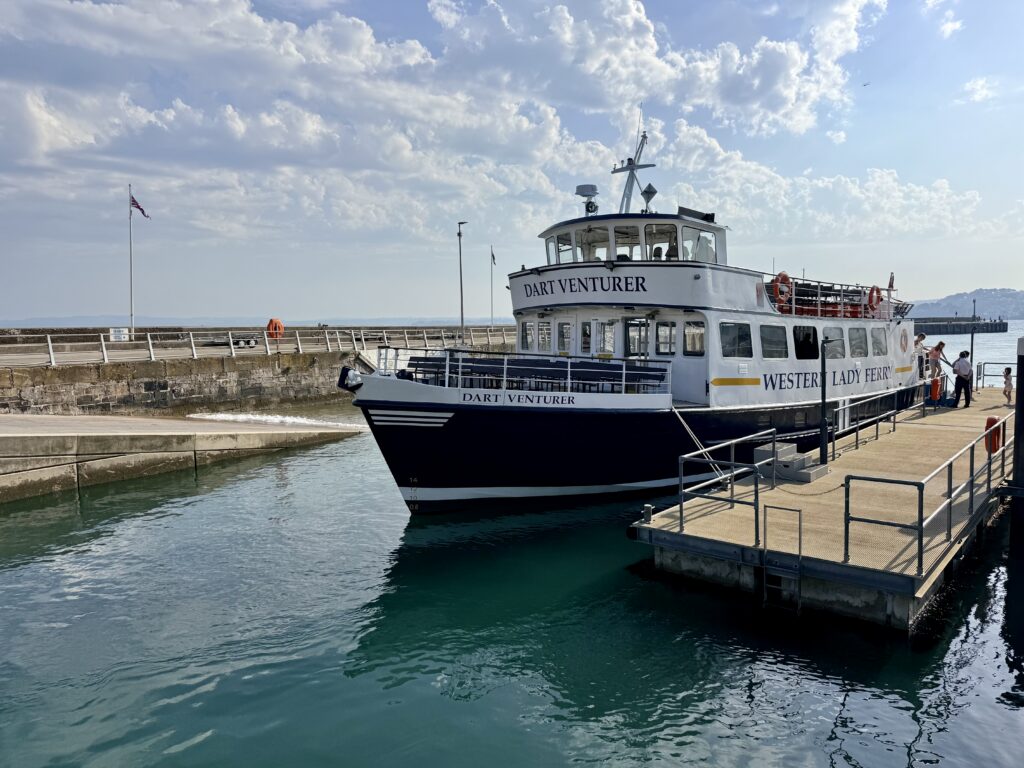
Exploring Tor Bay by boat is one of the best things to do in Torquay. Seasonal ferries and sightseeing cruises depart from Torquay Harbour, offering views of the English Riviera’s beaches, wooded headlands, limestone cliffs, and colourful harbours that cannot be properly appreciated from the road.
Depending on the route, you may pass Hope’s Nose, Thatcher Rock, Paignton, Berry Head and the entrance to the River Dart. Wildlife sightings can include seals, dolphins, porpoises and seabirds, although they are never guaranteed. Berry Head supports one of the largest breeding colonies of guillemots on the south coast of England.
What is the English Riviera UNESCO Global Geopark?
The English Riviera UNESCO Global Geopark covers Torquay, Paignton and Brixham, together with part of the surrounding seabed. Its rocks, caves, cliffs and coastal formations tell a geological story extending back more than 400 million years.
Seeing the Geopark from the water reveals how dramatically the landscape changes around the bay, from the Devonian limestone around Torquay and Berry Head to the red sandstone cliffs near Paignton. You can find further information on the English Riviera UNESCO Global Geopark website.
Catch the Western Lady Ferry to Brixham
If you take only one boat trip from Torquay, we recommend catching the Western Lady Ferry across the bay to Brixham. It is a simple, straightforward way to experience Tor Bay from the water without committing to a full sightseeing cruise.
The crossing takes approximately 30 minutes and includes light commentary pointing out places of interest along the way. Boats leave from Torquay Harbour and arrive at New Pier in Brixham.
Brixham is well worth exploring, with its working harbour, fish market, independent shops, cafés and colourful waterfront. You can return to Torquay by ferry or by bus, allowing you to see the coastline from two different perspectives.
The service operates seasonally, with several crossings normally available each day during the main holiday period. Tickets can be purchased from the harbour kiosks, although sailings remain dependent on weather and sea conditions.
Cruise from Torquay to Dartmouth
The Western Lady also operates selected Dartmouth day cruises from Torquay. These follow the coast past Brixham, Berry Head and the Coleton Fishacre estate before entering the River Dart and arriving in Dartmouth.
The excursion allows time to explore Dartmouth before returning by boat. An alternative Sea Train option combines the outward cruise with the passenger ferry to Kingswear, the steam railway to Paignton and a bus back to Torquay. These trips operate on selected dates and take most of the day, so planning is advisable.
The well-known Round Robin can also be joined by taking a bus from Torquay to Paignton. It combines the Dartmouth Steam Railway, a River Dart cruise and a scenic bus journey through the South Hams.
Accessible boat trips
Wetwheels Torbay operates scheduled and private trips from Torquay. Its specially adapted powerboat enables disabled and non-disabled passengers to experience the coastline together, including opportunities for wildlife watching and faster trips around the bay.
Walk the South West Coast Path
The South West Coast Path passes through Torquay and provides several excellent walks. The section towards Babbacombe takes in Meadfoot, Ilsham, limestone headlands and wooded coves, although repeated climbs make it more demanding than the distance suggests.
Heading south, walkers can follow the coast towards Paignton and Brixham. Urban sections around Torquay and Paignton give way to quieter cliffs, beaches and woodland. Good footwear is advisable, and cliff diversions should always be followed because this coastline is prone to erosion and landslips.
Torquay Town Centre, Harbour and Shopping

Torquay’s shopping and dining areas are spread across several parts of the town. The harbour is probably the best place to find bars, restaurants, cafés and the usual seaside gift shops. On the opposite side of the harbour, Torbay Road has amusement arcades, takeaways and other traditional resort businesses.
Fleet Walk and Fleet Street contain a mixture of independent businesses and familiar national chains. The lower part of Union Street offers a similar selection. Like many seaside shopping areas, it has a mixture of busy businesses, empty units and sections that can feel rather tired.
Some of Torquay’s most interesting independent shops, cafés and galleries are found away from the centre. Wellswood has a small but attractive selection of independent businesses, while St Marychurch and Babbacombe offer useful local shopping areas with plenty of places to stop for food or a drink.
Larger supermarkets, retail parks and out-of-town stores can be found around Newton Road, a short journey from the town centre by car or bus. Most everyday needs are well catered for within Torquay, and it is certainly possible to spend a few hours browsing. However, the town is better known for its harbour, restaurants, beaches and coastal scenery than for its main shopping streets.
What’s On in Torquay

Torquay has a varied events calendar covering theatre, live music, maritime celebrations, walking, food and seasonal festivals. These are some of the best annual events in Torquay and across the wider English Riviera.
English Riviera Airshow
Usually held around the end of May or beginning of June, the English Riviera Airshow is one of Torbay’s largest free events. Flying displays take place over the bay, with the main event area on Paignton seafront. The aircraft can also be seen from several locations around Torquay, although roads, car parks and accommodation become exceptionally busy.
English Riviera UNESCO Global Geopark Festival
The annual Geopark Festival celebrates Torbay’s internationally important coastline, geology, wildlife and heritage. Guided walks, fossil activities, exhibitions, creative workshops and outdoor experiences take place across Torquay, Paignton and Brixham.
English Riviera Walking Festival
The English Riviera Walking Festival offers guided walks around Torquay and the wider bay. Routes explore the South West Coast Path, local history, wildlife, geology and Agatha Christie’s connections with the area. Walks range from gentle town tours to more demanding coastal routes.
Torbay Royal Regatta
Based around the Royal Torbay Yacht Club and Torquay Harbour, the Torbay Royal Regatta brings several days of yacht racing to the bay. The event attracts a variety of racing classes and creates plenty of activity around the harbour and waterfront. The 2026 Torbay Regatta takes place from 21 to 24 August.
International Agatha Christie Festival
Torquay celebrates its most famous former resident each September with the International Agatha Christie Festival. Talks, performances, films, exhibitions and guided walks explore the author’s life, characters and connections with the English Riviera. The 2026 festival takes place from 12 to 20 September.
England’s Seafood Feast
England’s Seafood Feast celebrates locally landed fish and shellfish with special menus, tastings, demonstrations and dining experiences across Torquay, Paignton and Brixham. The 2026 festival runs from 21 September to 4 October.
Bay of Lights
The Bay of Lights runs from 28 November 2026 to 1 January 2027, bringing illuminated trails, festive displays, markets and seasonal events to the English Riviera during November and December. Torquay’s seafront illumination trail is one of the main attractions, making this a particularly good time for an evening walk around the harbour and Princess Gardens.

Theatre and live entertainment
The Princess Theatre hosts touring musicals, comedy, concerts and family productions throughout the year. Babbacombe Theatre offers a similarly varied programme, including tribute acts, comedians and seasonal shows. Smaller music events can also be found at venues around the harbour and town centre.
For the latest Torquay events, festivals and things to do, check our regularly updated What’s On in South West England guide.
Places to Visit Near Torquay
Torquay is one of the best bases for exploring South Devon. Paignton, Brixham and Dartmouth can be reached by bus or boat, while direct trains provide easy access to Teignmouth, Dawlish, Dawlish Warren, Exeter and several other destinations. A car is useful for rural attractions such as Haldon Forest and Dartmoor, but many of the most rewarding day trips are possible without one.
Paignton
Paignton is the easiest neighbouring resort to reach, with frequent trains and buses from Torquay. Seasonal boat services also operate around Tor Bay.
The town has a long sandy beach, pier and harbour, while nearby attractions include Paignton Zoo, Goodrington Sands and Splashdown Quaywest. Queen’s Park station is the starting point for the Dartmouth Steam Railway.
Brixham and Berry Head
Brixham is a colourful working fishing town wrapped around one of the busiest harbours in England. Attractions include the Golden Hind replica, independent shops, seafood restaurants and the coast path towards Berry Head National Nature Reserve.
The Western Lady Ferry provides a particularly enjoyable seasonal journey across the bay from Torquay. Alternatively, the 12 bus runs frequently between the two towns year-round.

Dartmouth and the Dartmouth Steam Railway
Dartmouth occupies a beautiful position beside the River Dart and is known for its harbour, castle, historic streets, independent shops and river cruises. Seasonal boats sail from Torquay, providing one of the most scenic ways to arrive.
Another option is to travel to Paignton and catch the Dartmouth Steam Railway to Kingswear. The heritage railway follows the coast through Goodrington and Churston before descending beside the River Dart. A short passenger ferry completes the journey from Kingswear to Dartmouth.
Totnes and the Round Robin
Totnes is a historic market town with a castle, independent shops, cafés, and a strong connection to local food, art, and alternative culture. Trains and buses operate from Torquay, although some rail journeys require a change at Newton Abbot.
For a more memorable day out, join the Dartmouth Steam Railway Round Robin from Paignton. This circular excursion combines a bus journey to Totnes, a cruise along the River Dart to Dartmouth, the passenger ferry to Kingswear and the steam railway back to Paignton. The order can vary according to tides and operating arrangements.
Greenway
Greenway was Agatha Christie’s much-loved holiday home and now belongs to the National Trust. The house contains family possessions and literary connections, while the gardens descend through woodland towards the River Dart.
The most attractive way to arrive is by seasonal ferry from Dartmouth or Dittisham. Greenway can also be reached on foot from Churston, but it is not immediately beside the steam railway, and the walk is several miles long. Visitors arriving by car should reserve a parking space in advance.
Teignmouth and Shaldon
Direct trains from Torquay make Teignmouth an easy day trip. The town has a long beach, a traditional pier, a promenade, an arts quarter, and an attractive position at the mouth of the River Teign.
A small passenger ferry crosses the estuary to Shaldon, where narrow streets, cafés and a sheltered beach create a quieter village atmosphere. More energetic visitors can continue towards Ness Cove or follow part of the South West Coast Path.
Dawlish and Dawlish Warren

Dawlish is known for its black swans, seafront gardens and railway running beside the coast. The journey from Torquay is an attraction in itself, with trains following the sea wall between Teignmouth and Dawlish.
Dawlish Warren lies slightly farther north and has a broad sandy beach, family attractions and an internationally important nature reserve at the mouth of the Exe Estuary. Both destinations have stations close to their main visitor areas.
Exeter
Exeter is easily reached by direct train from Torquay and provides a complete contrast to the coast. Highlights include Exeter Cathedral, the historic quayside, Royal Albert Memorial Museum, the medieval underground passages and shops around the High Street and Gandy Street.
Trains serve both Exeter St David’s and Exeter Central. Central is usually the more convenient station for the cathedral and city-centre shops.
Powderham Castle
Powderham Castle combines a historic family home with extensive grounds overlooking the Exe Estuary. Guided visits explore the castle’s interiors, while the estate also hosts seasonal events, concerts and family activities.
The castle is less than two miles from Starcross railway station. Visitors can walk from the station or connect with the number 2 bus, which stops near the entrance. Drivers benefit from free parking at the castle.
Haldon Forest Park
Haldon Forest Park has walking routes, cycle trails, viewpoints, children’s play areas and forest activities on the hills above Exeter. It is particularly good for families, cyclists and visitors looking for an active day away from the coast.
There is no convenient direct public transport from Torquay, so travelling by car is usually the simplest option. Parking charges apply.
Dartmoor National Park
Dartmoor lies around 40 minutes from Torquay by car and offers open moorland, wooded valleys, reservoirs, granite tors and historic villages. Haytor, Widecombe in the Moor, Bovey Tracey and Buckfastleigh are among the most straightforward destinations for a first visit.
Public transport into the national park is more limited and varies seasonally. A car offers the greatest flexibility, particularly if you want to combine several viewpoints and villages in a single day.
How to Get to Torquay and Travel Around

Torquay is surprisingly easy to visit without a car. The town can be reached by train, scheduled coach and local bus, while frequent public transport connects the main towns and attractions around Torbay. Seasonal ferries provide an even more enjoyable way to travel between Torquay and Brixham.
By train
Torquay train station is close to Torre Abbey Sands and the seafront. Local trains connect Torquay with Paignton, Newton Abbot, Exeter and Exmouth, while longer journeys may require a change at Newton Abbot.
The station has 66 parking spaces, including six accessible spaces. The platforms have level access from their respective entrances, but passengers who require assistance should check the arrangements for their complete journey.
Torre station serves the more inland part of town. It may be convenient for accommodation around Newton Road and Torre, but it is less useful for most seafront and harbour attractions.
By coach
Torquay is a long-established coach holiday destination, and several hotels welcome organised coach tours. National Express also operates scheduled services to Torquay from a selection of towns and cities. Routes and stopping points can change, so check the location shown on your ticket carefully.
By bus
Stagecoach route 12 connects Newton Abbot, Torquay, Paignton and Brixham, with buses advertised at intervals of up to 10 minutes during the main daytime service. Check the current timetable or Stagecoach Journey Planner before travelling.
Other local routes serve Babbacombe, St Marychurch, Wellswood, Cockington, Torbay Hospital and surrounding communities. Services also extend beyond Torbay to destinations including Dartmouth, Totnes, Teignmouth and Dawlish.
A Stagecoach Torbay DayRider provides unlimited travel within the selected ticket zone for one day. Tickets can normally be purchased through the Stagecoach app or from the driver using contactless payment. Group tickets and concessionary passes can make bus travel particularly affordable.
By car
Torquay is reached from Exeter and the M5 by following the A380 South Devon Highway. The road can become congested on summer Saturdays, bank holidays and major event weekends. Allow additional time when holiday accommodation changeovers coincide with beach and day trip traffic.
Driving is useful for reaching more rural parts of South Devon, but it is not always the easiest way to travel around Torquay itself. The harbour, seafront and town centre can become congested, while popular car parks may fill early during fine summer weather.
By air
Exeter Airport is approximately 26 miles from Torquay. Travelling by public transport normally involves taking a bus from the airport into Exeter and continuing by train or another bus. A taxi or pre-booked transfer is simpler but considerably more expensive.
Visiting Torquay without a car
Torquay and the wider Torbay area make an excellent car-free destination. Choose accommodation near the station, seafront, harbour or a frequent bus route and most major attractions will be within easy reach.
Trains and buses connect Torquay with Paignton, while the number 12 bus and seasonal Western Lady Ferry continue to Brixham. Babbacombe, St Marychurch, Wellswood and Cockington can also be reached by local bus. Some beaches and coves still involve steep paths, steps or hills after leaving the bus.
Walking, day tickets and concessionary passes can make public transport surprisingly affordable, particularly when compared with fuel and council parking charges of more than £11 for a full day. Travelling without a car also avoids the worst summer congestion and removes the need to find another parking space each time you move between attractions.
If your plans also include Babbacombe, Cockington, Paignton or Brixham, consider purchasing a bus day ticket. Torquay is one of those destinations where leaving the car behind can make the visit easier, cheaper and considerably more relaxing.
Parking in Torquay: A Quick Guide
Torquay has several council car parks, but the best choice depends on which part of town you plan to visit. Parking charges apply from 7am until midnight, including Sundays and bank holidays. Ordinary pay and display tickets cannot be transferred between council car parks.
Beacon Quay
Beacon Quay is convenient for Torquay Harbour, the marina, boat trips and waterfront restaurants. The published 2026 tariff is £3.40 for two hours, £6.10 for four hours and £11.30 for up to 17 hours.
Shedden Hill
Shedden Hill is useful for the seafront, town centre, Princess Theatre and Torre Abbey Sands. The published tariff is £1.90 for one hour, £5.70 for four hours and £11 for up to 17 hours.
Torre Valley
Torre Valley is convenient for Torre Abbey, the Riviera International Centre, Abbey Park and Torre Abbey Sands. The published tariff is £1.90 for one hour, £5.70 for four hours and £11 for up to 17 hours.
Union Square
Union Square is an inland option for the traditional town centre and Union Street. It has 397 spaces, with a published tariff of £1.80 for one hour, £5.40 for four hours and £9.90 for up to 17 hours.
Babbacombe and beach car parks
Smaller council car parks serve Babbacombe, Anstey’s Cove, Meadfoot Beach and Maidencombe. Parking is also available near Oddicombe Beach, although access roads and walking routes can be steep. These car parks often fill early during fine summer weather.
Visitors staying for several days may save money with a Torbay Council parking permit. Check the participating car parks carefully because not every permit is valid at every location.
Free parking in Torquay
There is very little free parking available in Torquay that is close to the harbour, beaches and town centre. However, possibilities include the area around Meadfoot Green, the road alongside Meadfoot Beach and stretches along Ilsham Marine Drive near Hope’s Nose and Kent’s Cavern.
Check the latest Torbay Council parking charges and permit prices before travelling, as tariffs and conditions can change.
Where to eat in Torquay

Torquay’s food scene extends well beyond traditional fish and chips and hotel dining. The harbour has the greatest concentration of restaurants and bars, while Wellswood, Babbacombe and St Marychurch offer quieter neighbourhood choices.
Seafood is one of the strongest reasons to eat locally. Fish landed around Tor Bay and at Brixham Fish Market appears on menus throughout the town, ranging from informal fish and chips to Michelin-starred dining.
Best for breakfast: Below Decks
Below Decks occupies a prominent position on Beacon Quay overlooking Torquay Harbour. Its breakfast menu, waterfront setting and convenient location make it an excellent place to begin a day around the harbour and seafront. It also serves lunch and dinner, with locally sourced seafood and moules and frites among its specialities.
For a larger, more informal breakfast, Brody’s Breakfast Bistro on Union Street is known for its self-service cooked breakfast and waffles. It is particularly suitable for visitors wanting a substantial breakfast before a full day of sightseeing.
Best for lunch: Below Decks and Meadfoot Beach Café
Below Decks is also a dependable lunchtime choice, particularly when the weather is suitable for sitting outside beside the harbour. Its menu offers seafood alongside burgers, salads and familiar favourites.
For something more relaxed, Meadfoot Beach Café combines light meals, refreshments and ice creams with views across the beach towards Thatcher Rock. Its opening hours can be seasonal and weather dependent, so check before making a special journey.
Other attractive daytime choices include Angels Tea Rooms beside Babbacombe Downs and the Babbacombe Bay Café, both of which are ideal for lunch, afternoon tea, or a cream tea with coastal views.
Best for families: Rockfish and Amici
Rockfish Torquay overlooks the inner harbour and specialises in fresh, sustainably sourced seafood. Its children’s menu, highchairs, baby-changing facilities, and relaxed atmosphere make it one of the easiest seafood restaurants to visit as a family. There is indoor seating and a small covered terrace overlooking the water.
Amici is another strong family choice near the harbour. This independent Italian restaurant serves pizza, pasta, grills and Mediterranean dishes, with separate children’s, vegan and gluten-free menus. Its broad selection is useful when feeding a family with different tastes.
Best for couples: The Orange Tree
The Orange Tree is tucked away a short walk from the harbour and serves modern British and European food from a seasonally changing menu. Its smaller dining room, attentive service, and quieter atmosphere make it particularly well-suited to couples.
Seafood lovers should also consider No 7 Fish Bistro, an intimate restaurant and wine bar near Beacon Terrace—the menu centres on fresh fish and shellfish from local boats and markets, accompanied by daily specials. Booking is strongly recommended.
Best for a special meal: The Elephant
The Elephant overlooks Torquay Harbour and remains the town’s standout choice for a special occasion. Run by chef Simon Hulstone and his wife Katy, it retained its Michelin star in the 2026 Michelin Guide, marking 21 consecutive years with a star.
The kitchen uses seasonal produce, including ingredients from the restaurant’s dedicated farm near Brixham. Although unmistakably fine dining, the atmosphere is intended to be relaxed and comparatively informal. Booking well ahead is essential.
The Orange Tree, No 7 Fish Bistro and the Restaurant at Orestone Manor are also worth considering for anniversaries, birthdays and quieter celebratory meals.
Best for fish and chips: Pier Point
Pier Point is beside the marina and offers restaurant dining and takeaway fish and chips with views across the bay. It was named Fish and Chip Shop of the Year at the Fishermen’s Mission Awards in 2025 and serves sustainably sourced fish, as well as vegetarian and vegan alternatives.
The Dressed Crab is a small, family-run seafood kiosk beside Torquay Harbour. It serves handpicked Devon crab, dressed crab, and crab sandwiches, alongside prawns, oysters, cockles, mussels, and whelks. Outdoor seating beside the water makes it an appealing choice for an informal seafood lunch in fine weather.
Rockfish Torquay is another good option if you prefer table service and want to explore a wider selection of locally landed fish. Its covered terrace overlooks the inner harbour, and the children’s menu makes it suitable for families.
Restaurant standards, menus and opening hours can change, particularly outside the main holiday season. TripAdvisor reviews are useful for checking recent customer experiences, but read a selection rather than relying on the overall ranking alone. Booking is advisable for popular restaurants during summer weekends, school holidays and major events.
Where to Stay in Torquay
Torquay has one of the largest selections of accommodation in South West England, ranging from large seafront hotels and traditional guesthouses to apartments, holiday parks and small luxury properties.
The best area depends on whether you want sea views, family facilities, nightlife, beaches or somewhere quieter. Torquay is hilly, so a hotel described as being close to the harbour may still involve a steep walk.
Best for sea views

The Imperial Torquay occupies a commanding position above the harbour, with some rooms overlooking Tor Bay towards Paignton and Brixham. It has an indoor pool, a health club, and a seasonal outdoor pool. The harbour is only a short walk away, although the return involves a short uphill section.
The Osborne Hotel overlooks Meadfoot Beach from the centre of the elegant Hesketh Crescent. Its grounds, terraces, tennis court and seasonal outdoor pool have excellent sea views. There is also an indoor pool, restaurant and free parking.
For something smaller and more luxurious, the Cary Arms and Spa occupies a dramatic position beside Babbacombe Beach. Its rooms, cottages and beach huts overlook the water, while the spa has a hydrotherapy pool facing the sea. Access by road is extremely steep.
Sea views are not guaranteed by the hotel’s location alone. Check the precise room description before booking, as inland and lower priced rooms may face gardens, car parks or neighbouring buildings.
Best for families

TLH Leisure Resort is one of Torquay’s strongest choices for families who want plenty to do without leaving the hotel. The resort comprises four hotels on a single site, with indoor and outdoor swimming pools, children’s pools, ten-pin bowling, soft play, games, entertainment, and organised activities. The Derwent is generally the liveliest and most family-focused of the four hotels.
Torquay Holiday Park is another practical family option. Its facilities include an indoor heated swimming pool with a waterslide, an adventure playground, a sports court, an amusement arcade, children’s activities, and evening entertainment. Its inland location makes a car or bus useful for reaching the seafront.
The Osborne Hotel also accommodates families, combining indoor and outdoor pools with easy access to Meadfoot Beach. Families who prefer a central hotel without extensive leisure facilities may find the Premier Inn Torquay Seafront more convenient.
Best for couples
Lincombe Hall Hotel and Spa is an adults-only hotel within walking distance of Torquay Harbour. Its spa includes a 15-metre indoor pool, a hydrotherapy pool, a sauna, steam facilities, and treatment rooms. A heated outdoor pool and hot tub normally operate during the warmer months.
The Orestone Manor near Maidencombe is a quieter country house hotel with views towards Lyme Bay. Its restaurant is highly rated, and some rooms have balconies or private hot tubs. The location is better suited to couples travelling by car or planning a peaceful break away from the town centre.
The Cary Arms and Spa is an excellent choice for a romantic coastal stay, particularly if sea views, spa treatments and direct access to the South West Coast Path are more important than proximity to Torquay Harbour.
Best hotels with swimming pools in Torquay

Torquay has an unusually good selection of hotels with pools:
TLH Leisure Resort offers the widest range of options for families, with indoor and outdoor pools and dedicated children’s areas.
Lincombe Hall Hotel and Spa is best for adults seeking a quieter spa break.
The Osborne Hotel has indoor and seasonal outdoor pools in grounds overlooking Meadfoot Bay.
The Imperial Torquay combines an indoor pool and health club with a seasonal outdoor pool overlooking the coast.
The Grand Hotel beside Torquay railway station also has indoor and seasonal outdoor pools. However, recent experiences at Torquay’s larger historic hotels can vary between rooms, so it is worth reading the newest reviews before booking.
Outdoor pools are normally seasonal. Check opening dates, children’s swimming times and whether access is included in your room rate.
Best budget hotels
Premier Inn Torquay Seafront is beside Torre Abbey Sands and close to the railway station, Riviera International Centre and seafront. It offers double, twin and family rooms, an adjoining restaurant and limited paid parking.
Premier Inn also has a hotel in Torquay Harbour, close to the waterfront, restaurants, and boat trips. It is more convenient for nightlife and the harbour, although parking is charged separately and the surrounding roads can be busy.
Travelodge Torquay is on Newton Road, farther from the seafront but convenient for Torre station, Torbay Hospital and visitors arriving by car or bus. It is often less expensive than accommodation beside the harbour, although prices increase sharply during school holidays and major events.
Independent guesthouses around Belgrave Road, Avenue Road and the railway station can offer better value than the national chains, particularly when breakfast and parking are included. Check recent reviews carefully on TripAdvisor and on sites such as Booking.com, as standards, accessibility, and room sizes vary considerably.
Best areas to stay
The harbour and town centre are best for restaurants, boat trips and nightlife, although evenings can be busy and parking is limited.
Torre Abbey and Belgrave Road are convenient for the railway station, beach, and Riviera International Centre, with numerous hotels and guesthouses.
Wellswood and Meadfoot offer quieter surroundings near Meadfoot Beach, Anstey’s Cove and the coast path. Babbacombe and St Marychurch suit visitors seeking clifftop views, family attractions and a calmer resort atmosphere.
Cockington provides a countryside setting, but accommodation and public transport options are more limited.
Before booking, check whether parking, breakfast and leisure facilities are included. Many older properties have limited parking or steep driveways. Railway travellers should also check walking gradients rather than relying on distance alone.
Torquay Weather and the Best Time to Visit
Torquay’s mild climate is an important part of its identity as the English Riviera. Tor Bay is sheltered from many prevailing winds, while surrounding hills offer some protection from weather approaching from the west.
The local microclimate supports the plants that give Torquay its distinctive appearance. The best known is the Torbay palm, found along the seafront, in public gardens and around older villas. It is actually a New Zealand cabbage tree, Cordyline australis, rather than a true palm.
The curved coastline, cliffs and wooded headlands create numerous sheltered locations. Even on windy days, Babbacombe Beach, Anstey’s Cove, Meadfoot Beach and the harbour can experience noticeably different conditions. Outside summer, a protected spot can feel surprisingly warm when the sun appears. Easterly winds and winter storms can, however, bring colder conditions, rough seas and heavy rain.
Summer offers the best chance of beach weather, boat trips and outdoor events, although July and August are the busiest and most expensive months. May, June and September are often better for walking, sightseeing and quieter breaks. Conditions on exposed headlands can feel considerably colder than forecasts suggest.
Winter is quieter but can still be rewarding. Kents Cavern, Torre Abbey and Torquay Museum provide all-weather options, while the harbour and coast remain enjoyable between spells of poor weather. Boat services, the cliff railway and some beach cafés operate reduced hours or close seasonally, so check before travelling.
Before setting out, check the latest Met Office forecast for Torquay and BBC Weather forecast, paying particular attention to wind speed and direction if you are planning a beach visit, coast walk or boat trip. The forecast temperature alone can be misleading around exposed headlands and sheltered coves. Walkers, swimmers and anyone exploring beaches should also consult ADMIRALTY EasyTide for the latest Torquay tide times, as the available beach area and safety of some coastal routes can change considerably between high and low tide.
Practical Information for Visiting Torquay
- 🛍️ Shops & supermarkets – National chains and independent shops can be found around Union Street, Fleet Walk, the harbour, Wellswood, Babbacombe and St Marychurch. Larger supermarkets and retail parks are situated along Newton Road and around The Willows.
- 🏥 Nearest hospital – Torbay Hospital, Lowes Bridge, Torquay TQ2 7AA. The Emergency Department is open 24 hours a day. Call 999 in a life-threatening emergency or use NHS 111 for other urgent medical advice.
- 🚔 Nearest police station – Torquay Police Station, South Street, Torquay TQ2 5AH. The public enquiry office is normally open from 8am until 5.30pm, Monday to Saturday, and closed on Sundays and bank holidays.
- 💊 Pharmacies – Pharmacies are available in the town centre and at neighbourhood shopping areas including Plainmoor, St Marychurch and Wellswood. Opening hours vary, particularly on Sundays.
- ✈️ Nearest airport – Exeter Airport is approximately 26 miles away. Travelling by public transport normally involves a connection through Exeter city centre, while taxis and pre-booked transfers provide a more direct option.
- 🚆 Railway stations – Torquay railway station is close to Torre Abbey Sands and the seafront. Torre station serves the inland part of town. Local trains connect Torquay with Paignton, Newton Abbot, Exeter and Exmouth.
- 🚌 Bus services – Stagecoach route 12 provides frequent connections between Newton Abbot, Torquay, Paignton and Brixham. Other useful services include route 22 for Wellswood, St Marychurch, Babbacombe and Dawlish Warren, and route 62 for Cockington.
- 🅿️ Car parks – Council and private car parks are available around the harbour, seafront and town centre. Beacon Quay is convenient for the harbour, Shedden Hill for the seafront and Torre Valley for Torre Abbey and the Riviera International Centre.
- ⛽ Petrol and EV charging – Petrol stations and public EV charging points are available around Torquay, with several situated along Newton Road and near larger supermarkets and retail areas.
- 💵 Banks and ATMs – Cash machines are available around Union Street, Fleet Walk, the harbour and larger supermarkets. The number of traditional bank branches is limited, so check before visiting if you need counter services.
- 📮 Post Office – Torre Post Office, 298 Union Street, Torquay TQ2 5QZ. Other smaller branches are available around the town. Check current opening hours and services before travelling.
- 🚻 Public toilets – Facilities are available near the harbour, seafront, Torre Abbey Sands, Meadfoot Beach, Babbacombe and several council car parks. Some are seasonal or have restricted opening hours.
- ℹ️ Visitor information – Torquay does not currently have a conventional town-centre visitor information office. Maps, attraction information and accommodation advice are available through the English Riviera’s official tourism website and at many hotels and attractions.
Other Helpful Links for Visiting Torquay
- Booking.com – for most accommodation needs. Look out for options that include free cancellation.
- EasyTide – Free UK tidal prediction service, providing tidal data and tide times for the current day and 6 days into the future.
- Expedia – good for flights and packages.
- GetYourGuide – find and book things to see. Includes unusual things to do.
- Hostelworld – Hostel-focused booking platform that fosters backpack connections.
- Met Office – Weather forecasts from the UK’s official meteorological office.
- National Express – UK-based coach operator providing long-distance bus services
- Omio – Book travel tickets by comparing trains, buses and planes in one search.
- Rental Cars – to search out and book hire cars.
- Rome2Rio – Great for comparing local transport options (and for locating bus stops).
- Ticketmaster – What’s On – Major Events – Venues – Bookings
- Trainline.com – our go-to online platform for booking train and bus tickets, offering route planning, price comparisons, seat reservations, and ticket sales.
- Traffic England – for live traffic updates on major roads.
- Traveline SW – Comprehensive public transport information from A to B by bus, coach, train, ferry in South West England and Great Britain.
- TripAdvisor – for reviews of… pretty much everything. Our go-to before booking anything.
- Vrbo – Great for self-catering and holiday home rentals.
Torquay FAQs
Is Torquay worth visiting?
Yes. Torquay offers beaches, harbour views, family attractions, boat trips, gardens and excellent coastal walks. It also makes a convenient base for exploring Paignton, Brixham, Dartmouth and the wider South Devon coast.
How long should you spend in Torquay?
Allow at least two or three days to explore the harbour, beaches, Babbacombe, Cockington and one or two major attractions. A longer stay provides time for boat trips and day visits to Brixham, Dartmouth, Totnes, Paignton and other parts of South Devon.
Is Torquay good for families?
Torquay is well suited to families. Popular attractions include Kents Cavern, Babbacombe Model Village, Bygones, Torre Abbey and the beaches around Tor Bay. The Riviera International Centre also has a leisure pool and soft play area.
Is Torquay suitable for couples?
Couples can enjoy harbour restaurants, boat trips, coastal walks and quieter stays around Meadfoot, Wellswood and Babbacombe. Cockington, Anstey’s Cove and the viewpoints around Hope’s Nose are particularly attractive places to explore together.
What can you do in Torquay when it rains?
Rainy-day attractions include Kents Cavern, Torre Abbey, Torquay Museum, Bygones, Babbacombe Model Village and the Riviera International Centre. The Princess Theatre and Babbacombe Theatre also provide year-round entertainment.
What are the best free things to do in Torquay?
Free things to do include exploring Torquay Harbour, walking through Princess Gardens, visiting Babbacombe Downs, discovering Cockington Country Park and following sections of the South West Coast Path. Torquay’s beaches are also free to visit, although parking and seasonal facilities may involve a charge.
What are the best beaches in Torquay?
Torre Abbey Sands is the most convenient central beach, while Meadfoot Beach has attractive views towards Thatcher Rock. Anstey’s Cove provides a more secluded setting, and Oddicombe and Babbacombe beaches lie beneath Babbacombe Downs.
Can you visit Torquay without a car?
Yes. Torquay railway station is close to the seafront, while local trains and buses connect the town with Paignton, Brixham, Newton Abbot, Exeter and surrounding communities. Local buses serve Babbacombe, St Marychurch, Wellswood and Cockington, and seasonal boats provide another way to explore Tor Bay.
Where is the best place to park in Torquay?
Beacon Quay is convenient for the harbour and marina, Shedden Hill serves the seafront and town centre, and Torre Valley is useful for Torre Abbey and the Riviera International Centre. Arriving early is advisable during summer weekends and major events.
When is the best time to visit Torquay?
May, June and September are good choices for milder weather and fewer crowds. July and August provide the widest choice of boat trips, events and family activities but are also the busiest months. Torquay can be visited throughout the year, although some coastal attractions operate reduced winter hours.
Is Torquay hilly?
Yes. The harbour, seafront and Princess Gardens provide relatively level walking, but many residential areas, beaches and attractions involve steep hills or steps. Visitors with limited mobility should check access information and consider using local buses between different parts of the town.
Is Torquay worth visiting?
We think so. Torquay combines traditional seaside attractions with beautiful beaches, a lively harbour and some of South Devon’s finest coastal scenery. For many visitors, it can be enjoyed year-round.
Families have attractions including Kents Cavern, Babbacombe Model Village, Bygones and Torre Abbey. Couples can enjoy harbour restaurants, boat trips and quieter stays around Meadfoot, Wellswood and Babbacombe. Walkers have direct access to the South West Coast Path, including routes towards Hope’s Nose and Anstey’s Cove.
The varied coastline is one of Torquay’s greatest strengths. Visitors can choose between Torre Abbey Sands, the sheltered Meadfoot Beach, the wooded Anstey’s Cove, and the beaches below Babbacombe Downs. There are also plenty of wet-weather attractions and free things to do, including harbour walks, gardens, beaches, Babbacombe Downs and Cockington Country Park.
Major events include the English Riviera Airshow, Torbay Royal Regatta and the Christmas Bay of Lights. Torquay also makes a practical base for exploring Paignton, Brixham, Dartmouth, Totnes, Exeter and the wider South Devon coast. Trains, buses and seasonal boats make a car-free visit entirely possible.
Let’s be honest, some parts of the town centre can feel tired, although ongoing regeneration is revitalising several areas with some success. Torquay’s steep hills may also prove difficult for some visitors. Even so, its beaches, attractions, coastal scenery and nearby destinations make Torquay well worth visiting for families, couples and walkers.
Over to you … have you recently travelled to South West England? What worked for you? What advice would you give to others? Please leave your comments below or join in the discussion in our Facebook Group.
New to South West England or returning after a while? Start with our ‘Travel Basics’ – quick guides packed with tips to help you plan your trip.

