Category: Devon

  • Things to Do in Cullompton, Devon: A Complete Visitor Guide

    Things to Do in Cullompton, Devon: A Complete Visitor Guide

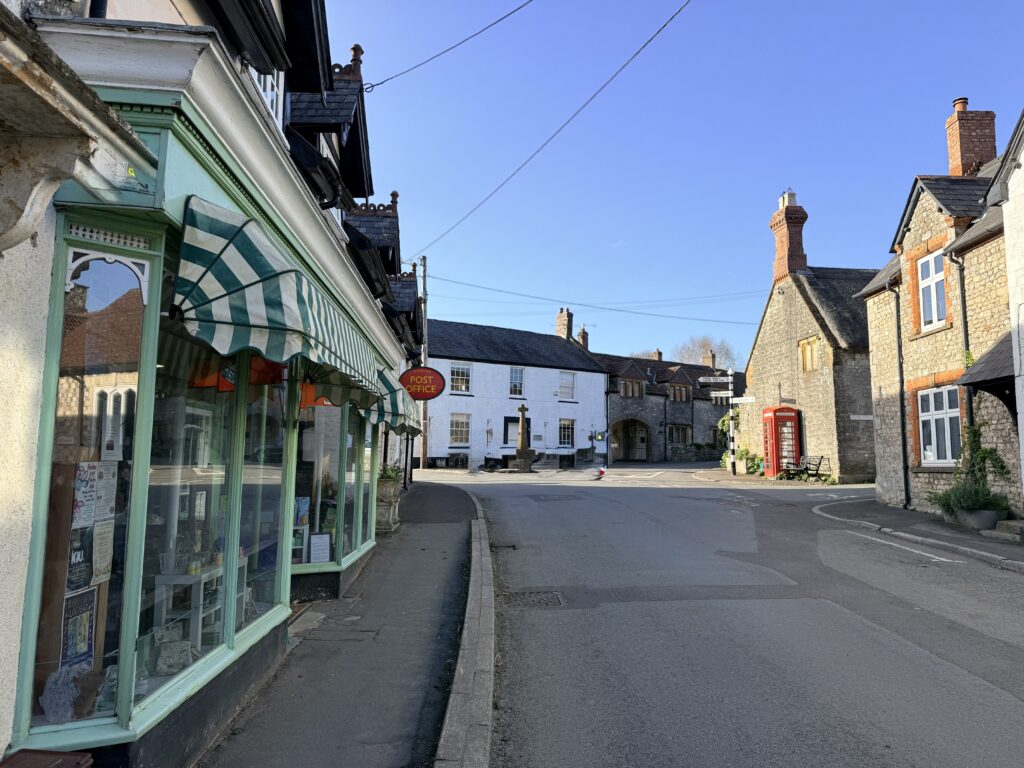
    Higher Bull Ring in Cullompton on a sunny morning, with winter trees, pedestrian space and historic buildings in the town centre.
    Higher Bull Ring, Cullompton

    Cullompton lies in the Culm Valley between Exeter, the Blackdown Hills and the Somerset border. Known by some as “Cully”, it is one of the oldest inland towns in Devon, with a history that stretches from a Roman fort on St Andrew’s Hill to a long tradition of markets, wool, craftsmanship and rural trade. Today, it combines historic buildings with modern housing, independent shops and easy access to both the M5 and the wider Mid Devon countryside.

    With just one main street, traffic through the town can be a bit hectic at times, but don’t let that put you off. Cullompton rewards anyone who stops for a proper look, even if it’s just for half a day. Spend a little longer, and you’ll quickly realise there’s far more here than you see from the road. St Andrew’s Church is one of the most impressive parish churches in the West Country; the heritage trail reveals centuries of industry and rebuilding, and the nearby lanes and riverside paths make it an easy place for short walks. With Coldharbour Mill, the Grand Western Canal and the Blackdown Hills National Landscape close by, the area also makes a comfortable base for exploring Mid Devon’s countryside and heritage.

    This guide introduces Cullompton, including its history, main sights, things to do, seasonal events, places to eat, and how to make the most of a visit to this busy Mid Devon market town.


    Map of Cullompton


    Disclosure: Some of the outbound links on this page are affiliate links to sites that we use and would genuinely recommend. Using them doesn’t cost you extra, but it does help support this free guide. We also provide links to other sites where we believe their inclusion may be helpful to you.


    The History of Cullompton, Devon: From Roman Fort to Market Town

    St Andrew’s Church in Cullompton, showing its tall 15th–16th-century tower and stone façade under a clear blue sky.
    St Andrew’s Church, Cullompton (Credit: ThisIsSouthWest)

    Cullompton has a history stretching back nearly two thousand years. Its position beside the River Culm and on important inland routes made it a natural place for people to settle, trade and defend.

    Roman Cullompton

    The earliest major chapter centres on a Roman auxiliary fort that once stood on St Andrew’s Hill. Archaeological work confirms that around five hundred soldiers were based here in the second half of the first century. The fort controlled a crossing of the River Culm and guarded the Roman road between Exeter and Somerset.

    Its ramparts were cut from turf and topped with a timber palisade. Inside stood barracks, workshops, granaries, a headquarters building and an annexe that likely included a bathhouse and officers’ quarters. A small civilian community developed close by, supplying the soldiers with goods and services.

    Saxon and Medieval Cullompton

    After the Romans left, the Culm Valley returned to agriculture. By the Saxon period, Cullompton had grown into a small but established settlement with a church, enclosed farmsteads and early field systems. The town name appears in many spellings, including Columtune, Colmpiton and Columpton. One tradition links the name to St Columba, said to have preached nearby, while another points to a meaning along the lines of “farmstead on the Culm”.

    Cullompton developed as a trading centre during the medieval period. A market was first granted in 1278, and in 1318 the town gained the right to hold a weekly market and annual fair under the authority of Buckland Abbey, which owned land and manorial rights in the area. This link explains why the Abbey’s abbot could later approve improvements within the town. In 1356, he authorised a watercourse to run through the centre and along parts of Fore Street, supplying fresh water to houses, courts and workshops. Remarkably, this system survived in an altered form until 1962.

    From the fifteenth century onwards, St Andrew’s Church was rebuilt, reflecting the prosperity brought by the wool and cloth trade. The Great West Tower, added in the sixteenth century, remains one of the tallest in Devon and is still one of Cullompton’s most recognisable landmarks.

    Wealth, Wool and Fire

    Front of the Manor House Hotel in Cullompton, a 1603 timber-framed merchant’s house with gabled façade on Fore Street.
    The Manor House Hotel, a 1603 merchant’s house on Cullompton’s Fore Street. (Credit: ThisIsSouthWest)

    For centuries, the town prospered through wool. By the nineteenth century, more than 500 looms were in use, and Cullompton became a centre for the production of serge, kersey, and other cloths. Other industries followed, including rope-making, bell-founding, leatherworking, and metal casting. Middle Mill Lane housed a foundry and axle works, which once handled large boilers and heavy castings brought through the town.

    Serge and kersey were two of the main woollen cloths produced across Mid Devon. Serge was a finer, twilled fabric with a smooth finish, often used for better-quality garments and exported widely from towns such as Tiverton. Kersey was a coarser, thicker cloth made from lower-grade wool and heavily fulled to give it warmth and strength. It was cheaper to make and commonly used for working clothes, blankets and everyday wear. These fabrics formed the backbone of Mid Devon’s textile trade for several centuries.

    Cullompton has experienced several major fires over the centuries. The most destructive occurred in 1839, when flames swept through Fore Street, destroying more than 100 buildings. The rebuilding that followed introduced slate roofs and altered the town centre’s appearance.

    Despite the fires and later redevelopment, Cullompton’s medieval street plan has largely remained intact. Narrow lanes run behind the main street and reward anyone who takes the time to explore, revealing former burgage plots, old workshops, small courtyards and hidden gardens. This tucked-away network gives the town centre much of its historic character.

    What were burgage plots?

    Burgage plots were the typical medieval town-house plots found across England. Each plot had a narrow frontage onto the main street, with a long strip of land running behind the house or shop. The front held the living space or business, while the rear was used for gardens, storage, workshops or small-scale industry. In Cullompton, the pattern of these long plots still survives in the lanes and courtyards that run off Fore Street.

    A Town of Fairs, Markets and Community Life

    Markets and fairs have always been part of local life in Cullompton. The Higher and Lower Bull Ring were once busy gathering points where cattle markets, Maypole dances, parades and, in earlier centuries, even bull baiting and cock fighting took place before such practices were outlawed. These open spaces played a central role in community life for generations, hosting everything from livestock sales to celebrations marking royal occasions.

    Livestock markets continued well into the late twentieth century and remained an essential part of the local farming economy. Today, Cullompton’s regular farmers market, still held at The Higher Bull Ring, continues that tradition in a modern form, bringing local meat, bread, produce and small food businesses into the heart of the town.

    Modern Cullompton

    Fore Street in Cullompton, Devon, with historic buildings and morning light on a clear day.
    Fore Street, Cullompton (Credit: ThisIsSouthWest)

    The arrival of gas lighting in the 1850s and electricity in 1920 helped move Cullompton into the modern era. The twentieth century brought new housing, small industries and better transport links. Rail travel played a key part in this. Cullompton once had its own station on the Bristol to Exeter main line, serving the town from the 1840s until its closure in 1964 as part of national cuts to smaller stations. For many years afterwards, the nearest stop was Tiverton Junction, a short distance to the south, which itself closed when Tiverton Parkway opened in 1986.

    Although Cullompton lost its direct rail connection, its position beside the M5 and its proximity to Tiverton Parkway have kept the town well linked to the broader region. Fast services from Parkway provide access to London Paddington, Bristol, the Midlands and the North. At the same time, ongoing discussions about restoring a station at Cullompton reflect the growing demand for improved local rail services.

    Today, the town continues to grow, with new homes, schools and community facilities developing around a centre that still reflects centuries of history. Cullompton’s position beside the M5 keeps it well connected. St Andrew’s Church, The Walronds and the wider historic core remain central to Cullompton’s identity, and quiet lanes lead quickly into nearby countryside. Mills, canals, farms and riverside paths offer easy days out, giving visitors and residents a balance of heritage, convenience and rural calm.


    What to See and Do in Cullompton

    St Andrew’s Church

    The Golgotha carving in St Andrew’s Church, Cullompton, showing the medieval skulls and bones sculpted from a single yew trunk.
    The Golgotha (Credit: ThisIsSouthWest)

    St Andrew’s Church is often described as one of the finest parish churches in the West Country. Its tall fifteenth and sixteenth-century tower dominates the town, while the interior preserves a remarkable collection of medieval and early modern craftsmanship. Look out for the richly painted rood screen, the carved bench ends, the early woodwork, and the Jacobean gallery above the south aisle.

    One of the most striking survivals is the Golgotha, a carved wooden Calvary scene made from a single yew trunk. It originally formed part of the medieval rood-screen ensemble above the chancel arch. The panel was removed in 1549 during the English Reformation, when rood screens and associated imagery were dismantled. It’s believed that the carving was thrown into the churchyard, later recovered, and preserved in two separate pieces. These halves were eventually rejoined and set back inside the church, where the Golgotha remains today as a rare, possibly unique, survival of its kind in an English parish church.

    A stained glass window designed by Edward Burne-Jones for Morris & Company adds further interest and connects the church to the nineteenth-century Arts and Crafts movement. Taken together, they show why St Andrew’s is so important to Cullompton’s story and why it continues to draw visitors who enjoy history and architecture.

    The Walronds

    Front view of The Walronds, Cullompton’s Grade I listed seventeenth-century townhouse.
    The Walronds, Cullompton. (Credit: ThisIsSouthWest)

    The Walronds is a Grade I listed early-seventeenth-century townhouse on Fore Street, rebuilt between 1603 and 1605 for a local lawyer, John Peter. It stands on one of Cullompton’s original burgage plots, which explains its generous footprint and wide frontage. Architecturally, it is one of the finest surviving examples of a high-status town house from this period in Devon, with original plaster ceilings, timber panelling, large fireplaces, jointed roof trusses and a traditional cross-passage layout that reflects how wealthy families lived and worked in the early 1600s.

    By the late twentieth century, the building had fallen into disrepair, but a long conservation effort led to a complete restoration and the house reopened in 2014. Today, the ground floor serves as a lively community venue, hosting exhibitions, craft markets, talks, workshops and seasonal events. The gardens and courtyard, once part of the house’s historic burgage plot, and usually open to the public, provide a peaceful green space close to the town centre, and are often used for outdoor activities and fairs.

    Today, The Walronds combines community use with private accommodation. The ground floor and gardens are open for events, workshops, and seasonal fairs, whilst the 5-bedroom garden flat is rented, which helps support the upkeep of this Grade I listed house. For visitors, it offers a rare chance to step inside a beautifully restored seventeenth-century townhouse and see how centuries of domestic history sit alongside modern community life.

    Cullompton Heritage Trail

    Woodland pond and riverside footpath near Cullompton in Mid Devon on a clear winter morning, with trees reflected in still water.
    The Mill Leat Walk (Credit: ThisIsSouthWest)

    Cullompton’s heritage trail runs through the town centre and nearby walks using a series of clear, well-presented boards to tell the town’s history. Many panels include old photographs showing Fore Street packed with livestock, procession banners, market stalls and everyday scenes that are hard to imagine in today’s traffic. Others highlight former mills, foundries and long-lost shops, explaining how the town grew, rebuilt and adapted over the centuries. Together, the boards give an easy, self-guided introduction to Cullompton’s past, revealing details of daily life and local crafts that you would otherwise walk straight past.

    Coldharbour Mill

    Just outside Cullompton at Uffculme, Coldharbour Mill is one of the oldest surviving woollen mills in the country and offers one of Mid Devon’s most enjoyable heritage experiences. The site was acquired by the Fox Brothers in 1797, and by 1799, a new mill was producing worsted yarn for markets across Britain and overseas. Much of the original layout remains, including the 1821 breast-shot waterwheel, one of the largest of its type still operating, and the later steam engines installed in the nineteenth century to support increased production.

    Spinning frames, combing machines, looms, and other traditional machinery have been preserved, and many still run on steam or waterpower during special event days. Regular demonstrations show how raw fleece was turned into cloth, giving visitors a clear sense of the mill’s role at the heart of the region’s textile industry. Exhibitions explore the working lives of mill employees and the impact of Fox Brothers across the South West.

    The wider site includes museum galleries, a shop selling yarn and woven goods, a café, and outdoor areas set around the restored mill pond and leat. Together, these features create a fascinating picture of industrial life from the early 1800s to the late twentieth century, making Coldharbour Mill an interesting place to visit for families, history enthusiasts and anyone interested in the region’s rural industries.

    Grand Western Canal Country Park

    Grand Western Canal (Tiverton Canal) at Sampford Peverell, Devon, with the towpath and village church reflected in the water on a cloudy winter day.
    Grand Western or Tiverton Canal at nearby Sampford Peverell (Credit: ThisIsSouthWest)

    Ten to fifteen minutes from Cullompton, the Grand Western Canal offers one of the easiest and most enjoyable days out in Mid Devon. The level towpath runs for fifteen miles from Tiverton to Lowdwells and suits walkers, cyclists and wheelchair users, with long, uninterrupted stretches beside the water. The canal is lined with reedbeds, hedgerows and wooded sections, making it a good place to spot kingfishers, herons, dragonflies and seasonal wildflowers. In season, kayak and canoe hire is available near Tiverton, and there are plenty of benches and picnic places along the route.

    In summer, traditional horse-drawn barge trips operate from Tiverton, giving visitors a gentle way to experience the canal’s slower pace. The canal country park also links with local footpaths and quiet lanes, making it easy to combine part of the towpath with circular walks around Halberton, Sampford Peverell and the surrounding farmland.

    The Stagecoach 373 bus between Tiverton, Sampford Peverell and Cullompton also makes one-way walks easy. You can follow the towpath in either direction and take the bus back to your starting point, opening up simple linear routes without retracing your steps.

    Blackdown Hills AONB

    The eastern side of Cullompton rises into the Blackdown Hills, an Area of Outstanding Natural Beauty noted for its peaceful ridgelines, wooded slopes, and broad views across the Culm Valley, the Somerset Levels, and East Devon. This landscape feels instantly more remote than the lowland fields around Cullompton, with quiet lanes, old field patterns, and pockets of heathland that give the area a distinctive character. Walkers can follow well waymarked routes to Culmstock Beacon, a historic hilltop lookout, and on towards the Wellington Monument, which stands high above the Somerset border.

    A network of shorter circular walks links farms, streams and open commons, making the hills suitable for leisurely half-day walks as well as longer outings. Villages such as Hemyock, Churchinford and Clayhidon add to the appeal with traditional pubs, small shops and relaxed country lanes ideal for slow exploration.

    Diggerland Devon

    For families, Diggerland Devon, just outside Cullompton, is one of the region’s most popular attractions. Set on a large outdoor site, it gives children and adults the chance to drive, ride and operate real construction machinery in a safe, supervised environment.

    Visitors can try mini diggers, dumpers and giant excavators, along with digger-themed rides that lift, spin or scoop. There are indoor play areas for younger children, a café for breaks between activities and picnic spots overlooking the grounds. The attraction works well in most weather and suits mixed-age groups, making it a popular choice for birthdays, school holidays and family days out from across Devon and Somerset.

    Bridwell Park Estate

    Just outside Uffculme, Bridwell Park Estate is a privately owned Georgian country house set within peaceful parkland. Its grounds include lakeside lawns, woodland paths and a small 19th-century chapel designed by Henry Clutton. In recent years, the estate has steadily opened up to the community, hosting seasonal markets, outdoor theatre, wellbeing events and creative workshops.

    When not closed for private functions, the parkland is open for gentle walks and relaxed visits, offering a calm, scenic setting only a short drive from Cullompton. The Orangery Café is open daily from 10:00 to 16:00, serving coffee, cakes, light lunches and teas. The wider estate grounds usually follow the same 10:00 to 16:00 opening hours, though occasional closures can occur for weddings or private hire, so it’s worth checking before travelling.

    The Antique Village

    The Antique Village, on the outskirts of Cullompton, brings together many independent dealers under one roof. It is a good place to browse furniture, vintage pieces, collectables and homeware at an unhurried pace, with stock changing regularly. The site includes a café for light lunches and refreshments, making it an appealing stop for anyone interested in antiques or second-hand finds.

    Devon Cookery School

    Located just outside Cullompton, Devon Cookery School offers practical, small-group cookery classes covering everything from bread and pasta to fish dishes, baking and world cuisines. The sessions focus on simple techniques, clear guidance, and ingredients that are easy to use at home, making it accessible even if you are not a confident cook.

    Classes are held in a rural setting with a relaxed, friendly atmosphere. You work through each stage at your own pace, learn a few valuable skills and finish by trying the food you have made. It is an enjoyable option on a quieter day, especially if you like structured activities or want to do something indoors. Visitors often combine it with time exploring Cullompton or a walk along the nearby countryside paths.


    Cullompton Town Centre and Shopping

    Cullompton’s town centre centres on Fore Street. It includes independent shops, bakeries, butchers, cafés and everyday services.

    Cullompton Farmers Market runs on the second Saturday of every month with producers from across Mid Devon and the wider area selling bread, cheese, vegetables, meat, sausages, preserves and seasonal goods. The market continues a tradition that stretches back to the thirteenth century.

    A supermarket on the edge of the town provides groceries and essentials, and small businesses on the local industrial estates carry on the town’s long history of manufacturing, trade and craft.


    Seasonal Highlights and Annual Events

    Cullompton’s event calendar reflects its strong sense of community.

    • Regular farmers’ markets throughout the year
    • Seasonal fairs and craft markets at The Walronds
    • Christmas events and winter markets in the town centre
    • Steam events and craft weekends at Coldharbour Mill
    • Outdoor shows and walking events across the Culm Valley

    The town also marks national events, and historic photographs show long traditions of parades, street parties and community celebrations.


    Getting There and Getting Around

    Tiverton Parkway railway station platform with a waiting train, station signs and winter trees under a cloudy sky.
    Tiverton Parkway (Credit: ThisIsSouthWest)

    By Train
    Cullompton does not (yet) have its own station, but Tiverton Parkway is less than fifteen minutes away and offers fast mainline services to London Paddington, Bristol, Birmingham and the Midlands. Regular buses on the Stageline 1, 1A and 1C routes link the station area with Cullompton, Tiverton and Exeter, and taxis are also available for quick connections.

    By Car
    Cullompton is beside the M5 at Junction 28, providing quick access to Exeter, Taunton, Bristol, and the wider South West. Taunton is about half an hour away by car, making it an easy link for shopping, services and onward rail connections. The A373 provides a direct route to Honiton and East Devon.

    By Bus
    Regular buses link Cullompton with Exeter and Tiverton along the main Culm Valley corridor, with frequent services on the 1, 1A and 1C routes. These provide reliable connections through Willand, Uffculme and the surrounding villages. The 373 offers an additional link between Cullompton and Tiverton, serving smaller communities along the way and stopping at Tiverton Parkway Station, which is helpful for onward rail travel. Services on the 373 are less frequent than the core 1-series routes, so checking the timetable before travelling is advisable.

    Connections towards Wellington and Taunton remain more limited and may require a change at either Tiverton or Exeter. Bus services to the smallest hamlets are often infrequent, especially in the evenings or on weekends, making planning important for anyone relying on public transport.

    Walking and Cycling
    The town centre is compact and easy to explore on foot, with short walks leading to the old mill leat and the River Culm, where level paths give a gentle introduction to the local landscape. Beyond the centre, the Culm Valley offers quiet lanes, riverside routes and easy access towards the Blackdown Hills. For longer outings, the Grand Western Canal towpath provides level cycling and walking that works well for families.


    Eating and Drinking

    Ploughman’s-style lunch plate with fresh bread, cheese, chutney and salad.

    Cullompton offers a modest but solid mix of cafés, pubs and small eateries — enough for relaxed lunches, informal dinners or a cosy pint. Independent spots such as The Bakehouse are popular for breakfasts, light lunches, evening meals and homemade cakes.

    The Weary Traveller, once a railway hotel, is a long-standing choice for hearty pub dishes, Sunday roasts and a family-friendly atmosphere. For a simple sit-down meal, there’s Al Dente Restaurant, a local Italian eatery.

    Several village pubs around Cullompton are well worth the short drive. The Ashill Inn is consistently praised for its food and friendly atmosphere. The Keepers Cottage Inn at Kentisbeare offers traditional pub classics in a traditional setting, and The Merry Harriers at Westcott is a welcoming rural pub known for generous portions and a relaxed feel. These smaller village inns give visitors a taste of Mid Devon’s quieter countryside and make good options for an evening meal close to Cullompton.


    Where to Stay

    The Waterloo Cross pub near Sampford Peverell in Mid Devon, a popular stop close to Tiverton Parkway, shown with its stone exterior, moss-covered roof and outdoor seating.

    Cullompton and the surrounding area offer a broad mix of hotels, pubs with rooms, B&Bs and holiday parks, with options for both quick stopovers and longer breaks.

    In and around the town, Padbrook Park Hotel is one of the main places to stay, with modern rooms, parking and easy access to the M5, making it popular for business trips and short breaks. A little further out on the old A38, Waterloo Cross combines a pub, restaurant and rooms close to Junction 27, which suits travellers breaking a longer journey to or from the South West of England.

    For simple overnight stops close to the motorway and mainline rail services, Travelodge Tiverton at the M5 services by Junction 27 is around ten to fifteen minutes from Cullompton and Tiverton Parkway. It is a practical choice if you need an early train or a straightforward night on the road.

    If you prefer village pubs with rooms, the Butterleigh Inn in the nearby hamlet of Butterleigh offers a classic country pub stay with food, local ales and B&B accommodation in a quiet rural setting. Further into the countryside, Forest Glade Holiday Park, between Cullompton and Honiton, offers caravans, camping pods, and touring pitches in a forest clearing on the Blackdown Hills, with an indoor pool and family-friendly facilities well-suited to longer stays.

    Together, these and other options give you a choice between town convenience, motorway access and peaceful rural retreats, all within a short drive of Cullompton.


    Weather in Cullompton

    Cullompton has a mild climate with relatively warm summers and gentle winters. Rain is possible year-round, particularly on the slopes of the Blackdown Hills. Spring and early autumn are good seasons for walking, and the valley offers shelter even on cooler days.

    For an up-to-date forecast, check BBC Weather or the Met Office.


    Cullompton Practicalities

    🛍️ Shops & supermarkets – a mix of independents on High Street and Fore Street, plus larger supermarkets on the edge of town.

    🏥 Nearest hospital – Minor Injuries Unit at Tiverton Hospital; full A&E at Royal Devon & Exeter (Wonford). Call 999/112 for emergencies, 111 for advice.

    🚔 Police – served by Devon & Cornwall Police. Call 999/112 for emergencies, 101 for non-emergencies.

    💊 Pharmacies – Cullompton Pharmacy on Station Road for prescriptions and health advice.

    🍽️ Restaurants – small selection of cafés, pubs and local eateries in town and nearby villages.

    ☕ Cafés & tea rooms – independent coffee shops offering breakfasts, light lunches and homemade cakes.

    🍺 Pubs & bars – options in town and surrounding villages, including traditional inns, gastro-style pubs and family-friendly venues.

    ✈️ Nearest airport – Exeter Airport (approx. 20–25 minutes by car, traffic dependent).

    🚆 Railway – Tiverton Parkway (10–15 minutes away) for fast services to London, Bristol, Birmingham and the North.

    🚌 Buses – regular buses link Cullompton with Exeter, Tiverton, Wellington and Taunton; village services operate but vary in frequency.

    🅿️ Car parks – short- and long-stay parking in the town centre; additional parking at supermarkets for customers.

    ⛽ Petrol & EV charging – fuel stations in town and at Cullompton Services, Junction 28; EV charging at Cullompton Services.

    💵 Banks & ATMs – cash machines available in the town centre and at local supermarkets.

    📮 Post Office – located centrally for letters, parcels and bill services.

    🛏️ Hotels & B&Bs – Padbrook Park Hotel, Waterloo Cross, local B&Bs and countryside stays nearby; Travelodge at Junction 27 for budget stops.

    🚻 Public toilets – available in the town centre (check local signage for opening times).

    🚶 Visitor information – available online via Visit Mid Devon and at local heritage sites such as The Walronds.

    • Booking.com – for most accommodation needs. Look out for options that include free cancellation.
    • Easy Tide – Free UK tidal prediction service, providing tidal data and tide times for the current day and 6 days into the future.
    • Expedia – good for flights and packages.
    • Get Your Guide – find and book things to see. Includes unusual things to do.
    • Hostelworld – Hostel-focused booking platform that fosters backpack connections.
    • MetOffice – Weather forecasts from the UK official meteorological office.
    • National Express – UK-based coach operator providing long-distance bus services
    • Omio – Book travel tickets by comparing trains, buses and planes in one search.
    • Rental Cars – to search out and book hire cars.
    • Rome2Rio – Great for comparing local transport options (and for locating bus stops).
    • Ticketmaster – What’s On – Major Events – Venues – Bookings
    • Trainline.com – our go-to online platform for booking train and bus tickets, offering route planning, price comparisons, seat reservations, and ticket sales.
    • Traffic England – for live traffic updates on major roads.
    • Traveline SW – Comprehensive public transport information from A to B by bus, coach, train, ferry in South West England and Great Britain.
    • TripAdvisor – for reviews of… pretty much everything. Our go-to before booking anything.
    • Vrbo – Great for self-catering and vacation holiday home rentals.

    Cullompton FAQs

    Where is Cullompton?

    Cullompton is in Mid Devon, close to Junction 28 of the M5. It sits between Exeter and Taunton, with the River Culm running through the town.

    Does Cullompton have a railway station?

    No. The former station closed in the 1960s. Tiverton Parkway, about ten to fifteen minutes away, provides fast services to London, Bristol, Birmingham and the North.

    How do I get from Tiverton Parkway to Cullompton?

    Regular buses link Tiverton Parkway with Cullompton, and taxis are available at the station. The journey usually takes around fifteen minutes.

    Does Cullompton have a market?

    Yes. Cullompton Farmers’ Market runs twice a month on Saturday mornings and features local produce, baked goods, ready-to-eat food and small local traders.

    What is there to see in Cullompton?

    Key highlights include St Andrew’s Church, The Walronds, the historic High Street, the town’s narrow lanes and access to the river and mill leat. Coldharbour Mill and the Grand Western Canal are close by.

    Is Cullompton good for walking?

    Yes. The town centre is walkable, and nearby routes follow the River Culm, the mill leat and quiet lanes. Longer options lead into the Blackdown Hills and towards Culmstock Beacon.

    Are there family attractions nearby?

    Several. Diggerland Devon is just outside the town, and the Devon Railway Centre and Coldharbour Mill are within a short drive.

    Where can I park in Cullompton?

    Town-centre car parks sit close to High Street and Fore Street. Additional shopper parking is available at supermarkets. Spaces can fill quickly at busy times.

    Does Cullompton have good bus links?

    Yes. Buses connect the town with Exeter, Tiverton, Wellington and Taunton. Services to smaller villages run less frequently, so checking timetables is helpful.

    Is Cullompton on the M5?

    Yes. The town is beside Junction 28, giving easy access to Exeter, Taunton, Bristol and the wider South West.

    Are there places to eat in Cullompton?

    Cafés and pubs serve breakfasts, hot meals, Sunday roasts and local produce. More dining options are available in neighbouring villages and in Exeter, twenty minutes away.

    When is the best time to visit?

    Spring and summer suit countryside walks and canal trips. Autumn colours the Exe and Culm valleys, while winter brings quiet lanes and cosy pubs.

    Is Cullompton good for history lovers?

    Yes. The town has a medieval street pattern, several listed buildings, and one of Devon’s most impressive parish churches. The Walronds and Coldharbour Mill add depth to the story.


    Final Thoughts

    Our family links to Cullompton mean we have spent time here and know the town. Its history is easy to see, from the medieval street layout and narrow back lanes to the landmark tower of St Andrew’s Church. The centre is compact and straightforward to explore, with everyday shops, cafés and regular community events.

    Cullompton’s location is another reason we appreciate it. The River Culm, the mill leat and nearby fields are only a short walk from the high street, and the Grand Western Canal and the Blackdown Hills provide quick access to longer walks and cycle routes. It is also a practical base for local travel, with the M5 close by and Tiverton Parkway offering fast rail services.

    The farmers’ market, local pubs and village cafés in nearby communities add to the area’s appeal. Overall, Cullompton offers proper facilities, a strong sense of its past, and easy access to the countryside, making it a place we return to often.


    Over to you … have you recently travelled to South West England? What worked for you? What advice would you give to others? Please leave your comments below or join in the discussion in our Facebook Group.

    New to South West England or returning after a while? Start with our ‘Travel Basics’ – quick guides packed with tips to help you plan your trip.

    ThisIsSouthWest.com logo showing a golden map of South West England with a sun icon on a blue background and the tagline “Discover South West England”.
  • Things to Do in Mid Devon, England: A Complete Visitor Guide

    Things to Do in Mid Devon, England: A Complete Visitor Guide

    Woodland pond and riverside footpath near Cullompton in Mid Devon on a clear winter morning, with trees reflected in still water.
    Mid Devon – Cullumpton (Credit: ThisIsSouthWest)

    Mid Devon is an inland district of green hills, river valleys and traditional market towns between Dartmoor, Exmoor and the Somerset border. It is one of the quieter corners of the South West, with a strong farming heritage, historic estates and good connections to Exeter, Taunton and the wider region.

    This is an ideal area for slow travel. You will find pannier markets, riverside footpaths, thatched villages and National Trust houses such as Knightshayes and Killerton, along with wooded valleys and farmland where life still feels firmly rural.

    Walkers and cyclists can follow quiet lanes and riverside paths through the Exe, Culm and Creedy valleys, linking hamlets, green fields and wildlife-rich meadows. History-lovers are well served too, with medieval estates, Civil War stories, one of Britain’s best-preserved textile mills and small towns full of churches, manor houses and mills.

    This guide introduces the main landscapes and towns at the heart of Mid Devon, including Tiverton, Crediton, Cullompton, Uffculme, Bradninch and Bampton, and suggests things to do, where to stay and how to make the most of a few slow days in the middle of Devon.

    Where is Mid Devon?

    Mid Devon lies between the Blackdown Hills to the east and the uplands of Dartmoor and Exmoor to the west and north. The Exe Valley runs roughly north–south through the district, with the Culm and Creedy valleys branching east and west.

    The district stretches:

    • From the farmland around Crediton in the west to Cullompton and the Culm Valley in the east
    • From the fringes of Exmoor in the north to the outskirts of Exeter in the south

    You will see a mix of river valleys, wooded slopes and open hill country, with distant views to both the Exmoor and Dartmoor National Parks. Mid Devon is still firmly rural, with farms, hamlets and traditional market towns, but it is easy to reach both the north and south coasts for day trips.

    Getting here is straightforward. The M5 runs along the south-eastern edge of the district, the A30 and A377 cross the southern and western borders, and the A361 North Devon Link Road cuts across the northern side towards Tiverton and Barnstaple. Tiverton Parkway at Sampford Peverell offers fast rail services to London Paddington, Bristol and the Midlands, while the Tarka Line serves Crediton with connections to Exeter, Barnstaple and Okehampton.


    Map of Mid Devon


    Disclosure: Some of the outbound links on this page are affiliate links to sites that we use and would genuinely recommend. Using them doesn’t cost you extra, but it does help support this free guide. We also provide links to other sites where we believe their inclusion may be helpful to you.


    Ten Key Facts About Mid Devon

    • Mid Devon covers about 357 square miles, making it one of Devon’s largest rural districts.
    • Its population is around 82,900 residents (2021 Census) with a density of roughly 94 people per km², compared with the England average of about 434 people per km².
    • Tiverton is the largest town, followed by Cullompton and Crediton.
    • The Grand Western Canal at Tiverton is a twenty-four-kilometre country park and heritage waterway.
    • The Exe, Culm and Taw rivers shape much of the landscape, creating green valleys and wildlife corridors.
    • National Trust highlights include Knightshayes, Killerton and Ashclyst Forest.
    • Coldharbour Mill in Uffculme is one of Britain’s oldest continuously working woollen mills.
    • Crediton is linked to Saint Boniface, the Anglo-Saxon missionary born here in the seventh century.
    • Mid Devon’s villages include Bradninch, Bampton, Hemyock, Uffculme, Willand and Sampford Peverell.
    • The district borders both Dartmoor and Exmoor, offering easy access to two National Parks.

    From Roman roads to railway age: A brief history of Mid Devon

    Tree-topped motte of the Norman motte-and-bailey castle above Bampton, Devon, on a cloudy winter day.
    Motte-and-bailey castle above Bampton, Devon (Credit: ThisIsSouthWest)

    Mid Devon’s landscape has been shaped by farming, trade, and transport for almost 2,000 years. Old routes, estate boundaries and mill sites still influence how the countryside looks today.

    Romans

    The Romans built strategic roads across what is now Mid Devon, including a route from Exeter (Isca Dumnoniorum) towards North Tawton (Nemetostatio) and the Taw Valley. The exact road surface has gone, but long straight alignments in lanes and parish boundaries still follow the Roman line around Upton Pyne, Newton St Cyres, Crediton and North Tawton.

    Finds near Bickleigh, Crediton, and Upton Pyne suggest a network of small farmsteads and fields supplying food and materials to Roman Exeter rather than large towns or forts within Mid Devon itself.

    Saxon

    By the Saxon period, the fertile valleys of the Exe, Culm and Taw supported a growing pattern of farmsteads, small churches and early market settlements. Many villages began as clusters of halls and enclosures near river crossings or tracks before evolving into the parishes seen today.

    Crediton grew around an influential Christian community in the seventh century and became one of the key religious centres of early Devon, associated with Saint Boniface. It served as the seat of the Devon bishopric until the see moved to Exeter in the eleventh century.

    Across the district, place-names ending in -ton, -combe, -worthy and -ford, along with long-established field boundaries and churchyards, still echo this Saxon landscape.

    Medieval Mid Devon

    Stone tower and medieval buildings of Tiverton Castle in Devon, with winter foliage and cloudy skies.
    Tiverton Castle, Devon (Credit: ThisIsSouthWest)

    During the medieval period, powerful landowners consolidated large estates across the Exe, Culm and Taw valleys. Their legacy survives in field patterns, parish boundaries and manor houses.

    Tiverton Castle, founded in the early twelfth century, became a major stronghold and later passed to the Courtenay family, Earls of Devon, who dominated local landholding for centuries. Bradninch developed as a manorial borough under the Duchy of Cornwall, a status it retains.

    Villages such as Uffculme, Hemyock and Sampford Peverell grew around agriculture, small-scale cloth production and water-powered milling, setting the stage for the textile industries that followed.

    Textiles and early industry

    From the sixteenth century onwards, wool and textiles became central to Mid Devon’s economy. The damp climate and fast-flowing rivers suited fulling, dyeing and finishing cloth, and by the early modern period, the Exe, Culm and Taw valleys were lined with mills and workshops.

    Coldharbour Mill in Uffculme is the best-preserved reminder of this period. Established by Fox Brothers in 1799, it later expanded into a substantial Victorian factory complex. Today it operates as a working museum, with original machinery and a mill leat that still drives the historic waterwheel on selected days.

    19th Century

    Grand Western Canal (Tiverton Canal) at Sampford Peverell, Devon, with the towpath and village church reflected in the water on a cloudy winter day.
    Tiverton Canal (Credit: ThisIsSouthWest)

    By the nineteenth century, improved transport links began to connect Mid Devon more directly with national markets. Coaching roads were upgraded, and the Grand Western Canal opened in the 1830s to carry limestone, coal, timber and agricultural produce between Tiverton and Somerset. It never reached its planned terminus in Exeter but became an essential local freight route.

    Railways followed soon after. The Exeter–Crediton line linked local farms and textile centres with Exeter and Barnstaple, and the main line near Tiverton (now served by Tiverton Parkway) brought fast services to Bristol, London Paddington and the Midlands. Branch lines through the Culm Valley connected communities such as Uffculme and Hemyock to the broader network.

    Beeching and beyond

    The Beeching (railway) cuts of the 1960s struck Mid Devon. The Culm Valley line closed; passenger services on the Exeter–Crediton–Okehampton route were withdrawn (since reversed with the reopening of the Dartmoor Line), and smaller stations along the main line shut.

    Many former railway corridors returned to farmland or became quiet tracks and footpaths. Today, Tiverton Parkway and Crediton, supported by local bus services, carry most of the district’s rail demand and play a key part in its modern connectivity.

    Modern Day Mid Devon

    Crediton railway station in Devon at dusk, showing the platforms, period station buildings and trackside sign.
    Crediton Station (Credit: ThisIsSouthWest)

    Modern Mid Devon combines rural tranquillity with practical connections and active community life. The district is still one of the most rural parts of Devon, but its towns and many villages have adapted to changing patterns of work and travel.

    Tiverton, Cullompton and Crediton act as the leading service centres, with independent shops, pannier markets, schools and leisure facilities. Surrounding villages retain their own identities and community events, from fairs and fêtes to local produce markets.

    Agriculture remains important, with dairy herds, beef cattle, orchards and arable fields alongside smaller smallholdings. The local economy now also includes food and drink producers, engineering, creative businesses, tourism and a growing number of home-based enterprises. The district attracts families, commuters and people looking for more space within reach of Exeter, Taunton and the M5 corridor.

    Outdoor leisure is a significant part of everyday life. Residents and visitors use the Grand Western Canal Country Park, the Exe and Culm valleys and the web of footpaths and quiet lanes that link farms, woods and villages. Cycling, walking and wildlife watching are easy to fit into a short break.

    Recent years have brought renewed focus on transport and sustainable growth. Development around Cullompton, improvements to bus routes, and the reopening of the Okehampton rail link all help strengthen Mid Devon’s wider connections. Planning policy now has to balance new housing and infrastructure with the protection of green spaces and the character of long-established communities.

    Medieval street patterns, mills, churches and manor houses still sit alongside newer housing and modern businesses across the district. This mix of long history and steady, low-key change is one of the things that gives Mid Devon its particular character.


    Mid Devon Towns and Villages

    Tiverton

    Tiverton Pannier Market in Devon, showing the covered stalls and clock tower on a cloudy day.
    Tiverton Pannier Market (Credit: ThisIsSouthWest)

    Tiverton is the largest town in Mid Devon, set above a bend in the River Exe. It has a compact centre with a mix of independent shops, cafés and services around Fore Street and Gold Street, as well as a covered pannier market that hosts regular markets and special events.

    The main historic sights are Tiverton Castle, with its medieval and later buildings, and the Tiverton Museum of Mid Devon Life, which covers local farming, textiles, lace-making and everyday life. Just outside the town, Knightshayes is a striking Victorian country house with extensive gardens, walks and views.

    The Grand Western Canal runs from the edge of Tiverton into open countryside, with a level towpath, hire boats, a floating café-bar and regular wildlife sightings. Together, the town and canal make Tiverton an excellent base for exploring central and northern Mid Devon.

    Crediton

    Crediton lies west of Exeter on the A377 and feels like a classic Devon market town, with red-brick and stone buildings climbing a gentle hill. Its parish church, Holy Cross, is one of the most impressive in the county and has strong links with Saint Boniface.

    The town’s streets hold a good mix of small shops, cafés, bakeries and traditional pubs. A regular farmers’ market, Crediton Farmers Market brings in local produce from the surrounding countryside, and the town has an active calendar of community events.

    Crediton is also an important rail hub for this part of Devon. It sits on the scenic Tarka Line towards Eggesford and Barnstaple and on the route west towards Okehampton and Dartmoor. This makes it a practical choice if you prefer to explore by train rather than by car.

    Cullompton

    Fore Street in Cullompton, Devon, with historic buildings and morning light on a clear day.
    Cullompton, Devon (Credit: ThisIsSouthWest)

    Cullompton is one of the oldest settlements in the Culm Valley, with roots going back to Saxon times. Its historic core developed around the wool and leather trades, supported by mills on the River Culm.

    Today, the town has a compact high street with independent shops, cafés and bakeries. St Andrew’s Church dominates the centre and is noted for its late-medieval carvings and impressive tower. The Walronds, a restored seventeenth-century house and Grade I listed building, now hosts community events, exhibitions and small markets.

    Cullompton sits very close to the M5, making it convenient for overnight stops and short breaks that combine Mid Devon’s countryside with day trips into Exeter, the Blackdown Hills and towards the Jurassic Coast. Planned improvements to rail connectivity should strengthen its role as a gateway between Mid and East Devon.

    Uffculme and Coldharbour Mill

    Coldharbour Mill in Uffculme, Devon, showing the historic brick mill buildings, tall chimney and footbridge over the mill leat on a cloudy day.
    Coldharbour Mill, Uffculme (Credit: ThisIsSouthWest)

    Uffculme lies near the Somerset border on the River Culm. The village centres on a small square, narrow lanes and a mix of stone and thatched cottages, giving it a traditional Mid Devon feel.

    On the edge of the village, Coldharbour Mill is one of the best-preserved woollen mills in Britain. It now operates as a working museum, with original machinery, steam days, exhibitions and family-friendly trails around the site and mill leat.

    Riverside paths and quiet lanes link Uffculme with neighbouring villages and open countryside. From here it is easy to reach Willand, Hemyock and the Blackdown Hills for longer walks and scenic drives.

    Bradninch

    Bradninch is a small town with long-standing links to the Duchy of Cornwall. Its older streets, church and estate buildings cluster on a hillside overlooking the Exe Valley countryside.

    Quiet lanes lead from the town into farmland and orchards, with footpaths offering views towards Killerton and the Exe Valley. Just a short drive away, the National Trust’s Killerton House Estate and the surrounding Ashclyst Forest provide extensive walks, gardens and family-friendly trails.

    Sampford Peverell and Tiverton Parkway

    View of Sampford Peverell, Devon, with hillside farmhouse and fields where a medieval castle once stood until the 14th century, now with no visible remains.
    Sampford Peverell – a Medieval Castle once stood on this hillside. (Credit: ThisIsSouthWest)

    Sampford Peverell sits beside the Grand Western Canal (Tiverton Canal), with stone cottages, a historic church and a peaceful, rural atmosphere. The towpath runs past the village and offers level walking and cycling towards Tiverton, Halberton and Lowdwells, with frequent views of boats, birds and open fields.

    Tiverton Parkway station lies just outside the village and provides fast mainline connections to Bristol, London Paddington, Birmingham and beyond. With a village shop, pub and easy access to the M5, Sampford Peverell suits visitors who want good transport links but a quiet place to stay.

    Bampton

    View over Bampton in Devon, showing hillside cottages, the town centre and surrounding wooded valleys on a cloudy winter day.
    Bampton, Devon (Credit: ThisIsSouthWest)

    Bampton stands on the southern edge of Exmoor, where wooded valleys meet rolling farmland. The small town has a friendly high street lined with pubs, cafés, independent shops and local services.

    Its best-known event is the Bampton Charter Fair, held each autumn and dating back to the thirteenth century. The fair has shifted from livestock to crafts, music and street entertainment, but it still reflects the town’s strong community spirit.

    Footpaths from Bampton lead along the River Batherm and up into the surrounding hills, with routes towards Exmoor National Park and the Exe Valley. It makes an excellent base if you want to combine Mid Devon with Exmoor walks and quiet country lanes.


    Things to do in Mid Devon: Tourist and visitor attractions

    Knightshayes House near Tiverton, Devon, showcasing its Victorian Gothic architecture and landscaped gardens on a cloudy day.

    Mid Devon may be inland, but it offers an impressive mix of countryside, heritage and family-friendly days out. Rivers, hills, historic towns and rural attractions come together to create an area that is easy to explore at your own pace.

    Countryside, rivers and walking routes

    The Exe, Creedy and Culm valleys form the heart of Mid Devon’s landscape, with peaceful paths, quiet lanes and gentle cycling routes weaving through farmland and small villages—longer options, including stretches of the Exe Valley Way and links towards the Two Moors Way.

    The Grand Western Canal Country Park is one of the district’s best-loved green spaces. Stretching for 15 miles (24 kilometres) from Tiverton to Lowdwells, it has a level towpath suitable for walking, wheelchairs and bikes. Summer brings horse-drawn barge trips, canoe hire and relaxed waterside picnics.

    To the east, the Blackdown Hills AONB offer ridges, views and ancient field patterns. From Hemyock, Culmstock or Churchstanton, you can reach the Wellington Monument, Culmstock Beacon and a network of circular trails along the Somerset border. In the north, Bampton provides a gateway to Exmoor’s wooded combes and riverside paths. Dartmoor and both the East Devon and North Devon coasts are also close enough for easy day trips, giving visitors plenty of variety.

    Historic houses, estates and heritage sites

    Knightshayes, just outside Tiverton, is one of the South West’s most striking Victorian houses, known for its Gothic Revival interiors, formal terraces and ornamental gardens. Nearby Killerton offers an elegant Georgian house set within colourful gardens, orchards and broad woodland trails. Ashclyst Forest, part of the wider estate, is one of the largest continuous woods in Devon and is excellent for wildlife and year-round walking.

    Mid Devon’s industrial past is well told through its mills and museums. Coldharbour Mill at Uffculme remains one of Britain’s oldest working woollen mills, with historic spinning and weaving machinery powered by water and steam. Tiverton’s Museum of Mid Devon Life explores local farming, lace-making and rural crafts, while Tiverton Castle adds medieval architecture, Tudor rooms and Civil War stories to the mix. Its courtyards and gardens offer a quiet contrast to busier attractions elsewhere in the county.

    Family attractions and days out

    Families have a healthy choice of all-weather attractions. Diggerland Devon near Cullompton is one of the region’s most distinctive days out, offering hands-on digger rides and construction-themed activities for children and adults. At Bickleigh, the Devon Railway Centre transforms a former station into a popular family venue with narrow-gauge trains, model railways, indoor play areas and a riverside picnic spot.

    Bridwell Park Estate, near Uffculme, hosts seasonal events and open days in its landscaped grounds. Smaller attractions add to the mix, from Wellhayes Vineyard near Tiverton to the Bampton Heritage and Visitor Centre, which offers helpful background for exploring the town and the Exmoor fringes. Throughout the spring and summer, gardens across the Mid Devon district open under the National Garden Scheme, offering colourful and peaceful afternoons outdoors.

    If you fancy a day by the sea, East Devon’s coastline is an easy trip from Mid Devon. Our guide to the best East Devon beaches explains where to find sandy bays, rock pools and quiet coves.


    What’s On in Mid Devon

    Signpost at the Grand Western Canal in Tiverton, Devon, pointing to the towpath, hire boats, floating café-bar and horse-drawn barge.
    Credit: ThisIsSouthWest

    Mid Devon’s events calendar blends traditional agricultural shows, community festivals and heritage days.

    Key highlights usually include:

    The Mid Devon Show in Tiverton – a major one-day agricultural show celebrating farming, food producers and countryside skills.
    Crediton Food Festival – a showcase for local growers, bakers, brewers and cooks.
    Bampton Charter Fair – a long-running autumn fair with stalls, music and heritage displays.
    • Steam and event days at Coldharbour Mill – bringing the historic textile site to life with working machinery and family activities.

    Along the Grand Western Canal, summer often brings outdoor theatre, guided wildlife walks and canal-side community events. Smaller village fêtes, church celebrations, live music and Christmas markets fill the local diary across the year.

    Check our What’s On Page for current dates and details across Tiverton, Cullompton, Crediton, Bampton, Uffculme, Bradninch and the surrounding villages. You can subscribe to the calendar to keep new dates in your diary, and event organisers can submit South West events for inclusion.


    Best Places to Stay in Mid Devon

    The Fisherman’s Cot at Bickleigh, a popular riverside pub with rooms on the River Exe, surrounded by gardens at sunset.
    Fisherman’s Cott, Near Tiverton (Credit: ThisIsSouthWest)

    Mid Devon offers a wide range of accommodation, from town-centre hotels to rural B&Bs, farm stays and self-catering cottages. Think carefully about how you plan to travel and what you want to do, then choose a base that fits.

    • Tiverton – good all-round base with town-centre hotels, countryside inns and quick access to the Grand Western Canal, Knightshayes and northern Mid Devon. Tiverton Parkway is about ten minutes away by car.

    • Cullompton, Willand and Sampford Peverell – ideal if you want to be close to the M5 and main routes through the South West. You will find practical hotels, pubs with rooms and self-catering options, plus canalside walks near Sampford Peverell.

    • Bampton and the Exe Valley – excellent for walking breaks, with B&Bs, inns and cottages giving easy access to the Exe Valley Way, Exmoor and wooded hills.

    • Crediton and the Creedy Valley – good for rail-based trips, with farm stays and cottages near quiet footpaths and lanes. From Crediton, you can reach Exeter, Okehampton, Dartmoor and North Devon by train.

    • Rural stays – farms and small holdings around Bickleigh, Uffculme, Silverton and the wider Exe Valley offer peaceful cottages and rooms, often with direct access to footpaths and cycling routes.

    Wherever you stay, Mid Devon’s central position means moor, coast and countryside are all within reach on a short break.


    Where to Eat in Mid Devon

    Choosing where to eat is part of the pleasure of exploring Mid Devon. With no coastline, the focus tends to be on farm-to-table cooking, local meat and dairy, garden produce and traditional pubs.

    Tiverton, Cullompton and Crediton offer the broadest choice of cafés, bakeries and small restaurants. Market days bring extra stalls and street food. Expect everything from cooked breakfasts and simple lunches to locally roasted coffee and cakes. Crediton has a particularly lively café scene, while Cullompton’s farmers’ market is a good place to pick up artisan bread, cheeses and preserves.

    In the smaller villages, eating out often means a characterful pub with beams, open fires in winter and gardens in summer. Menus usually feature Sunday roasts, seasonal specials, local ales and straightforward puddings. You will also come across farm shops, garden centre cafés and tearooms serving soups, scones and cream teas, ideal for refuelling mid-walk.

    For something more refined, several country inns and small hotels around the Exe Valley, Bickleigh and the Creedy Valley serve modern West Country dishes built around local ingredients. Vegetarian, vegan and gluten-free options are increasingly common, though it is always wise to check ahead in smaller places.

    If you are out on the Grand Western Canal or exploring the Exe and Culm valleys, look out for canalside cafés and pubs that make good stopping points on a circular walk or cycle ride.


    Practicalities

    Mid Devon is straightforward to visit but planning ahead will help, especially if you want to use public transport or explore the smaller villages.

    Quick Practicalities: Visiting Mid Devon

    • Getting There: By car via the M5, A361 and A377; by train via Tiverton Parkway for fast mainline services, and Crediton for the Tarka Line to Exeter, Okehampton and North Devon. Exeter Airport is within easy reach of the southern part of the district.
    • Getting Around: A car is useful for rural areas; buses link Tiverton, Cullompton, Crediton and nearby villages. The Grand Western Canal offers level walking and cycling, with further trails through the Exe, Culm and Creedy valleys and towards the Blackdown Hills.
    • When to Visit:
      • Spring – lambing season, blossom and gentle valley walks.
      • Summer – canal trips, long days and outdoor shows.
      • Autumn – rich colours in the Exe Valley and Blackdown Hills, harvest fairs.
      • Winter – quiet lanes, atmospheric villages and cosy pubs with fires.
    • Where to Stay: Tiverton for central access, Cullompton or Willand for the M5, Crediton for rail links, Bampton for Exmoor and the Exe Valley Way, or rural cottages and farm B&Bs around Bickleigh, Uffculme, Sampford Peverell and the Creedy Valley for peaceful countryside stays.

    • Booking.com – for most accommodation needs. Look out for options that include free cancellation.
    • Easy Tide – Free UK tidal prediction service, providing tidal data and tide times for the current day and 6 days into the future.
    • Expedia – good for flights and packages.
    • Get Your Guide – find and book things to see. Includes unusual things to do.
    • Hostelworld – Hostel-focused booking platform that fosters backpack connections.
    • MetOffice – Weather forecasts from the UK official meteorological office.
    • National Express – UK-based coach operator providing long-distance bus services
    • Omio – Book travel tickets by comparing trains, buses and planes in one search.
    • Rental Cars – to search out and book hire cars.
    • Rome2Rio – Great for comparing local transport options (and for locating bus stops).
    • Ticketmaster – What’s On – Major Events – Venues – Bookings
    • Trainline.com – our go-to online platform for booking train and bus tickets, offering route planning, price comparisons, seat reservations, and ticket sales.
    • Traffic England – for live traffic updates on major roads.
    • Traveline SW – Comprehensive public transport information from A to B by bus, coach, train, ferry in South West England and Great Britain.
    • TripAdvisor – for reviews of… pretty much everything. Our go-to before booking anything.
    • Vrbo – Great for self-catering and vacation holiday home rentals.

    Mid Devon frequently asked questions

    When is the best time to visit Mid Devon?
    Spring brings lambs, blossom and quiet valley walks. Summer offers long days, canal trips and outdoor shows. Autumn delivers rich colours in the Exe and Culm valleys and village fairs, while winter brings peaceful lanes, cosy pubs and calm countryside.
    What are the top things to do in Mid Devon?
    Walk the Grand Western Canal towpath, explore Knightshayes and the Killerton estate, visit Coldharbour Mill in Uffculme, tour Tiverton Castle, enjoy the Exe and Culm valley trails, and browse markets in Tiverton, Cullompton and Crediton.
    Where can I find the best pubs in Mid Devon?
    Look for riverside inns in the Exe Valley, traditional village pubs around Bickleigh, Uffculme and Hemyock, and historic coaching inns in Tiverton, Bampton and Cullompton. Many serve Devon beef, local ales, Somerset cider and homemade desserts.
    What are good places to stay in Mid Devon?
    Tiverton for central access, Cullompton or Willand for fast M5 links, Crediton for rail connections, and Bampton for Exmoor and the Exe Valley Way. Rural cottages and farm B&Bs around Bickleigh, Uffculme, the Creedy Valley and Sampford Peverell suit peaceful countryside breaks.
    Are there holiday parks or campsites in Mid Devon?
    Yes. Canal-side sites around Sampford Peverell, rural parks near Tiverton and Crediton, and small farm campsites in the Exe and Culm valleys offer quiet countryside stays. Many cater for walkers and cyclists with easy access to the Grand Western Canal and local trails.
    What are the main visitor attractions?
    Highlights include the Grand Western Canal Country Park, Knightshayes, Killerton, Coldharbour Mill, Tiverton Castle, Tiverton Museum of Mid Devon Life, Ashclyst Forest, the Blackdown Hills AONB and the Exe, Culm and Creedy valley walking routes. Exmoor and Dartmoor are both easy day trips.
    How do I get to Mid Devon by train?
    Great Western Railway stops at Tiverton Parkway for fast links to Bristol, London and the Midlands. The Tarka Line serves Crediton with trains to Exeter, Okehampton, Barnstaple and North Devon. Buses connect stations to towns and rural villages.
    Can I explore Mid Devon without a car?
    It is harder to go fully car free in Mid Devon than in coastal or urban areas, as many villages have limited public transport. However, it is possible to explore without a car if you base yourself near Tiverton or Crediton, use trains to Tiverton Parkway and Crediton, and rely on local buses, the Grand Western Canal towpath and nearby walking routes for days out.
    Which towns make the best base?
    Tiverton for central access and heritage sites, Cullompton for the M5, Crediton for rail links and local food spots, and Bampton for Exmoor, riverside walks and the Exe Valley Way. Rural cottages around Bickleigh, Uffculme and the Creedy Valley offer peaceful countryside stays.
    Where can I find what is on in Mid Devon?
    See our What’s On section for shows, fairs and community events, including the Mid Devon Show, Bampton Charter Fair, Coldharbour Mill events and local markets. You can subscribe to the calendar, and organisers can submit events.

    Why We Love Mid Devon

    The Exe Valley and its neighbouring valleys give Mid Devon a quietly distinctive feel. Rivers, fields and gentle hills create straightforward walks with changing views through the seasons, and many routes start right on the edge of towns and villages.

    Life here tends to move at a more leisurely pace. Towpaths, lanes and bridleways make it simple to explore without a packed itinerary, and the mix of farms, small settlements and historic buildings gives the landscape a settled, lived-in character.

    The combination of canal at Tiverton, heritage at Coldharbour Mill, valley walks, Exmoor access from Bampton and rail links from Crediton means you can piece together a varied trip without straying far. Mid Devon feels close to Exeter, Exmoor and Dartmoor yet keeps a quieter, more rural atmosphere, which is part of its appeal.


    Over to you … have you recently travelled to South West England? What worked for you? What advice would you give to others? Please leave your comments below or join in the discussion in our Facebook Group.

    New to South West England or returning after a while? Start with our ‘Travel Basics’ – quick guides packed with tips to help you plan your trip.

    ThisIsSouthWest.com logo showing a golden map of South West England with a sun icon on a blue background and the tagline “Discover South West England”.
  • Hartidge Common and Beacon Walk, East Devon

    Hartidge Common and Beacon Walk, East Devon

    Bench above Luppit overlooking the rolling Blackdown Hills in East Devon on a bright summers day.
    Hartridge & the Blackdown Hills (Credit: ThisIsSouthWest)

    East Devon Walks – Hartridge Common

    Hartridge Hill is one of the quiet giants of the Otter Valley, an elongated, peat-topped ridge that rises to around 261 metres and forms part of the upland spine between Luppitt, Beacon and Dumpdon Hill. Mostly given over to fields and grazing, it feels wilder than the map suggests, with huge skies, far-reaching views and a strong sense of being on the roof of East Devon. At its southern tip the Ordnance Survey marks a tumulus, a prehistoric burial mound that hints at how long people have used this ridge as a lookout over the surrounding countryside. It is a rewarding choice for anyone seeking peaceful East Devon walks, offering a quieter alternative to more familiar routes closer to the coast.

    Unlike coastal paths or waymarked honeypot routes, Hartridge Hill and the neighbouring Hartridge Common remain relatively little visited. Lanes are narrow, waymarks are sparse and much of the land is privately owned farmland, but a network of public rights of way and permissive paths skirts the ridge and links into the quiet hamlet of Beacon below the southern end. From the higher stretches, you can pick out Dumpdon Hill across the valley, the patchwork of fields and hedgerows around Honiton and, on a clear day, the further ridges of the Blackdown Hills National Landscape.

    This circular walk makes the most of those rights of way, tracing lanes and tracks around Hartridge Hill and Hartridge Common and passing close to Beacon on the way. It offers a mix of open ridge views, traditional Devon farmland and peaceful, hedged lanes with very little traffic. The route suits walkers who enjoy quieter, more rural paths; families with older children and confident dog walkers will also enjoy it, provided dogs stay on a lead near livestock and during the nesting season. Taken at a steady pace, it makes an unhurried half-day outing and works well with a visit to nearby Honiton, and by way of a short and quiet lane between the two could be combined with our separate walk on Dumpdon Hill.

    Hartridge Common over looking the Blackdown Hills on a bright summers day.
    Hartridge Common, East Devon (Credit: ThisIsSouthWest)

    More about the Luppitt Commons

    The Luppitt Commons form one of the most distinctive landscapes in East Devon, combining upland grazing, heathland, wet moor and long views across the Otter Valley. If you would like to explore their history, wildlife and management in more detail, the Luppitt Landscape website provides an excellent overview.

    Visit the Luppitt Commons page

    Permissive footpath on Hartridge Hill with an overhanging hedge creating dappled shade on the left and open fields on the right on a bright summer’s day.
    Hartridge Hill, permissive footpath (Credit: ThisIsSouthWest)

    Practicalities

    • Start: From position A on the map below. To get there, first find the hamlet of Beacon (EX14 4TT), follow the minor road that runs North-West, immediately beneath Hartridge Hill & Common, which rises behind the hamlet. Follow this, keeping the hill on your right, taking the first fork to the right, where, after a short while, you will find a small parking place – Grid Reference ST180067 – What3Words blemishes.others.overused
    • Difficulty: Easy – level, elevated walk crossing fields in places so unsuitable for pushchairs in parts
    • Length: 3.2 km (2 miles), 45–75 minutes
    • Parking: Roadside, directions above – Grid Reference ST180067 – What3Words blemishes.others.overused
    • Public Transport: Honiton is the nearest town with rail and bus links; no direct service to Hartridge Common
    • Nearest Town: Honiton, Devon
    • Facilities: None; cafés, shops, and toilets available in Honiton. The Luppit Inn in nearby Luppit.
    • Dog Friendly Walk: Yes, but dogs must be on a lead around livestock and during the nesting season
    • Maps: Ordnance Survey Explorer 115 or Landranger 192. The OS App is also useful for following paths and contours
    • Best for: views, dog walkers (livestock likely – keep dogs on leads), quiet nature

    If you are planning a wider trip, you may also find our guides helpful:
    Things to Do in Honiton
    East Devon Travel Guide


    Disclosure: Some of the outbound links on this page are affiliate links to sites that we use and would genuinely recommend. Using them doesn’t cost you extra, but it does help support this free guide. We also provide links to other sites where we believe their inclusion may be helpful to you.


    Map


    Route Description

    Start of the Hartridge Hill and Beacon walk, crossing an open field on a bright sunny day with sheep grazing before the path turns south.
    Close to the start of the walk (Credit: ThisIsSouthWest)

    From the small car park at position A, walk through the gate onto a permissive path, often through an open field with sheep, and walk along the obvious farm track and lane. Eventually, you will have a hedge and trees to your left with glimpses across the Otter Valley and the open fields of Hartridge Hill to your right.

    Continue South for just less than a mile, where you will find yourself above the hamlet of Beacon with views across to Dumpdon Hill. The track ahead goes downhill to the village, and from here you could walk the short distance along a quiet lane to combine the walk with Dumpdon Hill Fort.

    View from just above Beacon looking across to Dumpdon Hill Fort, with bracken, green fields and woodland in the foreground and the hill-fort’s earthworks visible on the slopes.
    Dumpdon Hill Fort from just above the hamlet of Beacon near Honiton (Credit ThisIsSouthWest)

    Otherwise, keep the high ground and bear right to a gate into a field, which the permissive path crosses. Follow this footpath East and then North, where you will find, on a clear day, views South West towards Honiton and West across the Blackdown Hills, and the village of Luppit.

    The footpath is slightly rougher now and eventually crosses an open common before returning to the start point A where you will find two or three benches with superb views – ideal for a picnic or flask of coffee.

    The village of Luppitt seen from Hartridge Common, surrounded by green fields and rolling farmland on a bright summer’s day.
    Luppit – A small village in the Blackdown Hills near Honiton, Devon (Credit: ThisIsSouthWest)

    Practical Information

    • Parking is limited – avoid blocking gates
    • Lanes are narrow with few passing places
    • No facilities on site
    • Dogs welcome but must be kept on a lead around livestock
    • Footpaths can be slippery after rain
    • Mobile signal varies


    Why Walk Here?

    Although this is a short, family-friendly walk, you may find it takes longer than expected simply because the views are so good. On a clear day, the landscape opens out in every direction, offering a peaceful and unspoiled backdrop that feels surprisingly remote for somewhere only 20 minutes from Honiton. Like its near neighbour, Dumpdon Hill, Hartridge Hill is very much an off-the-beaten-track place to visit, whether you are exploring the Honiton area, planning a longer day out, or simply looking for a quiet hour or two in the great outdoors.


    Over to you … have you recently travelled to South West England? What worked for you? What advice would you give to others? Please leave your comments below or join in the discussion in our Facebook Group.

    New to South West England or returning after a while? Start with our ‘Travel Basics’ – quick guides packed with tips to help you plan your trip.

    ThisIsSouthWest.com logo showing a golden map of South West England with a sun icon on a blue background and the tagline “Discover South West England”.
  • Dumpdon Hill Fort Circular Walk, Honiton

    Dumpdon Hill Fort Circular Walk, Honiton

    Wide view across the Otter Valley from the slopes of Dumpdon Hill Fort, showing rolling green fields, scattered farms and woodland under a bright blue sky.
    Views across the Otter Valley and A30 from Dumpdon Hill Fort (Credit: ThisIsSouthWest)

    East Devon Walks – Dumpdon Hill

    Dumpdon Hill is one of the most rewarding East Devon walks near Honiton, a steep-sided, unmistakably shaped landmark that rises above the Otter Valley and can be clearly seen from Honiton and the A30 and A35. Located within the Blackdown Hills National Landscape, it feels surprisingly remote despite only being a 15-minute drive from the main road.

    Managed by the National Trust, the hill climbs to around 265 metres and offers stunning views over the Blackdown Hills and East Devon, a peaceful beech woodland at the summit and the impressive earthworks of a large Iron Age hill-fort.

    Quieter than many of East Devon’s walks and better-known high points, Dumpdon has a calm, atmospheric feel that makes it an excellent addition to any visit to Honiton or the wider East Devon countryside.

    It is a welcoming spot for families, with a straightforward climb and plenty of space to explore, and dogs are very much at home here too, provided they remain on a lead around livestock and during the nesting season. Alongside the straightforward ascent to the trig point, the hill links easily into a longer figure-of-8 route through the nearby and aptly named village of Beacon (Hartidge Common and Beacon Walk, East Devon), turning a short outing into a relaxed half-day adventure.

    This circular walk explores the ramparts of Dumpdon Fort, first climbing to the trig point at the centre of the hill-fort. The route shown on the map below begins and ends on Dumpdon Lane, where there is a small National Trust car park.

    Practicalities

    • Start: Dumpdon Lane, near Honiton
    • Difficulty: Easy/Moderate – short but with a steep ascent
    • Length: 2.4–3.2 km (1.5–2 miles), 45–75 minutes
    • Parking: Small (free) National Trust Car Park on Dumpdon Lane (limited spaces) OS Grid Reference: ST 176 203, further parking along the lane, first left
    • Public Transport: Honiton is the nearest town with rail and bus links; no direct service to Dumpdon Hill
    • Nearest Town: Honiton, Devon
    • Facilities: None on site – cafés, shops and toilets available in Honiton
    • Dog Friendly Walk: Yes, but dogs must be on a lead around livestock and during the nesting season
    • Maps: Ordnance Survey Explorer 115 or Landranger 192. The OS App is also useful for following paths and contours
    • Best for: views, history lovers, dog walkers (livestock likely – keep dogs on leads), quiet nature

    If you are planning a wider trip, you may also find our guides helpful:
    Things to Do in Honiton
    East Devon Travel Guide


    Disclosure: Some of the outbound links on this page are affiliate links to sites that we use and would genuinely recommend. Using them doesn’t cost you extra, but it does help support this free guide. We also provide links to other sites where we believe their inclusion may be helpful to you.


    Map


    Views towards Honiton from Dumpdon Hill with East Hill in the distance, showing green fields, a broad valley and a bright blue sky.
    Views of Honiton and in the distance East Hill (Credit: ThisIsSouthWest)

    Route Description

    1. Start on Dumpdon Lane (Point A on the map)

    Begin at the small parking area on Dumpdon Lane, an informal car park with space for a few vehicles and an information board outlining the site. From here, go through the gate, follow the path a short distance to the right, then turn left and begin the brief but steep climb uphill.

    You will soon see the outer earthworks of Dumpdon Hill Fort, an Iron Age fortification that once defended this high ground.


    2. Climb towards the ramparts and inner enclosure

    Continue uphill to meet the ramparts. The inner and outer banks are visible here, especially on the northern side, where the fort builders constructed double ramparts and ditches to defend the most straightforward approach. You will most likely walk through a gap in the ditches, once the heavily defended entrance to the fort.

    From here, you will see the Ordnance Survey trig point and can explore the small beech copse nearby, a favourite spot where children often build their own makeshift forts. Enjoy the views!


    3. Loop around the Hill

    From the summit, you will see several paths radiating away, and by this point, you will have a good sense of the hill’s layout. We suggest returning partway down towards your starting point before joining the clear, clockwise (and mostly level) loop that circles the hill-fort. This path leads through woodland and open pasture, offers plenty of viewpoints, and brings you back to the start after roughly a mile.


    Small beech copse near the summit of Dumpdon Hill Fort, a popular spot where children build makeshift dens among the trees.
    The small beech copse is a favourite spot where children often build their own makeshift forts. (Credit: ThisIsSouthWest)

    History and layout of Dumpdon Hill Fort

    Dumpdon Camp crowns the summit of Dumpdon Hill and is a classic Iron Age hill-fort, probably dating from the first millennium BC. The fort encloses a large, roughly triangular area whose narrow tip points south, with the broad top of the enclosure running north east to south west. Its builders chose the hill for its steep natural slopes and then strengthened the weaker approaches with substantial earthworks.

    The most impressive defences sit on the northern side, where access to the hill is easiest. Here a double bank and double ditch run across the hillside, with the inner rampart standing around two metres above the interior and dropping sharply to an outer ditch and bank. On the naturally precipitous eastern and western slopes the fort is reinforced by further banks and a single ditch, creating a continuous defensive circuit that still reads clearly on the ground once you know what to look for.

    The main entrance lies on the north eastern side. At this point the inner and outer ramparts bend inward to form a narrow passage that would have forced attackers to move between high banks, exposed to defenders on either side. Below the entrance, terraced earthworks add another layer of control, restricting direct access up the slope. Inside the fort, a beech plantation now covers the southern third of the interior, while other parts show traces of historic ploughing and later disturbance.

    Archaeological surveys suggest that Dumpdon may never have been fully completed or permanently occupied, and some specialists believe it could predate and have been superseded by larger regional forts such as Hembury. Even so, the scale of the earthworks, the strategic position above the Otter Valley and the atmospheric summit make Dumpdon one of the most striking hill-forts in East Devon.


    Small beech copse near the summit of Dumpdon Hill Fort, where children often build makeshift dens among the trees, with surrounding green fields, woodland, blue skies and sections of the defensive ditches visible.
    Dumpdon Hill Fort from the North (Credit: ThisIsSouthWest)

    Practical Information

    • Parking is very limited – arrive early at weekends
    • Lanes are narrow with few passing places
    • No facilities on site
    • Dogs welcome but must be kept on a lead around livestock
    • Footpaths can be slippery after rain
    • Mobile signal varies


    Why Walk Here?

    Dumpdon Hill offers one of East Devon’s best short walks. It feels remote yet is just minutes from Honiton. The combination of Iron Age archaeology, huge views and peaceful summit makes it a great (off the beaten track) place to visit, whether you are exploring nearby Honiton, planning a longer day out or simply looking for a quiet hour or two in the great outdoors.


    Over to you … have you recently travelled to South West England? What worked for you? What advice would you give to others? Please leave your comments below or join in the discussion in our Facebook Group.

    New to South West England or returning after a while? Start with our ‘Travel Basics’ – quick guides packed with tips to help you plan your trip.

    ThisIsSouthWest.com logo showing a golden map of South West England with a sun icon on a blue background and the tagline “Discover South West England”.
  • Pecorama, Devon to Close for the 2026 Season

    Pecorama, Devon to Close for the 2026 Season

    Why Pecorama is closing in 2026 and what it means locally.

    Flower bed and green lawn at the entrance to Pecorama in Beer, East Devon, with the blue Pecorama sign in front of the main building on a bright day.
    Pecorama, Beer, Devon (Credit: ThisIsSouthWest)

    Pecorama in Beer is one of the most recognisable East Devon attractions. Sitting high above Beer with far-reaching views over Lyme Bay, it has welcomed families, railway enthusiasts and holidaymakers for more than fifty years. Its colourful gardens, detailed model railway displays and the Beer Heights Light Railway have shaped many childhood holidays on the Jurassic Coast.

    The parent company, PECO, has confirmed that Pecorama will close for the entire 2026 season. The full announcement explains that the attraction has been profitable for only a short period each year. Rising costs and year-round overheads mean the company cannot continue to support the financial losses created outside the summer months. They note that there is hope for a future reopening in a new format, although the immediate focus will be on core work in model railway manufacturing and publishing.
    Read the official announcement here: https://www.pecorama.co.uk.

    Pecorama states that it welcomes more than twenty-five thousand visitors each season. While there is no public breakdown of earlier years’ figures, long-term visitors and local tourism commentary suggest the attraction may have experienced stronger seasons in the past. For a village the size of Beer, the importance of these visitor numbers has always been clear. Pecorama has helped bring families into the area, supported small businesses and contributed to the wider visitor economy of East Devon.

    The closure also includes a significant update about staff. The company has said:

    “This decision of immediate closure sadly means that a few members of loyal staff have opted for voluntary redundancy. Our sincere thanks go out to all our staff and volunteers for their dedication and hard work in making Pecorama a wonderful, friendly place to visit.”

    The closure occurs amid uncertainty for many visitor attractions across the country. Industry commentary suggests that although some major city sites are recovering, regional attractions continue to face pressures linked to higher operating costs and changing travel behaviour. Some well-known venues in the South West have also spoken publicly about quieter seasons compared with the years before 2020. Pecorama’s experience reflects some of these wider challenges.

    Visitors have responded with warmth and sadness. The official Pecorama Facebook page has shared the announcement and received many messages from people recalling school trips, family holidays and first journeys on the miniature railway.

    A community response has also begun to form on social media. A Save Pecorama Facebook group was set up in the days following the announcement, aiming to bring together people who want to explore ways to keep the attraction alive. The group’s About section explains that Pecorama plays an important role in Beer and the wider East Devon coast, drawing visitors and supporting local employment, and invites members to share ideas and support for any future reopening.

    Although Pecorama will currently close throughout 2026, this may not be the end of the story. PECO has indicated that a new format could emerge, and the strong community response shows how valued the attraction remains. Anyone planning a trip to Beer or the wider East Devon coast in 2026 should check for updates, as further information may be released in due course.

    Railway signal at Pecorama in Beer, East Devon, overlooking the hillside site and distant sea views on a bright morning.
    Overlooking Beer, Devon (Credit: ThisIsSouthWest)

    If you are planning a visit to this part of the coast, you may find our local guides helpful:

    Beer and Branscombe Travel Guide
    Things to Do in East Devon & East Devon Beaches


    Accuracy and disclaimer

    Information in this article is correct to the best of our knowledge as of 18 November 2025. It draws on publicly available statements from Pecorama and other sources.

    This article is intended for general information and analysis only and should not be taken as official travel advice. Opening arrangements, operating status and services may change at short notice.

    Please check the latest details directly with Pecorama, local tourism bodies, transport operators and other relevant organisations before making plans. This page may be updated as more information becomes available.

    Over to you – what’s your view on this story? Please share your perspective in the comments below, or join the conversation on our Facebook Group.

    New to South West England or returning after a while? Start with our ‘Travel Basics’ – quick guides packed with tips to help you plan your trip.

    ThisIsSouthWest.com logo showing a golden map of South West England with a sun icon on a blue background and the tagline “Discover South West England”.
  • 🎄Devon Christmas Lights Switch On Events 2025 – An A–Z Guide

    🎄Devon Christmas Lights Switch On Events 2025 – An A–Z Guide

    This quick guide brings together Devon Christmas lights switch-on events 2025, What’s On in one place, listed alphabetically by town. It is designed to sit alongside our in-depth features on festive days out:

    If your town or village is missing, you can submit details to our What’s On Calendar and we will keep this guide updated:👉 https://thisissouthwest.com/submit-an-event-south-west-england-whats-on-calendar/

    Illustrated snowy town street at night with warm shop windows, Christmas decorations, and people browsing during late-night Christmas shopping.

    🍾 How to use this guide

    Refer to the table of contents for quick navigation. All events are listed A to Z by town, with a summary, an organiser or official link where available, and a complete date-ordered list at the bottom of the page. Dates and details are correct at the time of writing, but may change, so please check before you travel.


    Dates and details are, to the best of our knowledge, correct at the time of writing. Always check with organisers before travelling.


    ✨ Axminster – Light Up Axminster Christmas Switch On

    Date: Saturday 29 November 2025
    Where: Town centre, Axminster

    Axminster Christmas light switch-on is a big community night with a Christmas market, kids’ activities and a lantern parade. Roads around the centre are closed under a Devon County Council traffic order for the Light Up Axminster Christmas Switch-On, confirming the 2025 event on 29 November.

    The Axminster Christmas Lights Switch-On features afternoon and early evening stalls, children’s entertainment, a lantern procession, carols and an early evening lights switch-on.”

    👉 You may also like to read our Axminster, Devon Travel Guide.


    🎇 Barnstaple – Christmas Lights Switch-On

    Date: Thursday, 27 November 2025
    Where: The Square, Barnstaple

    Barnstaple’s big town-centre party uses The Square as its main stage. Barnstaple Town Council trails a Barnstaple Christmas Light Switch-On 2025 with entertainment from 5 pm and lights at about 6 pm.

    Expect choirs, live music, stalls and a busy atmosphere.

    Late-night shopping at Barnstaple Pannier Market is scheduled for Thursday 4 December 2025, Thursday 11 December 2025, and Thursday 18 December 2025, with the market open until 8 pm on those evenings.

    More information:
    Barnstaple Town Council events page – “Barnstaple Christmas Light Switch-On”. barnstapletowncouncil.gov.uk


    🤶Bideford – Bideford Community Christmas Lights Switch-On

    Date: Sunday 7 December 2025
    Where: Bideford Quay

    Bideford’s switch-on runs as a full day of family activities on the quay, with fairground rides, stalls and live music. The Bideford Christmas Lights Switch-On takes place on Sunday 7 December 2025, starting at 12 pm on the quay with fairground rides, stalls and music, culminating in the lights being switched on at around 6 pm.


    🏮Brixham – Lanterns, Lights & Luminations (Bay of Lights)

    Date: Friday–Saturday 21–22 November 2025 (weekend focus)
    Where: Brixham harbour

    Brixham’s harbourside shines during the Lanterns, Lights & Luminations weekend, with illuminated boats, fireworks and a family carnival feel. The event forms part of the wider Bay of Lights programme across the English Riviera, which runs from late November into the New Year.


    Illustrated town street at night with glowing Christmas lights strung overhead and a large decorated Christmas tree with a star on top.

    🌲Colyton Christmas Fayre

    The Colyton Christmas Fayre takes place on Wednesday 3 December 2025, and serves as the town’s Christmas lights switch-on event.

    The evening features market stalls throughout the town and in the Market Square, along with festive treats such as waffles, mince pies and mulled wine. It is one of the town’s annual highlights, offering a warm community atmosphere and seasonal sparkle for visitors of all ages.

    👉 You may also like to read our Colyton & Colyford Travel Guide.


    ⚓️ Clovelly – Clovelly Village Christmas Lights

    Date: Sunday 30 November 2025 (evening)
    Where: Clovelly village and harbour

    Clovelly’s switch-on is one of North Devon’s most atmospheric events. The cobbled streets and harbour are lit with fairy lights and lanterns, with a brass band, carols and a charity focus. Recent guides to North Devon Christmas events confirm the Clovelly Christmas Lights as a highlight, usually with an entry fee donated to the RNLI

    🔔 Crediton – Christmas Lights Switch-On

    Date: Saturday 29 November 2025
    Where: Town Square, Crediton

    Crediton’s Town Square hosts an afternoon of festive activity from 1 to 6 pm, with live choirs, local stalls, food, drink and seasonal entertainment building up to the Christmas light switch-on. It offers a lively and welcoming start to the festive season in the centre of Crediton.

    Visit Mid Devon lists the Crediton Christmas Lights Event on 29 November 2025 in the Town Square, featuring afternoon stalls, choirs, and entertainment leading up to the switch-on.


    ⛪️ Cullompton – Christmas Lights and Festival

    Date: Saturday 29 November 2025
    Where: Town centre, Cullompton

    Cullompton’s Community Celebration and Festive Fun begins with a tree-planting event at Upcott Field at 10 am, followed by an afternoon food market and street entertainment in the Bullring from 2 to 6 pm. The programme includes stiltwalkers, folk bands, choirs, fire shows and Elf and Nutmeg the baby reindeer puppet, along with a Father Christmas grotto at The Walronds. The town’s Christmas lights are switched on at 6 pm, and a community raffle for a festive hamper will be drawn during the event for anyone who spends £10 with participating shops before 28 November.


    Illustrated Christmas market at dusk with glowing stalls, festive garlands, gingerbread, a tall decorated Christmas tree and families in scarves and hats enjoying food, gifts and lights.

    🧜 Dartmouth – Candlelit Dartmouth

    Dates: Friday–Sunday 28–30 November 2025
    Where: Royal Avenue Gardens and the town centre

    Candlelit Dartmouth is a full festive weekend with lantern processions, Santa arriving by boat and a Christmas market. The Christmas lights in Royal Avenue Gardens are switched on during the weekend, with the 2025 programme confirmed on the Candlelit Dartmouth website.


    🐬 Dawlish – Christmas in Dawlish Weekend

    Dates: Saturday–Sunday 29–30 November 2025
    Where: The Strand and Lawn, Dawlish

    Christmas in Dawlish 2025 is a two-day celebration run by Dawlish Town Council in partnership with the local chamber. Dawlish Town Council’s website confirms the programme, with the Christmas lights switch-on and lantern parade on Saturday afternoon and evening.

    Highlights include a Christmas market on The Strand, a lantern parade with a carol sing-along, late-night shopping, live music, children’s entertainment and a visit from Father Christmas.


    ❄️ Exmouth – Exmouth Winter Festival and Lights Switch-On

    Date: Saturday 29 November 2025
    Where: The Strand, Exmouth

    Exmouth’s Winter Festival takes place on Saturday 29 November 2025 from 3 pm to 7.15 pm on the Strand, offering a free afternoon and evening of performances, walkabout entertainment, Christmas crafts and festive food and drink. The programme includes choirs, youth groups, majorettes, hula-hooping displays and an LED glow show, with entertainers roaming the town throughout the event.

    A lantern parade leaves Holy Trinity Church at 5.20 pm and reaches the Strand at around 5.45 pm, before the Mayor switches on the town Christmas tree lights to mark the start of the festive season. Visitors are encouraged to enjoy late-night shopping and support Exmouth’s local businesses.

    👉 You may also like to read our Exmouth, Devon Travel Guide.


    Cosy illustrated Christmas light switch-on scene with Father Christmas beside a glowing Christmas tree, children waving and a festive town square lit with garlands and lanterns.

    ☃️ Honiton Christmas Lights Switch-On 2025

    Honiton’s Christmas Tree Light Switch-On and Christmas Market takes place on Saturday 15 November 2025, with festivities centred on Honiton High Street and Mackarness Hall. The craft market in Mackarness Hall runs from 10 am to 7 pm, with additional stalls along the High Street from 9 am to 5 pm. From 4.30 pm, the focus shifts to the main lighting event outside St Paul’s Church, featuring carol singers, the Honiton Town Band and a blessing of the tree, before the lights are switched on at 6 pm and Father Christmas makes an appearance. It is a free, family-friendly day out that combines festive shopping, music, food, and a strong sense of community to mark the start of Honiton’s Christmas season.

    👉 You may also like to read our Honiton Travel Guide.


    🎅 Newton Abbot – Christmas Lights Switch-On

    Date: Saturday 22 November 2025
    Where: Town centre and St Leonard’s Clock Tower

    ChatGPT said:

    Newton Abbot’s Christmas lights switch-on takes place on Saturday 22 November, bringing a full day of festive activity to the town centre. From midday, Courtenay Street fills with handmade gift stalls and street food, including jerk chicken, churros, wraps and pizza, all set to a backdrop of live music and street entertainment. Families can enjoy free face painting, balloon modelling and art activities, plus giant stilt-walkers, Taiko Drummers and a visit to Santa’s Grotto inside St Leonard’s Clock Tower.

    Father Christmas arrives in a procession featuring a fire engine, vintage car, and the Ipplepen Carnival Float before leading the 5.30 pm lights switch-on with the Town Crier, Mrs Christmas and the Mayor. All activities are free, encouraging visitors to relax and enjoy the atmosphere while supporting Newton Abbot’s shops and local businesses. The town’s next festive event is the Victorian Evening on Wednesday, 3 December.


    🎆 Ottery St Mary Festive Cheer – Late Night Shopping & Light Switch-On

    Ottery St Mary’s festive lights event, branded as the “Festive Cheer – Late Night Shopping & Light Switch-On”, is scheduled for Friday 28 November 2025, from 4 pm to 8 pm in the town centre.

    The evening includes live entertainment (brass band, choirs, dance performances), a torch-lit parade and the Christmas tree lighting, with many shops remaining open late and a craft market in the grounds of the parish church.

    This community-centred event offers a charming, family-friendly kickoff to the festive season in Ottery St Mary, combining shopping, strolling, lights and town-centre atmosphere.

    👉 You may also like to read our Ottery St Mary Travel Guide.


    🧣Plymouth – City Centre and Barbican Switch-Ons

    Plymouth City Centre Christmas Lights Switch-On
    Date: Thursday 13 November 2025
    Where: Piazza, Plymouth City Centre

    Plymouth’s City Centre Christmas Lights Switch-On takes place on Thursday 13 November 2025, with entertainment from 4 pm and the lights switched on at about 6.25 pm. Visit Plymouth provides the full event details.

    Barbican Christmas Lights Switch-On
    Date: Saturday 15 November 2025
    Where: Barbican and Sutton Harbour

    Sutton Harbour Group confirms a separate Plymouth Barbican Christmas Lights Switch-On on Saturday 15 November 2025, with entertainment from midday and the big switch-on at 5.15pm. Expect appearances from the Lord Mayor, Father Christmas and community heroes.


    Sponsored


    🏂 Seaton – Christmas Light Switch-On

    Seaton’s Christmas Lights Switch-On takes place on Saturday, 29 November 2025, from 4 pm to 7 pm, organised by the Seaton and District Chamber of Commerce. The event brings festive entertainment to the town centre, with decorations, Christmas trees and seasonal displays transforming the high street for the occasion.

    The switch-on provides a lively start to the season, drawing residents and visitors to enjoy the lights and support local shops. It is a free, family-friendly celebration that creates a warm, welcoming festive atmosphere throughout the town.

    👉 You may also like to read our Seaton Travel Guide.


    🧑‍🎄 Sidmouth – Christmas Lights Switch-On and Late-Night Shopping

    Date: Saturday 22 November 2025
    Where: Market Place, Sidmouth

    Sidmouth’s Christmas Lights Switch-On takes place on Saturday 22 November in the Market Place, with festive street lighting provided once again by Sidmouth Town Council. The event runs alongside the Chamber of Commerce’s Late Night Shopping, drawing large crowds who can browse the town’s independent shops after the lights come on. Music and entertainment begin from 2 pm with Sid Valley Radio, followed by live performances from the local band Static Charge from around 4.30 pm.

    At 5.15 pm, the annual Golden Ticket draw gives primary school children the chance to win a £100 toy voucher donated by Gliddon’s Toy Shop. The Christmas lights are switched on at 5.30 pm by Sidmouth College students Jack Massey and Holly Vicarage, with members of the Student Council in attendance to recognise their work. The display has been designed and engineered by Torbay Display, who also create the lights for Fields of Sidmouth.

    Additional entertainment on the night includes a brass ensemble from Sidmouth Town Band near Hays Travel and a performance by the La-La Choir on Fore Street. With its mix of music, shopping and community involvement, the event offers a bright and lively start to the festive season.

    👉 You may also like to read our Sidmouth Travel Guide.


    🧣South Molton – Christmas Light Switch-On Event

    Date: Friday 28 November 2025
    Where: South Molton Pannier Market and town centre

    South Molton’s Christmas Light Switch-On takes place on Friday 28 November 2025, from 4:30 pm to 8:00 pm at the South Molton Pannier Market, Broad Street. southmoltonpanniermarket.co.uk

    Expect live music on stage, street food and drinks (including a hog roast and licensed bar), over 50 stalls selling unique gifts, and a festive, family-friendly atmosphere as the town’s lights sparkle to life.


    🎄Tavistock – Dickensian Evening and Light Switch-On

    Date: Friday 5 December 2025
    Where: Tavistock town centre

    The annual Tavistock Dickensian Evening takes place on Friday 5 December 2025, starting at 5 pm, with the Christmas light switch-on at 5.45 pm.

    Shops stay open late and the town fills with festive entertainment including stilt-walkers, choirs, street bands, food and drink stalls, craft stalls, a merry-go-round and candy-floss for children.

    There is free parking in the town centre from 3 pm and a free Park & Ride service from Morrisons Car Park starting at 4.15 pm; disabled parking is located at ATS on Parkwood Road from 5 pm.


    🎅 Tiverton – Tiverton Christmas Light Switch-On

    Date: Saturday 22 November 2025
    Where: Tiverton town centre and Pannier Market

    Tiverton’s Christmas Lights Switch On takes place on Saturday, 22 November 2025. It transforms the town centre into a lively street party with stiltwalkers, reindeer, live music and festive activities across Fore Street, Phoenix Lane and the Pannier Market. The big switch-on is at 6 pm, with headline act Joey the Lips delivering a high-energy mix of funk, soul, Motown, disco and pop to keep the celebrations going.


    ⛪️ Topsham Christmas Lights Switch-On

    Topsham’s Christmas Lights Switch-On is set for Thursday, 28 November 2025, with festivities beginning around 4 pm and the lights switched on at 5 pm. Fore Street and The Strand come alive with a Christmas market at St Margaret’s Church, live music including a brass band, children’s entertainment, Santa’s grotto, mulled wine, mince pies and late-night shopping, creating a warm and lively festive atmosphere in the heart of the town.

    👉 You may also like to read our Topsham Travel Guide.


    🔆 Torquay, Paignton and the English Riviera – Bay of Lights

    Dates: From Friday, 28 November 2025, into early January 2026
    Where: Torquay seafront, Paignton and Brixham

    The Bay of Lights – The Illumination Trail runs from 28 November 2025 to 2 January 2026 along the seafront of the English Riviera (from Torre Abbey to Torquay Harbour), featuring 19 large-scale light installations and a 1.5-mile fully accessible route.

    Each evening, the trail opens at 4.30 pm, with sound and lighting effects running until 9.30 pm (and lights continuing until 11 pm) in Torquay; the towns of Paignton and Brixham also take part with 8-metre-high digital Christmas trees and light shows.

    New for 2025 is a real ice rink in Abbey Park, Torquay (39 m × 12 m), open daily from 6 December to 2 January for up to 80 skaters per session, adding a winter-wonderland dimension to the event.


    ❄️ Totnes Christmas Light Switch-On 2025

    Totnes will switch on its Christmas lights on Tuesday, 25 November 2025, with a free community event running from 3 pm to 6 pm in the town centre around the Market Square and Civic Hall. The afternoon features children’s crafts, live entertainment including stilt-walkers and a brass band, and a festive atmosphere leading up to the Christmas tree and town lights being switched on by the Mayor.


    🔅And what about Exeter?

    Exeter no longer has a single city-centre switch-on night. Instead, its “Follow the Stars” light trail and displays begin on 14 November 2025, tying into Exeter Cathedral Christmas Market and the rest of the city’s festive programme. For everything from market dates to Winter Wonderland details, see:

    👉 Things to do in Exeter at Christmas 2025:
    https://thisissouthwest.com/things-to-do-in-exeter-at-christmas-2025/


    Sponsored

    Add your Devon Christmas Light Switch-On

    This guide is based on confirmed information from councils, BIDs, tourism bodies and official organisers at the time of writing. It is as comprehensive as we can make it, but Devon is full of smaller village events, parish celebrations and community light-ups that may not yet be listed.

    If your town or village is holding a Devon Christmas light switch-on event in 2025 that we have missed, we would love to hear from you.

    👉 Submit your event to our What’s On calendar:
    https://thisissouthwest.com/submit-an-event-south-west-england-whats-on-calendar/

    ✨ At a Glance – Devon Christmas Light Switch-On Events 2025 (Date Order)

    13 November 2025: Plymouth City Centre – Entertainment from 4 pm, lights at about 6.25 pm.
    15 November 2025: Plymouth Barbican & Sutton Harbour – Entertainment from midday, lights at 5.15 pm.
    15 November 2025: Honiton – Craft market all day, lighting outside St Paul’s Church at 6 pm.
    21–22 November 2025: Brixham – Lanterns, Lights & Luminations weekend as part of Bay of Lights.
    22 November 2025: Newton Abbot – Stalls, street food, live music and 5.30 pm switch-on.
    22 November 2025: Sidmouth – Entertainment from 2 pm, Golden Ticket draw at 5.15 pm, lights at 5.30 pm.
    22 November 2025: Tiverton – Street-party atmosphere across town and 6 pm switch-on.
    25 November 2025: Totnes – Afternoon community event with crafts, entertainment and the lights switched on by the Mayor.
    27 November 2025: Barnstaple – Entertainment from 5 pm with lights at about 6 pm.
    28 November 2025: South Molton – Live music, food and over 50 stalls from 4.30 pm to 8 pm.
    28 November 2025: Ottery St Mary – Late-night shopping, parade and Christmas tree switch-on.
    28 November 2025: Topsham – Christmas market, live music and 5 pm lights switch-on.
    28–30 November 2025: Dartmouth – Candlelit Dartmouth weekend with lantern processions and festive market.
    28 November 2025 – 2 January 2026: Torquay, Paignton & Brixham – Bay of Lights Illumination Trail from 4.30 pm nightly.
    29 November 2025: Axminster – Market stalls, children’s entertainment and evening switch-on.
    29 November 2025: Crediton – Stalls, choirs and entertainment from 1 pm to 6 pm.
    29 November 2025: Cullompton – Food market, street entertainment and 6 pm switch-on.
    29 November 2025: Exmouth – Winter Festival with parade and Christmas tree switch-on.
    29 November 2025: Seaton – Festive entertainment and town-centre lights from 4 pm to 7 pm.
    29–30 November 2025: Dawlish – Two-day Christmas celebration with lantern parade and switch-on.
    30 November 2025: Clovelly – Atmospheric evening switch-on with music and harbour lights.
    3 December 2025: Colyton – Christmas Fayre with seasonal stalls and town-centre switch-on.
    5 December 2025: Tavistock – Dickensian Evening with late-night shopping and 5.45 pm switch-on.
    7 December 2025: Bideford – Family-friendly day on the quay with lights at around 6 pm.

    Dates and details are correct at the time of writing. Always check with organisers before travelling.

    Over to you … have you recently travelled to South West England? What worked for you? What advice would you give to others? Please leave your comments below or join in the discussion in our Facebook Group.

    New to South West England or returning after a while? Start with our ‘Travel Basics’ – quick guides packed with tips to help you plan your trip.

    ThisIsSouthWest.com logo showing a golden map of South West England with a sun icon on a blue background and the tagline “Discover South West England”.
  • Ottery St Mary Tar Barrels 2026 – History, Timings and Visitor Guide

    Ottery St Mary Tar Barrels 2026 – History, Timings and Visitor Guide

    A burning tar barrel being carried through crowds in Ottery St Mary.
    Credit: ThisIsSouthWest

    We’ve been lucky enough to live within walking distance of Ottery St Mary, so we’ve seen the Tar Barrels many times over the years, though these days, the fast rides at the fair, while still tempting, are probably best left to others. If you only visit one Bonfire Night event in Devon, make it this one, because every 5 November the town erupts into one of Britain’s most unusual and thrilling traditions.

    As late afternoon turns to evening, the narrow streets fill with smoke, noise and anticipation as locals hoist flaming barrels of tar onto their shoulders and charge through the crowd. It’s wild, exciting and steeped in history, one of the most extraordinary and unusual things to do in Devon, and a fiery spectacle that genuinely has to be seen to be believed.

    The Ottery St Mary Tar Barrels are more than just a Bonfire Night event. They’re a long-standing community tradition, passed down through local families for generations. Each year, the town’s barrel rollers carry flaming barrels through packed streets as thousands of people watch. It’s an event that belongs entirely to Ottery, shaped by local pride, teamwork, and a strong sense of community, which is great to see.

    Visitors come from across the UK and beyond to experience the firelit chaos. A mixture of medieval ritual, carnival atmosphere, and personal courage. Whether you’re coming for the first time or returning, the 2026 Tar Barrels promise another unforgettable night.


    The Ottery St Mary Tar Barrels – At a Glance

    Date: Thursday 5 November 2026
    Location: Ottery St Mary, East Devon, England

    Main barrel rolling times:
    Children’s barrels from around 4pm
    Women’s, men’s and youths’ barrels from 7pm
    The “Gurt Big Un” (final large barrel) around midnight

    Bonfire: Evening of 5 November, usually lit around 6.30pm but timings can vary
    Parking: Designated car parks and park-and-ride services (details below)
    Entry: Free, no tickets required – however, buying an official souvenir programme or merchandise helps support the event, and donations are always appreciated.
    Website: Ottery St Mary Tar Barrels Official Site

    Please note: Event organisers themselves stress that the Tar Barrels are not suitable for small children, pushchairs or anyone with limited mobility, as barrels move quickly through very crowded streets. Always check the official event website for the latest updates, timings and safety information before travelling.

    A Unique Devon Tradition

    Crowds gather in the centre of Ottery St Mary at night to watch a flaming tar barrel carried through the streets during the annual Tar Barrels event.
    Credit: ThisIsSouthWest

    The Ottery St Mary Tar Barrels are one of Britain’s oldest surviving folk customs, believed to date back several hundred years. Though no official records pinpoint the exact origin, it’s thought to be linked to ancient fire festivals and the Gunpowder Plot of 1605. Like many November customs, it combines religious symbolism, local tradition and a fascination with fire!
    Fire has always been a feature of British midwinter rituals, said to symbolise purification and the turning of the seasons. Over time, Ottery’s fiery celebrations evolved into the extraordinary spectacle we see today, where barrels soaked in tar are set alight and carried through the streets.

    The Story Behind the Flames

    Much of the story behind Ottery’s flaming barrels is rooted in old fire customs, local folklore and community celebration. The tradition is believed to date back to the early 1600s and is most likely connected to the national commemorations of the Gunpowder Plot of 1605.

    Early descriptions refer to torchlit processions in the West Country and burning barrels in town streets, and in Ottery the custom evolved so that barrels were carried by locals rather than simply rolled.

    In Ottery, as in other towns, the celebrations grew into noisy public gatherings. Effigies of unpopular figures were burnt, fireworks were fired, and tar barrels became part of the night’s custom.

    By the 19th century, the event was firmly established. The barrels were rolled and later carried through the streets, a spectacle that attracted visitors and, occasionally, controversy.

    One notable event, remembered locally as The Ottery Riot of 1858, began when an overzealous police officer tried to stop the celebrations, deeming them too unruly. Locals resisted, but the barrels were lit anyway, and a near-riot broke out on the Flexton. The police eventually withdrew, and Ottery’s tar barrel independence was firmly asserted.

    The Gunpowder Plot and the Origins of Bonfire Night

    Bonfire Night, or Guy Fawkes Night, dates back to 1605 when a group of English Catholics, including Guy Fawkes, attempted to blow up the Houses of Parliament in what became known as the Gunpowder Plot. The plan aimed to assassinate King James I and restore a Catholic monarch to the throne. The plot failed when Fawkes was discovered guarding barrels of gunpowder beneath Parliament on the night of 4 November.

    In the aftermath, people across England lit bonfires in celebration of the King’s survival, and Parliament soon passed the Observance of 5th November Act, making it an annual day of thanksgiving. Over the centuries, the day evolved from a formal religious observance into a popular community celebration, marked by fireworks, effigies and bonfires.


    Preparing the Barrels – A Year-Long Tradition

    The barrels themselves are at the heart of the event. Once used for tar, now cider barrels, they are now specially prepared throughout the year by the Tar Barrel Committee. Each barrel is coated with layers of tar, allowing it to ignite evenly and burn brightly without quicky falling apart.

    This careful preparation, known as “tarring”, takes place months in advance and is said to be as social as it is practical!
    Every year, barrels are prepared in different sizes for boys, girls, teenagers, men and women. The biggest and heaviest, the “Gurt Big Un” closes the night in a blaze of heat and light near midnight.

    The “Gurt Big Un”

    The “Gurt Big Un” is the nickname for the midnight barrel at the Ottery St Mary Tar Barrels. “Gurt” is a traditional West Country word meaning “big”, and this final barrel is the largest and most dramatic of the night. Rolled through the streets by experienced barrel carriers, it brings the event to its fiery climax and marks the end of Ottery’s famous Bonfire Night celebrations.


    The Day of the Barrels

    A barrel runner carries a flaming tar barrel through the crowd during the Ottery St Mary Tar Barrels event, with spectators watching closely in the glow of the fire.
    Credit: ThisIsSouthWest

    Festivities begin early on the morning of 5 November with the firing of the “cannons” – hand-held devices that create booming explosions at dawn, signalling the day’s arrival. Around 5.30 am the sound echoes through the town, serving as an unmistakable wake-up call for Ottery residents.

    The daytime carnival atmosphere builds as visitors arrive and the streets fill. From around 4 pm, the children’s barrels are lit and rolled through designated areas of the town.

    These smaller barrels carried by both boys and girls are an introduction to the tradition and a proud moment for local families.

    As darkness falls, the barrels get bigger. Teenagers and women take their turn before the men’s barrels begin from around 7 pm. Each barrel begins outside one of Ottery’s pubs or inns, where its runner hoists it onto their shoulders and carries it through the cheering crowd.

    The evening builds to a dramatic finale around midnight with the lighting of the final “Gurt Big Un” – the largest and most spectacular barrel of them all.

    Because the action moves quickly from one barrel to the next, we recommend buying an official programme from the organisers. It includes a map and timetable, helping you follow the routes and make the most of the night.


    Bonfire & Fair

    Spectators gather on the outskirts of Ottery St Mary to watch the huge bonfire blaze during the annual Tar Barrels celebrations on Bonfire Night.
    The Ottery St Mary bonfire lights up the night sky as part of Devon’s famous Tar Barrels festivities. (Credit: ThisIsSouthWest)

    The town fair usually opens between 5 and 5.30 pm near St Saviour’s Meadow and the road bridge over the River Otter, with rides and food stalls welcoming the first visitors. Shortly before 6.30 pm, a flaming barrel is carried in a dramatic procession through the streets to light the bonfire.

    It’s a huge bonfire that burns brightly into the night, creating a dramatic backdrop to the fair.


    When is Ottery St Mary Carnival

    Otters Carnival Club illuminated carnival float decorated with colourful flowers, butterflies and Brazilian flags watched by crowds along the roadside.
    Otters Carnival Club – 2025 Float (Credit: ThisIsSouthWest)

    Ottery St Mary Carnival, once part of the town’s Bonfire Night celebrations, now takes place separately from the Tar Barrels event. In earlier years, the illuminated procession and the fiery barrel rolling both formed part of the same November festivities, but as the Tar Barrels grew in scale and popularity, organisers decided to hold the carnival on a different date for safety and logistical reasons. Today, the carnival usually lights up the streets in late October or early November as part of the East Devon carnival circuit, featuring decorated floats, costumes and music, while the Tar Barrels continue to dominate 5 November with their own long-standing, centuries-old tradition.

    We will. update the 2026 Ottery St Mary Carnival date as soon as it becomes available.


    Food and Drink at the Tar Barrels

    Crowds walk along Mill Street in Ottery St Mary at night, passing brightly lit food stalls selling doughnuts, churros, waffles and chips during the Tar Barrels celebrations.
    Mill Street in Ottery St Mary comes alive with food stalls and festive crowds during the famous Tar Barrels night. (Credit: ThisIsSouthWest)

    Aside from the tar barrels, bonfire and fair, a growing part of the Ottery St Mary Tar Barrels is the lively street food scene that springs up around the event. As evening falls, food trucks line the streets, especially along Mill Street, serving everything from burgers and chips to hog roasts, hot dogs, and sweet treats.

    Local cafés and restaurants also set up pop-up stands outside their premises, offering hot drinks, curries, pastries, and more to the passing crowds. The town’s pubs are central to the celebration too, staying open late and serving customers both inside and out. Beer and cider are sold in the streets (plastic cups only for safety), adding to the unique West Country feel.


    Sustainability and Community Spirit

    In recent years, Ottery St Mary’s Tar Barrels has shown that ancient traditions can adapt to modern values. Since 2018, the introduction of the Ottery Tar Barrels reusable cup has helped cut single-use plastic across the event. Available in half, pint and two-pint sizes, the sturdy cups have become both practical keepsakes and a visible symbol of sustainability. Visitors are encouraged to bring their cups back each year or hand them to stewards for reuse, helping ensure that all profits support the funding and upkeep of the Tar Barrels tradition.

    Behind the flames and noise lies a deep sense of local pride. Volunteers organise the entire event, from preparing the barrels to keeping the crowds safe on the night. Many families have been involved for generations, and children often grow up dreaming of one day becoming barrel rollers themselves.

    Every roller earns their place through years of experience and respect for the custom. Only those from Ottery carry the barrels, preserving the event’s authenticity. Yet, visitors from across Britain and beyond are warmly welcomed to watch, cheer and take part in the celebration’s unique atmosphere.

    Disclosure: Some of the outbound links on this page are affiliate links to sites that we use and would genuinely recommend. Using them doesn’t cost you extra, but it does help support this free guide. We also provide links to other sites where we believe their inclusion may be helpful to you.

    Where is Ottery St Mary?

    Ottery St Mary is a historic market town in East Devon, best known for its beautiful parish church, riverside walks and long-standing local traditions such as Pixie Day and the famous Tar Barrels. The town sits in the valley of the River Otter, surrounded by rolling Devon countryside.

    To learn more about the town’s history, attractions and places to visit, see our complete Ottery St Mary Travel Guide.

    Getting there

    By Car:
    Ottery St Mary lies just off the A30, about 12 miles east of Exeter and 5 miles west of Honiton. From Exeter, take the A30 towards Honiton and follow the signs for Ottery St Mary.

    By Train:
    The nearest stations are Feniton and Honiton, both on the Exeter–Waterloo line. From there, local buses or taxis can take you into the town (journey time around 10 minutes). Services will be limited later in the evening, so plan your return journey and check live timetables before travelling.

    Please also note that on 5 November, many roads in and around Ottery St Mary are closed for safety reasons. Visitors arriving by car should head straight to the designated temporary car parks rather than attempting to drive into the town centre – see the parking and road closure section below for complete details.

    By Bus:
    Stagecoach runs local services from Exeter, Sidmouth and Honiton. Services may finish early on Bonfire Night, so check return times before travelling.

    By Air:
    Exeter Airport is about 10 miles away and offers domestic and European connections. Taxis and bus services operate between the airport and Ottery.


    Parking and Road Closures

    One of the biggest questions visitors ask each year is: Where can I park for the Ottery St Mary Tar Barrels?

    On 5 November, the town centre closes to traffic from about 3 pm until after midnight. Parking within the centre is not possible, and parking in the town centre car parks means you cannot leave until the roads reopen. We therefore strongly advise using the temporary car parks, which are usually located on the outskirts of town.

    Car parks are clearly signposted from the A30 and surrounding roads. It’s best to arrive early, before 4pm, as spaces fill quickly and road access becomes restricted.

    For the latest 2026 parking and road closure information, check the official Ottery Tar Barrels website and this website closer to the date.


    Safety and Accessibility

    Ottery St Mary’s Tar Barrels are exciting but intense. The narrow streets become packed, and barrel rollers move fast through the crowd. The event has a strong safety record, but organisers and stewards remind visitors to take care and follow advice.

    Key safety advice:

    • Do not attempt to touch the barrels or get too close.
    • Keep to the sides of streets and follow the marshallers’ instructions.
    • Pushchairs are not allowed at the event, and it is not recommended for children after 7 pm.
    • The event is unsuitable for small children, people with limited mobility, or those who are uncomfortable in crowds.
    • Do not run away from the barrels. As they approach, simply take a step back and lean away; running can cause dangerous crowd surges.
    • Mobile phone signal can be intermittent, so arrange meeting points in advance.

    There are public toilets near Sainsbury’s car park and recycling points throughout the site. The event is glass and plastic-free; visitors are encouraged to buy reusable mugs and use the recycling bins provided.

    Alcohol is available from local bars and stalls, but visitors are asked to drink responsibly and avoid bringing glass bottles, which are prohibited.


    Where to Stay

    Ottery St Mary was once well served by the Salston Manor and Tumbling Weir hotels, both now sadly closed. While the town tends to attract day visitors rather than overnight guests, there are still some lovely places to stay nearby.

    You’ll find a great choice of self-catering cottages in the Otter Valley, along with welcoming bed and breakfasts and small hotels in the surrounding countryside. It’s well worth exploring the latest availability and guest reviews on Booking.com to find somewhere that suits your style and budget. Vrbo is also a great site for self-catering and vacation holiday home rentals.


    A Night to Remember

    Bright lights and colourful smoke surround a fairground ride spinning at night during the Ottery St Mary Tar Barrels celebrations.
    Ottery St Mary Fair. (Credit: ThisIsSouthWest)

    The Ottery St Mary Tar Barrels remain one of England’s most extraordinary and enduring folk events. It’s a mix of danger, devotion and deep local pride — a celebration that connects the modern town with its centuries-old past.

    Watching the flames move through the streets is a reminder of how traditions survive when communities care deeply about them. For visitors, it’s a glimpse of something rare and genuine — an event that belongs entirely to its people.


    Read More

    For official event updates, safety information, and the latest announcements, visit the Ottery St Mary Tar Barrels organisers’ website at https://www.tarbarrels.co.uk/.

    Explore the town’s history and attractions in our full Ottery St Mary Travel Guide.
    For regional events and local inspiration, see our South West Events Calendar.


    Helpful Sites:

    • Booking.com – for most accommodation needs. Look out for options that include free cancellation.
    • Easy Tide – Free UK tidal prediction service, providing tidal data and tide times for the current day and 6 days into the future.
    • Expedia – good for flights and packages.
    • Get Your Guide – find and book things to see. Includes unusual things to do.
    • Hostelworld – Hostel-focused booking platform that fosters backpack connections.
    • MetOffice – Weather forecasts from the UK’s official meteorological office.
    • National Express – UK-based coach operator providing long-distance bus services
    • Omio – Book travel tickets by comparing trains, buses and planes in one search.
    • Rental Cars – to search out and book hire cars.
    • Rome2Rio – Great for comparing local transport options (and for locating bus stops).
    • Ticketmaster – What’s On – Major Events – Venues – Bookings
    • Trainline.com – our go-to online platform for booking train and bus tickets, offering route planning, price comparisons, seat reservations, and ticket sales.
    • Traffic England – for live traffic updates on major roads.
    • Traveline SW – Comprehensive public transport information from A to B by bus, coach, train, ferry in South West England and Great Britain.
    • TripAdvisor – for reviews of… pretty much everything. Our go-to before booking anything.
    • Vrbo – Great for self-catering and vacation holiday home rentals.

    Ottery St Mary Tar Barrels – Frequently Asked Questions

    Do you need tickets for the Tar Barrels?

    No tickets are required. The Ottery St Mary Tar Barrels is a free public event organised by local volunteers. Donations are welcomed to help with costs, you can do this on the organisers website where merchandise is also available to purchase.

    When are the Tar Barrels held and what time do they start?

    The Tar Barrels take place every year on 5 November. Children’s and youth barrels start in the afternoon at 4pm, while the adult barrels usually begin around 7 pm and continue into the late evening.

    Is there an official programme or running order?

    Yes there is and it is highly recommended. It has a useful map and the times and locations of barrels around the town. Available from the organisers and on sale on the night.

    Where can you park for the Tar Barrels?

    Parking in the town centre is strictly limited due to road closures. Visitors are advised to use clearly signposted car parks on the outskirts of Ottery St Mary and walk in. Arrive early and expect delays on approach roads. Always follow temporary traffic signs and steward instructions.

    How busy does it get and how many people usually attend?

    Attendance can reach over ten thousand people, busier still when the event falls on a Friday or Saturday. The narrow streets become extremely crowded, so plan your route carefully, identify open spaces and avoid bottlenecks. It’s wise to arrange a meeting point in case you get separated from your group.

    What is the history behind the Tar Barrels?

    The custom dates back several centuries. It likely began as a way of celebrating Bonfire Night or cleansing the town at year’s end. Traditionally, barrels were set alight outside pubs and carried through the streets by locals. Today, the event remains a unique symbol of Ottery St Mary’s identity and community spirit, carefully managed by the Ottery Tar Barrels Committee.

    Where do the barrels take place?

    Barrels are run from various locations within the Ottery St Mary. We recommend buying a programme from the organisers as this has a map, locations and times.

    Over to you … have you recently travelled to South West England? What worked for you? What advice would you give to others? Please leave your comments below or join in the discussion in our Facebook Group.

    New to South West England or returning after a while? Start with our ‘Travel Basics’ – quick guides packed with tips to help you plan your trip.

    ThisIsSouthWest.com logo showing a golden map of South West England with a sun icon on a blue background and the tagline “Discover South West England”.
  • 🎄 Christmas in Exeter 2025: Your Guide to Markets, Lights and Winter Events 🎄

    🎄 Christmas in Exeter 2025: Your Guide to Markets, Lights and Winter Events 🎄

    Brand-new city lights, Exeter Cathedral Christmas Market, late-night shopping and a sparkling season ahead.

    Exeter High Street at night with festive Christmas lights hanging overhead, shoppers walking along the wet pavement and illuminated shopfronts creating a bright seasonal atmosphere.
    Exeter Christmas Lights 2025 (Credit:ThisIsSouthWest)

    This winter, Christmas in Exeter 2025 brings the city to life with festive lights, seasonal entertainment and the ever-popular Exeter Christmas Market on Cathedral Green. From mid-November, the streets and squares glow with a new display of Exeter Christmas lights, creating a warm and welcoming atmosphere across the city centre and providing the perfect setting for browsing the stalls, tasting local food and enjoying the Christmas market experience.

    Cathedral Green will once again host the Exeter Cathedral Christmas Market, featuring local crafts, food, gifts, and live entertainment. Visitors can also enjoy Exeter late-night shopping every Thursday from 20 November to 18 December, when shops across Princesshay, Guildhall and the High Street stay open until 9 pm, adding even more sparkle to the festive evenings.

    Alongside the market, there are plenty of things to do in Exeter at Christmas 2025. Families can enjoy pantomimes, theatre shows and carol services at Exeter Cathedral, while shoppers explore independent boutiques and markets around Princesshay, Gandy Street and the West Quarter.

    The Quayside is perfect for winter walks beneath the riverside lights, and visitors can also try ice skating in Northenhay Gardens or enjoy seasonal food in one of the city’s many restaurants. With so many Christmas events and attractions in Exeter, the city is an ideal destination for a festive day out or weekend break in Devon.


    Dates and programmes are subject to change. Always confirm before you travel.


    ✨ At a Glance – Christmas in Exeter 2025

    • 14 November: City-wide Christmas Lights – “Follow the Stars” theme, new illuminations across Exeter and late-night shopping Thursdays until 18 December. Note: there is no official light switch-on event at Princesshay this year.
    • 14 November – 23 December: Christmashay Village – festive cabins, street food and local traders across Princesshay Square, Bedford Street and the main mall. More details at princesshay.co.uk/christmashay.
    • 20 November – 19 December: Exeter Cathedral Christmas Market – over 100 chalets, local crafts, food and live entertainment on Cathedral Green.
    • 21 November – 28 December: Exeter Winter Wonderland at Northernhay Gardens – real ice rink, fairground rides, Santa’s Grotto and food stalls.
    • Thursdays, 20 November – 18 December: Late-Night Shopping – shops in Princesshay, Guildhall and across the city centre open until 9pm with festive entertainment and seasonal offers.
    • 28 November: Topsham Christmas Lights Switch-On – Fore Street and The Strand illuminated with live music and mulled wine.
    • 6 December: Magdalen Road Christmas Fair – artisan food, gifts and live music in St Leonard’s.
    • 7 December: Exeter Santa Run – join Father Christmas and hundreds of runners through the city centre.
    • 21 December: Christmas on the Quay – market stalls, local entertainment and lights along the waterfront.

    🎄 We understand there will be no official light switch-on this year at Princesshay and that the city’s new festive lights will illuminate automatically around sunset (approximately 4.30pm) on 14 November. Plan ahead and check Visit Exeter and organiser websites for updates, as dates and details may change.

    Disclosure: Some of the outbound links on this page are affiliate links to sites that we use and would genuinely recommend. Using them doesn’t cost you extra, but it does help support this free guide. We also provide links to other sites where we believe their inclusion may be helpful to you.


✨ Exeter Christmas Lights 2025 – Follow the Stars

Illuminated “JOY” Christmas light installation in Princesshay, Exeter, glowing with warm white LEDs beside decorated shopfronts during the Exeter Christmas lights display.
Illuminated Lights, Princesshay Exeter (Credit: ThisIsSouthWest)

Exeter’s Christmas Lights 2025 will be switched on from Friday, 14 November, launching the city’s brand-new Follow the Stars theme. Streets, squares and shopping districts will sparkle with illuminated arches, star-shaped projections and glowing light trails, creating beautiful photo spots and festive walks throughout the city centre.

This year’s display is Exeter’s most sustainable yet, made entirely from recycled materials and powered by energy-saving LEDs. The switch-on event also marks the start of late-night shopping on Thursdays, running until 18 December, when music, street performers and the buzz of Christmas crowds bring extra warmth and atmosphere to the city’s evenings.

“Every detail has been designed to make the experience as joyful and memorable as possible,” says Nicola Wheeler, CEO of InExeter. “We’re proud to bring a new Christmas light scheme to the city on behalf of local businesses.”


🎄 Exeter Cathedral Christmas Market – Devon’s Largest 🎄

Exeter Cathedral at night during the Christmas Market, with festive lights, wooden stalls, and large crowds gathered on Cathedral Green in Exeter, Devon.
Exeter Christmas Market 2025 (Credit: ThisIsSouthWest)

From 20 November to 19 December, Cathedral Green will once again be the centre of Exeter’s Christmas celebrations. More than 100 wooden chalets will fill the square, with festive lights, seasonal aromas and plenty of local produce and gifts. This year’s Exeter Cathedral Christmas Market also includes a new Cloister Garden area, giving space to smaller local makers and independent traders.

Set beneath the illuminated towers of the Cathedral, the market offers one of the most atmospheric festive settings in the South West. Visitors can browse handmade crafts, jewellery and food, enjoy live carols and sample mulled wine or hot chocolate under the lights. Inside the Cathedral, which is open by donation, special events include Exeter Cathedral Christmas by Candlelight, the Advent Procession on 30 November and The Exeter Nativity on 14 December.


🎶 Christmas at Exeter Cathedral – Key Dates and Events 2025

🎟️ Some events are ticketed. For details and bookings, see organiser websites or visit the official Exeter Cathedral website.


🎅 Princesshay’s Christmashay Village and Charity Tree Trail

Christmas market stalls and festive lights in Princesshay, Exeter, with visitors browsing food stands and reflections on the wet pavement during the Exeter Christmas Market.
Christmas market stalls and festive lights in Princesshay (Credit: ThisIsSouthWest)

Just a few minutes’ walk from the Cathedral, Princesshay adds extra festive sparkle to Exeter’s main shopping area. Thousands of lights, wreaths and an 8-metre Christmas tree create a bright seasonal display, while new selfie spots, including Santa’s Sleigh, Angel Wings and walk-through JOY letters, bring plenty of photo opportunities.

The celebrations begin on Thursday, 20 November, with the launch of Christmashay Village in Princesshay, marking the start of Exeter’s late-night shopping season. The event will be brought to life by the return of SPARK! WorldBeaters, whose energetic performances at 5 pm, 6 pm and 7 pm combine live percussion, movement and light to create a spectacular street theatre experience.

Running from 14 November to 23 December, the Christmashay Village builds on last year’s success with 23 food and market traders set across Princesshay Square, Bedford Street and the main mall. Seventeen festive cabins will showcase an ever-changing mix of local businesses offering jewellery, crafts, candles, bakes, art, pottery and soaps. The Christmashay Bar, next to a new Christmas tree in the square, completes the scene with a welcoming festive atmosphere and a taste of a European-style market.

About SPARK! WorldBeaters

SPARK! WorldBeaters are an award-winning UK street theatre group that combines live drumming, movement and synchronised LED lighting to create high-energy performances. Known for their spectacular shows at festivals and city celebrations around the world, they’ve appeared at events from Glastonbury to the Singapore Night Festival. In Exeter, their illuminated drummers are a highlight of the Christmashay Village launch, bringing rhythm, colour and excitement to the city’s festive celebrations.

Visit the official SPARK! WorldBeaters website

Nearby, Bedford Street hosts the Charity Christmas Tree Festival, where 35 trees are decorated to raise money for local causes. Families can also meet Father Christmas during Santa Sundays (30 November–21 December) in support of Vranch House.


🛍️ Guildhall and RAMM – Festive Shopping and Culture

Exeter Guildhall shopping centre decorated with Christmas lights and wreaths, with illuminated nutcracker pillars and reflections on the wet pavement creating a festive scene in the city centre.
Exeter Guildhall Shopping Centre decorated with Christmas lights

The Guildhall Shopping Centre will keep the festive mood alive with late-night shopping and live entertainment from Thursday, 20 November onwards. Families can enjoy storytelling, carols and special appearances from Santa, Mrs Claus and even The Grinch.

At the Royal Albert Memorial Museum (RAMM), the shop will open late on 4 and 11 December, offering a great selection of local gifts and Devon-themed souvenirs. The popular Night at the Museum: Winter Wonders event returns on 11 December, featuring live music, crafts and festive activities in one of Exeter’s most atmospheric settings.


❄️ Exeter Winter Wonderland

From 21 November to 28 December, Northernhay Gardens will once again host Exeter’s Winter Wonderland. The event features a covered real-ice rink, an illuminated light trail, Santa’s Grotto, a carousel, fairground rides, and a range of festive food and drink stalls, creating a full Christmas experience for all ages.

Whether you’re skating under the lights or warming up with a hot chocolate overlooking the city, Winter Wonderland remains one of Exeter’s most popular festive highlights.

⛸️ Exeter Winter Wonderland — Opening Dates and Times (2025)

Northernhay Gardens once again hosts Exeter Winter Wonderland, featuring a real ice rink, new light trail, Santa’s Grotto, fairground rides and a wide choice of festive food and drink.

Dates

Friday 21 November to Sunday 28 December 2025

Daily opening hours

10am to 10pm

Ice rink

Santa’s Grotto

🎄 Dates, times and activities are subject to change. Always confirm details and book tickets directly with the organiser at exeterwinterwonderland.co.uk before travelling.


🌟 Local Fairs and Riverside Celebrations

December in Exeter also means community celebrations full of warmth and character.


🎭 Pantomimes in Exeter – Festive Theatre Magic

Exeter’s stages come alive every December with pantomimes and family favourites:

Tickets sell fast, so early booking is essential for these seasonal favourites.


🎅 Santa’s Appearances in Exeter

Father Christmas will be spreading cheer all over Exeter this December, making appearances at Princesshay, the Guildhall and Winter Wonderland, as well as leading the Exeter Santa Run on 7 December. Keep an eye on Visit Exeter’s listings for the latest times and places to spot him.


🕒 Event dates and times may change. Please always check the organiser’s official website before travelling.


🛍️ A Festive Escape to Topsham

Just a short hop from Exeter, the estuary town of Topsham offers its own festive atmosphere, with more than 50 independent shops, cafés and boutiques dressed for the season.

The Topsham Christmas Lights Switch-On takes place on Friday 28 November, lighting up Fore Street and The Strand with live music, mulled wine and community cheer. Visitors can enjoy late-night shopping, carol singing and street food, with many local traders opening their doors for special festive offers and tastings. It’s a warm, welcoming event that captures the spirit of a Devon Christmas by the river.


🌟 Torbay Bay of Lights 2025

If you are exploring more of Devon this winter, Torbay offers one of the brightest coastal Christmas celebrations in the region. Just under an hour from Exeter by train or car, the English Riviera transforms into a sparkling bay of lights, markets and seaside festivities throughout December.

The Bay of Lights Illumination Trail runs from Torre Abbey to Torquay Harbour, creating a mile-and-a-half-long trail of glowing arches, colour, and reflections across the water. Paignton and Brixham join in with their own harbour lights and displays, making the whole coastline feel magical after dark.

Visitors can browse the Torre Abbey Christmas Market, skate at the new Abbey Park Ice Rink, join Brixham’s Lanterns, Lights & ’Luminations weekend, or book a seat on the famous Paignton to Dartmouth Train of Lights for one of South Devon’s most scenic festive experiences.

If you would like the full round-up of seaside events, illuminated trails, markets and Santa appearances, see our complete guide:
Christmas in Torbay 2025: Lights, Markets and Winter Events.


🚆 Getting to Exeter

By Train:
Fast trains run from London Paddington (about two hours) and London Waterloo (around three hours) to Exeter St Davids and Exeter Central. There are also direct connections from Bristol, Bath, Plymouth and Torbay.

By Road:
Exeter is easily reached via the M5, A30 and A38. Use Park & Ride sites at Honiton Road, Sowton or Matford for a stress-free journey into the centre.

By Air:
The Stagecoach 4A bus runs regularly between Exeter Airport and the city centre, taking about 25 minutes and stopping at key points including Exeter St Davids and Exeter High Street.


🅿️ Parking and Accessibility

Central car parks include Princesshay 2 (EX1 1EU), Guildhall (EX4 3HP) and Cathedral & Quay (EX1 1DE). Reduced evening rates apply after 6pm, and spaces can be pre-booked through JustPark.

The city centre is compact and largely step-free, making it easy to explore on foot. Accessible toilets are available at RAMM and Princesshay, and Co-Bikes provides electric cycle hire across key sites.

More About Exeter

If you’re planning a longer stay or want to explore beyond the festive season, take a look at our full Travel Guide to Exeter. It covers everything from the city’s historic landmarks and riverside walks to cultural highlights, local dining and day trips across Devon. Whether you’re visiting for Christmas or any other time of year, it’s packed with ideas to help you make the most of your visit to this vibrant South West city.


🏨 Stay a Little Longer

Turn your Christmas visit into a weekend break. Exeter’s central hotels make perfect bases for exploring both the market and the surrounding Devon attractions.

Book early for December weekends, as availability disappears fast once the market opens.


💡 Insider Tips


🎁 More Christmas Markets Across Devon

Exploring beyond Exeter? Devon offers some of the best Christmas markets in the country, each with its own personality — from grand city celebrations to smaller, handcrafted fairs nestled in market towns and coastal settings.

Each market captures a different side of Devon at Christmas — from bustling city scenes to countryside calm. Plan your festive route with our full guide: Best Christmas Markets in Devon: The Ultimate 2025 Guide.


Vrbo – Great for self-catering and vacation holiday home rentals.

Booking.com – for most accommodation needs. Look out for options that include free cancellation.

Easy Tide – Free UK tidal prediction service, providing tidal data and tide times for the current day and 6 days into the future.

Expedia – good for flights and packages.

Get Your Guide – find and book things to see. Includes unusual things to do.

Hostelworld – Hostel-focused booking platform that fosters backpack connections.

MetOffice – Weather forecasts from the UK official meteorological office.

National Express – UK-based coach operator providing long-distance bus services

Omio – Book travel tickets by comparing trains, buses and planes in one search.

Rental Cars – to search out and book hire cars.

Rome2Rio – Great for comparing local transport options (and for locating bus stops).

Ticketmaster – What’s On – Major Events – Venues – Bookings

Trainline.com – our go-to online platform for booking train and bus tickets, offering route planning, price comparisons, seat reservations, and ticket sales.

Traffic England – for live traffic updates on major roads.

Traveline SW – Comprehensive public transport information from A to B by bus, coach, train, ferry in South West England and Great Britain.

TripAdvisor – for reviews of… pretty much everything. Our go-to before booking anything.


Over to you … have you recently travelled to South West England? What worked for you? What advice would you give to others? Please leave your comments below or join in the discussion in our Facebook Group.


New to South West England or returning after a while? Start with our ‘Travel Basics’ – quick guides packed with tips to help you plan your trip.

ThisIsSouthWest.com logo showing a golden map of South West England with a sun icon on a blue background and the tagline “Discover South West England”.
  • Full London–Exeter Train Service to Be Restored from 29 November 2025

    Full London–Exeter Train Service to Be Restored from 29 November 2025

    Axminster railway station and railway tracks viewed from the footbridge, showing platforms, rails and surrounding countryside.
    Axminster Train Station, Devon (Credit: ThisIsSouthWest)

    Good news at last for rail travellers in the South West. South Western Railway and Network Rail have confirmed that the full West of England Line timetable will be reinstated from Saturday 29 November, restoring hourly London Waterloo–Exeter St Davids services and normal journey times.

    Tom Desmond, Network Rail’s Wessex Route Operations Director, speaking on behalf of South Western Railway and Network Rail, said:

    “We can confirm that we are set to restore the full timetable on the West of England Line on Saturday 29 November. We know just how important this line is to its local communities, with our customers using services to reach their places of work, or local schools and colleges.

    “We have closely monitored ground conditions and are now able to start track repairs. Once those repairs are complete, trains will be able to run at full line speeds, bringing the full timetable back into operation.

    “We are very grateful to our customers for their continued patience and would like to sincerely apologise for the disruption they have experienced since August.”

    The announcement ends more than three months of disruption that halved the route’s frequency after extreme summer heat and soil movement damaged embankments between Gillingham (Dorset) and Axminster (Devon).

    Service returns after three months of disruption

    From 11 August 2025, SWR introduced a temporary two-hourly timetable while engineers imposed a 40 mph speed limit through the unstable section. What should have been a straightforward three-hour journey often stretched close to four.

    At Crewkerne, services were even suspended for several days while monitoring and drainage works were carried out. Now, with the ground stabilised, the full hourly pattern will resume, restoring direct connections through Yeovil Junction, Crewkerne, Axminster, and Honiton.

    A Network Rail spokesperson said that following months of monitoring and reinforcement work, ground conditions had stabilised sufficiently for the speed restrictions to be lifted and the full timetable to return. The company thanked passengers and communities along the route for their patience.

    Why the slowdown happened

    The disruption was caused by soil-moisture deficit, the shrinking and cracking of clay embankments after prolonged dry weather. Much of the West of England Line sits on Victorian earthworks never designed for modern trains or today’s changing climate.

    Network Rail explained earlier this year that because track levels had been disturbed, trains could not travel safely at normal speeds. The single-track layout west of Salisbury made matters worse: when one train slowed, delays spread in both directions.

    Climate change and an ageing network

    This summer’s disruption has been described as one of the clearest examples yet of climate-driven stress on Britain’s railway. Hot, dry spells cause clay to shrink; heavy rain then destabilises the slopes.

    As reported by The Guardian, the episode was one of the first widespread examples of climate-related track deformation in Britain’s modern network. Network Rail’s own Soil Moisture Deficit on the Railway briefing warns that similar issues will return unless adaptation work, better drainage, stronger slopes and continuous ground monitoring is prioritised.

    Impact on passengers and communities

    For many in rural Dorset, Somerset, and East Devon, the reduced timetable was more than an inconvenience. It disrupted working lives, studies, and tourism-related trade.

    Commuters from Honiton and Crewkerne reported missed connections and unreliable travel. SWR apologised but emphasised that safety had to come first. The Dartmoor Railway Association warned in September that the amended timetable could last for several months, while parish councils from Gittisham to Crewkerne underlined how dependent their residents are on the line.

    Trackside businesses feel the strain

    View from the platform at Axminster Station showing The Railway Kitchen, a white station-side building with outdoor seating and signage welcoming passengers.
    The Railway Kitchen, Axminster (Credit: ThisIsSouthWest)

    The reduced timetable has not only affected travellers but also the small independent businesses that rely on regular footfall from the line. At Axminster Station, The Railway Kitchen, which sits directly on the platform, described the last few months as particularly difficult.

    In a recent Facebook post, the café said:

    “We are pleased to hear that the line will return to an hourly service at the end of the month. We have seen a significant drop in customer numbers since August 12th. However, since our recent post a few weeks ago, the support from our community has been incredibly strong, and it has been lovely to see so many familiar faces again.”

    The café added that this time of year normally brings an increase in visitors heading to the Exeter Christmas Market, festive events, and winter sports fixtures, and that the restoration of the hourly timetable should “bring some festive cheer and renewed hope to everyone.”

    Economic ripples

    Although no formal figure has been released, the financial impact is thought to be significant. The Peninsula Rail Task Force’s Closing the Gap report predicted £7.2 billion in long-term regional growth from improved rail investment, while the 2014 Dawlish closure cost an estimated £1.2 billion.

    The 2025 slowdown was far smaller, but it again showed how fragile the South West’s economy becomes when its transport arteries falter.

    Political pressure and calls for action

    Regional MPs have welcomed the restoration of the timetable but stressed that lessons must be learned.

    Adam Dance, MP for Yeovil, said on Facebook:

    “Good news – from 29 November, the West of England Line between London Waterloo and Exeter St Davids will return to an hourly service, meaning more regular trains stopping at Crewkerne and Yeovil Junction.”

    Richard Foord, MP for Honiton & Sidmouth, told Parliament in September that the struggle with rail infrastructure was not an occasional disruption but an everyday reality. He said journeys that should take a little over three hours were being dragged out to nearly four, and renewed calls for limited dualling near Whimple to improve reliability.

    David Reed, MP for Exmouth & Exeter East, added that buses were no substitute for a reliable, frequent rail service and warned that the West of England Line must not be left behind as other regions modernise.

    Could it have been prevented?

    The vulnerability of this route was flagged long ago. The West of England Line Study (2020) highlighted the risks from unstable embankments and single-track sections but its recommendations for dualling and reinforcement were postponed.

    The Peninsula Rail Task Force later warned that limited investment west of Salisbury leaves the South West more exposed to disruption from extreme weather.

    Rail specialists say that modest upgrades, improved drainage, polymer-stabilised soils, and continuous moisture sensors could have averted this summer’s restrictions. As The Times observed, the clay is not new, but it is drying out faster; the challenge is to build a railway that can cope with that reality.

    Looking ahead

    With full service returning on 29 November, Network Rail will continue to reinforce slopes and trial polymer-treated clays with Cranfield University and the British Geological Survey.

    Latest Information

    Latest information:
    South Western Railway has confirmed that the full West of England Line timetable between London Waterloo and Exeter St Davids will resume from Saturday, 29 November 2025. Temporary speed restrictions between Gillingham and Axminster remain in place until then, meaning longer journeys and reduced frequency for the next few weeks. Travellers can find the latest service updates and planned engineering details on the operator’s website: West of England Line Changes.

    Our view

    For passengers and communities alike, this restoration is more than a return to normal; it is a reminder of how vital the line is to the region’s identity and economy.

    The West of England Line has carried generations of travellers through Dorset, Somerset, and Devon. Its future now depends on facing modern realities: hotter summers, heavier rain, and the need for lasting investment.

    When hourly trains resume on 29 November, it will be a welcome sight, and we hope a signal that the South West’s railway resilience is finally moving up the national agenda.


    Over to you – what’s your view on this story? Please share your perspective in the comments below, or join the conversation on our Facebook Group.

    New to South West England or returning after a while? Start with our ‘Travel Basics’ – quick guides packed with tips to help you plan your trip.

    ThisIsSouthWest.com logo showing a golden map of South West England with a sun icon on a blue background and the tagline “Discover South West England”.

    Accuracy and Disclaimer

    Information in this article is correct to the best of our knowledge as of 5 November 2025.This article is intended for general information and discussion only and should not be regarded as formal travel advice. Travellers are advised to check the latest journey updates on the South Western Railway and National Rail websites before travelling.

  • Exeter Airport, Guide 2025/26– Flights, Parking, Departures & Destinations

    Exeter Airport, Guide 2025/26– Flights, Parking, Departures & Destinations


    Exeter Airport is at the heart of air travel in Devon and the South West, serving half a million passengers each year and linking the region with the UK, Europe and beyond. Whether you are searching for the latest Exeter Airport destinations 2025, checking live Exeter Airport departures and arrivals, or simply planning your next holiday, this updated guide covers everything you need to know.


    Entrance to Exeter Airport departures, showing the main terminal exterior and signage.
    Exeter Airport, UK (Credit: ThisIsSouthWest)

    A brief history of Exeter Airport, UK

    Exeter Airport first opened in 1937 at Clyst Honiton and soon became a key RAF fighter base during the Second World War. After peace returned, civil flights restarted in 1946, with Jersey Airlines and BIA among the early operators connecting Exeter to the Channel Islands.

    During the later decades of the twentieth century, the airport grew steadily with runway extensions and new terminals. Ownership passed to Regional & City Airports (Rigby Group) in 2007, and in 2025, a partnership with ICG European Infrastructure secured major investment for future expansion and sustainability projects.

    Today, Exeter Airport continues to evolve, balancing modernisation with its friendly regional character. Alongside Bristol, Newquay & Bournemouth airports. It is now one of the most important gateways to Devon, Somerset, Dorset and Cornwall.

    Exeter Airport Address & Key Details

    Address: Exeter Airport, Clyst Honiton, Exeter, Devon, EX5 2BD, United Kingdom

    Website: exeter-airport.co.uk

    Telephone: +44 (0)1392 367 433

    IATA: EXT   |   ICAO: EGTE


    Disclosure: Some of the outbound links on this page are affiliate links to sites that we use and would genuinely recommend. Using them doesn’t cost you extra, but it does help support this free guide. We also provide links to other sites where we believe their inclusion may be helpful to you.


    Exeter Airport flights and where you can go

    Exeter Airport flights reach across the British Isles and much of Europe, operated by TUI Airways, Ryanair, Loganair, Aurigny, Blue Islands, KLM Cityhopper and Emerald Airlines (Aer Lingus Regional).

    UK and Channel Islands

    Domestic connectivity improved again in 2025. Loganair now flies from Exeter to Manchester, Edinburgh and Newcastle, reconnecting the South West with the North and Scotland. Aurigny and Blue Islands run frequent services to Guernsey and Jersey, keeping reliable links to the Channel Islands.

    Skybus, part of Isles of Scilly Travel, continues its much-loved seasonal route between Exeter and St Mary’s from March to October, the quickest way for travellers from Devon and Somerset to reach the islands, with an unforgettable flight over the coast and Cornish peninsula.


    International connections

    KLM Cityhopper Embraer 190 aircraft in flight against a grey sky.
    KLM Cityhopper Embraer 190 (Photo by Martijn Stoof from Pexels)

    The standout performer remains KLM Cityhopper, operating daily flights from Exeter to Amsterdam Schiphol. This single route opens up more than 90 worldwide connections via Amsterdam, making it the easiest way for South West travellers to reach destinations across North America, Asia and Europe.

    Loganair now links Exeter with Manchester, offering connections to international destinations as well as same-day onward flights to Scotland, including Glasgow, Edinburgh, Inverness and Aberdeen, allowing travellers to head north without passing through Bristol or London.

    Emerald Airlines, flying as Aer Lingus Regional, serves Dublin, where passengers can clear US immigration before continuing onwards, a real bonus for anyone bound for America.

    The loss of direct flights to Paris and London City remains the most significant gap in Exeter Airport’s network. Both were casualties of Flybe’s collapse in 2020. Though discussions about restoration continue, for now, passengers must connect via Amsterdam, Dublin or Manchester to reach most international destinations.

    The wider regional challenge

    Like many regional airports, Exeter faces the challenge of balancing sustainable air travel with maintaining essential connectivity. As leisure demand outpaces business recovery, airlines have prioritised holiday routes to Spain, Portugal and Greece. Nonetheless, the airport continues to attract strong load factors on its core business and hub services.


    European and holiday Exeter Airport destinations

    TUI Airways anchors the airport’s holiday offering, flying to top Exeter Airport destinations such as Alicante, Málaga, Palma, Ibiza, Faro, Tenerife, Gran Canaria, Corfu, Rhodes, Crete (Heraklion) and Dalaman.

    Ryanair has also expanded Exeter Airport destinations 2025 and 2026, with year-round flights to Alicante and Málaga, and seasonal services to Palma de Mallorca and Faro. Alicante has become one of the airport’s most popular year-round routes for winter sun seekers.


    Exeter Airport destinations 2025 and 2026 – summary

    British Isles
    Belfast City – Emerald Airlines (Aer Lingus Regional)
    Dublin – Emerald Airlines (Aer Lingus Regional)
    Edinburgh – Loganair
    Manchester – Loganair
    Newcastle – Loganair
    Jersey – Blue Islands
    Guernsey – Aurigny / Blue Islands
    Isles of Scilly (St Mary’s) – Skybus (seasonal)

    Continental Hub
    Amsterdam – KLM Cityhopper

    Ryanair
    Alicante – year-round
    Málaga – year-round
    Faro – seasonal (Mar–Oct)
    Palma de Mallorca – seasonal (Apr–Oct)

    TUI Airways (selection)
    Tenerife / Lanzarote – year-round
    Gran Canaria – winter & shoulder
    Ibiza / Menorca – summer
    Palma / Dalaman / Antalya – summer
    Paphos – extended summer

    (Always check the official site for current routes and live Exeter Airport departures and seasonal variations.)


    Aircraft types and what to expect

    Ryanair Boeing 737-800 aircraft during boarding, showing the airline’s logo and one engine on the tarmac.
    Ryanair 737-800 (Credit: ThisIsSouthWest)

    Although Exeter is a regional airport, the mix of aircraft is remarkably diverse.

    KLM Cityhopper uses modern Embraer E175 and E190 jets with 2-2 seating, perfect for business or connecting flights.
    Emerald Airlines (Aer Lingus Regional) operates ATR 72-600 turboprop aircraft, well-suited for shorter journeys to Dublin and Belfast.
    Loganair uses Embraer 145 regional jets and ATR 42 aircraft on domestic links.
    Aurigny and Blue Islands also operate ATR turboprop aircraft on their Channel Islands services.
    Ryanair and TUI Airways use Boeing 737-800s and newer 737 MAX 8s, offering familiar single-aisle comfort on holiday routes.
    Skybus flies the smaller De Havilland Twin Otter, giving passengers a unique view of the South West coastline en route to the Isles of Scilly.


    Loganair ATR 72 taxiing at Exeter Airport on a sunny day with clear skies.
    ATR72 Operated by Loganair (Credit: ThisIsSouthWest)

    Executive and charter flights

    Private and business flyers use the XLR Executive Jet Centre, which provides VIP lounges, meeting rooms, and bespoke ground handling.

    The XLR Executive Jet Centre has helped establish Exeter as one of the South West’s leading airports for private aviation. It caters to corporate, charter and medical flights, with on-site customs and immigration clearance, aircraft parking and full concierge support. Regular users include business travellers heading for London or Europe, sports teams, and high-end leisure visitors bound for the West Country’s resorts and estates. Combined with the airport’s easy access to the M5 and A30, it offers a discreet and efficient gateway for those who prefer to fly privately.


    Facilities and Exeter Airport shops

    Exeter’s compact terminal is easy to navigate, with short security queues that usually see passengers airside within ten minutes. Before security, there’s a small café and a WHSmith for drinks, snacks and travel essentials.

    Once through to departures, travellers find the Fed & Watered Café-Bar, WHSmith and World Duty Free, along with a comfortable Executive Lounge offering drinks, light bites and charging points. Exeter Airport’s shopping and dining options are limited compared with larger hubs, but everything you need is close at hand.

    Aside from car parks 2 and 4, there are few places to watch aircraft while waving people off or waiting for arrivals, though the terminal’s compact layout means it’s easy to stay close to the action.

    Arrivals facilities are simple, with baggage reclaim only a few steps from the exit and an on-site car hire village hosting Europcar, Hertz and Enterprise. For car hire price comparisons, we use RentalCars.com

    The airport also offers an Accessibility Virtual Tour online, helping passengers visualise the layout before travelling.

    Car Hire, Exeter Airport


    Exeter Airport opening times

    The airport operates seven days a week, with terminal opening hours linked to the first and last flight of the day. In general, Exeter Airport opening times run from about 04:00 to 22:30, though this varies seasonally. Passengers should arrive at least 2 hours before their scheduled departure. Check the Exeter Airport website for live updates.


    Exeter Airport news and sustainability

    In the latest Exeter Airport news, the airport has joined the CAA Hydrogen Challenge, trialling hydrogen-powered ground vehicles and electric equipment to reduce emissions. LED lighting and advanced recycling initiatives are now fully in place as part of its carbon-reduction roadmap.

    Passenger feedback remains overwhelmingly positive: Exeter topped the 2025 Which? survey of UK airports with an 80% satisfaction rating for staff friendliness and minimal queues.


    Getting to Exeter Airport

    By road: Exeter Airport lies just off the A30 near M5 Junction 29 (postcode EX5 2BD). Car parks P1–P4 offer short and long-stay options, with online booking discounts and a free 30-minute stay in P4 for drop-offs.

    By bus:

    • Stagecoach 4A links the airport with Exeter city centre and St David’s Station.
    • Route 43 connects Pinhoe Station and the airport.
    • Route 58A runs between Exeter and Ottery St Mary, stopping at the terminal.

    By rail:
    The nearest station is Cranbrook, around 2½ miles away, with hourly trains to London Waterloo. Exeter St David’s offers mainline connections and is reached via the 4A bus or local taxis.

    Taxis and transfers:
    Apple Taxis Exeter operates 24 hours a day with an airport desk in Arrivals. Typical fares range from £28–£45 to Exeter city centre.


    Places to stay near Exeter Airport

    For early departures or late arrivals, several hotels are within a short drive:
    Fair Oak House (on-airport accommodation), Holiday Inn Express Exeter East, Courtyard by Marriott Sandy Park, Gipsy Hill Hotel, Travelodge Exeter M5, and Premier Inn Exeter M5 J29 are the most convenient.


    Exeter Airport departures and arrivals

    Passengers can view live Exeter Airport departures and Exeter Airport arrivals on the official website or the airport’s app, which updates in real time. Early morning is the busiest period, typically between 05:00 and 09:00. Late evening arrivals mainly consist of returning holiday flights from Spain, Portugal and the Canaries.


    The airport’s regional importance

    Exeter Airport supports thousands of jobs directly and indirectly. Its routes bring tourists into Devon and Cornwall and help local exporters connect globally via Amsterdam and Dublin. For the South West, Exeter remains more than a transport hub — it’s a lifeline for business, leisure and international connectivity.

    Our view

    Exeter Airport may be modest in size, but it punches far above its weight. With friendly staff, short queues, and a growing list of Exeter Airport destinations, it continues to prove that regional airports can deliver a world-class experience.

    As more Exeter Airport destinations 2026 are announced, and sustainability projects take flight, this gateway to the South West looks set for a bright and connected future.


    • Booking.com – for most accommodation needs. Look out for options that include free cancellation.
    • Easy Tide – Free UK tidal prediction service, providing tidal data and tide times for the current day and 6 days into the future.
    • Expedia – good for flights and packages.
    • Get Your Guide – find and book things to see. Includes unusual things to do.
    • Hostelworld – Hostel-focused booking platform that fosters backpack connections.
    • MetOffice – Weather forecasts from the UK official meteorological office.
    • National Express – UK-based coach operator providing long-distance bus services
    • Omio – Book travel tickets by comparing trains, buses and planes in one search.
    • Rental Cars – to search out and book hire cars.
    • Rome2Rio – Great for comparing local transport options (and for locating bus stops).
    • Ticketmaster – What’s On – Major Events – Venues – Bookings
    • Trainline.com – our go-to online platform for booking train and bus tickets, offering route planning, price comparisons, seat reservations, and ticket sales.
    • Traffic England – for live traffic updates on major roads.
    • Traveline SW – Comprehensive public transport information from A to B by bus, coach, train, ferry in South West England and Great Britain.
    • TripAdvisor – for reviews of… pretty much everything. Our go-to before booking anything.
    • Vrbo – Great for self-catering and vacation holiday home rentals.

    Over to you … have you recently travelled to South West England? What worked for you? What advice would you give to others? Please leave your comments below or join in the discussion in our Facebook Group.


    New to South West England or returning after a while? Start with our ‘Travel Basics’ – quick guides packed with tips to help you plan your trip.

    ThisIsSouthWest.com logo showing a golden map of South West England with a sun icon on a blue background and the tagline “Discover South West England”.