
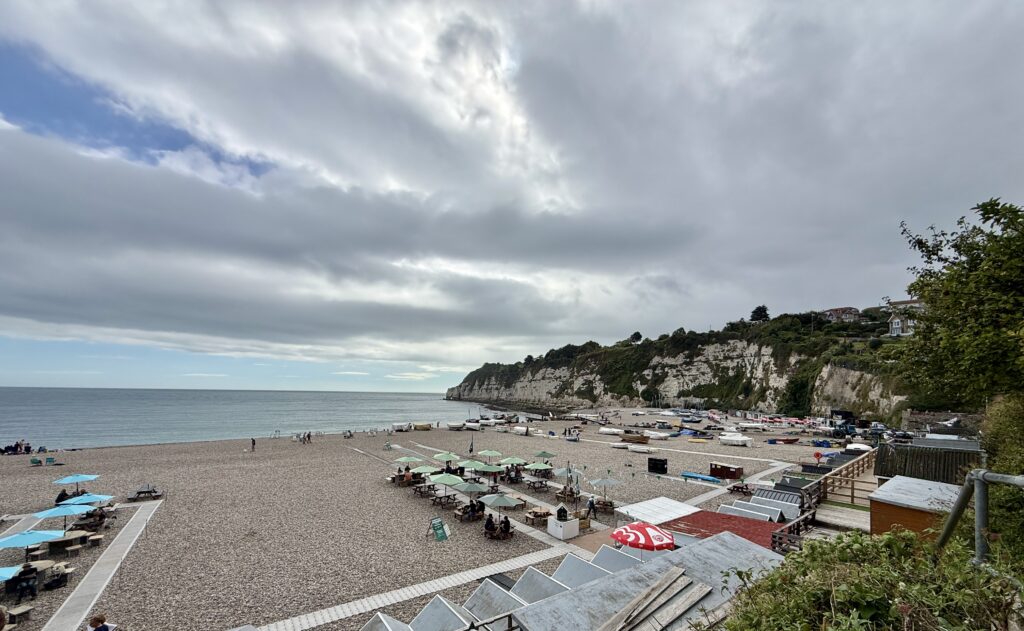
Beer is a compact fishing village on the East Devon coast, known for its sheltered shingle beach, white chalk cliffs and long history of fishing and quarrying. Boats are still hauled onto the pebbles, fresh fish is sold close to the shore, and the village’s narrow streets climb away from the sea.
Some of the best things to do in Beer, Devon include visiting Beer Quarry Caves, spending time on Beer Beach, arranging a fishing or pleasure trip, exploring Beer Village Heritage Centre and walking over Beer Head. Independent shops, cafés, pubs, and places to stay are also within easy reach of the beach.
We have visited Beer several times and walked the coast path from Seaton through the village and onwards towards Branscombe. For this guide, we also explored the beach, shops and heritage displays, checked local parking and bus information and followed the paths around Beer Head.
Beer works well as a destination in its own right, but you can also combine it with Seaton or nearby Branscombe. Our separate guide to things to do in Branscombe covers its beach, village, historic buildings and walking routes in more detail.
Beer at a Glance
📍 Location: East Devon, between Seaton and Branscombe, within the Jurassic Coast World Heritage Site.
🏡 Best known for: Its sheltered shingle beach, working fishing boats, white chalk cliffs, Beer stone and extensive underground quarry caves.
⭐ Top Beer attractions: Beer Beach, Beer Quarry Caves, Beer Village Heritage Centre, Beer Head, boat trips and Pecorama on selected opening days.
🆓 Best free things to do in Beer: Spend time on the beach, explore the Heritage Centre, browse the village shops and walk over Beer Head.
🥾 Best outdoor experiences: Walk to Seaton or Branscombe, explore Beer Head, go rockpooling or arrange a fishing or pleasure trip from the beach.
👨👩👧👦 Best for families: Beer Beach, rockpooling, the beach cafés, boat trips, Beer Quarry Caves and selected family opening days at Pecorama.
🌧️ Things to do when it rains: Tour Beer Quarry Caves, visit the Heritage Centre when open, browse the independent shops or enjoy a meal in one of the village pubs.
🗺️ If you only have a few hours: Walk down Fore Street to the beach, visit the Heritage Centre, stop at a beach café and browse the shops on your return.
⏱️ Time to allow: Half a day is enough for the village and beach. Allow a full day to include Beer Quarry Caves, a boat trip or a longer coastal walk.
🅿️ Parking: Central Car Park serves the village centre, Fore Street Car Park is small but close to the beach, and Cliff Top Long Stay Car Park offers more space above the village.
🚌 Public transport: Buses connect Beer with Seaton and Axminster, while selected services continue towards Branscombe and Sidmouth. Beer Cross is the main stop.
🐕 Visiting with dogs: Dogs are restricted on part of Beer Beach from 1 May to 30 September, but the designated section towards Beer Head permits dogs throughout the year.
⚠️ Good to know: Beer is steep, the beach is not lifeguarded and the shingle shelves quickly into deeper water. Keep away from the foot of the cliffs because rockfalls can occur.
Disclosure: Some links on this page are affiliate links. If you follow one and make a booking or purchase, we may receive a small commission at no extra cost to you. This helps support our independent guides. We also link to non-affiliate websites that we believe will be helpful. As an Amazon Associate, we earn from qualifying purchases.
- Beer at a Glance
- Map of Beer, Devon
- A Brief History of Beer
- Things to See and Do in Beer, Devon
- Shops in Beer, Devon
- What's On in Beer, Devon
- Getting to Beer and Travelling Around
- Where to Eat and Drink in Beer
- Where to Stay in Beer
- Weather and Tide Times in Beer, Devon
- Is Beer Worth Visiting?
- Frequently Asked Questions About Beer, Devon
- Practical Information for Visiting Beer
Map of Beer, Devon
Beer is on the East Devon coast between Seaton and Branscombe. The village centre is compact, with Fore Street leading downhill towards the beach, fishing boats and seafront cafés.
The map below shows Beer Beach, Beer Head, Beer Quarry Caves, Pecorama and the main streets through the village. Beer Quarry Caves and Pecorama are above the village rather than beside the beach, so allow additional time if visiting either attraction on foot.
A Brief History of Beer

Beer’s name has nothing to do with the drink. It is generally traced to the Old English word bearu, meaning a grove or wooded place, reflecting the sheltered valley in which the village developed. Archaeological discoveries around Beer Head point to activity here during prehistoric and Roman times, while Beer was an established settlement by the time of the Domesday Book in 1086.
The sea and the stone beneath the surrounding hills shaped much of Beer’s history. Fishing supported generations of local families, with boats launched and recovered from the shingle beach because the village had no harbour. That arrangement continues today, although tractors and powered winches have replaced much of the physical effort once needed to pull boats ashore.
Beer Stone
Beer’s other great industry was quarrying. Beer stone is a fine chalk limestone formed during the Cretaceous period. It is relatively soft when first extracted, allowing it to be carved into detailed figures and decorative features, but it hardens after exposure to air. The Romans first worked the underground quarry. It supplied stone for buildings including Exeter Cathedral, St Paul’s Cathedral, Westminster Abbey, the Tower of London, Hampton Court and Windsor Castle. The old underground quarry closed around 1920, while extraction from a later quarry continued until 2003. Visitors can explore part of this history on a guided tour of Beer Quarry Caves.
Fishing
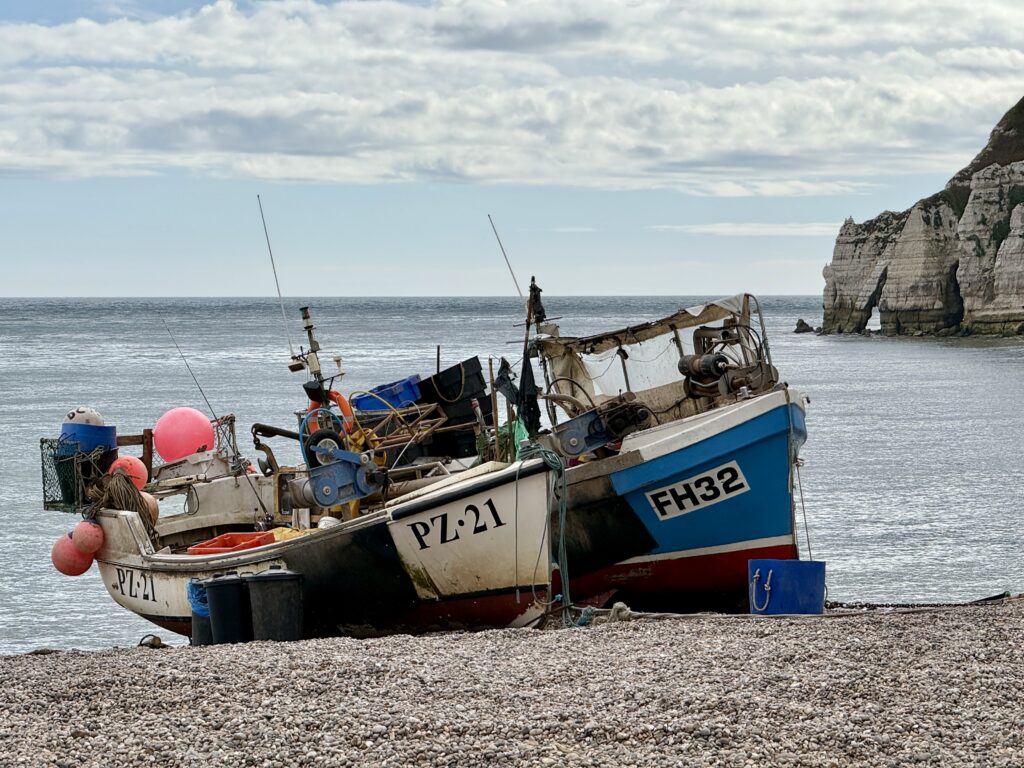
Fishing and quarrying produced generations of experienced seamen. Displays at Beer Village Heritage Centre explain that Beer Head’s shelter allowed local boats to go to sea in a wide range of conditions. This helped Beer fishermen gain a reputation as capable sailors, and the village could provide more than 20 seasoned men when the Royal Navy sought recruits during the Second World War.
Smuggling also became part of Beer’s story. During the eighteenth and early nineteenth centuries, high duties made goods such as tea, tobacco, spirits and silk profitable contraband. Fishing boats, secluded coves and local knowledge of the coast all helped smugglers avoid the customs authorities. Smuggling then was an activity that many coastal communities regarded as an additional source of income rather than a serious crime.
Lacemaking provided important work for women in Beer. The village formed part of the wider Honiton lace industry, with intricate pieces produced in local homes before being sold through dealers in Honiton. Beer lacemakers contributed to prestigious commissions, and the village remains proud of its connection with the lace associated with Queen Victoria.
Heritage
We spent some time in the volunteer-run Beer Village Heritage Centre behind the beach, where displays bring these different strands together. It covers quarrying, fishing, Beer luggers, lace, smuggling, wartime defence, and the geology of the Jurassic Coast. It is a modest building containing considerably more information than its appearance suggests, and admission was free with donations accepted.
Further displays around the village include the former bomb shelter in Fore Street and the Jubilee shelter opposite the RNLI shop. Together, they help explain how the sea, Beer Stone and the surrounding cliffs have influenced the village seen today.
Things to See and Do in Beer, Devon
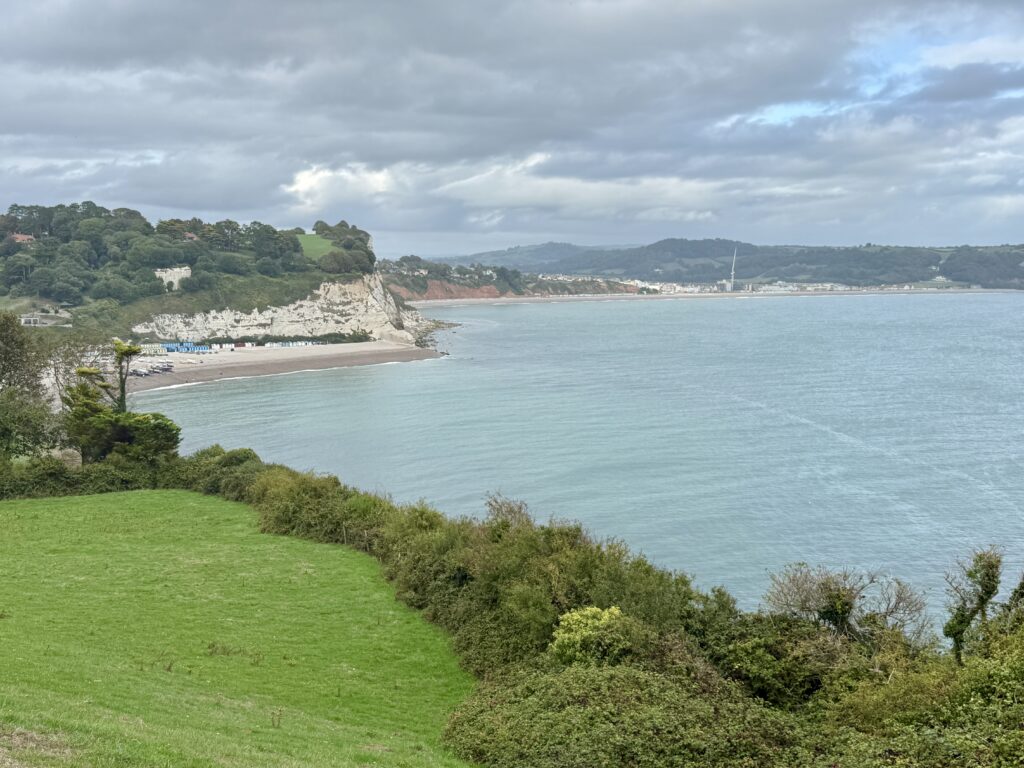
Beer may be a small village, but it offers enough to fill a full day. Main things to do in Beer include spending time on its working fishing beach, visiting Beer Quarry Caves, exploring the village’s heritage displays, taking a boat trip, and walking over Beer Head.
Most places around the village and beach are within walking distance. Beer Quarry Caves and Pecorama are higher above the coast, while the South West Coast Path climbs steeply from both sides of the village.
Visit Beer Beach
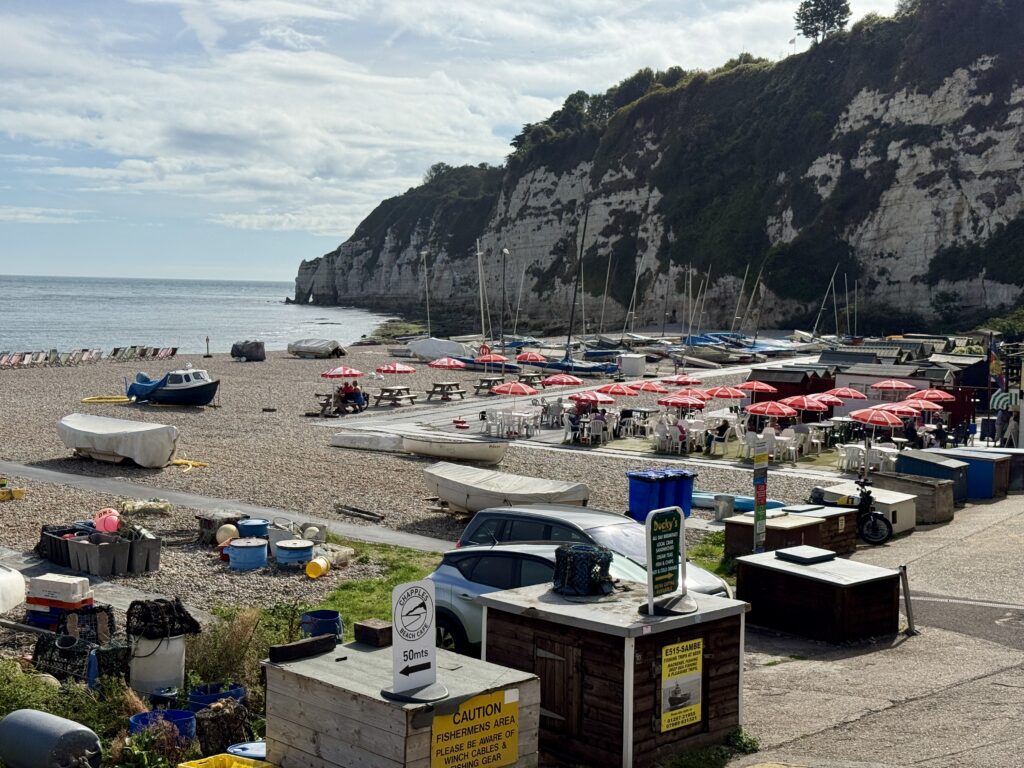
Beer Beach lies in a sheltered cove beneath white chalk cliffs. It is a shingle beach rather than a sandy one, with fishing boats, cafés and small huts occupying part of the shore. The setting feels quite different from the longer seafront at nearby Seaton.
This is still a working fishing beach. Boats are launched from the pebbles and hauled ashore by tractor or winch because Beer has no harbour. During our visit, fishing equipment and working boats shared the beach with deckchairs, visitors and people stopping for food beside the water.
The cafés immediately behind the beach serve breakfasts, light lunches, crab sandwiches, cakes and drinks. Deckchairs were also available to hire when we visited. Beer Fisheries, close to the beach, sold a substantial choice of locally caught fish and shellfish, including crab, lobster, prawns and seasonal fresh fish.
Rockpooling is possible around the edges of the beach when conditions and tides allow. Check the tide before exploring and avoid becoming cut off beneath the cliffs. The Marine Conservation Society provides useful guidance for families trying rockpooling for the first time.
Swimming and Safety at Beer Beach

Beer Beach is not lifeguarded. Anyone entering the water must therefore assess the conditions and closely supervise children.
Water quality, weather and sea conditions can change, particularly after heavy rain or during unsettled weather. East Devon District Council and the Environment Agency provide current bathing water information. The shingle may also make entering and leaving the water more difficult than it first appears.
👉 Check the latest bathing water quality for Beer Beach
Stay away from the foot of the cliffs because rockfalls can occur without warning. Visitors should follow local signs and keep clear of working boats, winches and launching equipment.
Are Dogs Allowed on Beer Beach?
Dog restrictions apply to part of Beer Beach from 1 May to 30 September. Signs displayed during our visit showed that dogs are permitted year-round on the section towards Beer Head.
The boundary between the restricted and dog-friendly sections is marked near the beach access. Check the current signs when you arrive.
Take a Boat Trip or Go Fishing from Beer Beach
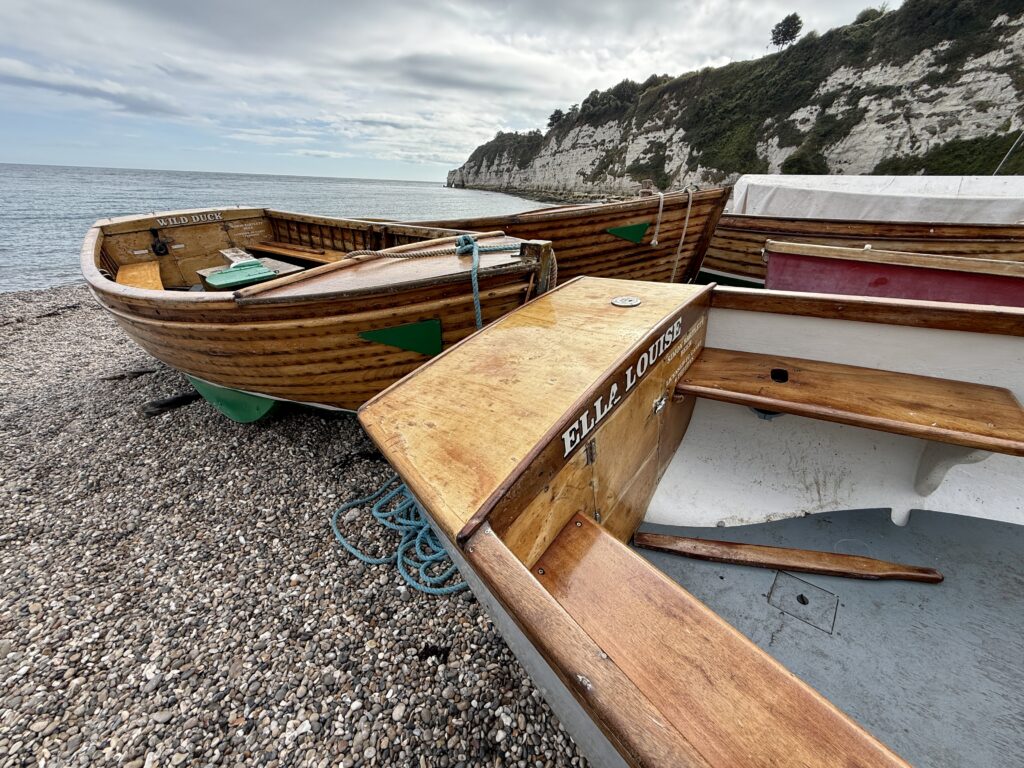
Boat trips are one of the most distinctive things to do in Beer, Devon. Fishing and pleasure trips leave directly from the shingle beach, giving visitors a closer view of the cliffs and coves along this part of the Jurassic Coast.
During our visit, several local operators were advertising mackerel fishing, deep-sea fishing and pleasure trips from huts beside the working boats. These included Lillie May with Paul Godfrey and Sambe E515 with experienced Beer fisherman Kim Aplin. Family mackerel trips were available alongside longer outings for more experienced anglers.
Beer Self-drive Motorboats also hires boats from Beer Beach, with lifejackets provided. Anyone considering boat hire should follow the operator’s instructions carefully and make sure they understand where they may take the boat before leaving the beach.
Trips depend on the weather and may be cancelled or changed at short notice. Details, prices and departure times are displayed beside the boats, so it is sensible to enquire at the beach early in the day.
Beer Sailing Club is based beside the beach and runs sailing, racing, social events and training at selected times. Its programme varies throughout the year, so check directly with the club if you’re thinking of learning to sail from Beer Beach.
Explore Beer Quarry Caves
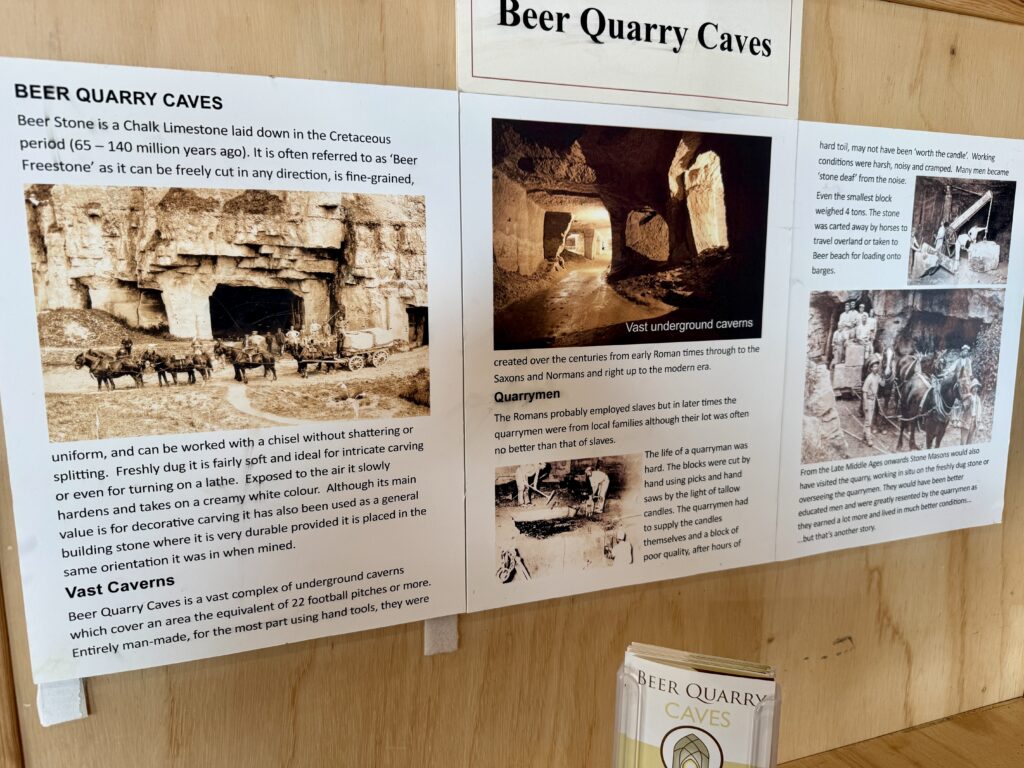
Beer Quarry Caves are among Beer’s best-known attractions. Hidden beneath the hillside above the village, the extensive underground workings were created during approximately 2,000 years of quarrying.
The Romans were the first known people to work the underground quarry. Beer stone was valued because it could be carved while newly extracted before becoming harder after exposure to the air. It was used in 24 cathedrals and in buildings including Exeter Cathedral, St Paul’s Cathedral, Westminster Abbey, the Tower of London, Hampton Court and Windsor Castle.
Guided tours lead through large chambers with vaulted roofs and supporting pillars, sometimes described as an underground cathedral. The guides explain how quarrymen cut and moved heavy blocks by hand in difficult conditions, lit by small candles.
The old underground quarry closed around 1920 when a new quarry opened nearby. Extraction from the later site continued until 2003, bringing Beer’s commercial quarrying history to an end. The caves also provide a habitat for bats, although sightings cannot be guaranteed during a tour.
Beer Quarry Caves gained a new audience after being used as a filming location for the 2026 Masters of the Universe film. Several scenes were filmed inside the caves, adding a modern chapter to a site better known for Roman and medieval history.
Tours generally last between one hour and ninety minutes. The caves remain cool year-round, and parts of the floor can be uneven, so bring a warm layer and wear sturdy footwear. The site’s nature limits access, and visitors with mobility concerns should contact the attraction before travelling.
The caves are above the village and have their own free car park. They can also be reached on foot from central Beer, although the walk involves hills and sections of narrow country lane. Booking ahead is advisable because tour numbers are limited and schedules can vary with demand.
Visit Beer Village Heritage Centre
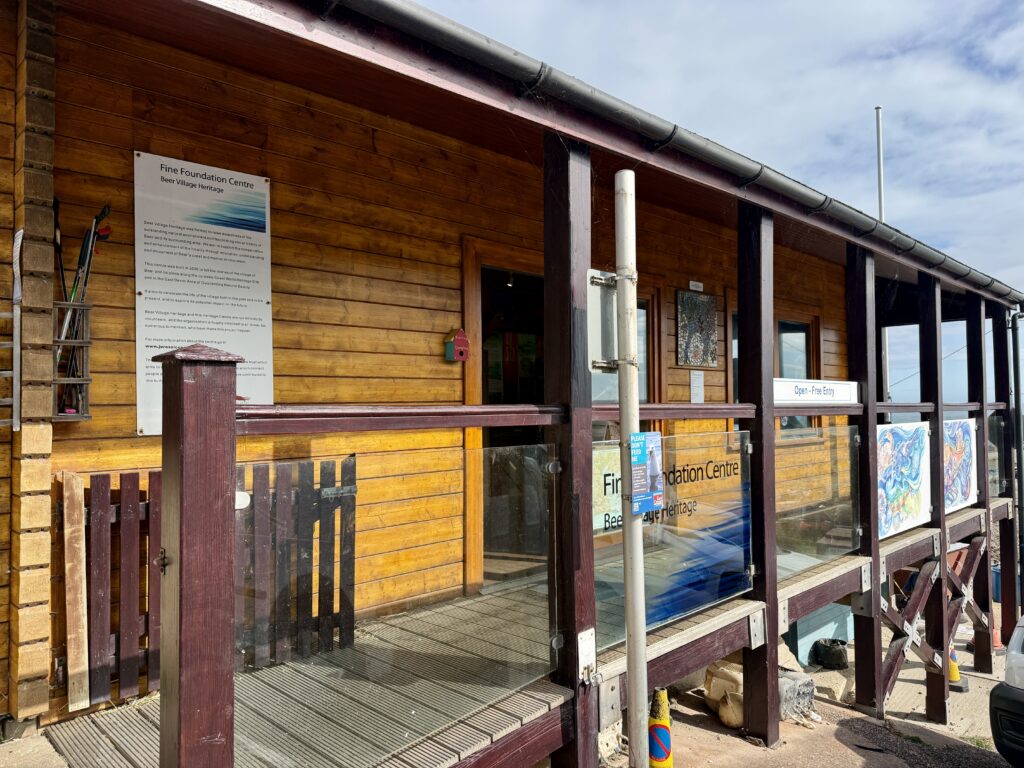
Beer Village Heritage Centre is found just behind the beach in the Fine Foundation Centre on Sea Hill. It is easy to spot and well worth a visit.
The volunteer-run centre explains how fishing, quarrying and the coast have shaped the village. Displays cover Beer luggers, shellfish, smuggling, lacemaking, Beer stone, the quarry caves and the geology of the Jurassic Coast. There is also information about prehistoric and Roman activity around Beer Head, the village’s wartime defences and the generations of local people who made their living from the sea.
One of the more unexpected exhibits describes how a piece of Upper Greensand from Beer was used in a space research experiment. Other displays explain the wildlife found on the cliffs and in the sea, with marine tanks adding interest for younger visitors when available.
We spent some time looking through the exhibitions. It helped connect the fishing boats on the beach, the stone buildings around the village and the old quarry workings beneath the surrounding hills.
Admission was free, with donations welcomed, when we visited. Opening times depend on volunteer availability, so check the Beer Village Heritage Centre website or local notices before making a special journey.
Beer’s heritage displays extend beyond the main centre. Further interpretation is available in the former bomb shelter in Fore Street and the Jubilee shelter opposite the RNLI shop, allowing visitors to discover more of the village’s story while exploring on foot.
Visit Pecorama on Selected Opening Days

Pecorama is on the hillside above Beer and is known for the Beer Heights Light Railway, landscaped gardens, and the PECO Model Railway Exhibition. The elevated setting also provides wide views across Beer and Lyme Bay.
The attraction is not operating as a conventional daily visitor attraction during 2026. Instead, it has opened for selected events and general admission days, as well as pre-booked tours and experiences.
Following opening days during the summer, Pecorama has announced six further general admission dates for the October half term in 2026. It will open on 20, 21 and 22 October and again on 27, 28 and 29 October 2026, from 10 am to 4 pm. Visitors can ride the Beer Heights Light Railway, explore the gardens, and visit the model railway exhibition.
Pre-booked activities available at other times include PECO factory tours, railway modelling courses and driving experiences. The Harburn Hobbies model railway shop also continues to operate, but check its opening arrangements before travelling.
Pecorama is a cashless site. Opening days, events and experiences can change, so always check the latest Pecorama visitor information before planning your day.
Walk to Beer Head
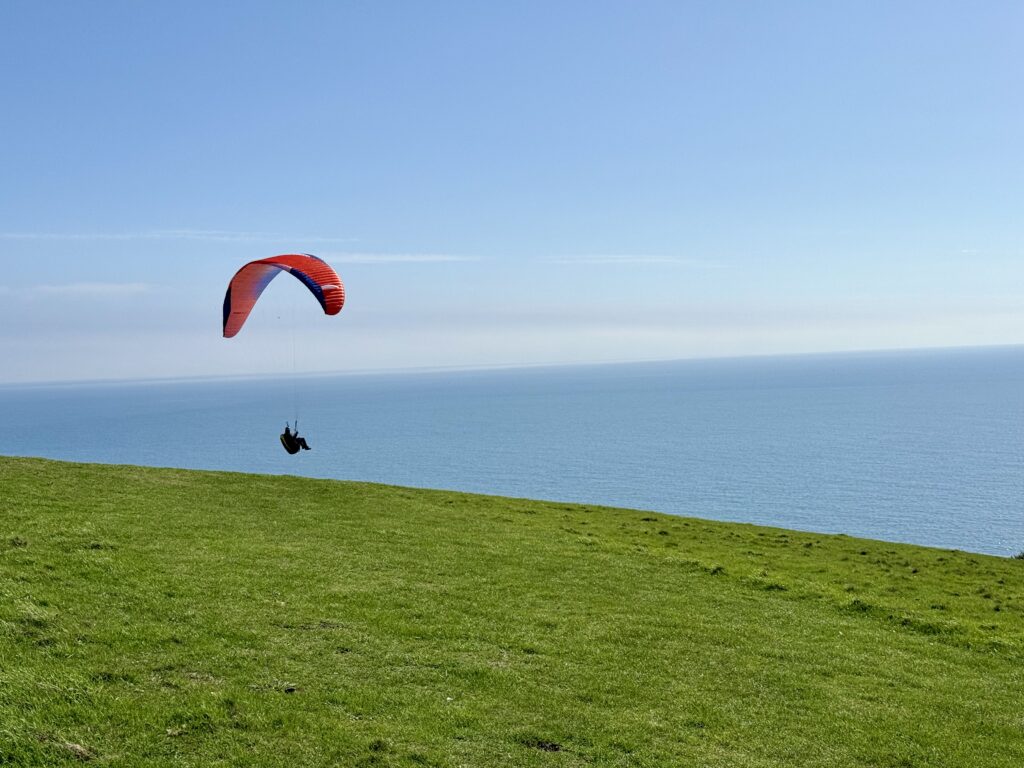
Beer Head rises immediately west of the village and provides some of the finest coastal views around Beer. The climb from the beach is steep, but the views back towards Beer and Seaton are unmissable. Once on the headland, the terrain opens up, and the walking becomes easier.
On a clear day, the wider views can extend towards Portland Bill in one direction and the South Devon coast in the other. Even without completing a longer walk, it is worth climbing far enough to look back over Beer Beach, the village and the sweep of Lyme Bay towards Seaton.
Beer Head is working farmland and part of the East Devon National Landscape. Interpretation panels beside the route explain that the land has been farmed since before the Bronze Age, with ancient field patterns providing evidence of Beer’s earliest settlers. The headland now supports livestock, crops, wildflowers and coastal wildlife.
We found the panels and map useful for understanding how farming has shaped this apparently open landscape over thousands of years. Keep dogs under close control, particularly around livestock, and remain on the marked paths.
You can avoid some of the climb from Beer by parking at the Cliff Top Long Stay Car Park, commonly known as Beer Head Car Park. The car park is towards the top of Common Lane above the village and offers excellent coastal views. It is mainly grass, and the ground is not completely level, so conditions may be less suitable after prolonged wet weather. The walk back into Beer is steep.
Beer Memorial Avenue is beside the car park. Thirty lime trees commemorate villagers who served during the First World War. Plaques remember 28 local men who died, while larger displays record other residents who served and returned.
Walkers can continue west over the top of Beer Head towards Branscombe. We found this upper route easy to follow and passable, with wide clifftop views along the coast. We plan to describe the walk in detail in a separate guide.
Hooken Beach
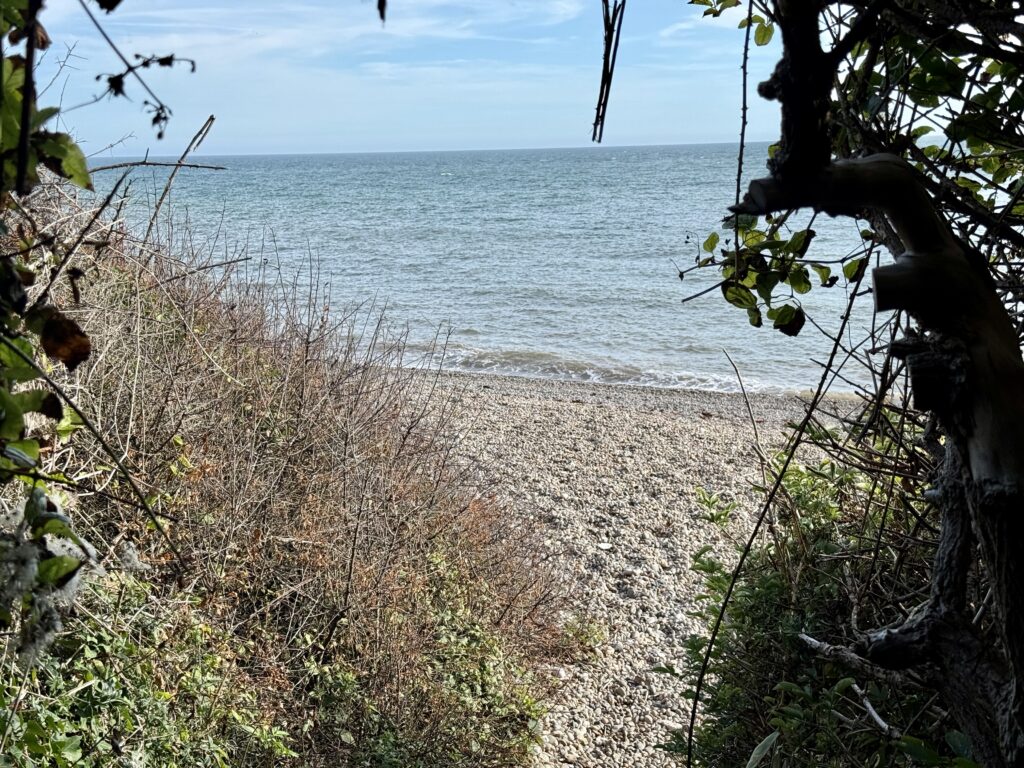
A separate, steep path descends through the Under Hooken landscape to Hooken Beach. The beach itself remains accessible, but the lower route is closed beyond this point because of instability and subsidence.
At low tide, it may appear possible to continue along the beach beneath the cliffs towards Branscombe. This is discouraged because the cliffs are unstable and falling rock could make the route dangerous even on the beach at low tide. The tide could also restrict the available space or cut off the shoreline. Walkers heading to Branscombe should use the open route over the top rather than treating the beach as an alternative.
The cliff edges on Beer Head are exposed and, in places, unfenced. Keep children and dogs well back, particularly during strong winds or poor visibility. Paths can become muddy and slippery after rain, so walking shoes or boots are preferable.
Follow the South West Coast Path from Beer
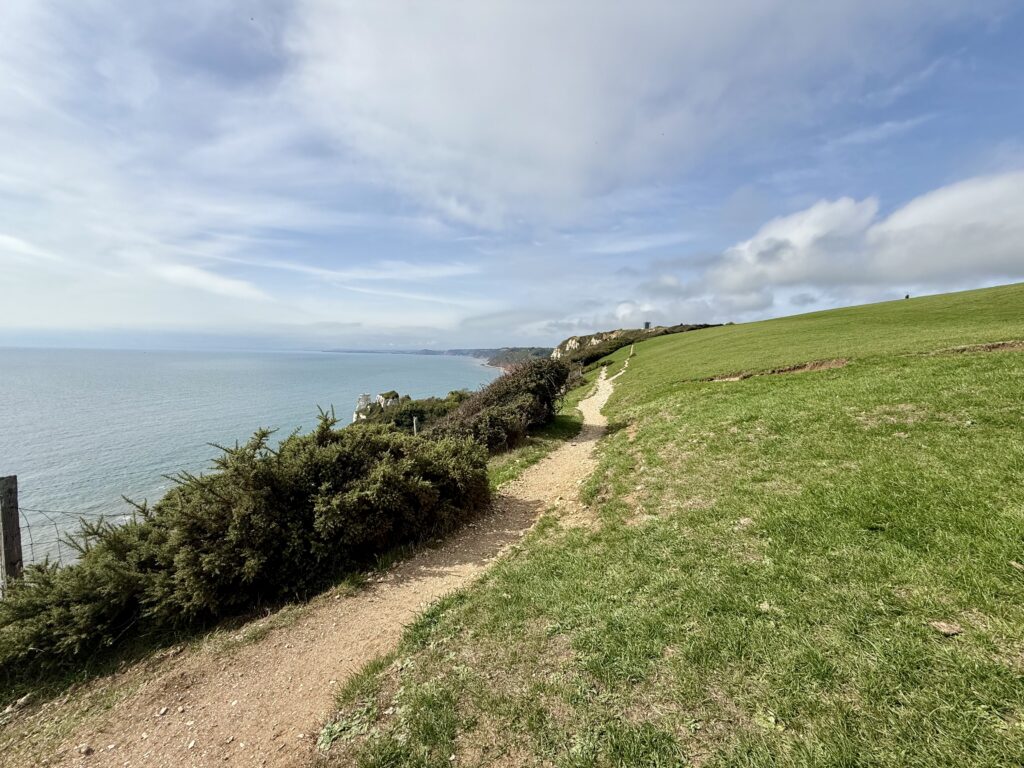
Beer is an excellent starting point for walks along the South West Coast Path. Routes head east towards Seaton and west over Beer Head towards Branscombe, with both directions providing changing views across Lyme Bay.
The walk from Beer to Seaton begins near the beach and passes through Jubilee Memorial Gardens. The path continues above the coast towards Seaton Hole before reaching Seaton’s longer seafront. We particularly enjoy the changing view as the white cliffs around Beer give way to the broad sweep of Seaton Bay.
This is a useful one-way walk because local buses connect Seaton and Beer. Check the current timetable before relying on a return bus, especially on Sundays, in winter, or later in the day.
West of Beer, the route climbs onto Beer Head before continuing across the open clifftop towards Branscombe. The initial ascent is demanding, but the upper path is comparatively easy to follow and provides extensive views along the Jurassic Coast. Read about our Beer to Branscombe return walk here.
We have walked from Seaton through Beer and onwards towards Branscombe. It is one of our favourite stretches of the East Devon coast because the scenery changes considerably over a relatively short distance. Beer also provides a convenient place to stop for food or spend time on the beach before continuing.
Both directions include slopes, steps and exposed cliff edges. Paths can become muddy after rain, so wear suitable footwear and check the latest South West Coast Path route information before setting out.
Visit St Michael’s Church

St Michael’s Church stands on Fore Street and remains an active part of village life. The Grade II listed building was consecrated in 1878 on the site of an earlier chapel dating from the sixteenth century.
Its stone construction and freestone detailing provide another connection with Beer’s quarrying heritage. Inside are stained glass, carved stonework and memorials reflecting the village’s maritime and religious history.
The churchyard contains Beer’s Grade II listed war memorial. Unveiled in 1922 following the First World War, the memorial was later updated to remember those who died during the Second World War.
Visitors are welcome when the church is open outside services, although access can vary. Current service and contact information is available from the Coastal Mission Community.
Shops in Beer, Devon
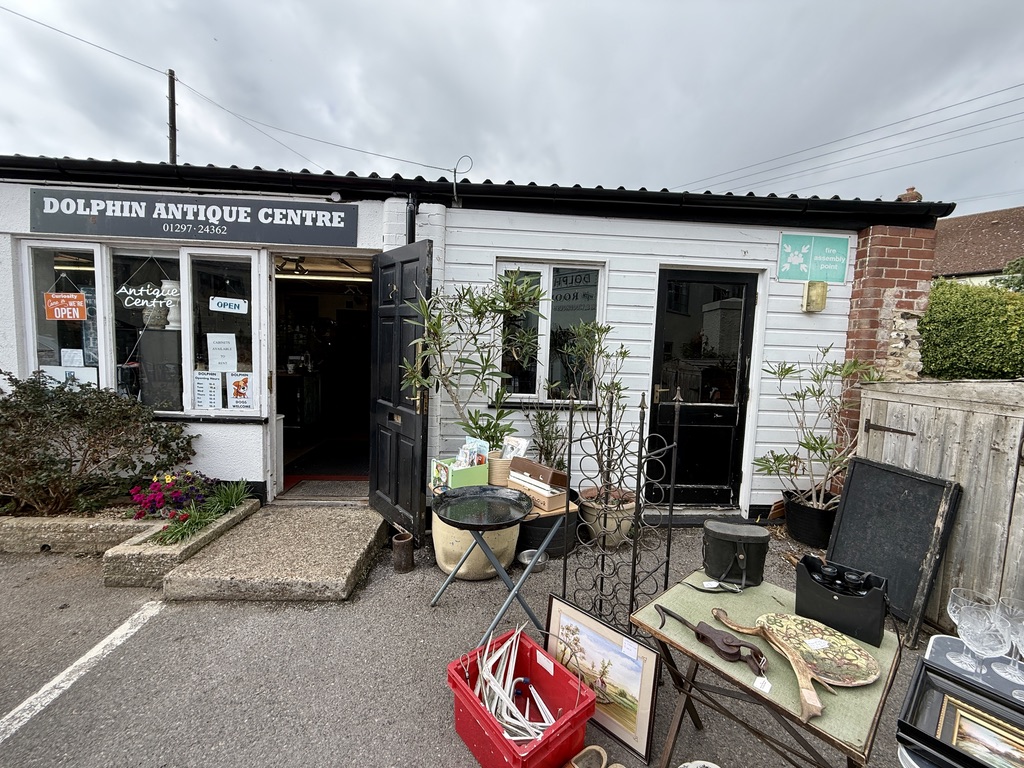
Beer has a surprisingly good selection of independent shops for a village of its size. Most are found along Fore Street and around the central crossroads, making it easy to combine browsing with a visit to the beach.
We particularly enjoyed Dolphin Antique Centre, just behind the Dolphin Hotel, which almost felt like an attraction in its own right. Its collection extended outside when we visited, with furniture, pictures, ceramics, decorative pieces and assorted curios inviting a closer look. It is the sort of shop where a quick visit can easily turn into a much longer browse.
Art is also well represented. Marine House at Beer and the nearby Steam Gallery exhibit work by regional and nationally recognised artists, with paintings, prints, sculpture, ceramics and other pieces inspired by the coast and countryside.
Beer Village Stores provides everyday groceries and useful supplies, while local delicatessens and food shops offer produce suitable for picnics or self-catering stays. You can also buy fresh fish and shellfish from Beer Fisheries beside the beach, depending on the day’s catch.
Jimmy Green Marine has a chandlery and clothing shop in the centre of Beer. It stocks marine equipment, outdoor clothing and practical items for sailing and coastal activities. An RNLI shop near the beach also sells gifts and souvenirs in support of the charity.
There are enough galleries, food shops, antiques, gifts and specialist businesses to make time for a proper browse rather than treating the village simply as a route to the beach.
As independent businesses may change their hours outside the main season, check individual websites or the Beer business directory before travelling for a particular shop.
What’s On in Beer, Devon

Beer may be a small village, but it hosts several popular events during the year. The busiest period is summer, when the beach, village streets and local venues become the setting for traditional celebrations, live music and family activities.
Beer Regatta is the village’s best-known annual event. Usually held over a week in August, it has been part of village life for more than a century. The programme combines boat and raft races with games, fancy dress, barrel rolling, live entertainment and some wonderfully eccentric local traditions. Regatta Day normally ends with fireworks over Beer Beach.
The Beer Rhythm and Blues Festival brings live music to venues around the village in autumn. The three-day festival has been running since the 1990s and attracts performers and visitors from well beyond East Devon. Some performances require tickets, while free daytime sessions have also formed part of previous programmes.
Pecorama events provide further reasons to visit Beer on selected dates. These can include Beer Heights Light Railway galas, special train-running days, tours and seasonal openings. As Pecorama is not currently operating to its former daily schedule, check the event calendar and book where required before travelling.
Smaller community events, exhibitions, church activities and live performances also take place throughout the year. Posters around the village are often useful for finding events during your visit. You can also browse our regularly updated guide to What’s on in South West England.
Beer becomes particularly busy during Regatta Week and other major events. If you want to stay in the village, it is sensible to compare accommodation in Beer and book well in advance. Event dates, programmes and weather-dependent activities can change, so always confirm the latest details with the organiser before setting out.
Getting to Beer and Travelling Around

Beer is reached from the A3052, the main coastal road between Exeter, Sidmouth, Seaton and Lyme Regis. The final approach descends towards the village along narrower roads, but the signposted routes are generally straightforward. Traffic and parking become much busier during summer weekends, school holidays and Beer Regatta Week.
Parking in Beer, Devon
Beer has three principal public car parks. Central Car Park is convenient for the shops and village centre, while the small Fore Street Car Park is closer to the beach but has very few spaces. Parking restrictions and charges can differ between marked bays, so read the signs carefully before leaving your vehicle.
Cliff Top Long Stay Car Park, also known as Beer Head Car Park, is the largest option. It stands on Common Lane above the village and usually offers a better chance of finding a space on busy days. The car park has excellent coastal views and is useful for walks around Beer Head, although the route down into the village is steep. Much of the parking surface is grass and not completely level.
A privately operated car park is also close to Beer Beach. When we visited, the displayed charge was £7 for a full day or £5 for half a day, but prices may change. Current information about the different options can be found in this independent guide to parking in Beer.
Arriving early is advisable during fine summer weather. Beer’s streets are narrow, and drivers should avoid obstructing access for residents, buses and emergency vehicles.
Getting to Beer by Bus
You can visit Beer without a car. The main stop is Beer Cross, close to the village shop and a short downhill walk from the beach. We photographed the timetable here during our visit and found the stop conveniently placed for exploring the village.
Local buses connect Beer with Seaton and Axminster, while selected services continue towards Branscombe and Sidmouth. The 885 provides a useful connection between Beer, Seaton, Colyton and Axminster. The 899 follows a more rural route between Seaton and Sidmouth through Beer and Branscombe, although it runs less frequently.
Services can change between seasons and are limited on Sundays, public holidays and during the evening. Check the latest timetable with AVMT Buses or use the Travel Devon timetable service before travelling.
Getting to Beer by Train
Beer has no railway station. Axminster is generally the most practical station, with services on the Exeter to London Waterloo line and onward buses through Seaton. Honiton is another possibility, although the public transport connection to Beer is usually less direct.
You can check train times and compare tickets with Omio. Allow sufficient time for the bus connection, particularly later in the day when services are less frequent.
Getting Around Beer
Beer is compact and best explored on foot. The beach, village centre, church, shops and heritage centre are all within a relatively small area. However, the village is built on a hillside, and several streets and paths are steep.
Beer Quarry Caves and Pecorama are farther from the centre. You can reach both on foot, but the walks involve hills and, in places, roads without continuous pavements. Visitors with limited mobility may find driving or taking a taxi more practical.
The bus also makes one-way coastal walks possible. A popular option is to walk between Seaton and Beer along the South West Coast Path and return by bus. Walkers continuing west can follow the open clifftop route over Beer Head towards Branscombe, with our separate guide to things to do in Branscombe providing ideas for extending the day.
Where to Eat and Drink in Beer
Despite its size, Beer has a good selection of cafés, pubs and restaurants. Seafood naturally features on many menus, while the cafés beside the beach are particularly enjoyable when the weather is fine.
Cafés on Beer Beach
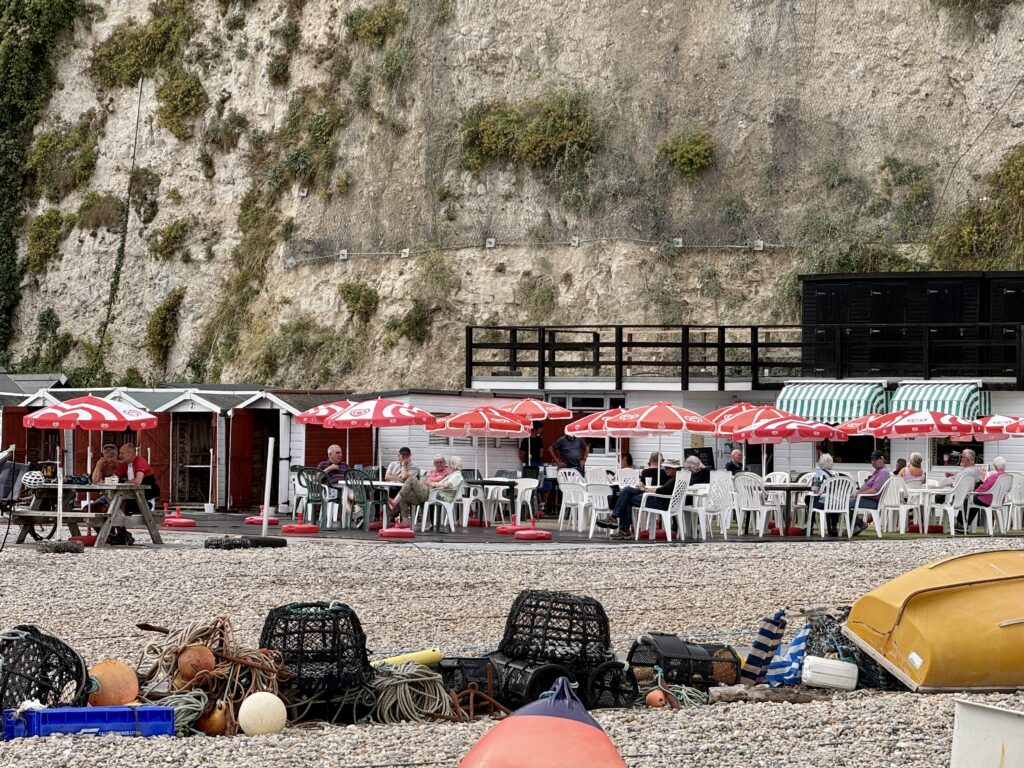
Beer Beach has three seasonal cafés, Ducky’s, Chapples and High Tide. All are set among the fishing boats and beach huts, making them convenient places for breakfast, lunch, coffee or an ice cream without leaving the seafront.
Ducky’s Beach Café is something of a Beer institution. It is known for generous cooked breakfasts, crab sandwiches, bacon rolls, cream teas and other straightforward seaside favourites. Tables beside the café overlook the beach, making it a particularly pleasant place to watch fishing boats being launched and hauled ashore.
Chapples Beach Café serves breakfasts, toasties, sandwiches, jacket potatoes, cakes and drinks. Its menu also features locally supplied produce, including seafood from Beer Fisheries. High Tide offers another extensive beachside menu, with breakfasts, sandwiches, crab, prawns, burgers, salads, children’s choices and hot and cold drinks.
The beach cafés are seasonal and opening times are affected by weather and visitor numbers. It is sensible to check locally if visiting outside the main holiday period.
Restaurants in Beer

The Smugglers Kitchen is an independent restaurant on Fore Street specialising in relaxed evening dining. Its changing menu makes good use of West Country produce, with seafood, meat and vegetarian dishes alongside wines and desserts. Booking is advisable during weekends and the main visitor season.
Beer also has takeaway options and lighter places to eat around the village centre. Menus and opening hours can change considerably between summer and winter, so it’s worth checking before making a special journey.
Pubs in Beer

The Anchor Inn stands close to the beach and serves familiar pub food and drinks. Its elevated outdoor seating is one of the appealing places in Beer to enjoy a drink with a view towards the sea.
The Dolphin Hotel is another central option, serving lunch, evening meals and Sunday roasts as well as offering a traditional pub bar. It is only a few minutes’ walk from Beer Beach.
The Barrel O’ Beer is a small family-run free house with a more traditional local pub atmosphere. When we visited, its menu included sandwiches, burgers, fish and chips, seafood dishes, small plates and classic pub meals. The choice of three pubs within such a compact village gives Beer more evening options than visitors might expect.
Local Seafood
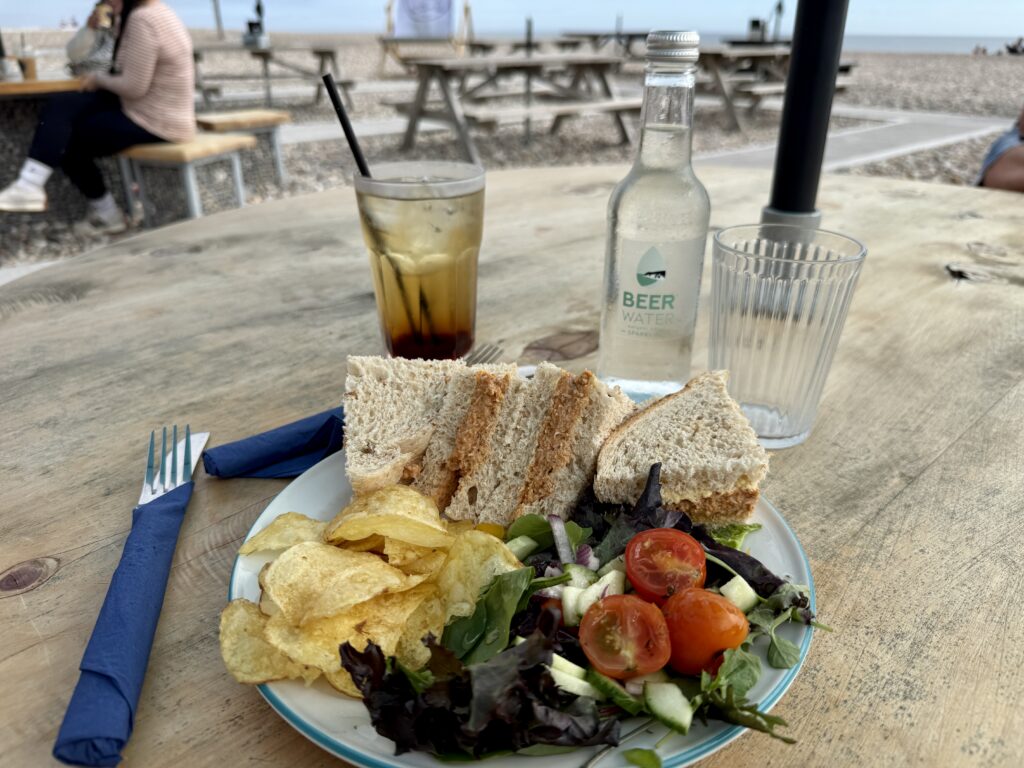
For something closely connected to the village’s fishing heritage, look for locally caught crab, lobster, scallops and fish. Beer Fisheries is just down the slope to the beach and sells fresh and prepared seafood, depending on the day’s catch and seasonal availability.
When it comes to eating out in Beer, you are spoiled for choice. You can have breakfast beside the boats, stop for a crab sandwich at lunchtime and return to the village for a pub meal or dinner in the evening. Popular places can get busy in summer, so reserve a table where possible rather than relying on finding space when you arrive.
Where to Stay in Beer
Beer offers a surprisingly varied range of places to stay, including small hotels, bed and breakfasts, holiday cottages, a youth hostel, and accommodation overlooking the coast. Staying in the village lets you enjoy Beer Beach early in the morning, after most day visitors have left.
Hotels and Bed and Breakfasts in Beer
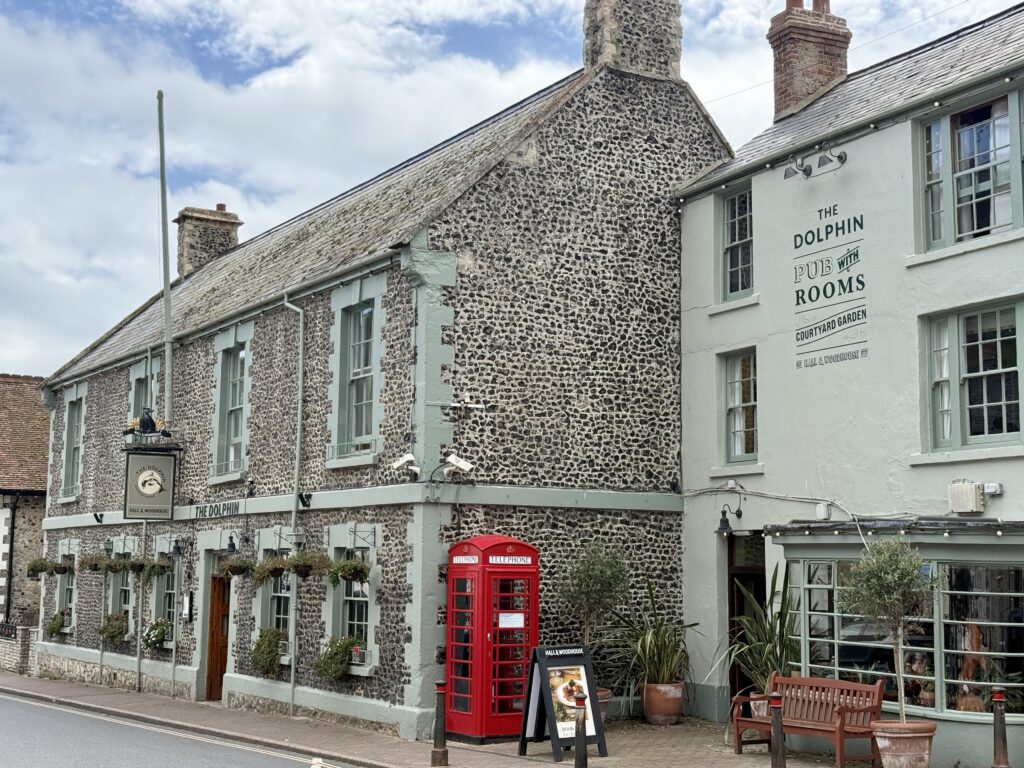
The Dolphin Hotel occupies a prominent flint building on Fore Street, within a few minutes’ walk of the beach. It offers rooms above a pub and restaurant, making it a convenient option for visitors who want to stay in the village centre.
The Anchor Inn also has rooms and is particularly well placed for the beach. Its position above the cove gives it some of the best sea views among Beer’s traditional accommodation.
Durham House is a welcoming bed and breakfast, with seven individually furnished en suite rooms. Its central position is useful for the shops, pubs, bus stop and the short walk down to the beach.
Other guest houses in and around the village include Bay View Guest House, Belmont House and Colebrooke House. Beer’s smaller accommodation can fill up quickly, particularly during summer weekends and Regatta Week, so booking ahead is sensible.
Self Catering Cottages in Beer
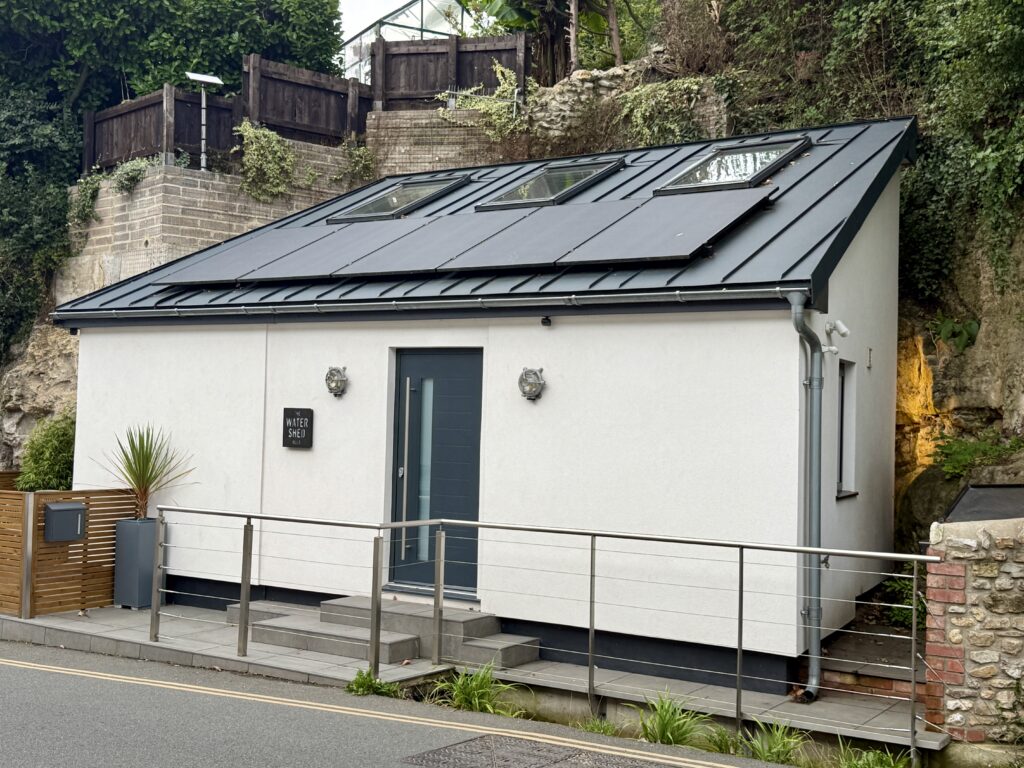
Self-catering accommodation makes up much of Beer’s accommodation options. Properties range from small apartments for couples to traditional flint cottages and larger houses suitable for families.
The Water Shed, which we noticed close to the centre of the village, is a compact contemporary property for two. Numerous other cottages are tucked along Fore Street and the lanes rising above the beach.
When choosing a holiday cottage in Beer, check the parking arrangements carefully. Some central properties don’t have private parking, while others are reached via steep or narrow streets. A cottage described as being close to the beach may still involve a considerable climb on the return journey.
You can browse Devon holiday cottages with Devon Hideaways or compare accommodation in Beer with Booking.com.
The Lookout Tower and Signal House
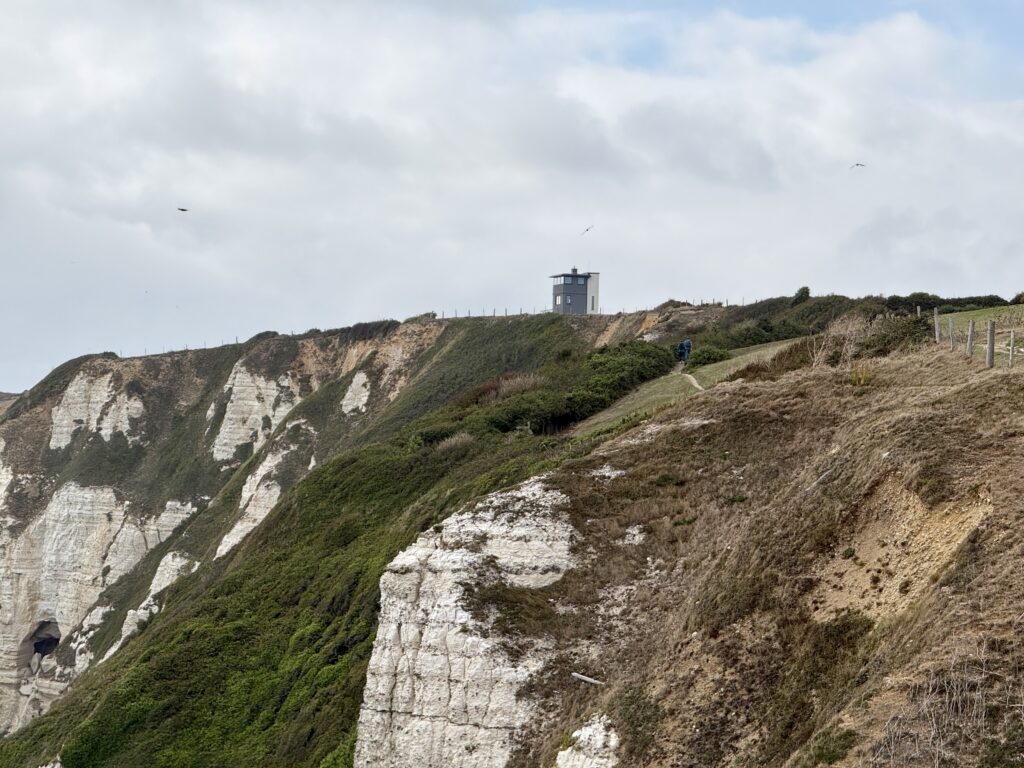
Two of the most unusual places to stay near Beer occupy an exceptional position on Beer Head.
The Lookout Tower is a converted historic signal station standing high above the cliffs. The building was used for coastal observation and has been transformed into distinctive self-catering accommodation with panoramic views across Lyme Bay and the surrounding countryside.
Nearby, The Signal House occupies a former Customs and Excise building associated with the coast’s smuggling history. It is now a two-bedroom cottage with a garden overlooking the sea.
Both properties are beside the South West Coast Path and particularly well suited to a walking break. Their clifftop setting also means they are exposed to the weather and separated from the centre of Beer by a steep walk.
Beer Head Holiday Park
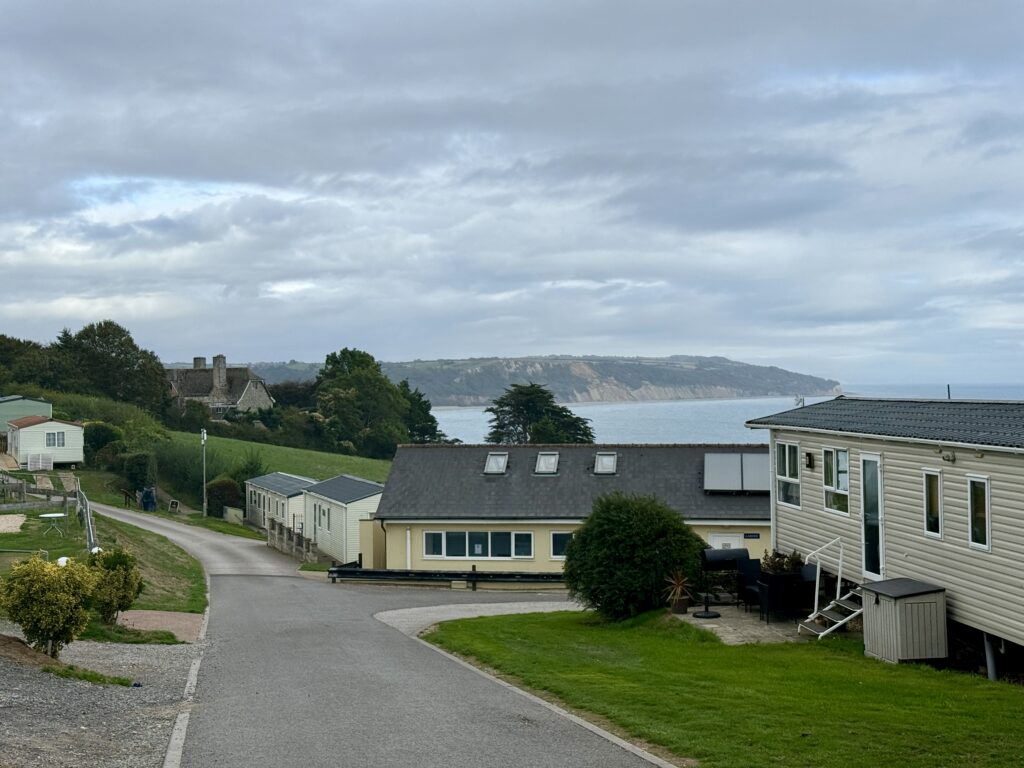
Beer Head Holiday Park is found on a beautiful clifftop above the village, with wide views across Lyme Bay and immediate access to the South West Coast Path. Although commonly described as a caravan park, the accommodation is much more varied than that suggests, with touring and camping pitches, standard and deluxe caravans, lodges and unusual self-catering properties.
We were impressed by the holiday caravans we saw during our visit. All were modern and very well appointed, while some were positively luxurious, with outside seating positioned to make the most of the coastal setting. The park feels spacious and enjoys some of the finest views around Beer.
Beer Head Bistro is open to non-residents and guests staying at the park. It serves home-cooked breakfasts, lunches, and evening meals, using locally sourced ingredients where possible. The outdoor tables have exceptional views across the sea, making the bistro worth seeking out even if you are not staying at Beer Head.
The Lookout Tower and Signal House are also part of the Beer Head accommodation offering. The park is well placed for walking, but the route between the site, village and beach is steep. Visitors who would find the climb difficult may prefer to drive into Beer or use the clifftop car park when exploring the headland.
YHA Beer and Camping
YHA Beer provides hostel accommodation and camping facilities in an Arts and Crafts house on the edge of the village. It is a useful choice for walkers, families and visitors looking for affordable accommodation close to the Jurassic Coast.
Beer Head Holiday Park also offers camping and touring pitches. Anyone bringing a large motorhome or caravan should follow the recommended approach directions and confirm access arrangements with the site before travelling.
Weather and Tide Times in Beer, Devon
Beer has a mild coastal climate, although the exposed cliffs around Beer Head can be much windier than the sheltered village. Check the latest Beer Beach forecast from the Met Office or BBC Weather before travelling, particularly if planning a coastal walk or boat trip.
Beer Beach is not lifeguarded and the shingle shelves steeply into deeper water. Assess sea conditions carefully, supervise children and remain clear of the unstable cliffs.
Tide Times for Beer Beach
Tide predictions for Beer Beach are based on Lyme Regis, the nearest reporting station, approximately seven miles away. Actual times, heights and conditions at Beer may vary slightly.
Check the tide for swimming, rockpooling and fishing, but never rely on it to make the shoreline route towards Branscombe safe. The cliffs beyond Hooken Beach are unstable, so walkers should use the open route over Beer Head.
Is Beer Worth Visiting?
Absolutely. On a sunny day, Beer is difficult to beat. Its beautiful shingle beach is sheltered on three sides by high cliffs, with beach cafés, boat trips, motorboat hire, deckchairs and beach huts adding to the traditional seaside atmosphere.
Beer has much more to offer than its beach. The coastal walks towards Seaton and Branscombe offer outstanding views, while the village has an unusually good selection of places to eat, pubs and independent shops. Beer Quarry Caves, Pecorama and the Village Heritage Centre add history and interest, making it easy to fill a complete day.
Beer is quieter outside the main season, but enough usually remains open to make an autumn or winter stay attractive. The village feels calmer once the summer crowds have gone. During storms, the sea can be spectacular too, provided you watch it safely from well away from the water, cliffs, and exposed coast paths.
Beer works equally well for a beach day, coastal walk, short break or relaxed stop while exploring East Devon. Try it. We do not think you will be disappointed.
Frequently Asked Questions About Beer, Devon
📍 Where is Beer in Devon?
Beer is a fishing village on the East Devon coast between Seaton and Branscombe. It lies within the East Devon National Landscape and on the Jurassic Coast World Heritage Site.
⭐ Is Beer worth visiting?
Yes. Beer is worth visiting for its sheltered beach, fishing boats, cafés, independent shops, pubs, coastal walks and attractions including Beer Quarry Caves and Pecorama. There is enough to fill a complete day or a longer coastal break.
🏛️ What are the best things to do in Beer?
The best things to do in Beer include visiting Beer Beach, exploring Beer Quarry Caves and Beer Village Heritage Centre, taking a fishing or pleasure trip, browsing the independent shops and walking over Beer Head.
🏖️ Is Beer Beach sandy or pebbled?
Beer Beach is primarily a shingle beach rather than a sandy one. It lies in a sheltered cove beneath white chalk cliffs and remains a working beach for local fishing boats.
🌊 Can you swim at Beer Beach?
People swim at Beer Beach when conditions are suitable, but there is no lifeguard service and the shingle shelves steeply into deeper water. Assess the sea carefully, remain within your abilities and supervise children closely.
🐕 Are dogs allowed on Beer Beach?
Dogs are restricted on part of Beer Beach from 1 May to 30 September. The designated section towards Beer Head permits dogs throughout the year. Check the signs marking the boundary when you arrive.
☕ What facilities are available at Beer Beach?
Beer Beach has three seasonal cafés, fishing and pleasure trips, motorboat hire, deckchair hire and beach huts. Beer Fisheries sells fresh and prepared seafood nearby. Public toilets are above the beach near the village centre.
🅿️ Where can you park in Beer?
The main options are Central Car Park, the small Fore Street Car Park and Cliff Top Long Stay Car Park on Common Lane. A privately operated car park is also available close to Beer Beach. Arrive early during fine summer weather.
🚤 Can you take a boat trip from Beer Beach?
Yes. Local operators offer pleasure trips, family mackerel fishing and longer fishing excursions from Beer Beach. Self drive motorboats are also available to hire. Trips are weather dependent, so enquire beside the boats early in the day.
🪨 How long does a Beer Quarry Caves tour take?
Guided tours generally last between one hour and ninety minutes. The caves remain cool throughout the year and the floor can be uneven, so take a warm layer and wear sturdy footwear.
🚂 Is Pecorama open in 2026?
Pecorama is not operating as a conventional daily attraction during 2026. It is opening on selected event and general admission days, while pre-booked tours and experiences are also available. Check the official website before travelling.
🥾 Can you walk from Beer to Branscombe?
Yes. The open South West Coast Path climbs over Beer Head and continues along the clifftop towards Branscombe. The lower route is closed beyond Hooken Beach, and walking beneath the unstable cliffs along the shoreline is discouraged.
🥾 Can you walk from Beer to Seaton?
Yes. The South West Coast Path runs east from Beer through Jubilee Memorial Gardens and Seaton Hole before reaching Seaton. Local buses make it possible to walk in one direction and return by bus.
🚌 Can you visit Beer without a car?
Yes. Buses connect Beer with Seaton and Axminster, while selected services continue towards Branscombe and Sidmouth. Beer Cross is the main stop and is within walking distance of the village centre and beach.
Practical Information for Visiting Beer
Beer Practicalities
🛍️ Shops and supermarkets: Beer has a village store, delicatessens, galleries, gift shops, an antiques centre and a marine clothing and chandlery shop. Larger supermarkets are available in nearby Seaton.
🏥 Nearest hospital: Honiton Hospital has a Minor Injuries Unit. The nearest full emergency department is at the Royal Devon and Exeter Hospital at Wonford. Call 999 or 112 for emergencies and 111 for urgent medical advice.
🚔 Police: Beer is served by Devon and Cornwall Police. Call 999 or 112 in an emergency or 101 for non-emergency enquiries.
💊 Pharmacy: Beer has a pharmacy on Fore Street. Check opening hours before visiting, particularly on Sundays and bank holidays. Further pharmacies are available in Seaton.
🍽️ Places to eat: Choices include The Smugglers Kitchen, the Anchor Inn, Dolphin Hotel and Barrel O’ Beer. Beer Fisheries sells fresh and prepared local seafood, subject to availability.
☕ Beach cafés: Ducky’s, Chapples and High Tide serve breakfasts, lunches, crab sandwiches, cakes, ice creams and drinks beside Beer Beach. Opening is seasonal and can be affected by the weather.
🍺 Pubs: Beer has three central pubs: the Anchor Inn, Dolphin Hotel and Barrel O’ Beer. Beer Head Bistro is licensed, open to non-residents and has exceptional views across Lyme Bay.
✈️ Nearest airport: Exeter Airport is approximately 35 to 45 minutes away by car, depending on traffic.
🚆 Railway station: Axminster is the most practical mainline station, with services towards Exeter and London Waterloo. An onward bus or pre-booked taxi is required.
🚌 Buses: Beer Cross is the principal stop. AVMT services connect Beer with Seaton, Axminster, Colyton, Branscombe and Sidmouth. Services are limited at certain times, so check the current AVMT timetable.
🚕 Local taxis: Taxi availability is limited, particularly during evenings and busy holiday periods. Booking in advance is advisable.
🅿️ Car parks: Central Car Park serves the village centre, while Fore Street Car Park is small but close to the beach. Cliff Top Long Stay Car Park is larger but involves a steep walk. A privately operated car park is also available near Beer Beach.
⛽ Petrol and EV charging: Beer does not have a petrol station. EV charging points are available at Central Car Park and Beer Head Holiday Park, but check their status before relying on them.
💵 Banks and ATMs: Beer does not have a bank branch. Cash withdrawal facilities are available in the village, although carrying some cash is sensible.
📮 Post Office: Beer Post Office is on Fore Street. Opening hours are limited and it is normally closed on Sundays.
🛏️ Accommodation: Beer offers hotels, guest houses, holiday cottages, a youth hostel, camping, touring pitches and luxury holiday caravans. Booking ahead is advisable during summer and Regatta Week.
🚻 Public toilets: Public toilets are available above the beach near the village centre. Reaching them from Beer Beach involves an uphill walk.
♿ Accessibility: Beer is steep and the beach consists of loose shingle. Road access reaches close to the shore, but gradients, uneven surfaces and limited nearby parking may present difficulties.
🚶 Visitor information: Beer Village Heritage Centre provides local information when open. Maps, businesses and visitor updates can also be found on the Beer Village website.
Other Helpful Links
- Booking.com – for most accommodation needs. Look out for options that include free cancellation.
- Easy Tide – Free UK tidal prediction service, providing tidal data and tide times for the current day and 6 days into the future.
- Expedia – good for flights and packages.
- GetYourGuide – find and book things to see. Includes unusual things to do.
- Hostelworld – Hostel-focused booking platform that fosters connections among backpackers.
- Met Office – Weather forecasts from the UK official meteorological office.
- National Express – UK-based coach operator providing long-distance bus services
- Omio – Book travel tickets by comparing trains, buses and planes in one search.
- Rental Cars – Search and book hire cars.
- Rome2Rio – Great for comparing local transport options (and for locating bus stops).
- Ticketmaster – What’s On – Major Events – Venues – Bookings
- Trainline.com – our go-to online platform for booking train and bus tickets, offering route planning, price comparisons, seat reservations, and ticket sales.
- Traffic England – for live traffic updates on major roads.
- Traveline SW – Comprehensive public transport information from A to B by bus, coach, train, and ferry in South West England and Great Britain.
- TripAdvisor – for reviews of… pretty much everything. Our go-to before booking anything.
- Vrbo – Great for self-catering and vacation holiday home rentals.
Over to you … have you recently travelled to South West England? What worked for you? What advice would you give to others? Please leave your comments below or join in the discussion in our Facebook Group.
New to South West England or returning after a while? Start with our ‘Travel Basics’ – quick guides packed with tips to help you plan your trip.

