
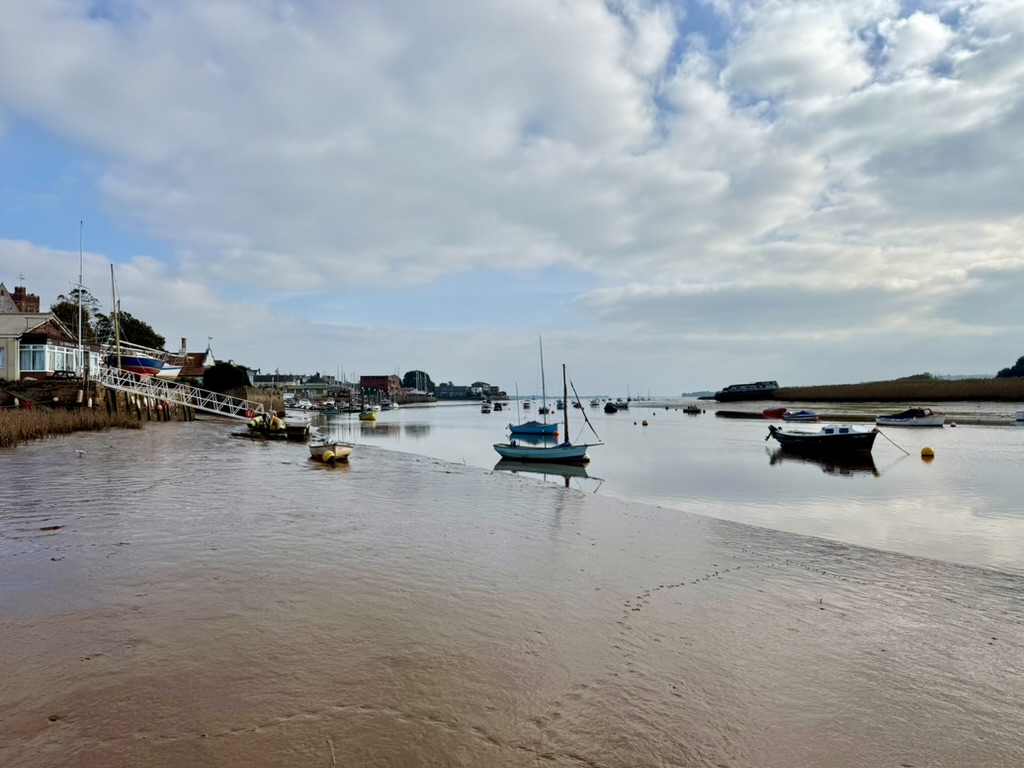
Looking for the best things to do in Topsham, Devon? This historic estuary town combines riverside walks, independent shops, antiques, traditional pubs and birdwatching, all within easy reach of Exeter and Exmouth.
Lying beside the River Exe, Topsham was once a busy port with shipyards and international trading links. Its maritime past is still visible around Topsham Quay, The Strand, and the town’s distinctive merchant houses. Today, it is one of the most attractive places to visit in East Devon, whether for a car-free day out or a longer stay.
Topsham’s narrow streets and period buildings are home to independent shops, galleries, cafés and antiques centres. Around the waterfront, riverside pubs and wide estuary views reflect the town’s working past.
Walking is another reason to visit Topsham. The Goat Walk leads towards Bowling Green Marsh, one of the best places for birdwatching on the Exe Estuary, while the Exe Estuary Trail provides walking and cycling routes towards Exeter and Exmouth. Nearby, Woodbury Common offers open heathland and countryside walks, while Powderham Castle and its deer park lie across the estuary.
Although Topsham has formed part of the City of Exeter since the late 1960s, it retains its own identity and sense of local life. Regular trains on the Avocet Line make it easy to reach from Exeter or Exmouth without a car, and to combine a visit with other places around the Exe Estuary.
This complete Topsham visitor guide covers the best things to do and see, including Topsham Quay, local shops, walks, and attractions, along with practical advice on transport, food, accommodation, and planning your visit.
Topsham at a Glance
Location: Topsham is a historic estuary town beside the River Exe, between Exeter and Exmouth in Devon.
Best known for: Maritime history, independent shops, antiques, riverside pubs and attractive buildings around Topsham Quay and The Strand.
⭐ Top Topsham attractions: Topsham Quay, the Goat Walk, Bowling Green Marsh, Topsham Quay Antiques Centre and Darts Farm.
🌿 Best walk: Follow the Goat Walk beside the Exe Estuary and continue towards RSPB Bowling Green Marsh.
🆓 Best free things to do: Explore Topsham Quay, walk beside the River Exe, browse the independent shops and visit the riverside garden at Topsham Museum.
🛍️ Best for shopping: Fore Street, the High Street and The Strand have independent shops, galleries, food businesses, books, antiques and homeware.
🦆 Best for wildlife: Bowling Green Marsh and the Exe Estuary are particularly rewarding for birdwatching during autumn and winter.
⏱️ Time to allow: Half a day for the quay, shops and Goat Walk, or a full day if you also visit Bowling Green Marsh, Darts Farm or The Turf.
🚆 Getting there: Regular Avocet Line trains connect Topsham with Exeter and Exmouth. The station is within easy walking distance of the town centre and quay.
🚲 Car-free visits: Topsham is easy to reach by train, bus or bicycle, and the Exe Estuary Trail passes through the town.
🅿️ Parking: Holman Way and Matthews Hall are the main car parks. Spaces at Topsham Quay are limited and can be affected by high tides.
Best for: Riverside walks, maritime history, independent shopping, antiques, birdwatching, food and car-free day trips from Exeter.
🗺️ Planning your visit? Continue to the best things to do in Topsham, Topsham Quay, Goat Walk and Bowling Green Marsh, Topsham shops, transport and parking advice, places to eat and drink or places to stay.
Disclosure: Some links on this page are affiliate links. If you follow one and make a booking or purchase, we may receive a small commission at no extra cost to you. This helps support our independent guides. We also link to non-affiliate websites that we believe will be helpful. As an Amazon Associate, we earn from qualifying purchases.
- Topsham at a Glance
- Map of Topsham, England
- A Brief History of Topsham, Devon
- Best Things to Do in Topsham, Devon
- Topsham Shops: Fore Street, Independent Shops and Antiques
- What's On in Topsham, Devon: Events and Local Highlights
- How to get to Topsham and Travel Around
- Where to eat and drink in Topsham
- Where to Stay in Topsham, Devon
- Weather and Tide Times in Topsham, Devon
- Practical Information for Visiting Topsham, Devon
- Topsham, England FAQs
- Is Topsham worth visiting?
Map of Topsham, England
Use the map of Topsham below to locate the town centre, Topsham Quay, the Goat Walk, Bowling Green Marsh and the railway station. Most of Topsham’s shops, pubs and best places to visit are within easy walking distance, making the town straightforward to explore without a car.
A Brief History of Topsham, Devon

Topsham’s history is closely connected with the River Exe and the growth of nearby Exeter. In Roman times, Exeter was known as Isca Dumnoniorum and stood near the upper reaches of a much wider estuary. By the medieval period, ships carried wool, wine, salt, and other goods along the river.
Topsham developed as Exeter’s outer harbour, where deeper water allowed larger vessels to load and unload. Its importance increased during the late thirteenth century when the Courtenay family, Earls of Devon, built weirs across the Exe at Countess Wear. These powered their mills but restricted navigation to Exeter, forcing the city’s merchants to move goods through Topsham.
In 1563, Exeter began building the Exeter Ship Canal to bypass the weirs and restore direct access to the city. Even after the canal opened, Topsham remained an important port, shipbuilding centre and transfer point between larger vessels and smaller barges travelling upriver.
During the seventeenth and eighteenth centuries, Topsham became particularly prosperous through exporting Devon serge cloth to Holland and Flanders. Ships returned with bricks, tiles, timber, wine and other goods. The Dutch-style gables and merchant houses around Topsham Quay and The Strand remain among the most visible reminders of this international trade.
The arrival of the railway and changes in shipping gradually reduced Topsham’s importance as a working port during the nineteenth century. Shipbuilding and commercial activity declined, while the town developed into a residential community and a popular place to visit.
Today, Topsham forms part of the City of Exeter but retains its own unique identity. Its historic streets, independent shops, riverside pubs and surviving maritime buildings continue to reflect centuries of life beside the Exe Estuary.

Best Things to Do in Topsham, Devon
Topsham may be small, but there is plenty to see and do around its historic streets, quay and riverside. Most of the main Topsham attractions are within walking distance, making it easy to combine the town’s maritime history, independent shops, estuary walks and wildlife in one day.
Topsham Museum and Town Trails

Topsham Museum occupies a historic house close to The Strand and Topsham Quay. Its collections explore local shipbuilding, estuary wildlife, domestic life and the people who shaped the town, with maritime tools, ship models, costumes and photographs.
The museum is currently closed for major structural repairs, although its riverside garden remains open and visitors can explore exhibitions online. Check the museum website for the latest information before visiting.
The museum’s downloadable Topsham Town Trails are still a handy way to explore. One route follows the river and returns through Fore Street, while a longer Topsham walk continues along the Goat Walk and past Bowling Green Marsh.
Topsham Quay and Antiques Centre

Topsham Quay is a natural starting point for exploring the town. Historic warehouses, traditional pubs and waterfront buildings reflect Topsham’s maritime past, while the quay has wide views across the River Exe. It is particularly attractive around high tide, when the water fills the upper estuary.
The quay is also home to Topsham Quay Antiques Centre. This popular multi-dealer centre occupies a former postwar flour-storage building and is filled with furniture, glassware, ceramics, silver, paintings, and curios. Allow an hour or two if you enjoy browsing antiques and collectables.
Parking is available beside Topsham Quay, but spaces are limited, and the car park can become busy. Holman Way and Matthews Hall provide alternatives within walking distance.
The Goat Walk and Bowling Green Marsh
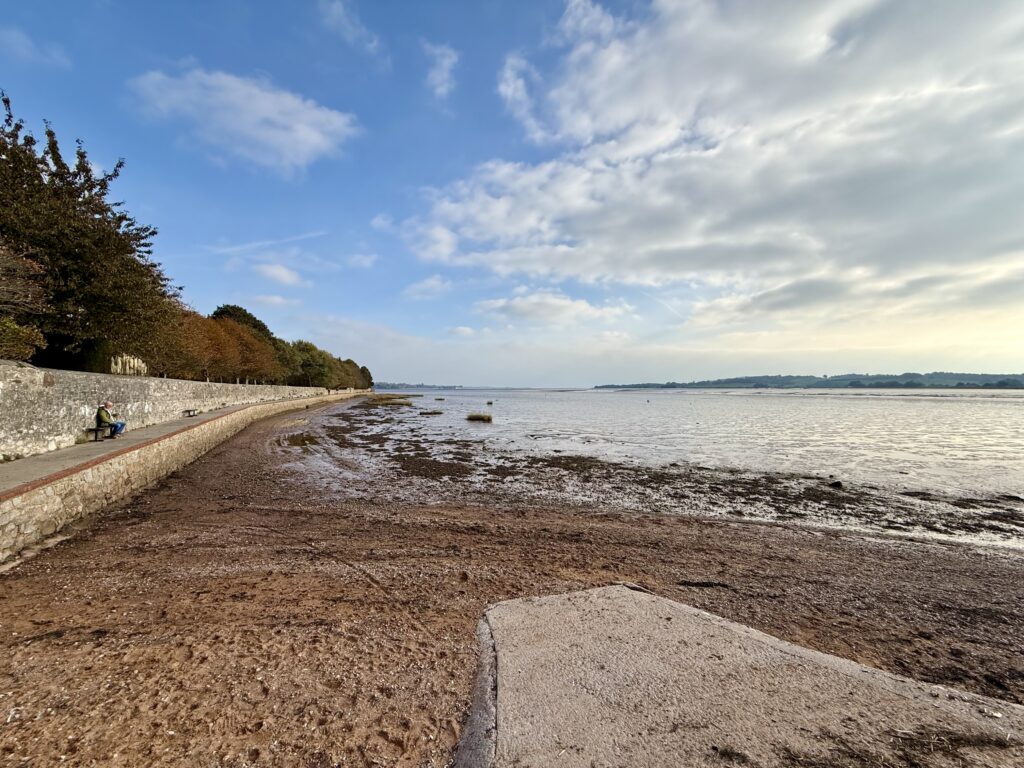
The Goat Walk is one of the best short walks in Topsham, following the edge of the Exe Estuary from the southern end of the town. It offers open river views, passing boats and some particularly attractive sunsets across the water.
At low tide, wading birds feed across the exposed mudflats. A rising or high tide pushes them closer to the shore and towards the nearby wetlands, making this a rewarding area for birdwatching year-round.
Continue beyond the Goat Walk to reach RSPB Bowling Green Marsh and Goosemoor, where the River Exe meets the Clyst. The wheelchair-accessible Lookout hide overlooks pools visited by wigeon, dunlin, black-tailed godwits, avocets and little grebes, particularly during autumn and winter.
The paths are mostly level and easy to reach from Topsham town centre. For a longer outing, follow the museum’s self-guided trail and return through the historic streets around The Strand and Fore Street.
Walk or Cycle the Exe Estuary Trail
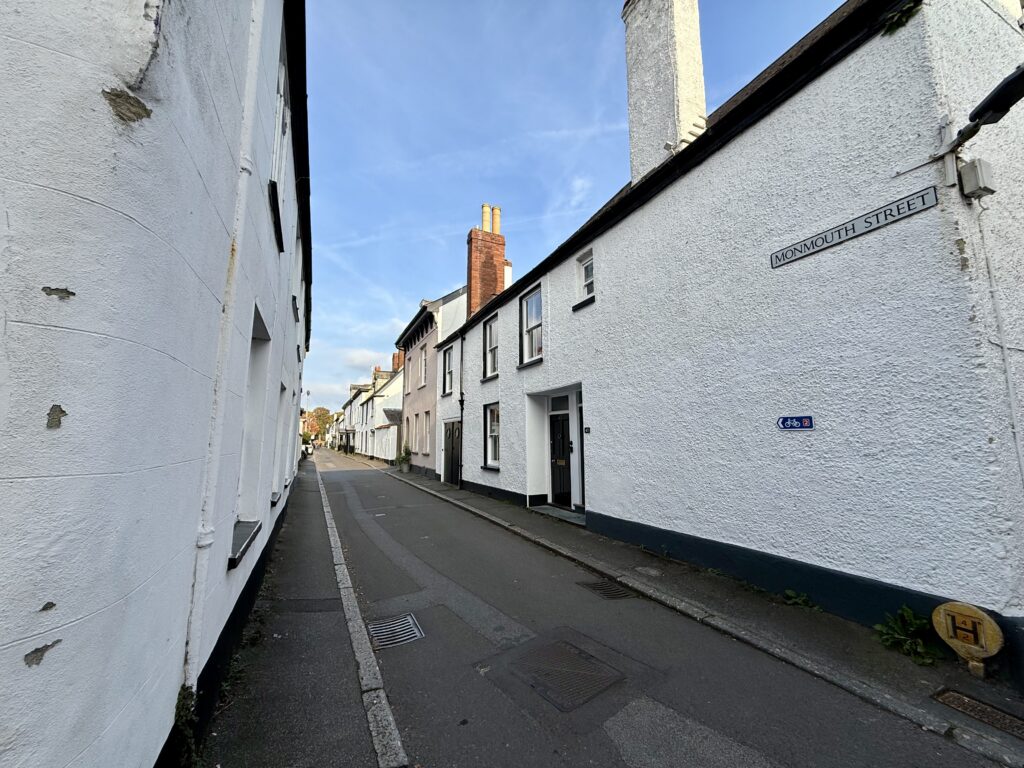
The Exe Estuary Trail passes through Topsham on its route between Exeter and Exmouth. The mostly level trail follows the river and estuary, making it suitable for walking and cycling.
A route north beside the river leads towards Exeter, while heading south takes you past Bowling Green Marsh and onwards through Exton to Lympstone and Exmouth. Stations along the Avocet Line make it easy to walk or cycle in one direction and return to Topsham by train.
One of the most enjoyable options is to follow the Exe Estuary Trail to Lympstone, a beautiful waterside village with narrow lanes, historic buildings and a small harbour. The Swan Inn is close to Lympstone Village station, while High Tide café and the village shop provide further places to stop for refreshments.
From Lympstone, you can return to Topsham by train or continue beside the estuary to Exmouth for a longer day out. Regular trains from Exmouth make the return journey straightforward.
Route 2 Bikes offers cycle hire on Holman Way, which, as an aside, follows part of the former railway route to Topsham Quay.
Take the Topsham Ferry

Seasonal ferries provide another way to experience the Exe Estuary. The Topsham Ferry crosses the river to the western bank, where paths continue towards the canal, marshes and Powderham estate.
A separate direct ferry has previously operated between Trout’s Boatyard in Topsham and The Turf, but its 2026 operating schedule has not been confirmed. Check the Topsham to Turf Ferry website or contact the operator before planning a journey around this service.
The Turf stands beside the Exeter Ship Canal in an isolated position overlooking the estuary. Reachable only on foot, by bicycle or by water, it is a popular place to stop for food or a drink during a walk or ferry trip. Opening days and food service hours vary through the season.
Sailing and Watersports on the Exe
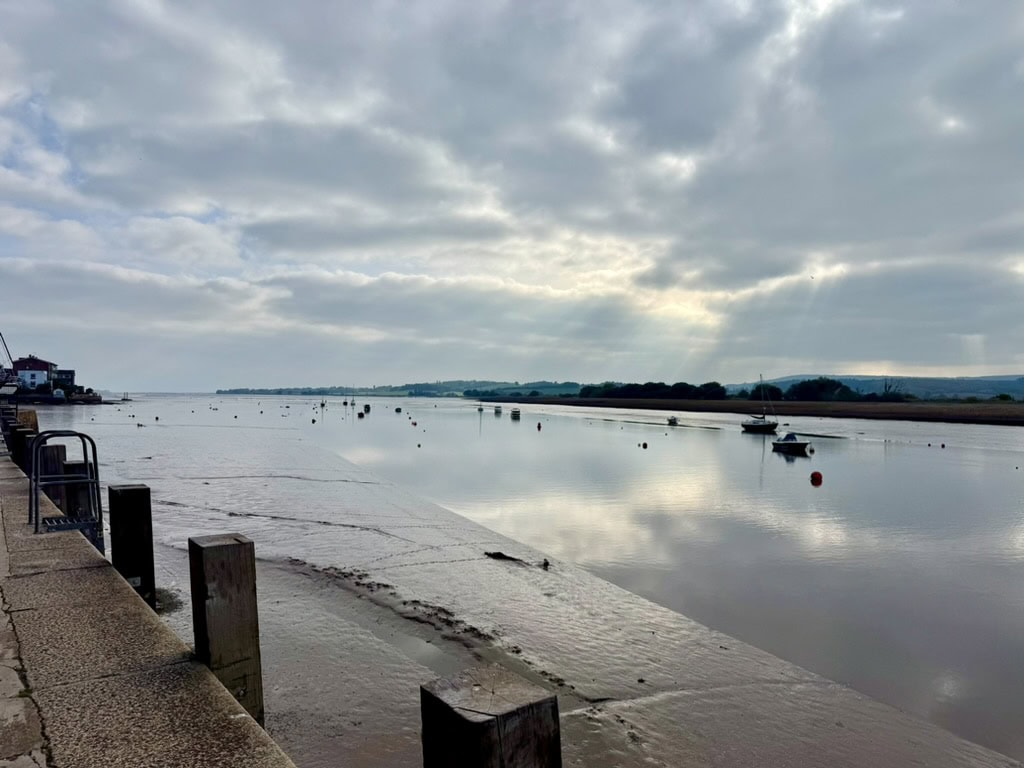
Sailing remains part of everyday life in Topsham. Topsham Sailing Club runs cruiser and dinghy racing, while the annual River Exe Regatta brings together clubs from around the estuary.
The sheltered upper estuary and Exeter Ship Canal are also suited to kayaking, canoeing and paddleboarding. Equipment hire is available around Exeter Quay, while Exmouth offers additional hire centres and lessons for those looking for more open-water or coastal routes.
Swim at Topsham Outdoor Pool
Topsham Outdoor Pool is a heated 25 metre swimming pool in the centre of the town. Usually open from spring until September, it offers public swimming sessions and activities for families, making it an enjoyable addition to a summer visit to Topsham.
Opening hours vary throughout the season, and some sessions have restricted availability, so check the current timetable before visiting.
Visit Darts Farm
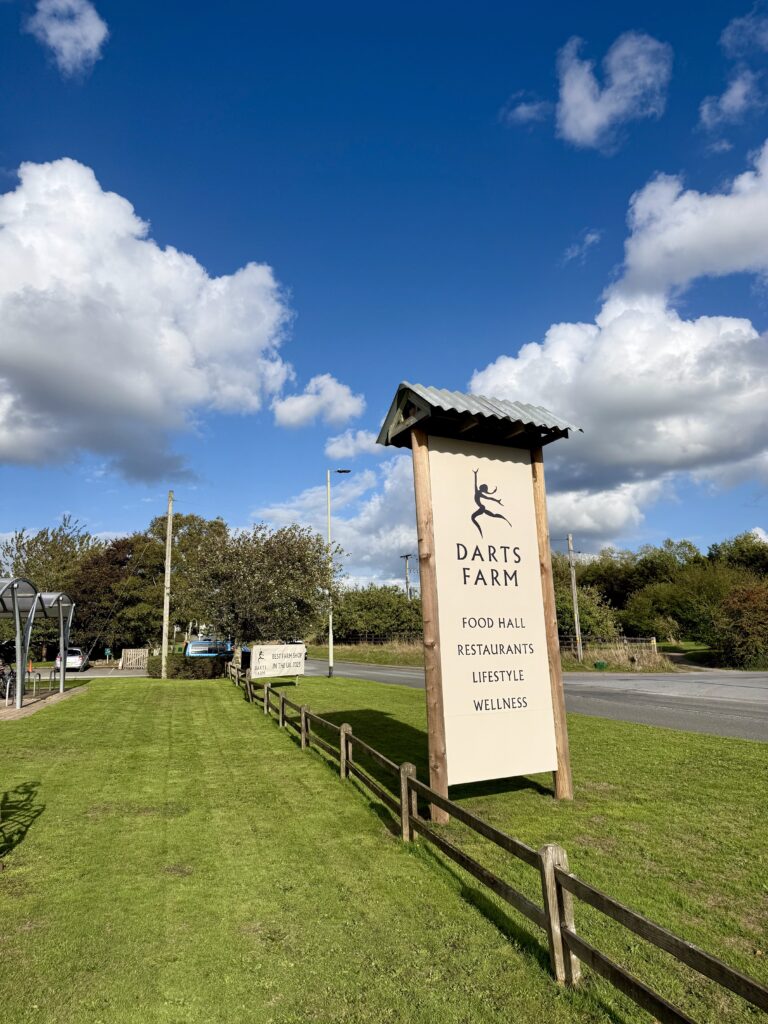
Darts Farm is just outside Topsham and is far more than a traditional farm shop. It has become a substantial food, shopping, and leisure destination that can easily fill half a day.
The food hall includes master butchers, a bakery, seasonal fruit and vegetables, a deli, chocolatier and a well-stocked drinks cellar. There are several places to eat and drink, ranging from restaurants and cafés to fish and chips from The Fish Shed and refreshments outside on the terrace.
Darts Farm also contains a range of independent and specialist retail outlets, including Cotswold Outdoor and an RSPB shop, alongside homeware, gifts, garden products and a wellness spa. Most of the food hall and retail areas are indoors, making it one of the best things to do near Topsham when it is raining.
In better weather, families can explore the play area, fort and assault course or visit the animal corner. Depending on the season, children may see Poll Dorset sheep, Saddleback pigs and the farm’s Ruby Red Devon cattle. The farm also offers farm walks, wetlands, fishing ponds and Pebblebed Vineyard.
A changing programme of events includes food tastings, workshops, vineyard tours and seasonal activities such as the maze, sunflower picking and Pumpkin Fest. Check the current programme before visiting, as many activities are seasonal and some require advance booking.
Darts Farm can be reached from Topsham on foot or by bicycle using routes connected with the Exe Estuary Trail. It can become busy at weekends and during major events, so allow plenty of time if combining it with Topsham town centre.
Topsham Shops: Fore Street, Independent Shops and Antiques

Topsham’s town centre is a pleasure to explore. More than 50 independent businesses trade around Fore Street, the High Street, The Strand and the surrounding lanes, giving the town a distinctive character rarely found in larger shopping centres.
Topsham shops include boutiques, galleries, jewellers, gift and homeware shops, food specialists and places selling vintage and pre-owned items. The Topsham Bookshop on Fore Street is particularly worth seeking out, with second-hand books covering subjects including Devon, travel, history, transport, art and literature.
Topsham Quay Antiques Centre is the main destination for antiques, but it is far from the only reason to browse. The town’s smaller shops feel rooted in the local community, while the Saturday market at Matthews Hall brings together food, crafts and independent traders.
Everyday services are available too, including a pharmacy, Post Office, convenience stores and local grocers. This helps Topsham feel like a lived-in town rather than somewhere maintained solely for visitors.
What’s On in Topsham, Devon: Events and Local Highlights

The Exe Estuary shapes the town’s feel year-round. In spring, birdlife returns to the shore and the first warmer days make the Goat Walk and riverside paths especially inviting.
Summer brings a livelier atmosphere around the quay, with events such as the River Exe Regatta and Topsham Charter Day over the August Bank Holiday.
Autumn suits slower estuary walks and includes Heritage Open Days, while winter brings a quieter, more atmospheric side of the town.
The town also has a steady calendar of community events. Regular favourites include the Saturday Market at Matthews Hall, the Topsham Christmas Lights switch-on and a Topsham Christmas Market in early December. In some years, Topsham Secret Gardens offers a chance to explore private gardens.
Nearby, larger events within easy reach include the Darts Farm Summer Festival, Exmouth Festival, the Exeter Cathedral Christmas Market and the Devon County Show.
For more ideas and up-to-date listings, see our What’s On in South West England page.

How to get to Topsham and Travel Around

Topsham is just off the A376 between Exeter and Exmouth. Although it is only a short drive from either, we’ve found parking in Topsham can be difficult. Given the town’s excellent train and bus links, as well as its position on the Exe Estuary Trail, we think Topsham is generally best visited on foot, by bicycle, by bus or by train.
Getting to Topsham by Train
The train journey is an enjoyable part of a visit to Topsham. Direct services generally run between Paignton and Exmouth, passing through Torquay, Newton Abbot and Exeter before continuing to Topsham.
The section between Exeter and Exmouth is known as the Avocet Line. Beyond Topsham, the railway follows the River Exe through Exton and Lympstone, offering beautiful views across the estuary before reaching Exmouth. With regular services connecting the towns and villages along the route, it is one of the easiest and most enjoyable ways to explore the Exe Estuary without a car.
The station is within easy, mostly level walking distance of Fore Street, Topsham Quay and the town’s main attractions.
Buses, Walking and Cycling
Regular buses connect Topsham with Exeter, Exmouth and surrounding communities. The Exe Estuary Trail also passes through the town, providing a largely traffic-free route for walkers and cyclists.
Once you arrive, Topsham is compact and best explored on foot. The town centre, quay, Goat Walk and Bowling Green Marsh are all within easy reach.
Parking in Topsham
Parking in Topsham is limited, and we have found that the main car park on Holman Way can fill quickly, particularly at weekends and during the summer. Other council pay-and-display options include Tappers Close beside Matthews Hall and Topsham Quay, although the quay has only a small number of public spaces. During winter, part of the quay is used for storing boats, further reducing available parking.
On-street parking is very limited in and around the town centre, and many surrounding streets are narrow or restricted. If travelling from Exeter, Exmouth or elsewhere along the Exe Estuary, arriving by train, bus, bicycle or on foot will often be easier than driving.
Where to eat and drink in Topsham

Topsham has become a foodie destination in recent years, with an excellent choice of independent cafés, restaurants and atmospheric pubs. Its maritime history and setting beside the River Exe give many of these places a character that feels distinctly Topsham.
It is a lovely place to eat and drink year-round, whether you’re sitting outside beside the water on a sunny summer afternoon or settling into a cosy café or historic pub in winter. Route 2 Café near the quay serves breakfasts, coffee and cream teas, while Sara’s Petite Cuisine is known for its patisserie-style cakes and friendly service. For waterside surroundings, The Boathouse on Topsham Quay combines coffee and light refreshments with views across the estuary.
You will not be short of choice, particularly around Fore Street, The Strand and Topsham Quay.
Best Restaurants in Topsham
When it comes to restaurants, The Galley is Topsham’s long-standing fine dining favourite, with menus centred on fresh, locally sourced seafood. The Restaurant at The Salutation Inn serves polished modern British dishes in the elegant surroundings of a restored former coaching inn.
Denley’s Essence of India is another established favourite, serving award-winning contemporary Indian food. Meanwhile, South West Pizza Co near the quay offers a more informal choice with handmade pizzas, charcuterie and wine. Together, they give Topsham a varied dining scene that extends well beyond traditional pub food.
Topsham’s Historic Pubs
Just on the edge of Topsham and near Darts Farm, The Bridge Inn on Bridge Hill is a riverside classic with a nationally recognised historic interior and long-standing family stewardship; Queen Elizabeth II even visited in 1998, and cask ales are still served straight from the cellar.
In the centre, The Globe is a 16th-century coaching inn offering rooms and a full restaurant menu, making it a good all-round choice after a town walk. A few doors away, The Salutation Inn has been a public house since at least 1720; today, it’s known for its polished dining and handsome Georgian frontage.

Down on the quay, The Lighter Inn takes its name from the flat-bottomed boats that unloaded ships here; it remains a lively waterside spot for food and drinks after a stroll along the estuary.
By Topsham Ferry, The Passage House Inn sits in an 18th-century waterfront building with a history tied to the old crossing; it’s a scenic spot for lunch or a pint, with river views. The Lord Nelson adds a later-Victorian note to the line-up, long a locals’ favourite and still trading in the heart of town.
Where to Stay in Topsham, Devon

We really like Topsham. Although officially part of Exeter, it has its own distinctive character and identity, making it an appealing place to stay for business or leisure. Regular trains and buses make Exeter and Exmouth easy to reach, while Topsham itself offers an excellent choice of places to eat and drink. Its riverside paths are also ideal for an evening walk after a busy day exploring or working.
Places to Stay in Topsham
Accommodation in Topsham includes historic inns, bed and breakfasts and self-catering apartments. The Salutation Inn and The Globe both offer rooms in characterful buildings close to Fore Street, placing guests within walking distance of the shops, quay, restaurants and pubs.
For more independence, Route 2 Apartments near Topsham Quay offer self-catering facilities and space for bicycles, making them particularly convenient for anyone walking or cycling the Exe Estuary Trail.
Accommodation Near Topsham
You can also find places to stay just outside Topsham, with options for every budget. Lympstone Manor is the luxury choice, with views across the Exe Estuary and its own fine dining restaurant.
For straightforward road access and on-site parking, Premier Inn Exeter Countess Wear and the Courtyard by Marriott at Sandy Park provide practical alternatives within a short drive of Topsham.
For a more personal stay, Riverdown in Exton offers bed-and-breakfast accommodation, home-cooked breakfasts, and easy access to the Avocet Line.
Accommodation fills quickly during the summer, school holidays and popular local events, so booking early is sensible. If you are bringing a car, check whether parking is included before reserving. It is also worth confirming minimum-stay requirements, accessibility and pet policies directly with the accommodation.
Use the interactive map below to explore hotels and other places to stay in Topsham and the surrounding area, compare locations and check current availability.
Weather and Tide Times in Topsham, Devon
Topsham has a mild maritime climate influenced by the Exe Estuary. Summers are generally pleasant for exploring Topsham Quay, walking the Goat Walk and sitting outside riverside cafés. Spring and autumn often bring quieter streets and good walking conditions, while winter can be wetter and windier but is particularly rewarding for birdwatching.
Check the latest Topsham weather forecast with the Met Office or visit BBC Weather before travelling. Conditions beside the estuary can feel cooler and breezier than they do farther inland, so it is worth carrying an extra layer even on a fine day.
The tide table below shows the latest predicted high and low tide times for Topsham. Tide times and heights are predictions, so check local conditions as well, particularly when using the ferries, walking beside the estuary or parking near Topsham Quay.
Practical Information for Visiting Topsham, Devon
Topsham Practicalities
🛍️ Shops & supermarkets – independent stores along Fore Street; larger supermarkets and Darts Farm a short drive away.
🏥 Nearest hospital – A&E at Royal Devon & Exeter (Wonford). Call 999/112 for emergencies, 111 for health advice.
🚔 Police – served by Devon & Cornwall Police. Call 999/112 for emergencies, 101 for non-emergencies.
💊 Pharmacies – Topsham Pharmacy, Fore Street for prescriptions and advice.
🍽️ Restaurants – choice of riverside and town-centre dining, from pubs to refined modern British.
☕ Cafés & tea rooms – plenty of spots for coffee, cakes and cream teas.
🍺 Pubs & bars – historic inns and waterside pubs around the quay and ferry.
✈️ Nearest airport – Exeter Airport (approx. 15–20 mins by car, traffic dependent).
🚆 Railway station – Topsham station on the Avocet Line with regular services to Exeter and Exmouth.
🚌 Buses – frequent services linking Topsham with Exeter, Exmouth and nearby villages.
🅿️ Car parks – Holman Way, Matthews Hall and the Quay (check tides and signage at waterfront locations).
⛽ Petrol & EV charging – local fuel stations on main approaches; EV chargepoints signposted in town and at nearby sites such as Darts Farm.
💵 Banks & ATMs – cash machines available in town and at nearby supermarkets.
📮 Post Office – central Topsham for letters, parcels and other services.
🛏️ Hotels & B&Bs – town-centre rooms, riverside inns and self-catering nearby.
🚻 Public toilets – available at the quay.
🚶 Visitor information – online via Visit Exeter and local venues; Topsham Museum provides heritage info (building currently under restoration).
Other Helpful Links
- Booking.com – for most accommodation needs. Look out for options that include free cancellation.
- Easy Tide – Free UK tidal prediction service, providing tidal data and tide times for the current day and 6 days into the future.
- Expedia – good for flights and packages.
- GetYourGuide – Find and book things to see. Includes unusual things to do.
- Hostelworld – Hostel-focused booking platform that fosters connections among backpackers.
- Met Office – Weather forecasts from the UK official meteorological office.
- National Express – UK-based coach operator providing long-distance bus services
- Omio – Book travel tickets by comparing trains, buses and planes in one search.
- Rental Cars – to search out and book hire cars.
- Rome2Rio – Great for comparing local transport options (and for locating bus stops).
- Ticketmaster – What’s On – Major Events – Venues – Bookings
- Trainline.com – our go-to online platform for booking train and bus tickets, offering route planning, price comparisons, seat reservations, and ticket sales.
- Traffic England – for live traffic updates on major roads.
- Traveline SW – Comprehensive public transport information from A to B by bus, coach, train, and ferry in South West England and Great Britain.
- TripAdvisor – for reviews of… pretty much everything. Our go-to before booking anything.
- Vrbo – Great for self-catering and vacation holiday home rentals.
Topsham, England FAQs
Is Topsham part of Exeter?
Yes. Topsham is within the City of Exeter boundary but retains its own riverside character, town centre and distinctive identity.
Is Topsham Museum open?
Topsham Museum is currently closed for major structural repairs, and a reopening date has not yet been announced. Its riverside garden remains open, while self-guided town trails and museum displays are available online.
Does the Exe Estuary Trail pass through Topsham?
Yes. The shared walking and cycling route links Topsham with Exeter, Exton, Lympstone and Exmouth. Much of the route around Topsham is level, with convenient access near the quay and railway station.
Are there ferries from Topsham?
The seasonal Topsham Ferry crosses the River Exe to the western bank, where paths continue towards the Exeter Ship Canal and The Turf. A separate direct ferry has previously operated between Trout’s Boatyard and The Turf, but its 2026 schedule has not been confirmed. Check with the relevant operator before travelling, as services depend on tides, weather and operating conditions.
Where can I park in Topsham?
The main council car parks are Holman Way, Tappers Close, Matthews Hall and Topsham Quay. Spaces are limited, particularly at weekends and during summer. Part of the quay is used to store boats during winter, further reducing availability. On-street parking is also very limited, so travelling by train or bus is often easier.
Is Topsham good for birdwatching?
Yes. RSPB Bowling Green Marsh and Goosemoor are on the edge of Topsham. High tides during autumn and winter can bring large numbers of wading birds within easier viewing distance.
Are dogs allowed on the estuary paths?
Dogs are allowed on many paths around Topsham. Keep them under close control, use a lead around livestock and sensitive wildlife habitats, and follow any seasonal notices.
What are the historic pubs in Topsham?
Historic Topsham pubs include the Bridge Inn, the Globe, the Salutation Inn, the Passage House Inn, the Lighter Inn and the Lord Nelson. Several occupy characterful buildings close to the town centre or waterfront.
Can I follow a self-guided walk around Topsham?
Yes. Topsham Museum’s downloadable town trails cover the quay, Fore Street and the Goat Walk, with longer variations continuing towards Bowling Green Marsh. You can also follow the Exe Estuary Trail towards Lympstone or Exeter and return by train.
When is the best time to visit Topsham?
Late spring to early autumn is well suited to riverside walks, seasonal ferry crossings and outdoor café stops. Autumn and winter are particularly rewarding for birdwatching, but bring suitable clothing and check the weather and Topsham tide times.
How do I get to Topsham without a car?
Topsham station is on the Avocet Line, with regular trains connecting the town with Exeter and Exmouth. Buses also serve Topsham, while the Exe Estuary Trail provides a largely traffic-free route for walkers and cyclists.
Is Topsham waterfront accessible?
Many parts of Topsham waterfront are level and step-free, including sections of the Exe Estuary Trail and the accessible hide at Bowling Green Marsh. Uneven surfaces, narrow streets and high tides can affect access in some places around the quay.
Does Topsham have an outdoor swimming pool?
Yes. Topsham Outdoor Pool is a heated 25 metre pool in the town centre. It usually opens from spring until September, with public swimming and family sessions. Opening times vary, so check the current timetable before visiting.
Is Darts Farm worth visiting?
Yes. Darts Farm is more than a traditional farm shop and can easily occupy several hours. It has a large food hall, restaurants, cafés, specialist shops, a play area, animal corner, farm walks and seasonal events. Its indoor food and retail areas also make it a useful option when it is raining.
Is Topsham worth visiting?
Yes, Topsham is well worth visiting. Just a short journey from Exeter by car, bus or train, it feels like a different place altogether. The town is known for its independent shops, food scene, riverside pubs, parks and walks, along with easy access to the Exe Estuary Trail, making it a good choice for a day trip or a longer stay.
It suits exploring on foot, starting at the quay and following the river or heading into town for cafés and pubs. Topsham is lively in summer but quieter in winter, when the estuary and surrounding walks feel more peaceful. With its riverside views, historic buildings and an easy-going atmosphere, it stands out as a small town on the Exe Estuary.
Over to you … have you recently travelled to South West England? What worked for you? What advice would you give to others? Please leave your comments below or join in the discussion in our Facebook Group.
New to South West England or returning after a while? Start with our ‘Travel Basics’ – quick guides packed with tips to help you plan your trip.

