

This East Devon travel guide covers some of the best places to visit in East Devon, including Exmouth, Sidmouth, Beer, Budleigh Salterton, Seaton, Honiton and the Jurassic Coast.
East Devon is an area we know well, having lived in Exeter, later near Ottery St Mary and now just over the border in Somerset. Below you’ll find our guide to East Devon’s coastal towns, beaches, market towns, attractions and countryside walks. Use the links at the top of the page to explore each destination in more detail and start planning your visit.
First, however, among East Devon’s many attractions is the coastline, and not just any coastline, but the world-famous Jurassic Coast, a UNESCO World Heritage Site that tells the story of 185 million years of geological history through layers of sandstone, chalk, and shale.
Fossil hunters search the East Devon beaches around Orcombe Point in Exmouth; walkers follow the red cliffs East from Exmouth. Yet, travel just a few miles inland and the landscape shifts to deep green valleys, lush Devon farmland, and wooded hills, dotted with market towns and thatched villages, some of which have changed little over the centuries.
For visitors, this variety is part of East Devon’s appeal. In a single day, you can cycle the Exe Estuary Trail from Exeter to Exmouth, perhaps pausing at the historic town of Topsham for coffee, then head to Budleigh Salterton to watch birdlife on the Otter Estuary, before returning to Exeter for a waterside meal on the historic quay.
Or you could spend the morning in Honiton’s antique shops, the afternoon walking through Beer & Branscombe’s narrow lanes, and the evening enjoying fresh seafood in a beachside café.
And, while it takes no more than an hour by car to get from one side of East Devon to another, it actually covers a large area – approximately 314 square miles (814 km²). Yet its population density is half the English average, giving it a sense of real space and openness that is rare in southern England.
The population’s average age is higher than the national average, reflecting its appeal to some of the more affluent retirees. However, it now includes Cranbrook, a planned new town located just outside Exeter, being built for the 21st century. East Devon continues to grow and evolve.
East Devon at a Glance
Best beach: Exmouth Beach
Best village: Beer
Best family attraction: Seaton Tramway
Best walk: South West Coast Path
Best wildlife: Seaton Wetlands
Best market town: Honiton
Best estuary views: Lympstone
Where is East Devon?

East Devon is a geographical region within the county of Devon. It stretches from Exeter down to the coast at Exmouth. It then follows the coast to Dorset and north, roughly to a line drawn just south of the M5 motorway.
We found that most towns and villages are easily accessible by public transport during the season. It makes a largely car-free visit to East Devon a real possibility.
With railway stations at Exeter, Exmouth, Honiton and Axminster, many places in East Devon are relatively easy to reach. A well-organised summer bus and rail network offers pretty good connections across the region, including Exeter and beyond.
10 Key Facts About East Devon
- Size and location: covers about 314 square miles (814 km²) from the edge of Exeter to the Dorset border.
- Population: around 150,000 residents with a density of roughly 190 per km² (492 per square mile), less than half the England average.
- Largest town: Exmouth, with about 35,500 residents and two miles of sandy beach.
- Villages: many picturesque options including Beer, Branscombe, Otterton, Sidbury and Colyton.
- New town: Cranbrook, first occupied in 2012, planned to grow towards 20,000 residents.
- UNESCO coastline: the Jurassic Coast records 185 million years of Earth history.
- Wildlife: the River Otter hosts England’s first legally established wild beaver population in centuries, with Seaton Wetlands a major reserve on the Axe.
- Festivals: Sidmouth Folk Festival, Beautiful Days, Budleigh Salterton Literary Festival and Ottery St Mary Tar Barrels headline the year.
- Heritage industries: Honiton lace, Beer stone and flour milling at Otterton Mill, recorded in Domesday Book in 1086.
- National Trust: highlights include Killerton, A La Ronde and Branscombe’s Old Bakery, Forge and Manor Mill, plus landscapes such as Dumpdon Hill.
Map of East Devon
Disclosure: Some of the outbound links on this page are affiliate links to sites that we use and would genuinely recommend. Using them doesn’t cost you extra, but it does help support this free guide. We also provide links to other sites that we believe may be helpful to you.
- East Devon at a Glance
- Where is East Devon?
- Map of East Devon
- From fossils to folk Festivals: A brief history of East Devon
- What Is East Devon Famous For?
- Which Towns Are in East Devon?
- Prettiest Villages in East Devon
- Best Things to Do in East Devon
- Best Sandy Beaches in East Devon
- What's On in East Devon: Festivals, Events and Shows
- Best Places to Stay in East Devon
- Best Places to Eat in East Devon
- Plan your Trip to East Devon
- Why We Love East Devon
- East Devon Frequently Asked Questions
From fossils to folk Festivals: A brief history of East Devon

East Devon’s story begins with its rocks. From west to east, Triassic sandstone at Orcombe Point in Exmouth gives way to Cretaceous chalk at Beer and, across the border in Dorset, Jurassic limestone at Lyme Regis. These layers have yielded ammonites, ichthyosaurs and traces of ancient forests, inspiring early geologists and today’s fossil hunters.
Humans have left deep marks, too. Bronze Age barrows crown the Blackdown Hills, and Iron Age hill forts such as Blackbury Camp and Woodbury Castle guarded the ridges. The Romans left quieter traces in coins, pottery and the Fosse Way, which ran from Lincoln to Exeter with a branch to the harbour at Axmouth, once a hub for trade with Gaul and the wider continent.
Iron Age Hill Forts to visit in East Devon
Blackbury Camp, managed by English Heritage and open to visitors, makes a fine walking destination amidst bluebells in spring.
Dumpdon Hill can be explored as part of the scenic National Trust land near Honiton.
Woodbury Castle lies within accessible heathland; look out for red flags, as it doubles as a military training ground at times.
Hawkesdown Hill is on private land with no public access; it is best experienced from a distance or from nearby coastal glimpses.

By the medieval period, East Devon’s coast was alive with small ports: Axmouth, Exmouth, Budleigh, Sidmouth, and Topsham. Inland, Honiton grew into a bustling market town, and villages such as Ottery St Mary and Colyton thrived around farming and fairs. Colyton’s rebellious streak in the Monmouth Rebellion of 1685 is still remembered; its support for the Duke of Monmouth led to harsh punishments in the Bloody Assizes.
The Duke of Monmouth’s Uprising & the Bloody Assizes
In 1685, the Duke of Monmouth, illegitimate son of Charles II, landed at Lyme Regis and gathered support across East Devon in a bold bid to seize the throne from James II. Villages such as Colyton were labelled “rebellious” for backing his cause, sending men to fight at the ill-fated Battle of Sedgemoor in Somerset. After Monmouth’s defeat, Judge Jeffreys led the infamous Bloody Assizes, a series of brutal trials in which hundreds were executed or transported to the colonies. The episode left a deep scar on East Devon’s communities, remembered as one of the most turbulent moments in the district’s history.
The 17th and 18th centuries witnessed the rise of lace-making, primarily in Honiton, as well as in smaller towns and villages such as Beer and Branscombe, which developed into a cottage industry. Bobbin lace from Honiton gained international fame.
By the Regency era, the focus shifted to leisure. In late Georgian and Regency Britain, doctors began prescribing sea bathing and coastal air. Fashionable society followed the royal example of George III at Weymouth and the Prince Regent at Brighton, making the English seaside a place to be seen.
At the same time, the Napoleonic Wars curtailed the Grand Tour. The aristocracy and rising middle classes sought homegrown alternatives, and East Devon, with its mild climate, dramatic Jurassic Coast scenery, and polite towns near Exeter, was perfectly positioned to capitalise.
Local investors responded: esplanades, assembly rooms, lodging houses and bathing machines appeared in Exmouth and Sidmouth; carriage roads improved under the turnpike trusts, making journeys from London and Bath easier; guidebooks praised the “picturesque” cliffs and valleys. By the 1810s–1820s, sea-cures, promenading and genteel social seasons had remade East Devon’s coastal towns as leisure resorts.
The arrival of the railway (with branch lines to Seaton, Sidmouth, Budleigh Salterton and Exmouth) made East Devon accessible, and tourism boomed.
When the Railway Reached East Devon
Railways arrived in East Devon on 19 July 1860 when the London and South Western Railway opened the Yeovil–Exeter extension via Honiton. Subsequent openings followed:
- Exmouth (Avocet Line): 1 May 1861
- Seaton branch: 16 March 1868
- Sidmouth branch: 6 July 1874
- Budleigh Salterton branch: 15 May 1897
East Devon – the wartime years

East Devon felt both world wars in very real ways. During the First World War, the commons and parks served as drill grounds, convalescent hospitals, and supply depots, supporting Exeter’s garrisons and the railway. Memorials in every town and village mark heavy local losses, while museum collections in places like Honiton keep the lace-making community’s wartime stories alive.
In the Second World War, the district became a defended coastline and a hive of air activity. RAF Exeter (near Clyst Honiton) operated Hurricanes and Spitfires from 1940 to 1941 and played a crucial role in defending the city during the 1942 Baedeker raids; today’s airport was built on the site of that fighter base.
North of Honiton, Dunkeswell Airfield was home to long-range patrol bombers and later served as the US Navy’s base for Atlantic anti-submarine missions, making it the only US naval air base on the British mainland. Nearby Upottery (Smeatharpe) was a US Air Force troop-carrier base. C-47s lifted paratroopers on the night of 5–6 June 1944 as D-Day began. Both have heritage centres which you can visit.
On the ground, the Taunton Stop Line ran down the Axe Valley to Seaton with pillboxes, anti-tank obstacles and roadblocks; you can still spot concrete defences along rivers, lanes and field edges. Coastal lookouts, decoy sites and radar installations dotted the cliffs and commons, while beaches were mined and wired.
Traces remain everywhere if you know where to look: airfield runways and memorials at Dunkeswell and Upottery, pillboxes near the Axe and Colyford, coastal gun and searchlight positions above Beer and Branscombe, and exhibition panels in local museums. If you enjoy walking, you are sure to spot some of them.
Post-War East Devon

After 1945, East Devon moved from defence back to leisure. Wartime airfields found new roles, with Exeter becoming a civilian airport (Exeter International Airport) and Dunkeswell a busy general aviation base. Seaside towns rebuilt their seasons around promenades and regattas, and the Sidmouth Folk Festival took root. Rail closures in the 1960s led to a shift in visitors to the roads; at the same time, car ownership rose. Conservation gathered pace with the East Devon Area of Outstanding Natural Beauty, the Axmouth to Lyme Regis Undercliffs reserve and more coast and countryside cared for by the National Trust.
Exeter strengthened as the regional hub, attracting prestigious organisations such as the UK Meteorological Service (Met Office), and improved routes on the M5, A30, and A35 made weekend trips easier.
Festivals such as Beautiful Days and Budleigh’s Literary Festival broadened the East Devon calendar. Attractions and trails expanded, including the Donkey Sanctuary and the Exe Estuary Trail, and the Jurassic Coast gained UNESCO World Heritage status. The River Otter’s beavers were formally accepted, and the Lower Otter Restoration Project reconnected the floodplain and paths. Cranbrook’s creation shows ongoing change, while village pubs, farm shops and small museums keep local character to the fore.
What Is East Devon Famous For?
East Devon is best known for the Jurassic Coast, a UNESCO World Heritage Site that stretches along much of its coastline. The area combines dramatic red sandstone cliffs, chalk headlands, fossil-rich beaches and some of the most attractive seaside towns in South West England, including Exmouth, Sidmouth, Beer and Budleigh Salterton.
The district is also known for attractions such as the Seaton Tramway, the Donkey Sanctuary near Sidmouth, the Exe Estuary, Honiton lace and the historic Ottery St Mary Tar Barrels celebration. Annual events, including Sidmouth Folk Festival, Beautiful Days and the Budleigh Salterton Literary Festival, attract visitors from across the UK, helping to make East Devon one of Devon’s most popular destinations for walking, beaches, wildlife and outdoor activities.
Which Towns Are in East Devon?
The main towns in East Devon are Exmouth, Sidmouth, Honiton, Seaton, Axminster, Ottery St Mary, Budleigh Salterton and Cranbrook, a new town on the edge of Exeter, near Exeter Airport. The district also includes attractive villages and smaller communities such as Beer, Branscombe, Colyton, Colyford, Lympstone, Otterton and Sidbury.
From seaside favourites such as Exmouth and Sidmouth to quieter places including Budleigh Salterton, Beer and Branscombe, East Devon combines Jurassic Coast scenery with traditional seaside charm. Exmouth is known for its sandy beach and watersports, while Sidmouth offers a Regency seafront beneath dramatic red cliffs.
Further inland, Honiton provides antiques and market-town character, while Topsham, Lympstone, Ottery St Mary and Axminster offer estuary views, historic streets and easy access to the surrounding countryside. Together, these towns and villages showcase the variety that makes East Devon such an interesting place to visit and explore.
Exeter – The county town of Devon

Although Exeter is not part of the East Devon district, it is Devon’s county town and a useful gateway to the area.
Highlights include the magnificent Exeter Cathedral and Roman walls, the revamped Quayside with its cafés, pubs, and waterside walks, as well as museums such as the Royal Albert Memorial Museum (RAMM) and the rather unusual medieval Underground Passages. It is compact and walkable, yet well-connected by the M5 motorway, the Great Western Railway, and local lines (South West Railway), making it a perfect base for day trips along the Exe Estuary Trail to Exmouth and the Jurassic Coast.
Topsham & Lympstone

Topsham is a handsome estuary town on the River Exe, featuring Dutch gables, independent shops and cafés, the Topsham Museum, and easy wildlife watching at RSPB Bowling Green Marsh. It works brilliantly as a slow day out from Exeter or Exmouth, with waterside pubs, antiques, and a little ferry across to Turf Locks and the entrance to the Exeter Ship Canal, as well as flat cycling or walking on the Exe Estuary Trail.
Lympstone is a pretty waterside village between Topsham and Exmouth with narrow lanes, pastel cottages and a small harbour that opens onto vast estuary views at low tide. It sits right on the Exe Estuary Trail for effortless walks and bike rides, has trains on the Avocet Line, pubs on The Strand and the distinctive Peters Tower looking out over the mudflats and boats.
Exmouth – East Devon

Exmouth is East Devon’s classic seaside town: two miles of golden sand, a lively esplanade and marina, and easy days on the water from paddleboarding to boat trips on the Exe. It anchors one end of the Jurassic Coast at Orcombe Point’s Geoneedle, links Exeter via the Avocet Line, and opens the Exe Estuary Trail for traffic-free cycling to Topsham and beyond. With family attractions, independent shops and cafés, and big-sky sunsets over the bay, it’s a friendly, well-connected base for coast-and-countryside breaks.
Budleigh Salterton, East Devon

Budleigh Salterton is a peaceful seaside town framed by red Triassic cliffs and a sweeping two-mile pebble beach, with the Otter Estuary Nature Reserve at its eastern end and easy South West Coast Path walking in both directions. The level, former railway path links inland towards Exmouth, while low-effort nature trails and new footbridges created by the Lower Otter Restoration Project make birdwatching simple year-round.
In town, you will find a compact high street of independents, the thatched Fairlynch Museum, and easy half-day trips to Bicton Park Botanical Gardens and nearby Otterton Mill, all adding to Budleigh’s unhurried, quietly genteel feel.
Sidmouth, England

Sidmouth is a genteel seaside town in the East Devon AONB with red sandstone cliffs, a shingle beach and an elegant Regency esplanade. The South West Coast Path runs through town, with short climbs to Peak Hill and Salcombe Hill for wide sea views, while the Byes riverside park offers easy walking beside the River Sid.
Highlights include Jacob’s Ladder and Connaught Gardens above the western beach, the small but engaging Sidmouth Museum, and the hilltop Norman Lockyer Observatory, with the Donkey Sanctuary a short hop east. It is compact, suitable for walking and ideally placed for day trips to Budleigh Salterton, Branscombe, Beer and Seaton.
Beer & Branscombe, Devon

Beneath white chalk cliffs, the working fishing cove at Beer has boats hauled up on the shingle and beach cafés serving fresh crab. Cliff-top walks lead to Seaton and Branscombe, and underground tours explore the vast Beer Quarry Caves, which were first worked in Roman times.
Branscombe is one of England’s longest villages, strung along a wooded valley to a shingle beach; the National Trust’s Old Bakery tearoom, Manor Mill and the thatched Forge anchor its heritage, while pubs and green lanes make it a gentle, timeless day out.
Seaton – Home of Seaton Tramway

Seaton is a quieter Jurassic Coast base where a broad pebble beach meets the Axe Estuary and the little harbour at Axmouth. It’s known for the Seaton Tramway that rattles through the Seaton Wetlands nature reserves, easy coastal walks to Beer and Branscombe, and geology that showcases all three Mesozoic periods. Add Roman-to-Victorian history, bird hides and walks, and a relaxed seaside feel, and you have a calm, well-placed town for coast-and-countryside days.
Colyton & Colyford

Colyton and Colyford sit a short way inland along the Axe Valley near Seaton.
Colyton is known as the most rebellious town in Devon and has a compact historic centre centred around the Market Place, featuring St Andrew’s Church, Colyton Heritage Centre, and lanes lined with old houses, cafés, and pubs. The Seaton Tramway brings visitors through the wetlands to Colyton’s station, making it easy to explore on foot and to link up with riverside paths and the East Devon Way.
Barely a mile away, Colyford began as a medieval borough by the ford of the River Coly and today feels peaceful, with St Michael’s Chapel, the old filling station and welcoming pubs; each September it celebrates the Goose Fayre. Axminster is the nearest rail stop, and buses connect to Seaton, making for a simple day out in the countryside and along the coast.
Axminster

Axminster is a small market town at the head of the Axe Valley, best known for its carpet-weaving heritage founded by Thomas Whitty in the 18th century; you can still trace the story through the Axminster name today. It sits on the South Western Railway line between London Waterloo and Exeter, which makes it an easy inland base for the Jurassic Coast at Seaton and Beer. Nearby days out include the family-friendly Axe Valley Wildlife Park, the National Trust’s Shute Barton, and the lowland heath at Trinity Hill, which is perfect for quiet walks and taking in the valley views.
Honiton – East Devon’s market town

Honiton is a classic East Devon market town, renowned for its long Georgian High Street, famous for Honiton lace, and a lively antiques scene. It is also well-placed for walks in the Otter Valley and the Blackdown Hills. Visit Allhallows Museum for world-class lace displays, browse the antiques centres, and dip into the Thelma Hulbert Gallery for contemporary art.
The town’s story runs from Iron Age hill forts like Dumpdon and Hembury through to wartime aviation at Dunkeswell and Upottery, and it celebrates its heritage with July’s Hot Pennies and the Honiton Agricultural Show in August. Trains on the London Waterloo line and easy road links on the A30 and A35 make Honiton a practical base for exploring the Jurassic Coast and nearby villages.
Ottery St Mary
Ottery St Mary is a characterful East Devon town situated on the River Otter, renowned for its magnificent St Mary’s Church, featuring cathedral-like fan vaulting, the November Tar Barrels tradition that races through its narrow streets, and its connections to the poet Samuel Taylor Coleridge, who was born there.
Wander alongside the River Otter, browse independent shops around the square and follow easy riverside paths for birdlife and beaver signs, then head a short way to Escot for gardens, woodland trails and summer events. With regular buses and handy road links to Sidmouth, Honiton and Exeter, Ottery makes a relaxed inland base with plenty of history and a lively calendar.
Woodbury Common & the Blackdown Hills
The surrounding landscapes are also of interest. Woodbury Common offers vast heathland and an Iron Age fort, with views stretching to the Exe estuary in one direction and the Jurassic Coast in another. To the north, the Blackdown Hills National Landscape provide ridges, valleys, and hidden lanes, dotted with barrows, hill forts, and wartime echoes. These quieter landscapes balance the coast, giving East Devon a depth and variety few regions can match. There is something for everyone.
Prettiest Villages in East Devon
East Devon is home to some of Devon’s most attractive villages, many of them tucked between the Jurassic Coast and the rolling countryside of the East Devon National Landscape. Beer is perhaps the best known, with its working fishing beach, white chalk cliffs and narrow streets lined with independent shops, cafés and galleries. Nearby Branscombe stretches along a wooded valley to the sea and is often described as one of the most unspoilt villages in Devon.
Other picturesque villages include East Budleigh, the birthplace of Sir Walter Raleigh; Otterton, with its historic mill and riverside setting; and Colyford, in the peaceful Axe Valley near Seaton Wetlands. One of our personal favourites is Lympstone on the Exe Estuary, where colourful cottages, waterside views and easy access to the Exe Estuary Trail create a wonderfully relaxed atmosphere. Sidbury, just north of Sidmouth, also retains much of its historic character. Whether you are looking for thatched cottages, estuary views or easy access to the South West Coast Path, East Devon offers no shortage of charming villages to explore.
Best Things to Do in East Devon

If you are planning things to do in East Devon, start with the UNESCO Jurassic Coast. Walk short sections of the South West Coast Path for Exmouth’s red cliffs, Sidmouth’s esplanade views, Budleigh Salterton’s long pebble sweep and the white chalk headlands around Beer. Easy half-day circuits link promenades with cliff viewpoints and picnic spots, and you can mix in watersports at Exmouth, gentle nature trails on the Otter Estuary and relaxed seafront time in Seaton.
For tourist attractions and visitor attractions, ride the Seaton Tramway through wetlands to Colyton, tour the vast Beer Quarry Caves and call in at National Trust sites in Branscombe, where the Old Bakery, Forge and Manor Mill tell a village story.
Killerton and A La Ronde add houses and gardens, while the Donkey Sanctuary near Sidmouth is a free favourite with sea views.
Families enjoy Bicton Park and Beer’s Pecorama. In Exeter, the Cathedral, RAMM, and the Underground Passages make a strong rainy-day trio, with smaller museums at Fairlynch in Budleigh and in Sidmouth for local history enthusiasts.
Connaught Gardens and Jacob’s Ladder lift you above Sidmouth beach, and Norman Lockyer Observatory brings stargazing into the mix. Round things off with the Exe Estuary Trail between Exeter, Topsham, Lympstone and Exmouth, boardwalks and hides at Seaton Wetlands, an antiques browse in Honiton, fresh crab on Beer’s shingle and thatched pubs close to Branscombe beach.
Wherever you base yourself, you are never far from a simple coastal walk, a nature reserve or a small museum that turns a day out into a story.
Best Sandy Beaches in East Devon
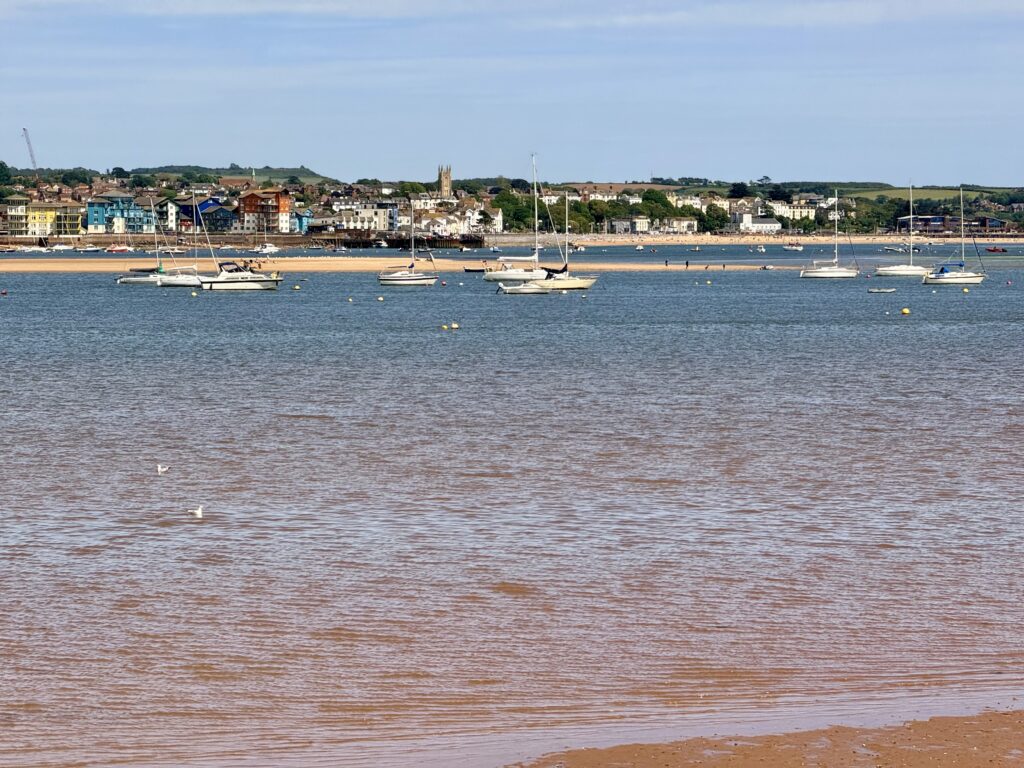
Although much of the East Devon coastline is known for its pebbles and dramatic cliffs, there are several sandy beaches. Exmouth Beach is the largest and best known, with around two miles of sand backed by a busy seafront. Sandy Bay, east of Exmouth, offers another popular sandy beach beneath the cliffs.
Elsewhere, Sidmouth and Seaton reveal areas of sand at low tide, while beaches such as Budleigh Salterton, Beer and Branscombe are predominantly shingle. For families looking for traditional bucket-and-spade beaches, Exmouth and Sandy Bay are usually the best choices in East Devon.
Visitors looking for a broader comparison can also read our guide to the best beaches in East Devon, which covers sandy beaches, family-friendly resorts, quieter coves, and some of the Jurassic Coast’s most scenic stretches.
What’s On in East Devon: Festivals, Events and Shows

There is always something happening. Check our What’s On page for festival dates, community events and seasonal highlights across Exmouth, Sidmouth, Budleigh, Beer, Branscombe, Honiton and the villages. You can subscribe to the calendar to keep new dates in your diary, and organisers can submit South West events for inclusion.
Summer brings the big hitters. The Sidmouth Folk Festival turns the town into a week of music, dance and crafts. Nearby, Escot Park hosts Beautiful Days, a family-friendly independent festival founded by The Levellers, with live music, theatre and art across a colourful August weekend. As spring tips into summer, the Exmouth Festival fills parks and the seafront with free concerts, community arts and family events. September then belongs to books as the Budleigh Salterton Literary Festival gathers writers, thinkers and readers in one of Devon’s most elegant seaside settings.
Rural tradition shines too. May sees the Devon County Show, and August features the Honiton Agricultural Show, one of the South West’s leading one-day farming events, celebrating livestock, local produce and rural crafts. Autumn evenings glow with the East Devon Carnival Circuit, a series of illuminated parades featuring floats, music, and a strong sense of community spirit. On 5 November, Ottery St Mary’s Tar Barrels blaze through the narrow streets, a centuries-old custom and one of Devon’s most dramatic spectacles. Together, these festivals and traditions bring music, fire, stories and community to every season.
Best Places to Stay in East Devon

East Devon offers a wide variety of places to stay, from seafront hotels and serviced apartments to country B&Bs, farm stays, cottages and relaxed lodge parks. Whether you want a classic beach break, a quiet village base or somewhere practical for walking and cycling, there are options for every style of trip.
Exmouth has the biggest choice, with hotels and apartments close to the long seafront and several holiday parks above Sandy Bay. Its rail link on the Avocet Line makes it especially convenient for car-free travellers. Sidmouth suits gentler escapes, offering Regency hotels and sea-view guesthouses near the Esplanade and the Byes. Budleigh Salterton is quieter, with small hotels and self-catering close to the level promenade and the Otter Estuary nature reserve.
Beer and Branscombe provide some of the most characterful places to stay, with thatched inns, pub rooms and valley-set cottages ideal for walkers exploring the South West Coast Path. Seaton is well suited to families and nature lovers, thanks to its sea-view apartments and easy access to the Tramway and Seaton Wetlands. Nearby Colyton and Colyford offer rural B&Bs, farm stays and peaceful countryside bases.
Further inland, Honiton has practical guesthouses on the A30 and A35 for exploring the Blackdown Hills. At the same time, Exeter’s city hotels make straightforward hubs for rail travel and days out along the Exe Estuary. Wherever you book, it is worth checking for parking, step-free access and dog-friendly facilities.
Holiday parks and campsites are a popular option across East Devon, particularly for families. Many enjoy coastal settings near Exmouth, Sidmouth, Budleigh Salterton, Beer, and Branscombe, offering the convenience of pools, splash zones, play areas, evening entertainment, and kids’ clubs during school holidays. They are close to beaches, coast path walks and easy days out such as the Seaton Tramway, the Donkey Sanctuary and Bicton Park.
Quieter parks lie slightly inland around Honiton, Colyton and the Blackdown Hills, with wider views, darker skies and simple access to riverside or countryside trails. Most offer a mix of accommodation, from touring pitches and static caravans to lodges and glamping pods, making them handy for mixed groups or extended families. Look out for sea views, EV charging, step-free units and dog-friendly options, and book early for summer and festival weeks.

Best Places to Eat in East Devon

Choosing places to eat in East Devon is half the fun. Seaside towns showcase the coast at its best, with Lyme Bay crab, Exe mussels and day-boat fish appearing on menus along the promenades in Exmouth, Sidmouth and Seaton. Beer and Branscombe add shingle-beach cafés and thatched pubs serving simple plates with sea views. Inland, the district leans into its rural strengths: bakeries, farm-shop kitchens and tearooms offering honest, seasonal food made with produce from local growers.
Honiton stands out for independent cafés serving coffee, cake and light lunches, ideal for browsing antique shops. Villages such as Colyton, Colyford and Newton Poppleford offer relaxed places for brunch or cream teas, while farm shops around the Otter and Axe valleys serve homemade soups, pastries and locally reared meats. Vegetarians and vegans are well catered for, and many places welcome both children and dogs.
Pubs are a highlight throughout East Devon. Expect a mix of waterside terraces, thatched inns and countryside locals with open fires. Exmouth and Topsham pour pints with estuary views, Sidmouth and Budleigh Salterton are known for fresh fish and traditional cream teas, and Beer and Branscombe combine real ales with timeless coastal settings. Menus often feature West Country ciders, real ales from Devon breweries and ingredients from nearby farms and fishing boats.

Planning around your day works well. A coast path walk between Seaton, Beer and Branscombe goes perfectly with a pub lunch, while the Exe Estuary Trail makes it easy to stop at Topsham or Lympstone for drinks or dinner. Honiton and Colyton offer traditional market-town inns ideal after antique hunting, countryside rambles or a trip on the Seaton Tramway through the wetlands.
Bookings are advisable during school holidays and major events such as the Sidmouth Folk Festival, but outside peak weeks, you can often wander and follow your nose. Walkers and cyclists will find plenty of mile-friendly pit stops along the Exe Estuary Trail and East Devon Way, while farm-gate stalls, local markets and food festivals offer easy chances to taste the best of the region.
Evenings tend to be relaxed and pub-led, with Exeter broadening the choice through its small-city mix of world flavours, independent restaurants and good pre-theatre dining. Smaller towns favour dependable favourites done well: fresh fish, Devon beef, local cheeses and proper puddings.
Plan your Trip to East Devon

East Devon is easy to reach. It is simple to explore and rewarding in every season. A car gives the most flexibility. However, public transport, cycling trails, and walking routes also allow you to see a lot without driving.
Quick Practicalities: Visiting East Devon
- Getting There: By car via the M5 and A30, by train via Honiton, Axminster, Exmouth, and Cranbrook, and by air through Exeter Airport.
- Getting Around: Car recommended for villages; trains and buses serve towns. Avocet Line (Exeter–Exmouth) and scenic cycle/walk routes like the Exe Estuary Trail and East Devon Way.
- When to Visit:
- Spring – blossom, wildflowers, and migrating birds.
- Summer – seaside buzz, family holidays, and major festivals.
- Autumn – colourful Blackdown Hills, literary festivals, and carnivals.
- Winter – quiet coasts, storm watching, and cosy pubs.
- Where to Stay: Sidmouth for Regency grace, Exmouth for activity and beach life, Beer and Branscombe for charm and cottages, Honiton for practical hub access, or rural B&Bs for tranquillity.
Other Helpful Links
- Booking.com – for most accommodation needs. Look out for options that include free cancellation.
- Easy Tide – Free UK tidal prediction service, providing tidal data and tide times for the current day and 6 days into the future.
- Expedia – good for flights and packages.
- Get Your Guide – find and book things to see. Includes unusual things to do.
- Hostelworld – Hostel-focused booking platform that fosters backpack connections.
- MetOffice – Weather forecasts from the UK official meteorological office.
- National Express – UK-based coach operator providing long-distance bus services
- Omio – Book travel tickets by comparing trains, buses and planes in one search.
- Rental Cars – to search out and book hire cars.
- Rome2Rio – Great for comparing local transport options (and for locating bus stops).
- Ticketmaster – What’s On – Major Events – Venues – Bookings
- Trainline.com – our go-to online platform for booking train and bus tickets, offering route planning, price comparisons, seat reservations, and ticket sales.
- Traffic England – for live traffic updates on major roads.
- Traveline SW – Comprehensive public transport information from A to B by bus, coach, train, ferry in South West England and Great Britain.
- TripAdvisor – for reviews of… pretty much everything. Our go-to before booking anything.
- Vrbo – Great for self-catering and vacation holiday home rentals.
Why We Love East Devon
For us, East Devon is about the views. From the Blackdown Hills, you can look across the Axe Valley. From Woodbury Common, you can see the River Exe and even Dartmoor in the distance.
We enjoy the coast in every season. Exmouth beach is perfect for long walks. Branscombe feels peaceful on a bright winter’s day. The South West Coast Path always offers fresh and changing views.
Among the villages, Beer stands out. There are many things to see throughout the year. There are plenty of places to eat and drink. It also makes a great walk from Seaton, another town we always enjoy.
The Tar Barrels in Ottery St Mary are hard to beat. They show the area’s spirit and tradition at their strongest.
What we like most is the rhythm of life. Summer is full of buzz and energy. Winter feels calmer and slower. This pattern is felt throughout the South West of England.
East Devon has something for everyone.
East Devon Frequently Asked Questions
When is the best time to visit East Devon?
What is East Devon famous for?
Which towns are in East Devon?
What are the prettiest villages in East Devon?
Are there sandy beaches in East Devon?
What are the top things to do in East Devon?
What are good places to stay in East Devon?
Are there dog friendly beaches in East Devon?
What are the main visitor attractions in East Devon?
How do I get to East Devon by train?
Can I explore East Devon without a car?
Which town makes the best base for exploring East Devon?
Where can I find what is on in East Devon?
Over to you … have you recently travelled to South West England? What worked for you? What advice would you give to others? Please leave your comments below or join in the discussion in our Facebook Group.
New to South West England or returning after a while? Start with our ‘Travel Basics’ – quick guides packed with tips to help you plan your trip.

