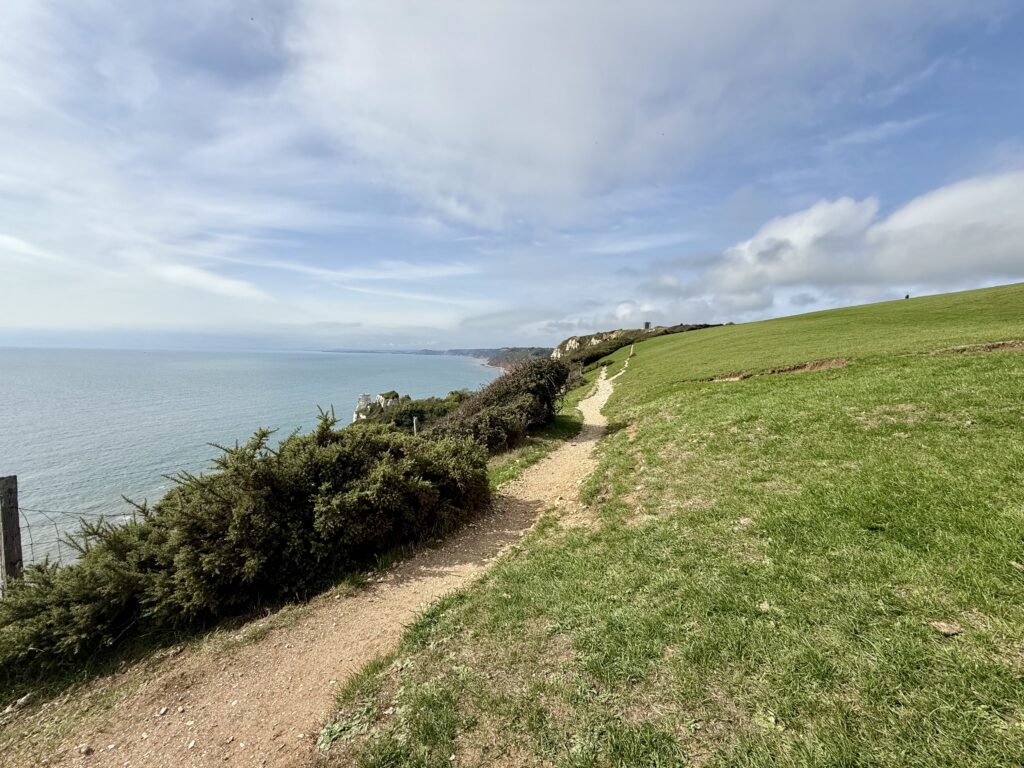
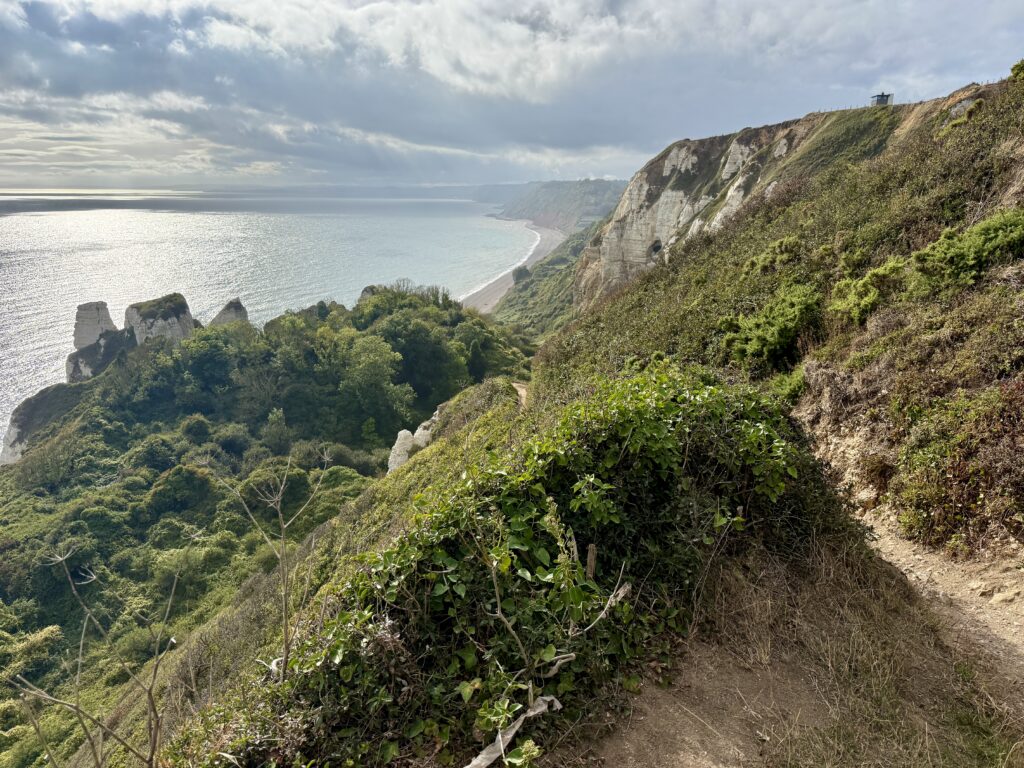
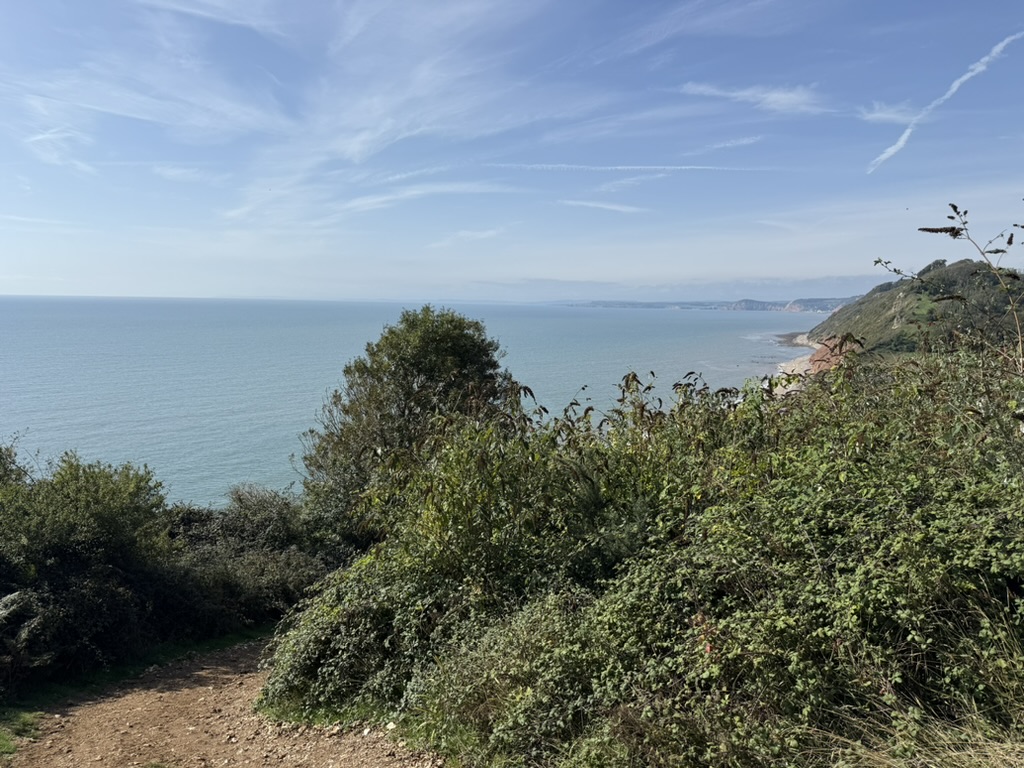
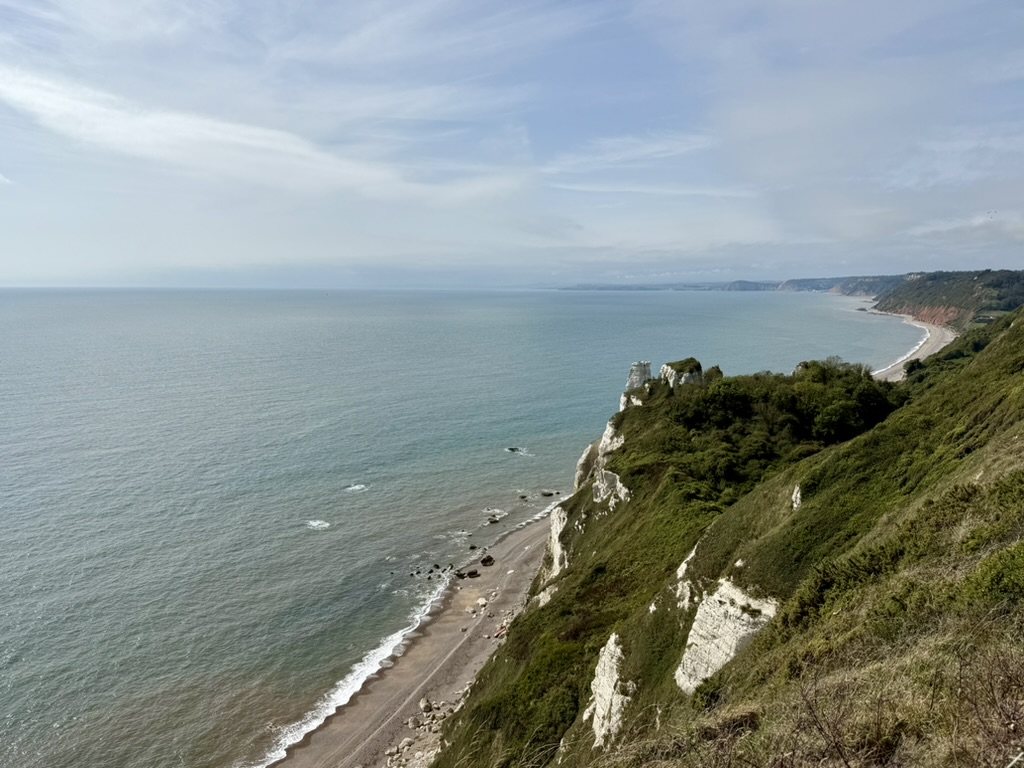
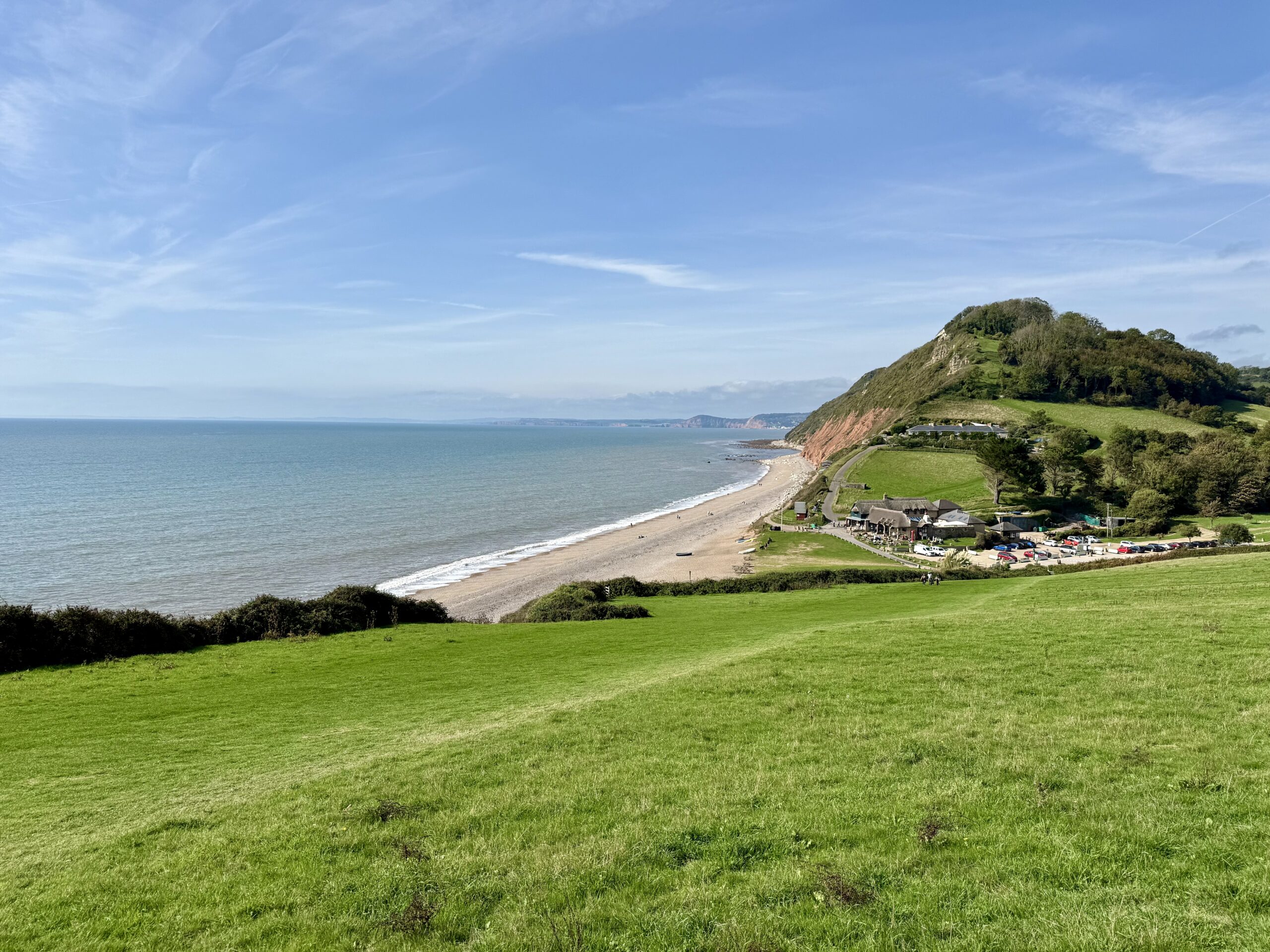
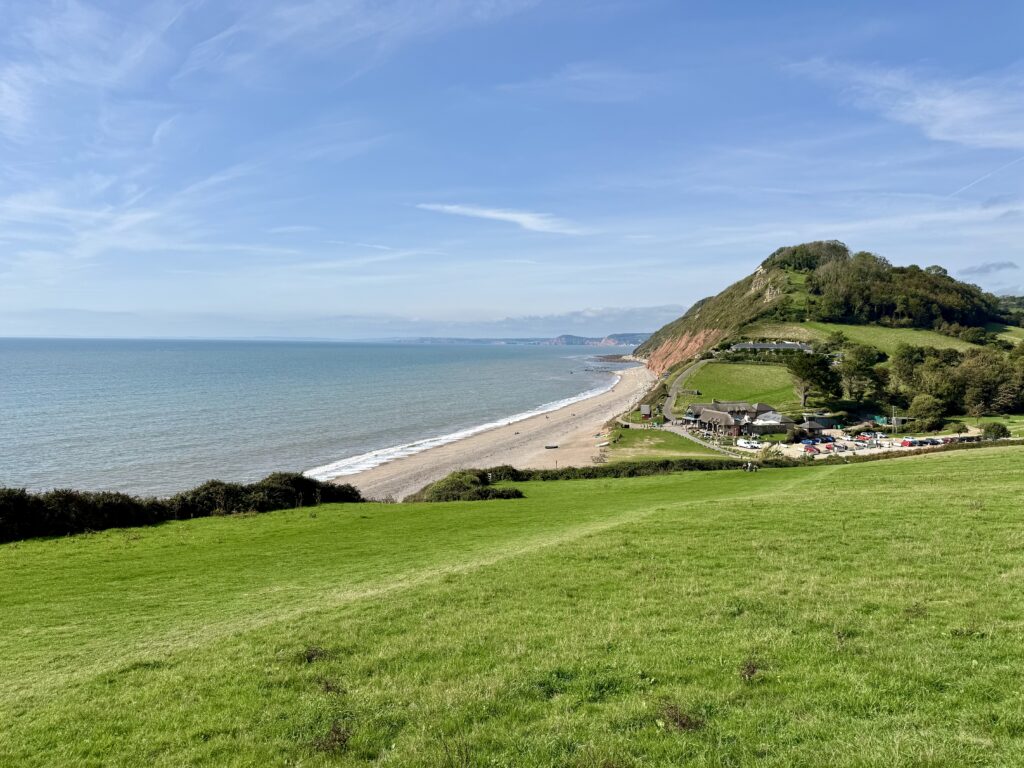
The clifftop coast path between Branscombe and Beer. (Credit: ThisIsSouthWest)
The Beer to Branscombe walk links two of East Devon’s most attractive villages across the open clifftops of Beer Head. Along the way, you’ll find far-reaching views across Lyme Bay, ancient earthworks, a lost Napoleonic gun battery, and the extraordinary landscape of Hooken Undercliff.
We have walked between Beer and Branscombe many times, in summer and winter and in both directions. For us, it would be difficult to visit or stay in either village without exploring the other.
The two villages have quite different characters. Beer is the larger, with a sheltered beach, fishing boats, shops and plenty of places to eat and drink. Branscombe is quieter and more scattered, stretching inland through a peaceful National Trust valley.
The walk between them is moderate, not easy. There is a steady climb out of Beer and a much steeper descent into Branscombe, but the route is straightforward enough, suitable for most, and the views make the effort worthwhile.
🥾 Beer to Branscombe Walk at a Glance
This moderate Beer to Branscombe coastal walk links two of East Devon’s loveliest villages by way of Beer Head, open clifftops and the steep path down East Cliff. The same route can also be followed as a Branscombe to Beer walk.
📍 Starting point
Beer Beach, although the walk can also begin at Branscombe Beach.
🚗 Parking in Beer
Clapps Lane car park, Beer, EX12 3EN. For a shorter walk that avoids Common Hill, use Cliff Top Long Stay Car Park, also known as Beer Head Car Park, EX12 3AQ.
🅿️ Parking in Branscombe
Branscombe Village Hall, EX12 3DB, where parking is by donation. Paid ANPR parking is also available beside Branscombe Beach.
↔️ Distance
Just over 4 miles for our return route between Beer and Branscombe.
⏱️ Walking time
About two hours without stops. Allow at least three hours, or longer if you plan to explore Branscombe.
⛰️ Total ascent
Approximately 800 feet.
🥾 Difficulty
Moderate. Common Hill is the longest climb, while East Cliff above Branscombe is shorter but considerably steeper.
🌿 Terrain
Village roads, field paths, wide clifftop tracks, gates and a steep coastal path. Some sections can become muddy and slippery in winter.
🐕 Dog friendly
Yes, although dogs should be kept on leads around livestock and under close control near cliff edges.
👨👩👧 Suitable for children
Suitable for active children, but the climb back up East Cliff can be challenging.
♿ Accessibility
The full route is not suitable for wheelchairs or pushchairs because of steep gradients, steps and uneven ground.
☕ Refreshments and toilets
Available in Beer and Branscombe, although some cafés and attractions open seasonally.
🚌 Return by bus
The Axe Valley 899 connects Beer and Branscombe. Check the current timetable before setting out.
⚠️ Hooken Undercliff route update:
the lower coast path beyond Hooken Beach was closed because of subsidence during our latest visit. Hooken Beach and the undercliff remain accessible as a worthwhile detour, but walkers continuing to Branscombe should follow the signed upper clifftop route.
Disclosure: Some links on this page are affiliate links. If you follow one and make a booking or purchase, we may receive a small commission at no extra cost to you. This helps support our independent guides. We also link to non-affiliate websites that we believe will be helpful. As an Amazon Associate, we earn from qualifying purchases.
Beer to Branscombe Walk Route Map
Our Beer to Branscombe walk route map shows the outward coastal path across Beer Head and East Cliff, then our return to Beer via the bridleway near the Lookout Tower and Common Hill.
Starting the Walk in Beer
Beer Beach, the starting point for the walk to Branscombe. (Credit: ThisIsSouthWest)
For convenience, we begin the walk at Beer Beach. It is easy to find and places the start close to public toilets, cafés, pubs and village shops.
Beer has several car parks, but we usually use Clapps Lane car park, EX12 3EN. This is the main long-stay car park and is only a few minutes’ walk from the beach.
Occasionally, on-street spaces may be available on Long Hill or The Causeway, although parking is certainly not guaranteed and restrictions may apply. Our complete guide to things to do in Beer has more information about parking, places to eat and other attractions in the village.
Public toilets are situated just above the beach. A water tap is also at the bottom of Sea Hill, on the right-hand side. We believe this provides drinking water, although it would be sensible to check the signage before filling a bottle.
From Beer Beach, walk uphill along Sea Hill towards the Anchor Inn. Turn left beside the pub and continue up Common Hill.
This is the longest climb of the walk. Common Hill is fairly steep, but the gradient eases as you leave the village and approach Beer Head.
Little Lane and Beer Memorial Avenue
Before reaching Beer Head Holiday Park, turn left from Common Hill into Little Lane. Look out for the coast-path signs.
If you miss the turning, continuing up Common Hill and Common Lane will still bring you towards the clifftop, so it is difficult to go too far wrong.
A large car park soon appears on the right. This is Cliff Top Long Stay Car Park (pay and display), also known locally as Beer Head Car Park, EX12 3AQ.
You can begin the Beer to Branscombe walk here if you want a slightly shorter route and would prefer to avoid the steep climb up Common Hill. Starting here means missing the walk through Beer and the initial views as you leave the village, but it puts you closer to the coast path.
Before continuing around Beer Head Holiday Park, take a few moments to visit Beer Memorial Avenue beside the car park.
The avenue consists of 30 small-leaved lime trees planted in November 2019 to honour people from Beer who served during the First World War. Plaques remember local residents who were killed, while two of the trees recognise more than 200 men and women who served and returned.
An information board recounts several personal stories, including those of Beer men who lost their lives at the Battle of Jutland. This moving, relatively little-known place is tucked away just beyond the village.
Climbing Towards Beer Head
Beer Beach and Seaton. (Credit: ThisIsSouthWest)
Return to the path and continue around the lower edge of Beer Head Holiday Park. Depending on opening times, Beer Head Bistro, with its fabulous views, may offer a chance to stop for refreshments.
The path continues gently uphill towards Beer Head. Compared with Common Hill, this section feels a little easier.
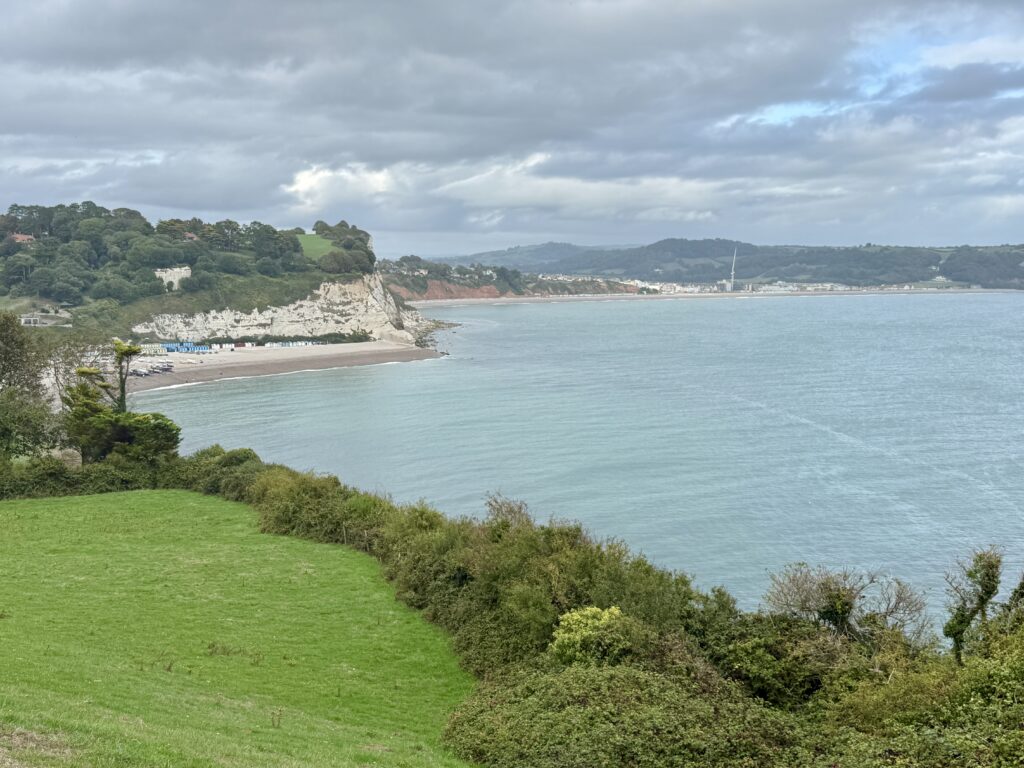
Before reaching the headland, you will pass a bench with an excellent view back across Beer Beach and along the coast towards Seaton. It is perfectly placed for a rest after the climb and is one of our favourite viewpoints on this side of Beer Head.
The white cliffs enclosing Beer Beach show why the village is so sheltered. Fishing boats are drawn up on the shingle below, while Seaton Bay opens out beyond the headland.
Beer Head
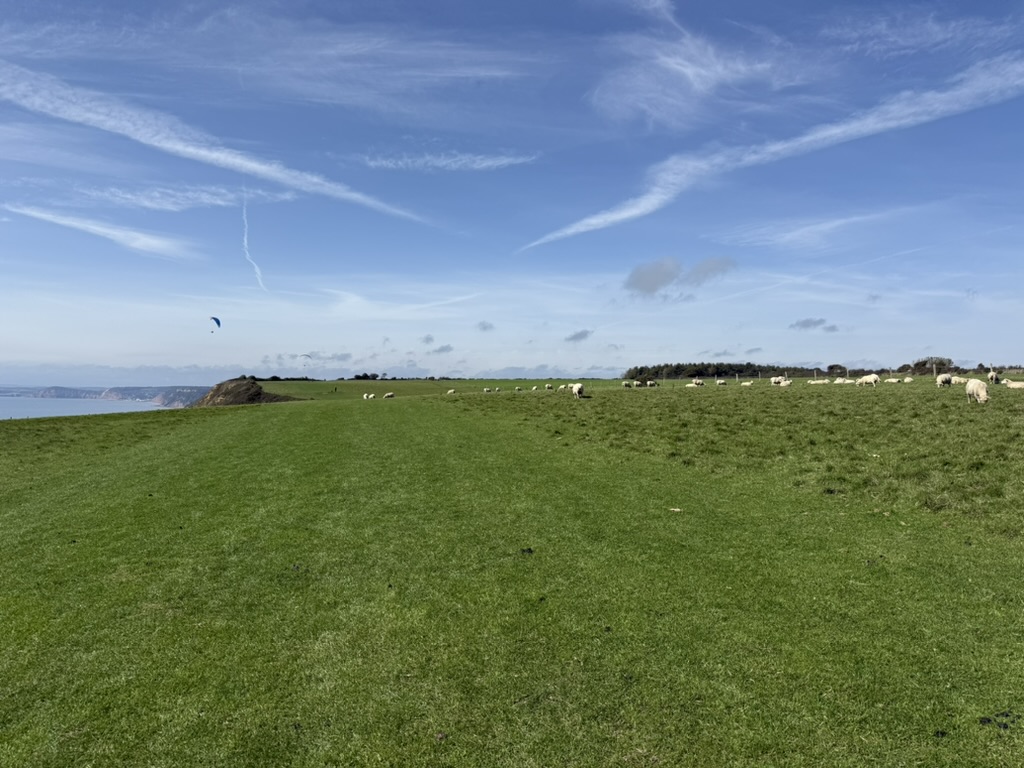
Paragliders above Beer Head on a clear day. (Credit: ThisIsSouthWest)
Beer Head is a broad, open headland rising above the white chalk cliffs of the Jurassic Coast.
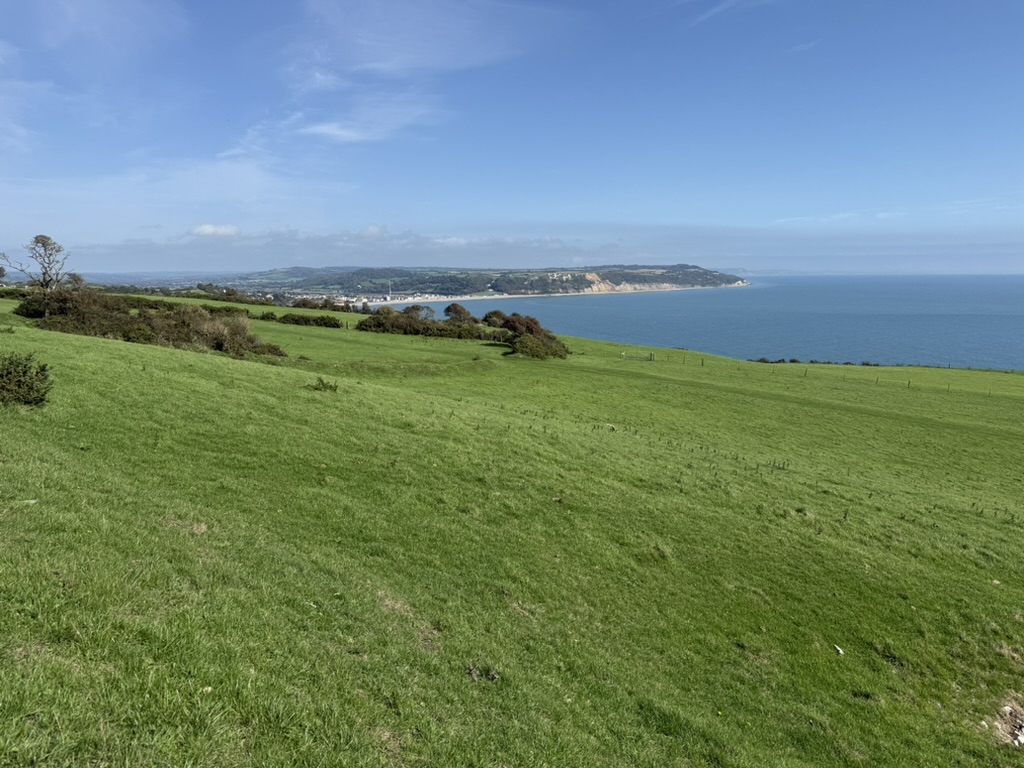
The views are the main reason to make the climb. On a clear day, you can look east along the coast towards Portland and west across Lyme Bay towards Torbay and Berry Head. Closer at hand, there are wonderful views over Beer, Seaton Bay and the changing colours of the East Devon coastline.
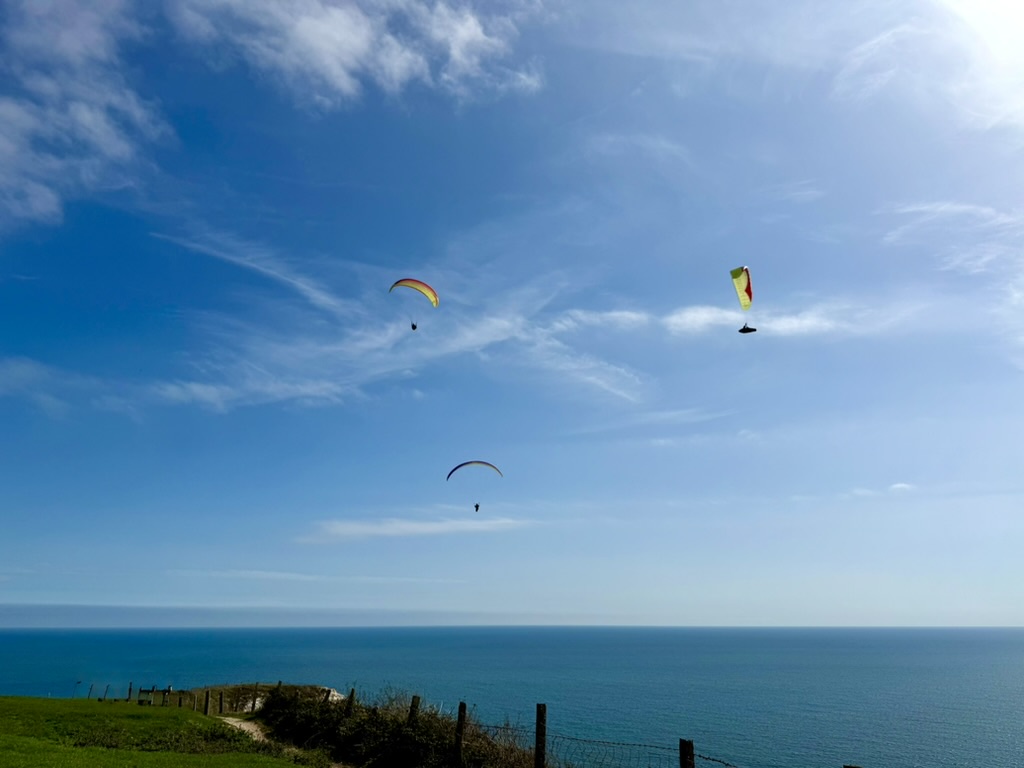
Paragliders are sometimes seen above the headland when the weather and wind direction are suitable.
The path is generally wide, with much of the cliff edge fenced because of grazing livestock. Those who are nervous around heights can easily remain well back from the edge.
Beer Head is exposed, however, with little shelter in poor weather. The cliffs are also unstable, so walkers should stay on the established paths and keep children and dogs under close supervision.
Farming and Wildlife on Beer Head
Open clifftop fields between Beer Head and Branscombe. (Credit: ThisIsSouthWest)
Beer Head remains a working farm, and its agricultural story stretches back more than 4,500 years.
Information boards explain how people have grown crops and kept animals here since at least the Neolithic period. The most visible field boundaries date from later centuries, but the wider landscape contains traces of far older activity.
The chalk grassland around the cliffs is particularly valuable. Thin soils and wind exposure create conditions in which specialist wildflowers can survive. The information boards identify rare plants found in the area, including Nottingham catchfly and purple broomrape.
Sheep and cattle often graze the fields beside the route. Dogs are welcomed, but should be kept on leads where livestock are present.
Ancient Archaeology and the Lost Gun Battery
Coastal views towards Seaton from Beer Head. (Credit: ThisIsSouthWest)
Subtle marks in the fields around Beer Head reveal a long history of occupation. The local map identifies areas of ancient and Roman archaeology, while worked flint found on the headland provides evidence of much earlier activity.
A ten-gun coastal battery once stood close to Beer Head.
The battery was installed during a period of concern about attacks and invasion during the Napoleonic era. It appears to have been a fairly simple position, with guns placed on the cliff and a hut to shelter the men rather than a substantial stone fort.
The guns were regularly exercised but apparently never fired in action. Local accounts say that a section of the cliff collapsed during the night, taking the guns and their shelter into the sea. The Beer Head map marks the former position, but walkers see little or nothing recognisable today.
The map also marks the site of a steam-powered winding wheel from the 1920s which we think was associated with stone working and features connected with later coastguard and wartime activity.
The Junction for Hooken Beach
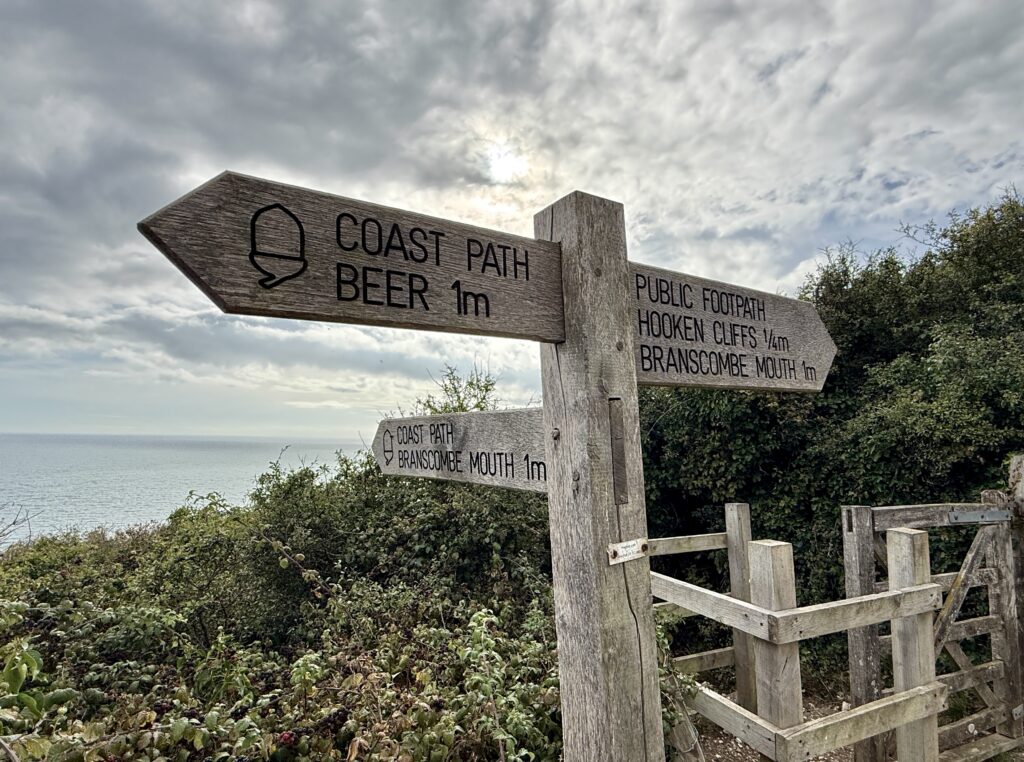
Coast path choices between Beer, Branscombe and Hooken Cliffs. (Credit: ThisIsSouthWest)
Continuing west, you reach the walk’s most important junction.
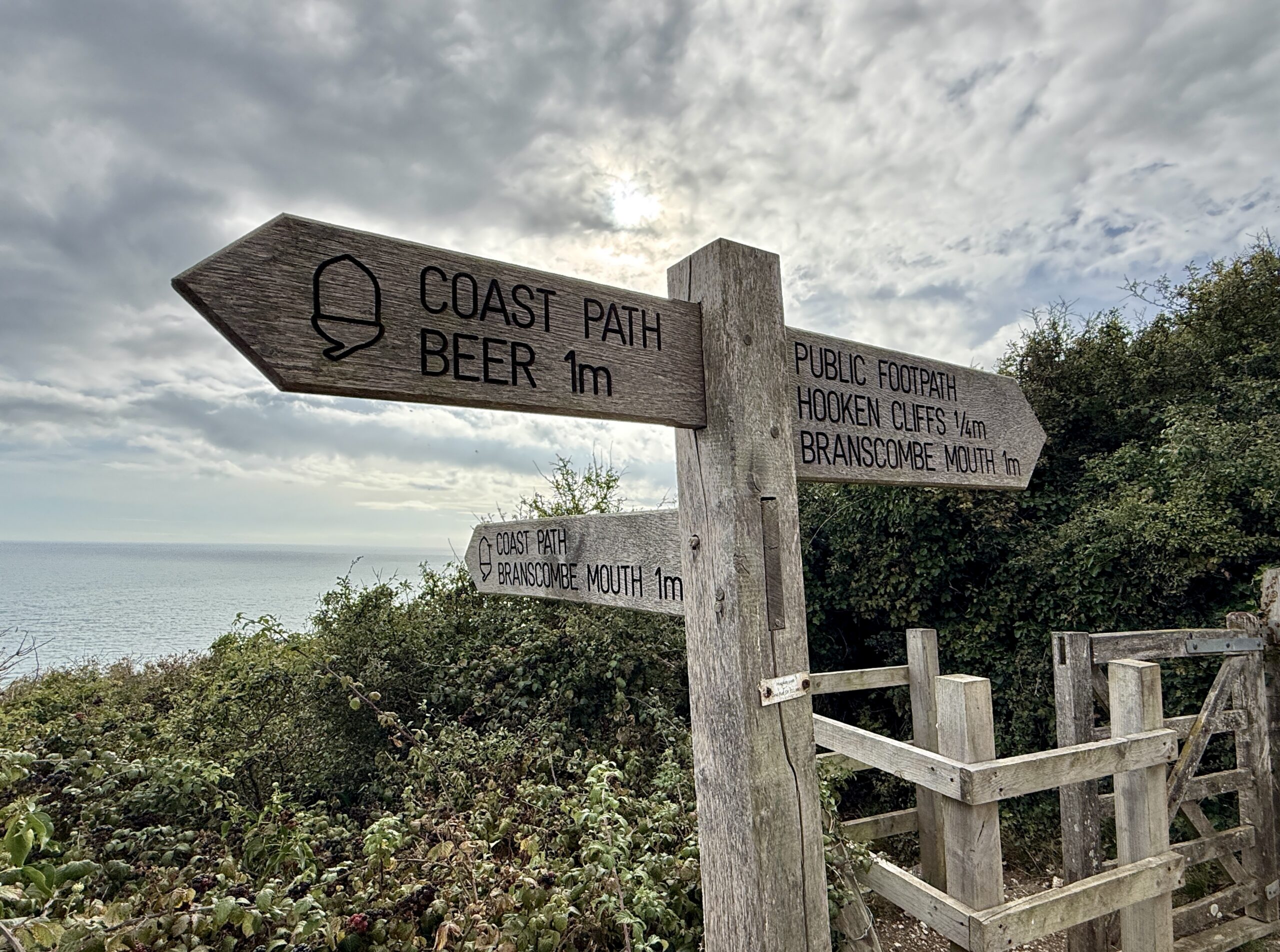
The path to the left descends towards Hooken Undercliff and Hooken Beach. Continuing straight ahead (signposted Hooken Cliffs and Branscombe Mouth) keeps you on the upper clifftop route towards the lookout and Branscombe.
At the time of our latest visit, the South West Coast Path through the lower undercliff towards Branscombe was closed following landslips and subsidence during the winter of 2025/26. The upper route provides a clear and straightforward alternative for the main Beer to Branscombe walk.
However, Hooken Undercliff and Hooken Beach remain well worth exploring as a separate detour.
Hooken Undercliff
The steep path through Hooken Undercliff to Hooken Beach. (Credit: ThisIsSouthWest)
Hooken Undercliff is one of the most remarkable parts of the East Devon coast.
A huge cliff collapse in 1790 created the landscape, when about ten acres of chalk slipped towards the sea. Great blocks and pinnacles of chalk were left standing while the fallen ground between them gradually became covered with trees, shrubs and coastal plants.
The result is quite unlike the open fields above. The path descends into a sheltered and almost hidden landscape, with pale cliffs and chalk pinnacles rising through the vegetation.
It is beautiful, slightly mysterious and much more dramatic than the word “landslip” might suggest. The sheltered conditions also provide valuable wildlife habitat, helping explain its designation as a Site of Special Scientific Interest.
One of the most striking formations is the Pinnacle, a tower-like section of chalk left standing when the surrounding cliff moved.
The path down is steep, stepped and uneven. It is considerably harder on the way back up, but we think the landscape is worth the extra effort if time and conditions allow.
Hooken Beach
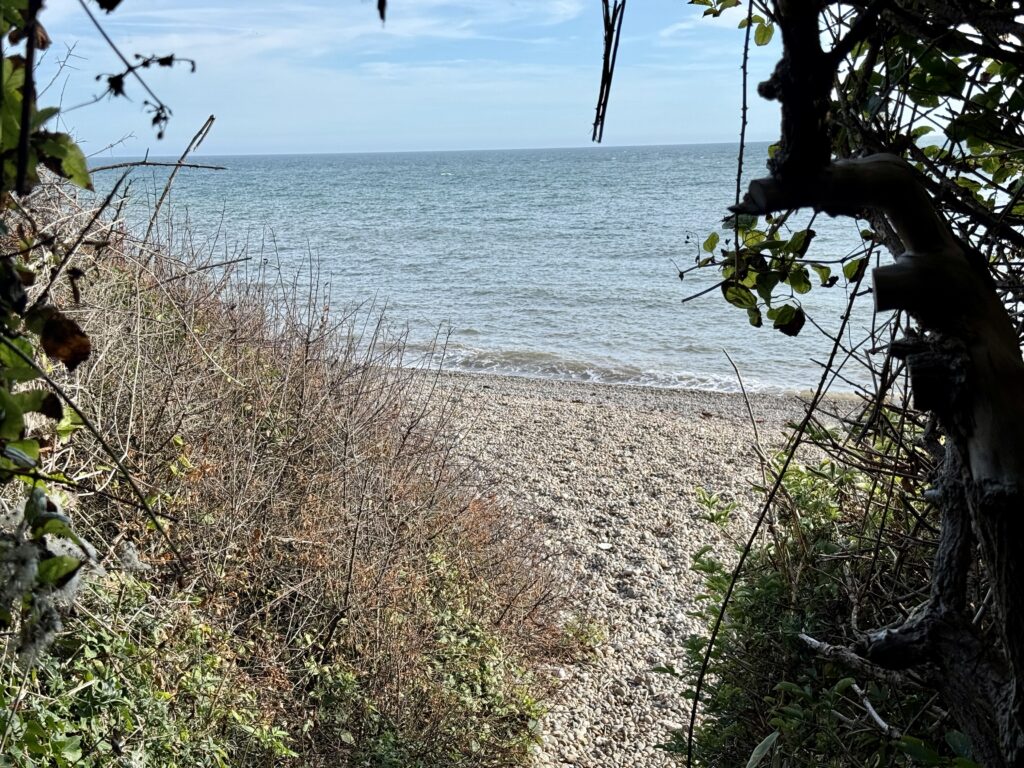
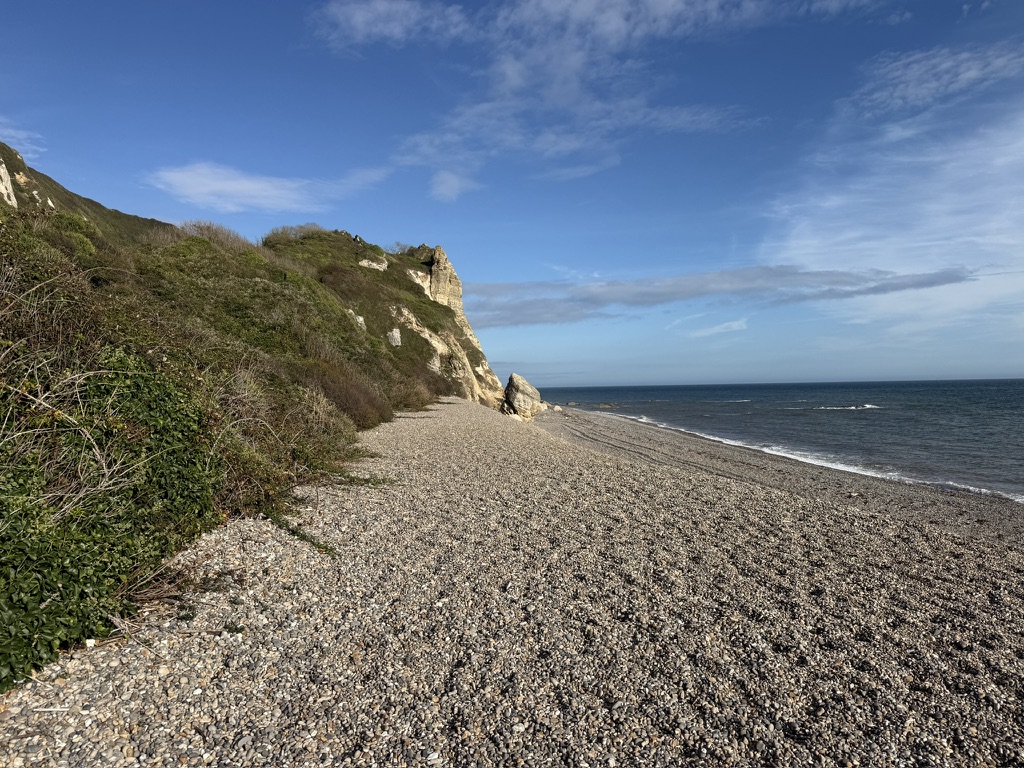
A secluded glimpse of Hooken Beach. (Credit: ThisIsSouthWest)
At the bottom lies Hooken Beach, a wonderfully quiet stretch of shingle beneath the white cliffs.
It feels far removed from the busier beaches at Beer and Branscombe. There are no cafés, toilets or other facilities, and it is quite possible to have much of the beach to yourself.
Access to Hooken Beach remains possible, but visitors should watch the tide and allow enough time for the steep climb back to the clifftop.
People do walk west along the shingle towards Branscombe, and we have done so ourselves in the past. However, warning signs now highlight the danger of rockfalls and further landslips, even when walking closer to the sea at low tide.
For that reason, we don’t recommend using the beach as the route to Branscombe. Conditions can change, the cliffs remain unstable, and the rising tide can reduce the available space. The safer choice is to enjoy Hooken Beach, then return up the same path and continue along the upper clifftop route.
The Lookout Tower and Signal House
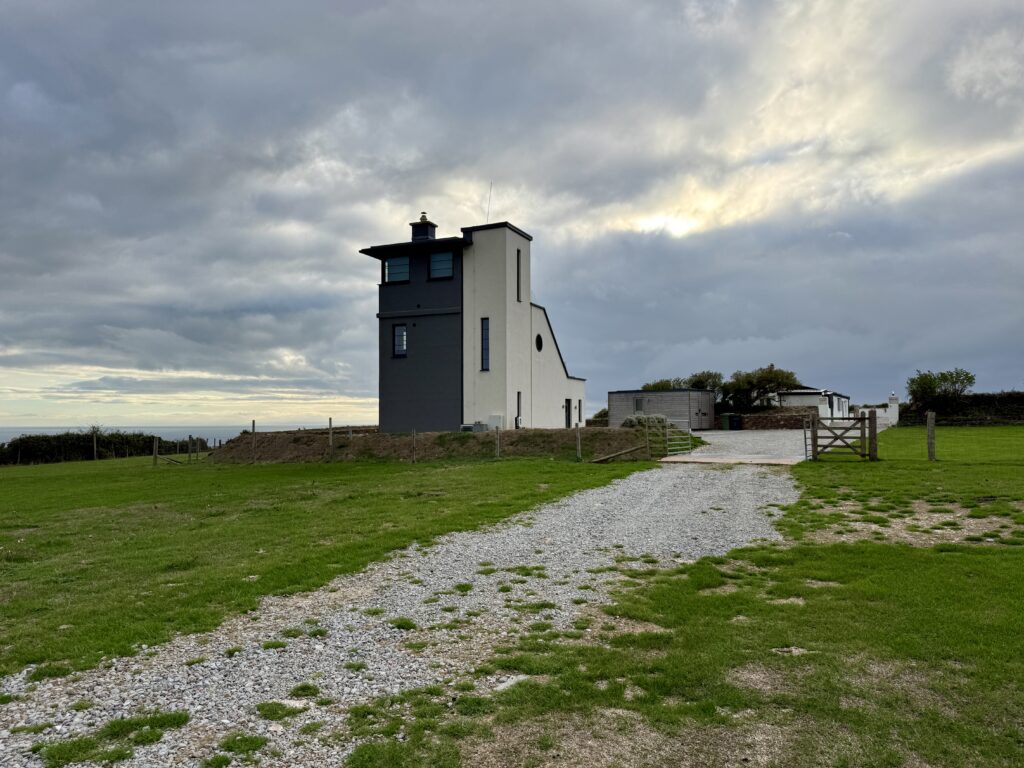
The Lookout Tower occupies a secluded position on Beer Head. (Credit: ThisIsSouthWest)
Back at the junction, continue straight ahead across the clifftop. The route climbs gently before levelling out near the lookout.
The Lookout Tower has a fascinating history. It developed from an 18th-century Napoleonic signal station and later became a 19th-century observation post used in attempts to control smuggling. It subsequently served as a coastguard lookout before being converted into private self-catering accommodation.
Nearby, the Signal House has also had several lives. It appears to have been used for livestock before becoming a coastguard and signal building and later a Customs and Excise house.
Its exact age remains uncertain. During renovation, musket balls, coastguard buttons and large blocks of local Beer stone were discovered. Stories that it dates from around 1600 or stands upon much earlier foundations remain intriguing but unproven.
Both buildings now offer private, self-catering accommodation, so walkers should stay on the public path and respect guests’ privacy.
The Lookout Tower and its near neighbour, the Signal House, may appeal to anyone searching for an unusual place to stay on Beer Head, with panoramic views across the surrounding coast and countryside.
Across the Clifftops Towards Branscombe
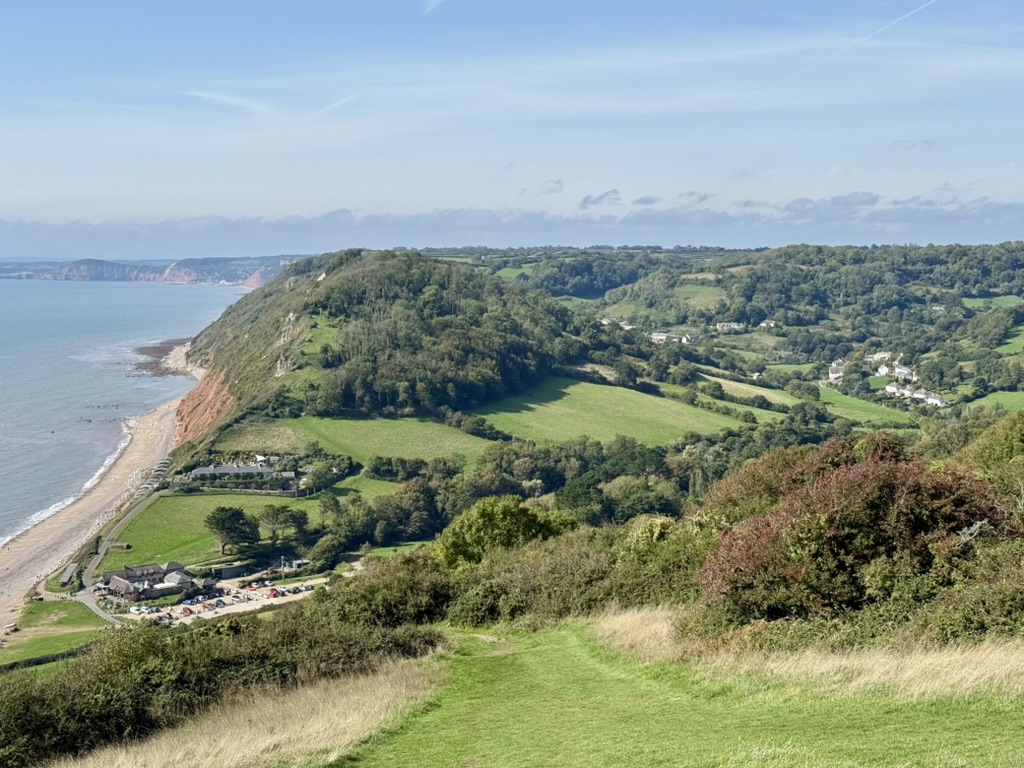
Branscombe Beach and village from the path down East Cliff. (Credit: ThisIsSouthWest)
Beyond the lookout, the path continues west across open fields. After the earlier climbs, this section feels wonderfully easy.
The route is largely level, the path is clear, and the sense of space is enormous. Sheep or cattle may be grazing in the adjoining fields, so keep dogs on leads.
Pass through the gate and continue towards East Cliff. Branscombe Beach gradually appears below, with the village stretching inland along its green valley.
Benches near the top provide a fine place to stop. The view looks across Branscombe Beach and west towards Sidmouth, with even more of the coastline visible in exceptionally clear weather.
Anyone who wants a shorter walk can turn around here. You will avoid the steep descent into Branscombe while still enjoying Beer Head and most of the clifftop views.
We think Branscombe is worth the additional effort, but there is no shame in saving your legs for another day.
Descending East Cliff
Descending East Cliff on the Beer to Branscombe walk. (Credit: ThisIsSouthWest)
The path now drops steeply down East Cliff towards Branscombe Beach.
This is the steepest section of the Beer to Branscombe walk, with a sharply descending path and several flights of steps. The route is easy to follow, but the ground can become muddy and slippery during winter, so take particular care when it is wet.
A few more benches line the descent, offering places to rest and enjoy the view.
If you return to Beer on foot, remember you will need to regain this height. The climb back up East Cliff is short but sharp, and children may find it challenging.
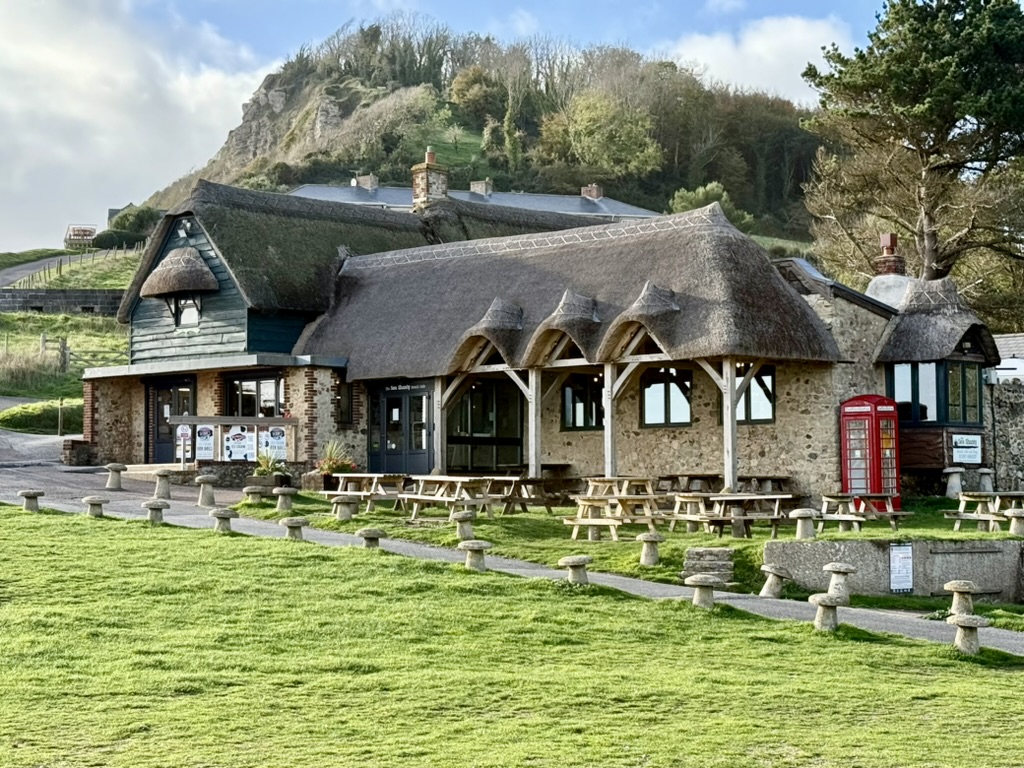
At the bottom, the path reaches Branscombe Beach close to the Sea Shanty Beach Café.
Branscombe Beach and the Napoli Anchor
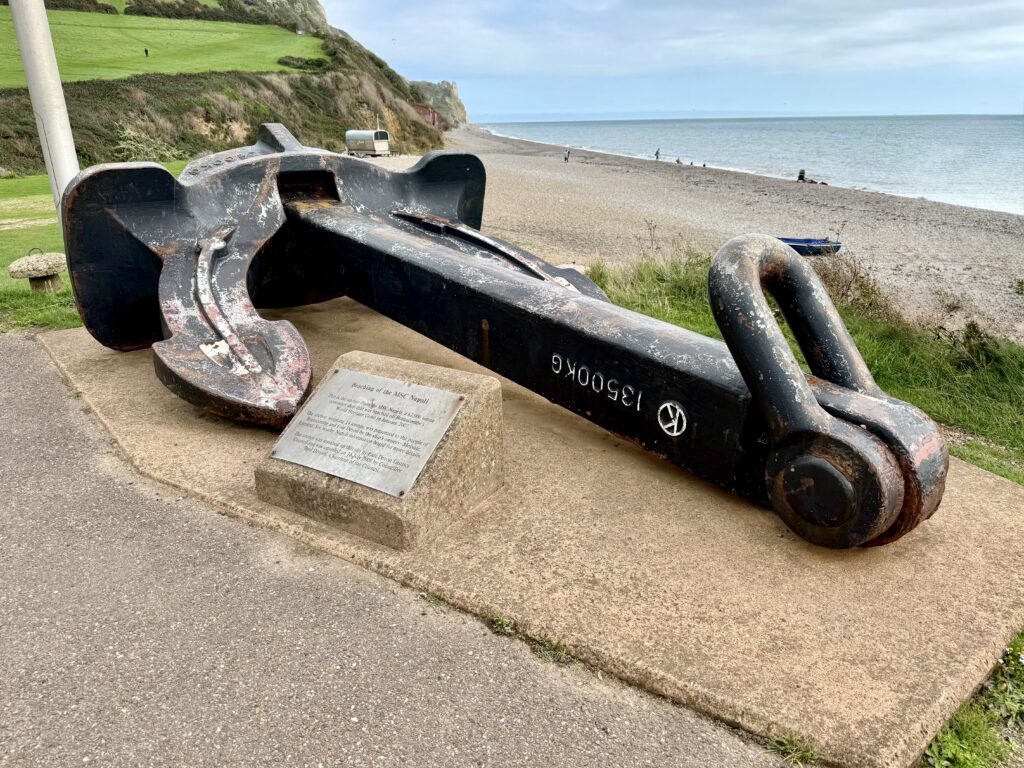
The MSC Napoli anchor overlooking Branscombe Beach. (Credit: ThisIsSouthWest)
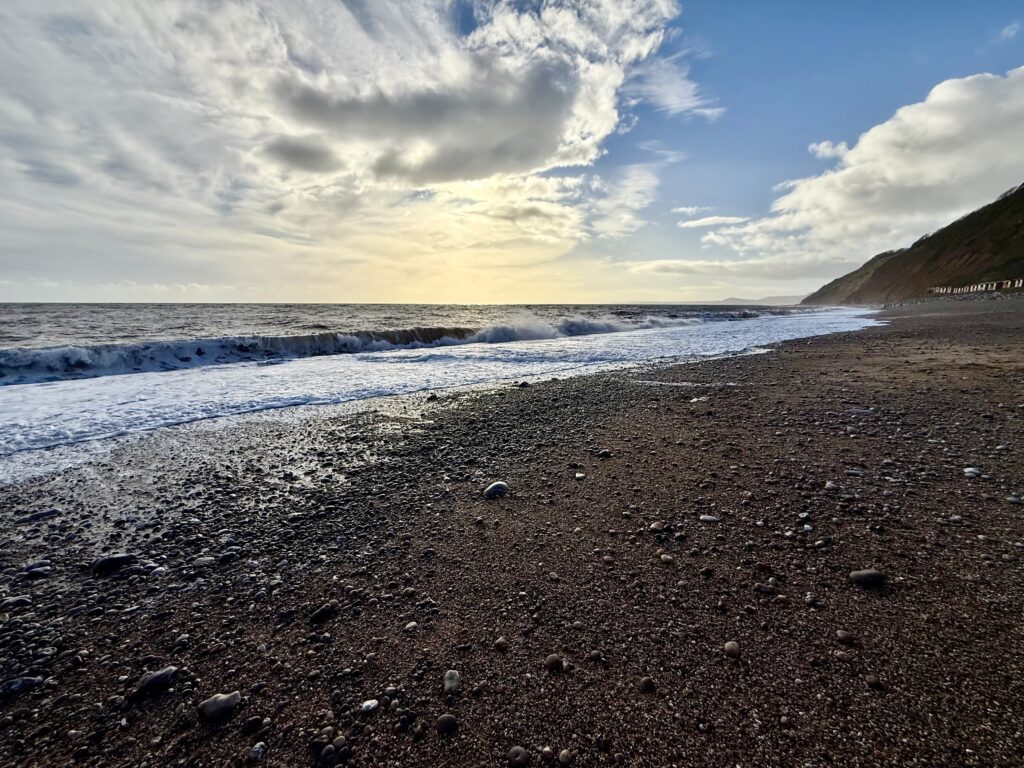
Branscombe Beach is a long shingle beach backed by low cliffs and the entrance to the village valley.
Near the Sea Shanty stands an anchor associated with the MSC Napoli. The cargo ship got into difficulty during severe weather in January 2007 and was deliberately grounded off Branscombe to prevent it from sinking in deeper water.
More than 100 containers were lost, and items ranging from car parts and motorcycles to everyday household goods washed ashore. The incident briefly turned this quiet Devon beach into the focus of national attention.
Today the anchor provides a reminder of one of the most extraordinary episodes in Branscombe’s recent history.
Exploring Branscombe
The Masons Arms, Branscombe (Credit: ThisIsSouthWest)
It would be a shame to reach Branscombe and immediately turn around.
The village has a peaceful, timeless quality quite different from Beer. The National Trust cares for much of the surrounding land, and historic buildings are scattered along the valley rather than concentrated around a single centre.
From the beach, a gentle footpath follows the valley inland. Along the way you can visit Manor Mill, the Old Bakery and Branscombe Forge.
Manor Mill is the only surviving working mill of the three that once served the village. The Old Bakery was Devon’s last traditional working bakery, closing in 1987, and some of its historic baking equipment has been preserved.
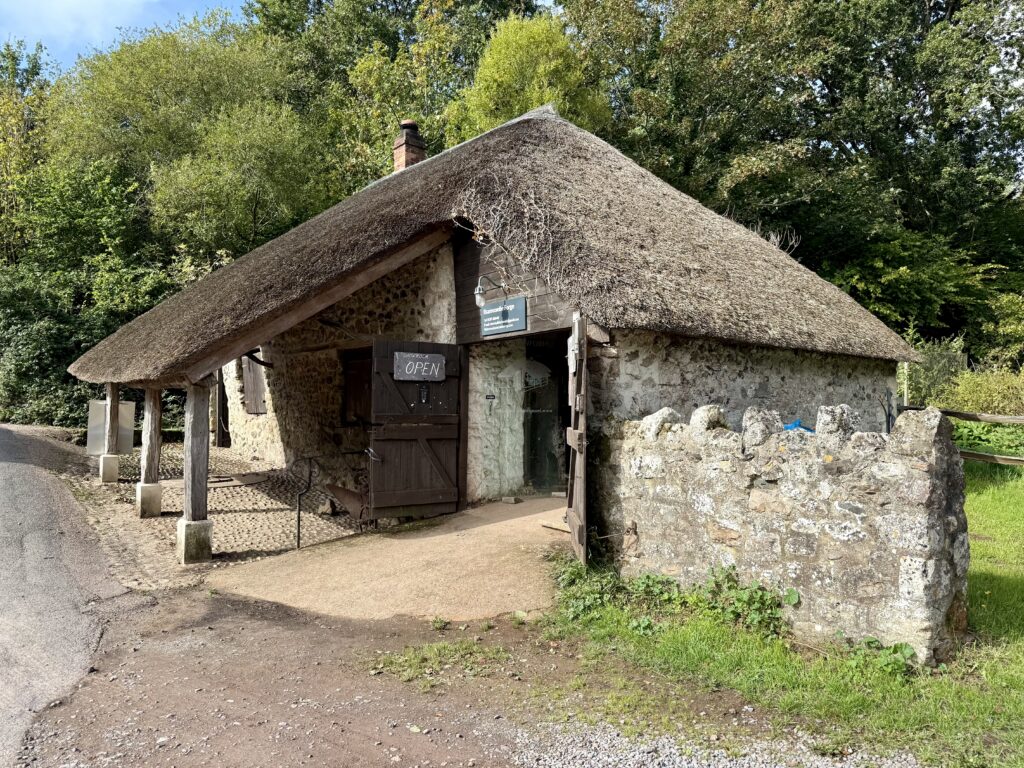
Branscombe Forge is believed to be England’s only working thatched forge. When open, visitors can see the blacksmith at work and browse locally made ironwork.
For refreshments, the Sea Shanty is the most convenient choice beside the beach. The Masons Arms is the nearest village pub, while the Fountain Head lies farther up the valley.
Opening arrangements can be seasonal, so check before planning the day around a particular café or attraction.
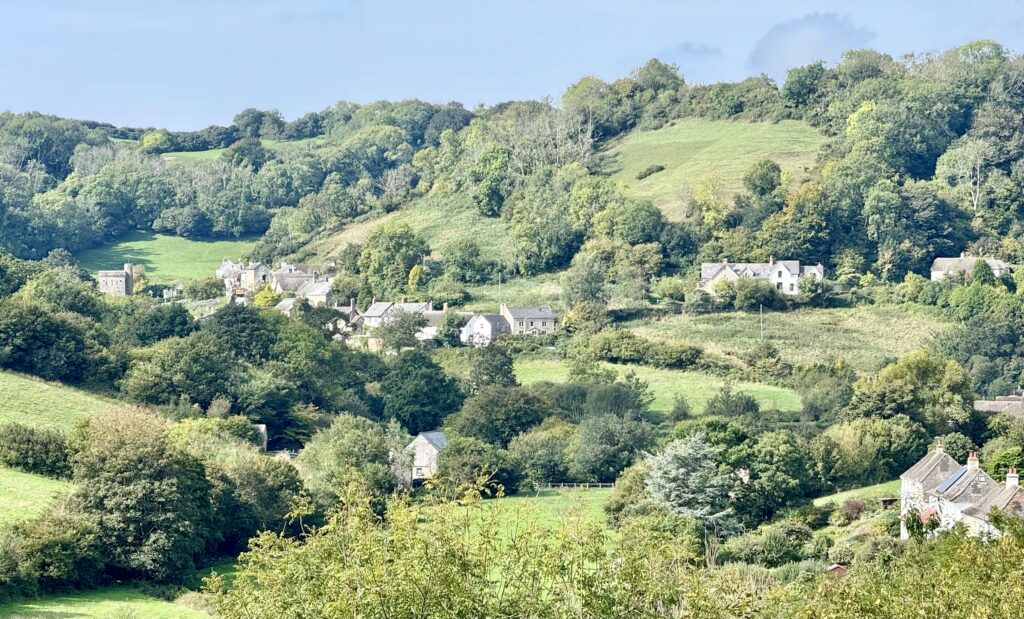
Branscombe’s scattered cottages and church sit within its deep green valley. (Credit: ThisIsSouthWest)
There are several ways to return to Beer.
Walk Back Over Beer Head
The most scenic option is to climb East Cliff and retrace the outward route across Beer Head.
The Branscombe to Beer coastal walk follows the same spectacular clifftop route in the opposite direction.
We particularly recommend this route for anyone starting in Branscombe. Descending towards Beer provides a memorable view over the village and its sheltered beach.
Return via the Lookout Bridleway
On our walk, we climbed East Cliff and retraced the clifftop route to The Lookout.
Here, we turned left onto a bridleway and access track leading inland to the small informal car park at the very top of Common Hill. From the car park, follow Common Hill downhill, past Beer Head Holiday Park, and return to the centre of Beer.
This version of the walk measuredjust over 4 miles and included approximately 800 feet of ascent. Without stops, you could do it in just over 2 hours, about an hour each way.
Allow at least three hours at a comfortable pace. If you explore Branscombe, stop for lunch or spend time on the beaches, this can easily become a full day out.
Return by Bus
The Axe Valley 899 bus links Beer and Branscombe as part of its route between Seaton and Sidmouth.
In Beer, the bus stops near the village shop. In Branscombe, it stops beside the village hall and car park. We have used the service ourselves and find it a useful option for turning the walk into a one-way journey.
The service is limited, and timetables can change, so check return times before you start.
Make It a Circular Walk
A longer inland return is possible using paths around Stockham’s Hill and Mare Lane.
This creates a fuller circular walk, although it misses the pleasure of crossing Beer Head again.
Walking from Branscombe to Beer
Hooken Undercliff and the coast towards Branscombe. (Credit: ThisIsSouthWest)
The Branscombe to Beer walk is equally enjoyable.
We normally park behind Branscombe Village Hall, EX12 3DB, where parking is by donation. From here, it is roughly half a mile down the valley to Branscombe Beach. The pleasant route passes close to the Old Bakery and Manor Mill, with the Masons Arms also nearby.
The walk can include the Old Bakery, Manor Mill and, with a short variation, the Masons Arms. It is a lovely introduction to the village before tackling the coast path.
A paid ANPR-controlled car park is also available beside Branscombe Beach. The lane leading to it is narrow and can feel tortuous when traffic is busy, particularly during summer. For this reason, we generally prefer the village hall car park.
From Branscombe Beach, the path up East Cliff is obvious. The climb is a short, sharp shock, but once you reach the top, the route becomes considerably easier.
Starting in Beer means a longer but generally gentler climb. Starting in Branscombe gets you over the steepest ascent quickly. We find it difficult to recommend one direction over the other because the views and sense of space are wonderful either way.
How Difficult Is the Beer to Branscombe Walk?
We consider this a moderate walk.
Common Hill is the hardest sustained climb, while East Cliff is the steepest individual section. Most of the clifftop route is comparatively easy and should be manageable for reasonably active walkers.
The main path is well signed and difficult to lose. Look out for the left turn from Common Hill into Little Lane and, farther along, the junction for Hooken Beach.
With the lower through-route closed, walkers continuing to Branscombe should remain on the upper clifftop path.
Walking With Children
The route should suit active children who are comfortable walking uphill.
The return climb up East Cliff may be tiring, so allow extra time and breaks. The main clifftop path is wide and much of it is fenced, but children should still be supervised around cliff edges.
The full route is unsuitable for pushchairs because of steep slopes, steps, gates and uneven ground.
Walking With Dogs
This is an enjoyable dog-friendly walk.
Keep dogs on leads around sheep and cattle, and under close control near cliffs. Carry water in warm weather, and remember the Hooken Beach detour includes steep steps in both directions.
Footwear and What to Bring
We have walked between Beer and Branscombe in both winter and summer. Our most recent visit was in September, with sunny spells, comfortable temperatures and dry ground.
In settled summer weather, supportive everyday shoes may be sufficient. In winter, we recommend proper walking boots because the paths can become muddy and slippery.
Beer Head and the clifftops are exposed, with very little shelter from wind or rain. Bring clothing appropriate to the forecast and consider carrying an extra layer even when conditions seem pleasant in the villages.
Apart from water, you need little specialist equipment. If making a day of it, take whatever you need at the other end, perhaps beachwear, a picnic or warmer clothing. Food and drink are available in both villages, but some businesses open seasonally.
Mobile reception can be poor beneath the cliffs and around Branscombe Valley.
Weather and Tide Times in Beer, Devon
Beer has a mild coastal climate, although the exposed cliffs around Beer Head can be much windier than the sheltered village. Check the latest Beer Beach forecast from the Met Office or BBC Weather before travelling, particularly when planning a coastal walk.
Tide Times for Beer Beach
Tide predictions for Beer Beach are based on Lyme Regis, the nearest reporting station, approximately seven miles away. Actual times, heights and conditions at Beer may vary slightly.
Check the tide for swimming, rockpooling and fishing, but never rely on it to make the shoreline route towards Branscombe safe. The cliffs beyond Hooken Beach are unstable, so walkers should use the open route over Beer Head.
Is the Beer to Branscombe Walk Worth Doing?
Quiet and unspoilt Hooken Beach below the undercliff. (Credit: ThisIsSouthWest)
Absolutely.
The walk combines two contrasting villages with some of the finest coastal scenery in East Devon. It offers open clifftops, white chalk cliffs, quiet beaches, ancient archaeology, military history, and the remarkable landscape of Hooken Undercliff.
Beer is the busier village, with shops, fishing boats, and plenty of places to eat. Branscombe is quieter, greener and wonderfully timeless.
If you do nothing else, walk from either village to Beer Head. On a clear day, the views are stunning, and we promise they make the climb worthwhile.
Those who want an easier outing can turn around on the clifftop and retrace their steps. Ideally, though, allow enough time to visit both Beer and Branscombe. The walk is best when treated as a full day out rather than simply a route between two points.
Beer to Branscombe Walk FAQs
Practical answers about the Beer to Branscombe coastal walk, including its distance, difficulty, parking, bus service and the current route around Hooken Undercliff.
How far is the Beer to Branscombe walk?
The direct coastal route between Beer and Branscombe is approximately two miles each way. Our return route, using the bridleway near the Lookout Tower and Common Hill on the final section, measured just over four miles.
How long does it take to walk from Beer to Branscombe?
Allow about one hour of continuous walking in each direction. Our complete return walk took just over two hours without stops. We recommend allowing at least three hours, or longer if you want to explore Branscombe, visit Hooken Beach or stop for refreshments.
Can you walk from Beer to Branscombe?
Yes. A clearly signed upper clifftop route connects Beer and Branscombe via Beer Head and East Cliff. Coastal landslips can affect the lower path through Hooken Undercliff, so follow current signs and local diversions.
Is the Beer to Branscombe walk difficult?
We rate the walk as moderate. Common Hill provides the longest climb, while East Cliff above Branscombe is much steeper but relatively short. Most of the clifftop section is comparatively level and easy to follow.
Which direction is easier?
Walking from Beer involves a longer but generally gentler climb. The Branscombe to Beer walk begins with a short, steep climb up East Cliff, after which the route becomes much easier. The views are rewarding in both directions.
Is Hooken Undercliff open?
Hooken Undercliff and Hooken Beach remain accessible as a there-and-back detour from the clifftop. However, the onward lower coast path towards Branscombe was closed because of subsidence during our latest visit. Walkers continuing to Branscombe should follow the signed upper route and check current conditions.
Can you walk along Hooken Beach to Branscombe?
People do walk west along the shingle towards Branscombe, and we have done so in the past. However, warning signs highlight the risk of rockfalls, unstable cliffs and changing tides. We therefore recommend returning to the clifftop and using the signed upper path.
Is Hooken Beach worth visiting?
Yes. Hooken Beach is a beautiful and usually quiet stretch of shingle beneath the white cliffs. The steep path also passes through the remarkable Hooken Undercliff, formed by a major landslip in 1790. There are no facilities at the beach.
Is the Beer to Branscombe walk dog friendly?
Yes. Dogs are welcome, but they should be kept on leads around sheep and cattle and under close control near cliff edges. Carry water for your dog during warm weather.
Is the walk suitable for children?
The route should suit active children who are comfortable walking uphill. The climb back up East Cliff can be tiring, so allow extra time and supervise children carefully around the cliffs.
Where can I park for the Beer to Branscombe walk?
In Beer, we usually use Clapps Lane car park, EX12 3EN. Cliff Top Long Stay Car Park, also known as Beer Head Car Park, EX12 3AQ, provides a shorter starting option that avoids the steep climb up Common Hill. In Branscombe, donation parking is available behind Branscombe Village Hall, EX12 3DB.
Is there a bus between Beer and Branscombe?
Yes. The Axe Valley 899 bus connects the villages, stopping near the village shop in Beer and beside Branscombe Village Hall. Services are limited, so check the current timetable before starting a one-way walk.
Over to you … have you recently travelled to South West England? What worked for you? What advice would you give to others? Please leave your comments below or join in the discussion in our Facebook Group.
New to South West England or returning after a while? Start with our ‘Travel Basics’ – quick guides packed with tips to help you plan your trip.
Branscombe Mouth and Beach. To the right, and stretching away in the valley, is the village of Branscombe. (Credit: ThisIsSouthWest)
Things to do in Branscombe include walking along the Jurassic Coast, relaxing on its spacious pebble beach and exploring historic buildings amid some of East Devon’s most beautiful countryside.
Between Seaton and Sidmouth, Branscombe village stretches along a long, green valley that tumbles gently towards the sea. It feels sleepy, relaxed and genuinely timeless, with thatched cottages scattered along lanes that appear to have changed little over the centuries. Even after a hot, dry summer, the valley remains remarkably lush, with orchards, fields and a stream running towards the coast.
Branscombe has long-standing connections to fishing, farming, smuggling, and traditional crafts, including lace-making and working local stone. Its historic buildings include the Old Bakery, Manor Mill and an 18th-century forge, while two traditional pubs provide welcome stopping points when exploring the village on foot.
We visit regularly, sometimes arriving along the South West Coast Path from Beer or Sidmouth. If you arrive by car, we usually park behind the village hall and follow the valley path towards the beach, stopping at the forge, Old Bakery, and Manor Mill along the way. The route continues beside fields and the stream, passing benches and picnic spots before reaching Branscombe Beach and the Sea Shanty café.
If you are planning a visit to Branscombe, Devon, this guide covers the village, beach, parking, places to eat, historic attractions and popular walking routes. It also includes practical advice about the narrow approach roads, travelling by bus, visiting with dogs and exploring nearby places along the Jurassic Coast.
Branscombe is a destination in its own right, but you can also combine it with Seaton or nearby Beer. Our separate guide to things to do in Beer covers its beach, village, historic buildings and walking routes in more detail.
Branscombe at a Glance
📍 Location – East Devon, between Seaton and Sidmouth, within the Jurassic Coast World Heritage Site.
🏡 Best known for – Its long green valley, thatched cottages, historic buildings, traditional pubs and spacious pebble beach.
⭐ Top Branscombe attractions – Branscombe Beach, the Forge, Old Bakery, Manor Mill, St Winifred’s Church and the MSC Napoli anchor.
🆓 Best free things to do in Branscombe – Walk through the valley, relax on the beach, explore the churchyard and follow the South West Coast Path.
🥾 Best outdoor experiences – Walk between Branscombe and Beer, explore the Weston Plats or follow the more demanding coast path towards Sidmouth.
👨👩👧👦 Best for families – The beach, orchard, valley path, seasonal Old Bakery café and refreshments at the Sea Shanty.
🌧️ Things to do when it rains – Visit the Forge, explore Manor Mill when open, stop at the Old Bakery or enjoy a meal in one of Branscombe’s traditional pubs.
🗺️ If you only have a few hours – Park behind the village hall and walk to the beach, visiting the Forge, Old Bakery and Manor Mill along the way.
⏱️ Time to allow – Half a day is enough for the valley and beach. Allow a full day if you plan to include a longer coastal walk or pub meal.
🅿️ Parking – Donation parking behind Branscombe Village Hall, limited National Trust parking near the Forge and a paid ANPR car park near the beach.
🚌 Public transport – The limited 899 bus links Branscombe with Beer, Seaton and Sidmouth. Check the latest timetable before travelling.
🐕 Visiting with dogs – Branscombe is dog friendly, but leads should be used around livestock, near cliff edges and wherever signs request them.
⚠️ Good to know – Follow signs from the A3052 rather than satnav shortcuts. The approach lanes are narrow and Branscombe Beach has no lifeguard service.
Disclosure: Some links on this page are affiliate links. If you follow one and make a booking or purchase, we may receive a small commission at no extra cost to you. This helps support our independent guides. We also link to non-affiliate websites that we believe will be helpful. As an Amazon Associate, we earn from qualifying purchases.
Use the map of Branscombe to find the village’s main attractions, places to eat and drink, parking areas and Branscombe Beach. Remember that Branscombe stretches along a narrow valley rather than having a compact village centre, so places that appear close together on the map can involve a longer walk than expected. The surrounding lanes are also very narrow, making it sensible to plan where you intend to park before arriving.
A Brief History of Branscombe
Branscombe’s sheltered valley has attracted people since prehistoric times. High above the village, Berry Cliff Camp is the surviving part of a small hillfort believed to date from the Late Bronze Age or Early Iron Age. Part of the site has been lost to coastal erosion, but its remaining banks and ditches provide evidence of settlement here more than 2,000 years ago.
At the heart of the village, St Winifred’s Church reflects centuries of continuous community life. Parts of the Grade I listed building may be Saxon, while much of the church dates from the early 12th to the early 17th centuries. Its unusual central tower contains some of its oldest surviving fabric.
Branscombe’s scattered cottages and church sit within its deep green valley. (Credit: ThisIsSouthWest)
Farming Community
Branscombe mainly grew as a farming community rather than a fishing village. Its scattered cottages and hamlets extend along the valley instead of gathering around the beach. Generations of villagers worked the surrounding fields, grazed livestock on the valley sides and tended orchards that supplied apples for cider. The steep coastal plots above nearby Weston Mouth beach, known as the Weston Plats, were also cultivated, despite their difficult location above the sea.
The forge, Manor Mill, and Old Bakery remind us of a time when the community produced much of what it needed within the valley. Blacksmiths repaired tools and shod horses, while the watermill ground locally grown grain. The Old Bakery continued producing bread by traditional methods until around 1986, making its survival particularly remarkable. Branscombe was also known for lace-making, an important source of additional income for some village families.
Smuggling
The isolated coastline also encouraged less official activity. Smuggling formed part of life along the East Devon coast during the 18th and 19th centuries, when tobacco, spirits and other goods were landed in secluded coves and carried inland along paths through the cliffs. Stories of shipwrecks and salvaged cargo also became woven into local folklore.
That connection with wrecking and salvage took on an unexpected modern chapter in January 2007, when the container ship MSC Napoli was deliberately grounded in Branscombe Bay after suffering serious structural damage in the English Channel. Containers and cargo washed ashore, attracting sightseers and people searching for anything of value.
We remember walking from Beer to Beer Head along a very wet, muddy path to see the ship, as did many others. The Napoli became a major local spectacle and drew visitors from across the country. Removing it took considerable time: the bow was eventually towed to Belfast for dismantling, while the stern was broken up off Branscombe. One of its anchors is now displayed beside the Sea Shanty at Branscombe Beach.
Although tourism now plays a much greater part in village life, Branscombe has retained its rural character. The working forge, restored mill, old bakery, church, orchards and traditional pubs help explain why the valley still feels so timeless. Walking between them provides more than an attractive route to the beach: it follows the story of a community shaped by farming, traditional crafts and the sea.
Things to See and Do in Branscombe, Devon
The clifftop coast path between Branscombe and Beer. (Credit: ThisIsSouthWest)
The best things to do in Branscombe reflect the village’s peaceful character. Rather than rushing between conventional attractions, much of the pleasure comes from walking through the valley, visiting its historic buildings and continuing down to the beach.
Our favourite way to explore is to park behind Branscombe Village Hall, where donations are accepted, and follow the valley path towards the sea. This creates a gentle route taking in the forge, Old Bakery, Manor Mill and Branscombe Beach, with the option of returning via the Masons Arms.
Walk through Branscombe Valley
The walk from the village car parks to the beach is one of the loveliest parts of a visit. The surfaced Branscombe Valley Path runs for approximately one kilometre beside fields, orchards and the village stream, with benches and picnic places along the way.
We particularly enjoy the sound of running water and the views across the fields. Even after a hot and dry summer, the valley usually remains remarkably green. The route is relatively level, with only gentle slopes, and suits most pushchairs. Many wheelchair users can also use it, although the rear section of the village hall car park has a gradient, and individual access needs should be checked before visiting.
Visit Branscombe Forge
Branscombe Forge, a traditional working forge in the heart of the village. (Credit: ThisIsSouthWest)
Close to the village hall and National Trust car park, Branscombe Forge provides an atmospheric introduction to the village’s working history. The Grade II listed forge remains in use, with blacksmiths employing traditional techniques to produce practical and decorative ironwork.
Visitors may be able to watch the blacksmith at work, although this cannot be guaranteed. A small showroom sells pieces made at the forge and is worth visiting even when work is not taking place.
Dogs are welcome around much of Branscombe but are not allowed inside the forge.
Explore the Old Bakery and orchard
An old apple orchard, Branscombe, Devon. (Credit: ThisIsSouthWest)
The Old Bakery is a partially rendered stone and thatched building which served as a traditional bakehouse until the 1980s. It now combines a small collection of historic baking equipment with a tea room and café serving refreshments.
One of our favourite parts of Branscombe is the walk through the old apple orchard between the bakery and Manor Mill. Picnic tables and grassy paths run through the orchard, making it a lovely place to pause with children or enjoy a quieter break from the beach.
The Old Bakery does not open every day throughout the year, so check the latest National Trust information before planning a visit.
Manor Mill is a restored watermill reached from the Old Bakery through the orchard and along Mill Lane. Water diverted from the village stream once powered its machinery and millstones, grinding locally grown grain into flour.
When the mill is operating, visitors can see and hear the waterwheel, gears and millstones in motion. It offers a much clearer impression of Branscombe’s self-sufficient rural past than static displays alone could.
Opening is limited and seasonal, with demonstrations usually taking place on selected days. The approach includes an uneven track and a step, and dogs are not allowed inside the mill.
Visit St Winifred’s Church
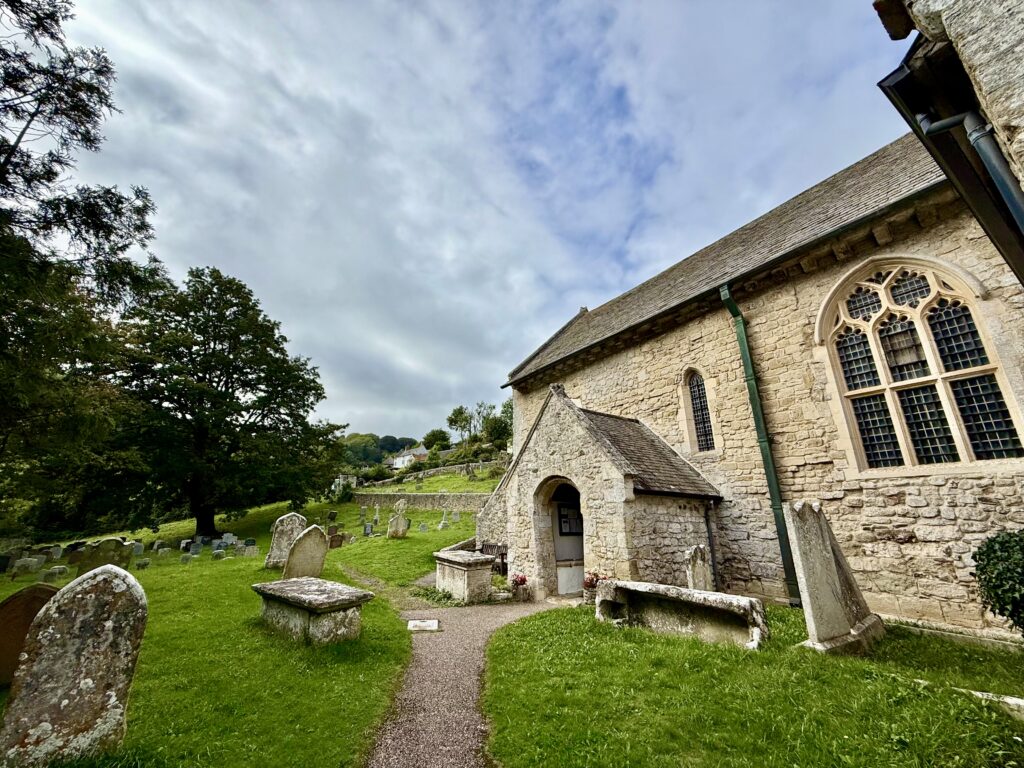
St Winifred’s Church stands at the heart of Branscombe’s long, green valley. (Credit: ThisIsSouthWest)
St Winifred’s Church stands in the upper part of the village and is worth the additional walk from the village hall. The Grade I listed church has an unusual cruciform layout and a large central tower, parts of which may contain Saxon fabric. Most of the building dates from the 12th to 17th centuries.
Inside, its stonework, memorials and furnishings reflect centuries of village life. The church remains an active place of worship, so visitors should enter quietly and respect any services or private events.
Pairing the church with the Fountain Head Inn gives you a good reason to explore beyond the better-known lower part of Branscombe.
Spend time at Branscombe Beach
Branscombe Beach and the Sea Shanty café from the surrounding coast path. (Credit: ThisIsSouthWest)
Branscombe Beach is a long pebble beach beneath the cliffs of the Jurassic Coast. Its size means that it rarely feels as crowded as some of East Devon’s smaller beaches. Even on a busy summer day, you can usually walk further along the shore and find more space.
The beach shelves steeply in places, particularly following storms and around low tide, so enter the water cautiously. There is no seasonal lifeguard service, and swimmers should assess the sea conditions carefully before entering. Keep well away from the base and edge of the cliffs, especially towards Hooken and the eastern end of the beach, where instability and rockfalls present a serious risk.
Dogs are welcome year-round but should be kept under close control. The National Trust asks owners to use leads on the beach, near cliff edges, around livestock and in the Old Bakery garden and orchard.
Stop at the Sea Shanty
The Sea Shanty serves refreshments beside Branscombe Beach. (Credit: ThisIsSouthWest)
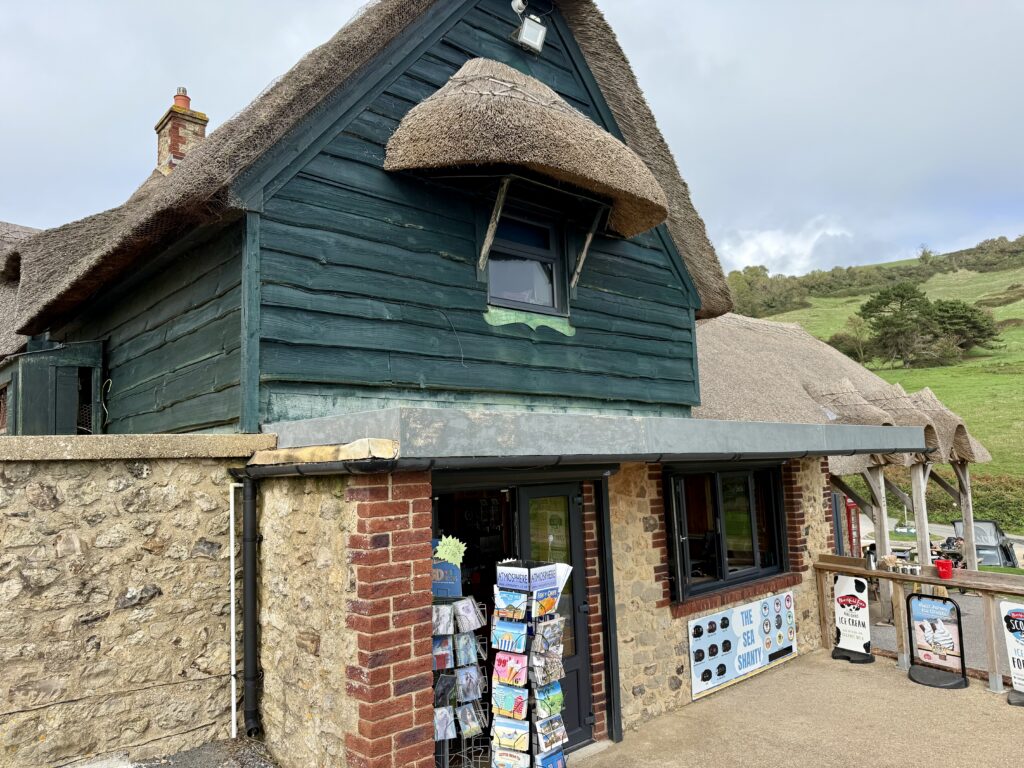
The Sea Shanty Beach Café is an easy place to stop after walking down the valley or arriving along the coast path. It serves meals, light snacks and drinks, with plenty of outdoor seating overlooking the beach and indoor tables for wet or colder days.
We usually choose something light and sit outside, although it is easy to be tempted into staying longer. An attached shop sells drinks, ice creams, gifts and useful beach essentials to take away. Public toilets are available in the beach car park, although visitors should check seasonal opening arrangements before relying on other facilities.
Outside the café, look for the anchor from the MSC Napoli. The container ship was deliberately grounded in Branscombe Bay in 2007 after suffering serious structural damage in the English Channel. We were among the many people who walked up from Beer to see it, and the anchor now provides a tangible reminder of an extraordinary episode in Branscombe’s recent history.
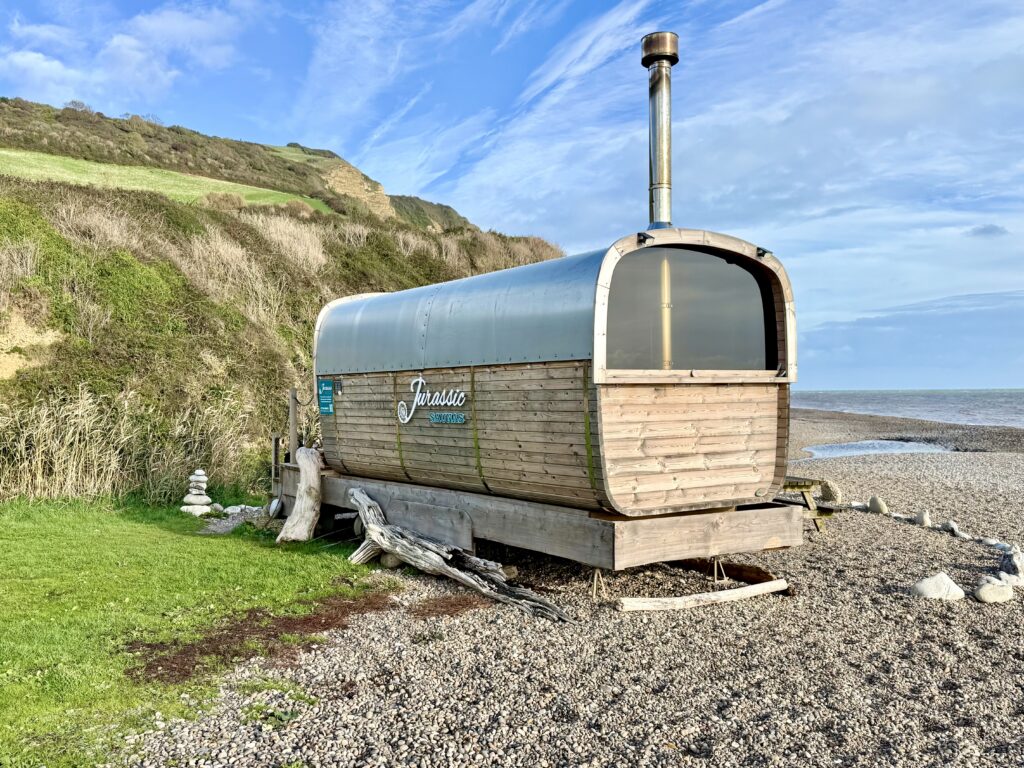
For something unexpected, Jurassic Saunas operates a wood-fired sauna on Branscombe Beach, close to the Sea Shanty. Sessions can be combined with a carefully judged dip in the sea, although the steeply shelving pebble beach makes suitable footwear advisable.
Sessions should be booked in advance. Bring swimwear, drinking water, a towel, beach shoes and warm clothes for afterwards, and check the operator’s latest instructions before travelling.
Walk from Branscombe to Beer
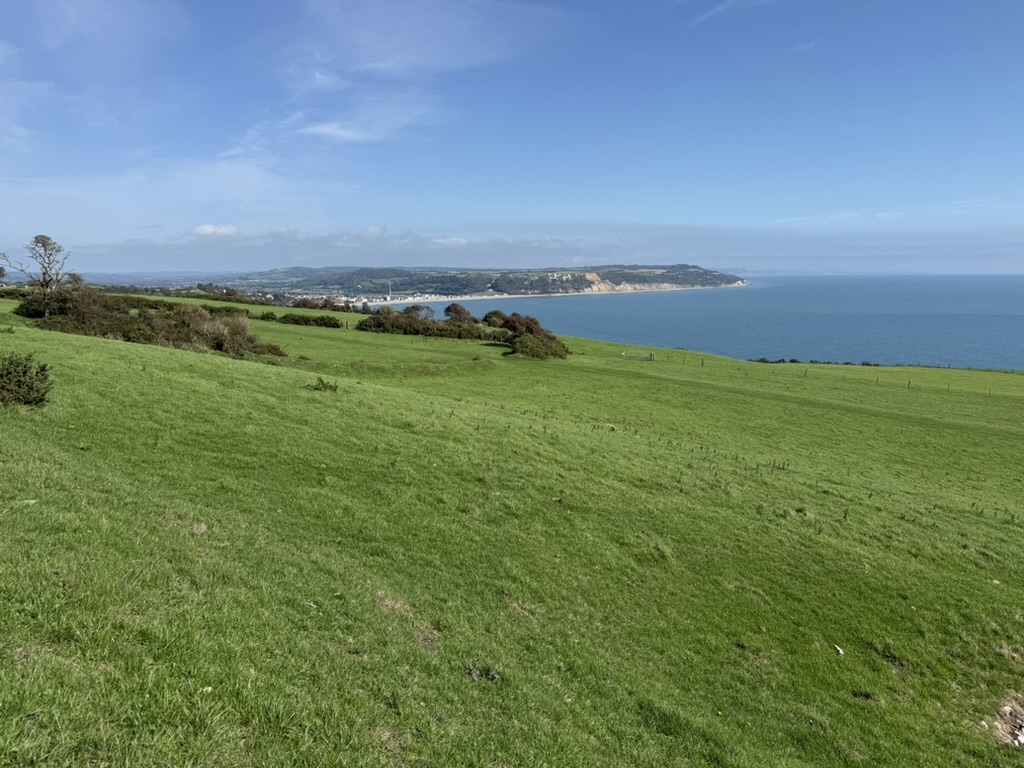
Coastal views towards Seaton on the walk between Branscombe and Beer. (Credit: ThisIsSouthWest)
The South West Coast Path between Branscombe and Beer provides some of the finest views in East Devon. From Branscombe, the path climbs steeply towards the cliffs before continuing across more open ground past the former coastguard lookout and signal station.
The villages are only a couple of miles apart by the most direct coast path route, but the climb and descent make the walk more demanding than the distance suggests. The cliffs rise to around 450 feet, and paths can become slippery or muddy after rain. Sensible walking shoes are preferable to ordinary trainers in wet conditions.
We often walk from Beer to Branscombe and return the same way, adding time on the beach and refreshments at the Sea Shanty or one of the village pubs. The views across Branscombe, Beer Head and Lyme Bay make the effort worthwhile. Our separate Beer to Branscombe walk guide covers the route in greater detail.
Continue Towards Sidmouth and the Weston Plats
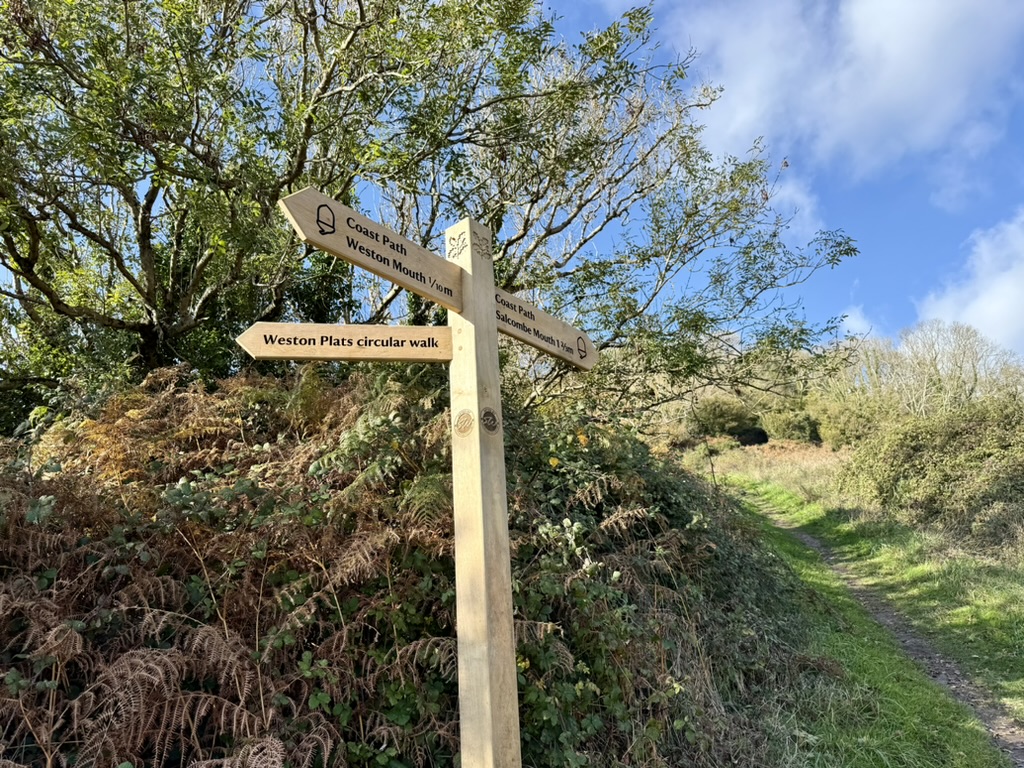
Coast path routes towards Weston Mouth, Salcombe Mouth and the historic Weston Plats. (Credit: ThisIsSouthWest)
More energetic walkers can follow the South West Coast Path west from Branscombe towards Weston Mouth, the historic Weston Plats, Salcombe Regis and Sidmouth. This is considerably tougher than the walk to Beer, with repeated climbs and descents across steep, exposed countryside.
The Weston Plats provide a fascinating glimpse into Branscombe’s rural past. Until the mid-20th century, these sheltered, south-facing slopes supported productive market gardens known locally as “plats”. Growers supplied their families and sold produce as far away as London. Early “Branscombe spuds” were a particularly anticipated speciality.
Working such steep ground was demanding. Donkeys carried harvested vegetables along the narrow paths and brought seaweed from nearby beaches to fertilise the soil. The final plat worker, George Lee, left during the mid 1960s, after which scrub gradually reclaimed the terraces. Restoration began in 2007.
You can explore the surviving plats via a waymarked route near the South West Coast Path. Take care because the ground is steep, old machinery remains, and cliffs border the site. There is no through route along the coast from within the plats.
We have walked into Branscombe from Sidmouth and the views are spectacular, but this is a proper coastal walk rather than a casual village stroll. Check the weather, allow enough daylight and wear footwear suitable for steep, potentially muddy paths.
The limited 899 bus links Branscombe with Beer, Seaton and Sidmouth, making it useful for linear walks. Always check the latest timetable before setting out.
Enjoy a drink at a traditional Branscombe pub
The Masons Arms, Branscombe. (Credit: ThisIsSouthWest)
Branscombe has two historic pubs. The Masons Arms occupies a particularly attractive position in the valley, with a thatched roof, traditional interior and outside seating. We enjoy stopping for a local beer, cider or glass of wine, and have found the food and service excellent when treating ourselves to a meal.
Further up the village, the Fountain Head Inn offers a more rustic village-pub atmosphere. It serves local ales and cider alongside traditional pub food and is particularly convenient for visitors staying at Branscombe Campsite.
Opening and food-serving times can vary, especially outside the main season, so check directly with either pub before making a special journey.
Watch aircraft at Branscombe Airfield
Branscombe Campsite incorporates a small active airfield on the upper edge of the village. Light aircraft use the grass runway with prior permission, and its countryside setting makes watching arrivals and departures particularly memorable.
We have been to summer fly-ins and vintage vehicle displays here and thoroughly enjoyed them. Events do not take place often, so check the campsite’s website and social pages for confirmed dates. The campsite and airfield are some distance from the beach, with the walk through the village taking around 40 minutes.
Follow the Branscombe village walk
Branscombe Forge (top right). The Old Bakery is along the path to the left. (Credit: ThisIsSouthWest)
Follow the Branscombe Village Walk
The National Trust’s Branscombe village walk is a 2.5 mile circular route through the valley, linking the village’s historic buildings, orchards, countryside and beach. It provides an enjoyable introduction to Branscombe, although steep slopes, steps and potentially muddy paths make it more demanding than the level valley path alone.
For a gentler half-day visit, we recommend walking from the village hall to the beach and back, visiting the forge, Old Bakery and mill before finishing with a drink at the Masons Arms.
Getting to Branscombe and Travelling Around
Branscombe, Devon (Credit: ThisIsSouthWest)
Branscombe is not the easiest Devon village to reach, but its relative isolation has helped preserve its peaceful character. The village lies below the A3052 between Seaton and Sidmouth, with narrow lanes descending into the valley from either direction.
Once there, the best way to travel around Branscombe is usually on foot. The village stretches along the valley, and its historic buildings, pubs and beach are separated by footpaths and quiet lanes rather than grouped around a conventional centre.
Driving to Branscombe
Branscombe is signposted from the A3052. We recommend following local road signs carefully instead of letting a satnav choose the shortest route. Some navigation systems may direct drivers along particularly narrow lanes, especially when approaching from the Seaton side.
Drive slowly and be prepared to stop, reverse or pull into a passing place for approaching traffic. The lanes become busier during summer weekends and school holidays, when patience is sometimes required.
We would think carefully before bringing anything larger than a Transit-sized campervan into the village. Drivers of motorhomes, caravans or larger vehicles should contact their campsite or accommodation provider before travelling and ask which approach they recommend. Some routes into Branscombe are unsuitable for large vehicles.
Parking in Branscombe village
Our preferred parking spot is behind Branscombe Village Hall, also known as Branoc Hall. The surfaced car park has space for more than 30 vehicles, with additional overflow parking sometimes available on the adjoining field when ground conditions allow.
Parking is offered in return for a donation towards the car park’s upkeep. You can leave donations in the wishing well near the entrance, and we always contribute when we use it. Public toilets are beside the visitor information room.
Next to the village hall is a much smaller National Trust car park beside Branscombe Forge. It has only six spaces and often fills quickly. Parking is free for National Trust members, while non-members are asked to make a suggested donation.
The village hall is a better starting point for exploring the forge, Old Bakery, Manor Mill, and the valley path. It also avoids the narrower drive down to Branscombe Mouth.
Parking at Branscombe Beach
A privately operated car park is available near Branscombe Beach, approximately 200 metres from the shore. It includes a separate surfaced area for Blue Badge holders and is convenient for visitors who do not want to walk down from the village.
The approach is along a narrow lane which can become awkward when traffic is moving in both directions. We generally prefer to park at the village hall and walk, particularly on busy days.
The beach car park uses automatic number plate recognition. Read the payment instructions carefully, allow enough time for your visit, and make sure you enter the correct vehicle registration. Parking time begins when the vehicle enters, not when payment is made. The National Trust describes the payment system as rigorous, so do not overstay and retain evidence of payment where possible.
This is a privately owned car park and National Trust membership does not provide free parking.
Travelling to Branscombe by bus
The Axe Valley Mini Travel 899 service connects Branscombe with Seaton, Beer, Sidmouth and places along the route. It stops beside the village hall, making it particularly useful for reaching the start of the valley path.
We have used the bus when completing linear walks along the coast. One enjoyable option is to walk between Beer and Branscombe, then return by bus, avoiding the need to retrace the coast path.
Services are limited compared with urban bus routes and generally run Monday to Saturday, not on Sundays or public holidays. Timetables may change, so check the current 899 timetable and service updates before setting out. Do not rely on an old timetable displayed elsewhere online.
Connections to Axminster railway station are available via Seaton and other local services, but you need to plan journey times and waiting periods carefully.
Walking around Branscombe
The most pleasant way to explore the village is along the Branscombe Valley Path. From the village hall and forge, the surfaced path runs about one kilometre towards the beach, passing fields, picnic benches, the Old Bakery orchard, and Manor Mill.
The route is relatively level and suitable for pushchairs. Many wheelchair users should also be able to follow it, although surfaces and gradients vary. Two accessible picnic tables line the path.
The route ends close to the Sea Shanty and Branscombe Beach. Allow around 20 minutes each way at an unhurried pace, although visiting the historic buildings, stopping in the orchard or pausing beside the stream can easily turn it into a much longer outing.
The Masons Arms is a short walk from the village hall in the opposite direction. St Winifred’s Church and the Fountain Head Inn are further up the valley, where walking increasingly involves narrow lanes and steeper gradients.
Arriving via the South West Coast Path
You can reach Branscombe on foot from Beer, Seaton, or Sidmouth via the South West Coast Path. Walking from Beer is one of our favourite ways to arrive, with spectacular cliffside views before a steep descent into the valley.
The direct coast path between Beer and Branscombe is only a few miles, but the cliffs rise to around 450 feet, and the climb makes it feel more demanding than the distance suggests. Paths can become muddy and slippery after rain.
The route from Sidmouth is considerably longer and involves repeated climbs and descents. It is a rewarding walk but should be treated as a proper coastal outing, with suitable footwear, sufficient water and enough daylight to complete the route.
The 899 bus lets you walk in one direction and return by public transport on operating days. Check the timetable before you start, rather than assuming a later bus will be available.
Cycling to Branscombe
National Cycle Network Route 2 passes through Branscombe as it travels between Seaton and Sidmouth. The scenery is excellent, but the surrounding lanes include steep gradients, blind bends and narrow sections shared with vehicles.
Experienced cyclists may enjoy the challenge, but this is not a gentle traffic-free family route. Use appropriate gearing, expect demanding climbs and take particular care when descending into the village.
Accessible travel around Branscombe
The front section of the village hall car park has a designated accessible space, although reaching the larger rear car park involves a gradient. A level-access toilet is available beside the visitor information room.
The valley path provides the easiest accessible route through Branscombe and towards the beach. The forge has ramped access, while the Old Bakery has level access but an uneven floor. Manor Mill is approached along an uneven track and has a step at the entrance.
Visitors with specific mobility requirements should consult the current National Trust access guide before travelling. Seasonal Tramper mobility scooter sessions may also be available on selected dates and require booking.
Where to Eat and Drink in Branscombe
Outdoor seating at the Sea Shanty beside Branscombe Beach. (Credit: ThisIsSouthWest)
Considering its small population and scattered layout, Branscombe has a surprisingly good choice of places to eat and drink. Options range from refreshments in the Old Bakery orchard and light meals beside the beach to two traditional village pubs.
Opening and food-serving hours can change outside the main season, so check directly before making a special journey.
Sea Shanty Beach Café
The Sea Shanty Beach Café sits in a superb spot beside Branscombe Beach and directly on the South West Coast Path. It serves coffee, cakes, breakfasts, lunches and light meals, with an emphasis on fresh, locally sourced ingredients.
We tend to choose a light snack and a drink before sitting outside, though indoor tables are available on colder or wetter days. After walking down through the valley or arriving over the cliffs from Beer, it’s easy to be tempted to stay longer than planned.
A small shop attached to the café sells drinks, ice creams, gifts and useful beach essentials to take away. The café is dog-friendly, but opening hours vary throughout the year and should be checked before relying on it during a winter walk.
The Masons Arms
The Masons Arms is a handsome thatched inn in the lower part of Branscombe village. Its low ceilings, stone floors, traditional bar and outside seating retain the atmosphere of an old Devon pub, while the dining menu takes a more polished approach to familiar pub food.
Current menus combine refined pub classics with seasonal dishes, locally influenced ingredients and a choice of desserts. The bar serves St Austell beers, local ales, cider, and wine.
We particularly enjoy sitting outside with a cold beer, cider or glass of wine. Having a meal here feels like a genuine treat, and we have found both the food and service superb on our visits.
The Masons Arms is a natural stopping point when walking between the village hall and the upper part of Branscombe. It also has guest accommodation, making it an appealing base for visitors who want to explore the valley and coast without driving again in the evening. Booking a table is sensible during summer, at weekends and around bank holidays.
The Fountain Head Inn
The Fountain Head Inn is further up the valley, close to Branscombe Campsite and Airfield. It offers a more rustic village-pub experience and is worth seeking out if you are exploring St Winifred’s Church or the upper part of Branscombe.
The pub serves locally brewed ales and cider alongside sandwiches, light bites, traditional meals and a children’s menu. Its Forge Restaurant was once a working smithy, adding another connection with Branscombe’s rural past.
We have visited the Fountain Head, although not recently, and need to make more effort to explore this part of the village again. Recent visitors continue to praise its traditional atmosphere, local drinks and friendly welcome.
The pub is dog-friendly and especially convenient for campers, but food is not always served during every opening period.
The Old Bakery
The Old Bakery provides the most peaceful place for simple refreshments in the village. The historic thatched bakery now operates as a rural craft hub and farm shop, with self-service cakes, cream teas, hot drinks and light lunch options available when open.
Tables in the adjoining orchard make it a particularly attractive stop in fine weather. We love the short walk through the orchard between the bakery and Manor Mill, and combining it with refreshments turns the historic buildings into an unhurried part of the day rather than a quick visit.
Opening is seasonal and limited to selected days, so always check the current National Trust information before planning.
Our choice for different visits
For coffee, cake or something light beside the sea, we would choose the Sea Shanty. We prefer the Masons Arms when we want a pub meal or a drink that feels like part of the Branscombe experience. The Fountain Head suits visitors exploring the upper valley or staying at the nearby campsite, while the Old Bakery is ideal for simple refreshments among the village’s historic buildings.
A particularly enjoyable half-day combines the forge, Old Bakery and Manor Mill with a walk down to the beach, followed by refreshments at the Sea Shanty. On the return, a drink or meal at the Masons Arms provides an excellent finish.
Where to Stay in Branscombe
Accommodation in Branscombe is scattered throughout the valley rather than concentrated in one area. Choices include rooms at the Masons Arms, traditional self-catering cottages, farm stays and Branscombe Campsite beside the village’s small airfield.
Branscombe suits visitors looking for a quiet base close to the Jurassic Coast. The village has no general food shop, so self-catering guests should arrive with essential supplies or shop in Seaton before entering the valley.
We visit Branscombe regularly but have not stayed overnight ourselves. The suggestions below are based on their locations, published facilities and recent guest information rather than personal stays.
The Masons Arms
The Masons Arms combines a traditional thatched Devon inn with bedrooms in the main building and nearby stone and thatched cottages. It is well positioned between the village hall and beach, making it possible to explore much of Branscombe on foot.
The pub serves breakfast, lunch and evening meals, which is particularly useful given the village’s limited shops and narrow approach roads. Some rooms are dog-friendly, and larger options are available for families. This would be our first place to consider for a short break where food, drink and accommodation are all available in one place.
Self-catering cottages in Branscombe
The Lookout Tower occupies a secluded position on Beer Head. (Credit: ThisIsSouthWest)
Self-catering works particularly well for families, walkers and anyone planning to stay for more than a couple of nights. Several cottages are listed on Booking.com, although availability is limited and the most appealing properties can book well ahead.
The Lookout Tower is an unusual two-bedroom retreat on Beer Head, between Beer and Branscombe. The restored former signal station sleeps up to four and has panoramic views across Lyme Bay and the surrounding countryside. It includes a private sauna, landscaped garden, off-road parking and complimentary EV charging. Hooken Beach is around a ten-minute walk away across the clifftop, with direct access to the South West Coast Path. The property does not accept pets.
Wheelwright Cottage is a three-bedroom, dog-friendly holiday home sleeping up to six. It has a kitchen, enclosed garden, woodburner and private parking. Its position in the valley, around a ten-minute level walk from Branscombe Beach, makes it one of the most conveniently located options.
Coombe Cottage has two bedrooms and two bathrooms and occupies a characterful position near St Winifred’s Church. You can reach the South West Coast Path through the churchyard, and the beach is about a 15-minute walk away. Dogs are accepted, but there is no private parking, so guests may need to use nearby unrestricted spaces or the donation car park behind the village hall.
Pottery Barn is a two-bedroom cottage sleeping up to five. It includes two bathrooms, an open-plan living area, a woodburner, garden space and off-road parking for two cars. Its position higher in the village suits visitors who value countryside and walking access more than being directly beside the beach.
Rosechurch Cottage provides three bedrooms, two bathrooms and on-site parking. Its village location makes it another option for families or groups seeking a traditional self-catering base.
Branscombe Lodge is a romantic woodland retreat in a quiet East Devon valley near Branscombe. Its well-equipped kitchen and secluded setting make it better suited to couples seeking peace and countryside than visitors who want to walk straight onto the beach.
Devon Hideaways also provides a Branscombe holiday cottage search, which is worth checking for newly added properties and cancellations.
Branscombe Campsite and Airfield
Branscombe Campsite and Airfield is a family-run site on the upper edge of the village. It accommodates tents, touring caravans and motorhomes, with a static caravan also available to hire.
Friends of ours have stayed here, and we have attended enjoyable summer fly-ins and vintage vehicle displays at the adjoining airfield. The active grass runway makes this an unusual place to camp, particularly for anyone interested in light aircraft. Pilots can fly in with prior permission and should contact the airfield well in advance for a briefing.
The campsite is close to the South West Coast Path and the Fountain Head Inn. Branscombe Beach is further away than it may appear on a map; the walk through the village takes around 40 minutes.
Anyone bringing a caravan or larger motorhome should ask the campsite for advice about the best approach. The surrounding lanes are narrow, so follow local directions rather than relying entirely on a satnav.
Staying near Branscombe
Accommodation within the village is limited, particularly during summer and school holidays. Beer and Seaton provide more self-catering choices, while Sidmouth has a broader selection of hotels, guesthouses and apartments.
Staying nearby can also save you from navigating Branscombe’s narrow lanes every day. The 899 bus connects Seaton, Beer and Sidmouth with the village on operating days, while walkers can reach Branscombe along the South West Coast Path.
Staying in Branscombe undoubtedly lets visitors enjoy its lanes and historic buildings after most day visitors have left.
Weather and Tide Times in Branscombe, Devon
Changing weather and sea conditions at Branscombe Beach. (Credit: ThisIsSouthWest)
Branscombe has a mild coastal climate, although the sheltered valley can feel noticeably calmer than the beach and surrounding cliffs. Spring brings fresh growth to the orchards and hedgerows, summer is livelier around the beach, and autumn colours the valley beautifully. Winter can also be rewarding for a walk followed by a pub meal, as long as you dress for the conditions.
Check the latest Branscombe weather forecast from the Met Office, or visit BBC Weather before travelling. Pay particular attention to wind, rain and visibility if walking towards Beer or Sidmouth. Coastal paths can become muddy and slippery, while strong winds may make exposed clifftop sections unsafe.
The table below shows predicted tide times for Branscombe Beach based on a nearby reference point. Conditions at Branscombe Mouth may vary, so never rely on the tide to expose a safe route around headlands.
The pebble beach shelves steeply in places, particularly after storms, and there is no lifeguard service. Keep away from unstable cliffs, take care on slippery rocks and assess sea conditions carefully before entering the water.
Tide times for Branscombe Beach
Tide times for Branscombe Beach are based on predictions for Exmouth, the nearest available reporting location. Actual times, heights and local conditions at Branscombe may vary slightly.
Is Branscombe Worth Visiting?
Yes. Branscombe combines beautiful countryside, a spacious beach, historic buildings and an unmistakably slower pace.
The village stretches through a deep green valley towards the coast, with thatched cottages, traditional inns, orchards and a stream beside the path to the sea. Much of its appeal lies in walking through the village, visiting the forge and Manor Mill, and stopping for something to eat or drink.
Branscombe Beach is one of the village’s greatest attractions. Its long pebble shoreline provides plenty of room and rarely feels overcrowded. The high cliffs on either side of the valley can make it feel surprisingly sheltered in suitable conditions. The Sea Shanty provides food, drinks, ice creams and beach essentials, with toilets available when the facilities are open.
The South West Coast Path offers spectacular walks towards Beer, Weston Mouth and Sidmouth. Branscombe is one of our favourite East Devon beaches for combining time beside the sea with a gentle village walk and lunch or a drink at a local pub.
We particularly enjoy the lush green valley in spring and early summer, although Branscombe is worth visiting year-round. It is also easy to include Branscombe with a visit to Beer, Seaton, Colyton and other places in East Devon.
Frequently Asked Questions About Branscombe
📍 Where is Branscombe in Devon?
Branscombe is on the East Devon coast between Seaton and Sidmouth. The village stretches through a long valley towards Branscombe Mouth and the Jurassic Coast.
⭐ Is Branscombe worth visiting?
Yes. Branscombe is worth visiting for its spacious pebble beach, peaceful valley, thatched cottages, historic buildings, traditional pubs and excellent coastal walks. Half a day is enough for the village and beach, although walkers can easily spend a full day here.
🏛️ What are the best things to do in Branscombe?
The best things to do in Branscombe include walking through the valley, visiting Branscombe Forge, exploring the Old Bakery and Manor Mill, seeing St Winifred’s Church and spending time on Branscombe Beach. You can also walk towards Beer or Sidmouth along the South West Coast Path.
🏖️ Is Branscombe Beach sandy or pebbled?
Branscombe Beach is a long pebble beach. It offers plenty of space and rarely feels overcrowded, while the deep valley and high cliffs on either side can make it feel surprisingly sheltered in suitable conditions.
🌊 Can you swim at Branscombe Beach?
People do swim at Branscombe Beach, but there is no lifeguard service and the beach shelves steeply in places, particularly after storms. Check the weather and sea conditions, remain within your abilities and keep away from unstable cliffs.
🐕 Are dogs allowed on Branscombe Beach?
Dogs are welcome at Branscombe throughout the year. Keep them under close control and use a lead on the beach, around livestock, near cliff edges and wherever local signs request it. Dogs are not allowed inside Branscombe Forge or Manor Mill.
☕ Are there facilities at Branscombe Beach?
Facilities near Branscombe Beach include the Sea Shanty Beach Café, an attached shop selling drinks, ice creams and beach essentials, a paid car park and public toilets. Opening arrangements can vary with the season, so check before relying on them.
🅿️ Where can you park in Branscombe?
You can park behind Branscombe Village Hall in return for a donation, in the small National Trust car park near the Forge or in the privately operated ANPR car park near the beach. The village hall is a convenient starting point for exploring the valley on foot.
🚗 Is Branscombe difficult to reach by car?
Branscombe is reached along narrow country lanes with limited passing places. Follow the signs from the A3052 rather than allowing satnav to choose a shorter lane. Large motorhomes and caravans should seek advice from their campsite or accommodation provider before travelling.
🥾 Can you walk from Branscombe to Beer?
Yes. The South West Coast Path links Branscombe and Beer, with excellent views across Lyme Bay. The distance is relatively short, but the steep climb and descent make it more demanding than it first appears. Wear suitable footwear and allow extra time after rain.
🚌 Can you visit Branscombe without a car?
Yes, although planning is required. The limited 899 bus connects Branscombe with Beer, Seaton and Sidmouth and is particularly useful for linear coast path walks. Check the latest timetable before travelling and do not rely on an old timetable found elsewhere online.
🛍️ Does Branscombe have a village shop?
Branscombe no longer has a general village shop, so bring anything essential with you. The shop attached to the Sea Shanty sells drinks, ice creams, gifts and basic beach items when open.
Practical Information for Visiting Branscombe, Devon
Branscombe Practicalities
🛍️ Shops and supermarkets: Branscombe no longer has a general village shop, so bring essential supplies with you. The nearest supermarkets and wider choice of shops are in Seaton.
🏥 Nearest hospital: Honiton Hospital has a Minor Injuries Unit. The nearest full emergency department is at the Royal Devon and Exeter Hospital at Wonford. Call 999 or 112 for emergencies and 111 for urgent medical advice.
🚔 Police: Branscombe is served by Devon and Cornwall Police. Call 999 or 112 in an emergency or 101 for non-emergency enquiries.
💊 Pharmacies: The nearest pharmacies are in Seaton. Check opening hours before travelling, particularly on Sundays and bank holidays.
🍽️ Places to eat: The Masons Arms and Fountain Head Inn serve pub meals, while the Sea Shanty Beach Café offers breakfasts, lunches, cakes and lighter options. Food-serving hours vary.
☕ Cafés and tea rooms: The Sea Shanty is beside Branscombe Beach. The Old Bakery offers simple refreshments, cakes and cream teas when open, but its opening days are limited and seasonal.
🍺 Pubs: Branscombe has two traditional pubs. The Masons Arms is in the lower valley, while the Fountain Head Inn is further up the village near Branscombe Campsite and Airfield.
✈️ Nearest airport: Exeter Airport is approximately 30 to 40 minutes away by car, depending on traffic and the route taken. Branscombe also has a small private airfield used by light aircraft with prior permission.
🚆 Railway stations: Axminster and Honiton are the nearest mainline stations, with services towards Exeter and London Waterloo. An onward bus or pre-booked taxi is required.
🚌 Buses: The Axe Valley Mini Travel 899 service links Branscombe with Seaton, Beer and Sidmouth. Services are limited, so check the current timetable before travelling.
🅿️ Car parks: A small National Trust car park is beside Branscombe Forge. The larger village hall car park accepts donations in the wishing well. Branscombe Beach has a privately operated ANPR car park where charges apply at all times.
⛽ Petrol and EV charging: There are no fuel or public charging facilities in Branscombe. Fill up or charge before entering the valley and check current facilities in Seaton, Sidmouth or along the A3052.
💵 Banks and ATMs: There are no banks or cash machines in Branscombe. Obtain cash in Seaton or Sidmouth before visiting, particularly if you wish to make a parking donation.
📮 Post Office: Branscombe does not have a Post Office. The nearest postal services are available in surrounding towns and villages, including Seaton.
🛏️ Accommodation: Choices include rooms at the Masons Arms, self-catering cottages, farm stays and Branscombe Campsite. Accommodation is limited, so booking ahead is advisable during summer and school holidays.
🚻 Public toilets: Toilets are available beside the visitor information room at the village hall and at the Branscombe Beach car park. A level-access toilet is available near the village hall.
♿ Accessibility: A relatively level, surfaced path runs for approximately one kilometre from the village car parks towards the beach. Accessible parking and surfaces vary, so check the National Trust access guide before visiting.
🚶 Visitor information: Maps, walking information and local guidance are available from the National Trust visitor information room opposite the village car parks. Opening and staffing arrangements vary.
📱 Mobile reception: Phone reception can be poor within Branscombe Valley. Download maps, bus timetables and booking details before arriving.
Helpful Links for Visiting Branscombe, Devon
Booking.com – for most accommodation needs. Look out for options that include free cancellation.
Easy Tide – Free UK tidal prediction service, providing tidal data and tide times for the current day and 6 days into the future.
Traveline SW – Comprehensive public transport information from A to B by bus, coach, train, and ferry in South West England and Great Britain.
TripAdvisor – for reviews of… pretty much everything. Our go-to before booking anything.
Vrbo – Great for self-catering and vacation holiday home rentals.
Over to you … have you recently travelled to South West England? What worked for you? What advice would you give to others? Please leave your comments below or join in the discussion in our Facebook Group.
New to South West England or returning after a while? Start with our ‘Travel Basics’ – quick guides packed with tips to help you plan your trip.