
Weston-super-Mare, England, is one of Somerset’s best-known seaside resorts, located on the Bristol Channel between Worlebury Hill and Brean Down. This guide explores Weston-super-Mare beach, the Grand Pier, Marine Lake, coastal walks and family attractions that continue to make the town one of the West of England’s top seaside destinations.
Unlike smaller Somerset coastal towns such as Clevedon, Burnham-on-Sea and Watchet, Weston-super-Mare is a larger resort town, with a population of around 85,000. Here you will find a long promenade, traditional seaside attractions, independent shops, family entertainment and easy access to some of North Somerset’s finest coastal scenery.
Weston-super-Mare makes an excellent base for exploring the Somerset coast. It is also a destination in its own right, with attractions ranging from Weston Beach and the Grand Pier to Marine Lake, Weston Museum, and nearby Brean Down, plus accommodation options including holiday parks, seafront hotels, and traditional guesthouses.
If spending time by the sea is a priority, our guide to the beaches near Weston-super-Mare compares Weston Beach, Marine Lake, Sand Bay, Uphill, Brean and Berrow, including swimming, dogs, parking and tide considerations.
This complete visitor guide to Weston-super-Mare covers the best things to do, where to stay, how to get there and how to make the most of your visit.
Weston-super-Mare at a Glance
🌊 Best for: Traditional seaside days out, family attractions, promenade walks and easy coastal breaks from Bristol and the Midlands.
⭐ Known for: The Grand Pier, wide sandy seafront, Marine Lake, Birnbeck Pier and the huge tidal range of Weston Bay.
🎡 Top attractions: Weston Beach, the Grand Pier, Marine Lake and Knightstone Island, Weston Museum, the Helicopter Museum, Uphill and Weston Woods.
🆓 Best free things to do: Walk along the promenade, explore Marine Lake and Knightstone Island, visit Weston Museum, see Birnbeck Pier, wander through Prince Consort Gardens or follow the coast towards Uphill.
👨👩👧👦 Good for families: The seafront, Grand Pier, Rock Up Weston, Water Adventure Play Park and nearby Puxton Park.
🥾 Good for walking: Birnbeck Pier, Prince Consort Gardens, Weston Woods, Sand Bay, Uphill Nature Reserve and the Brean Down Way.
🌊 Tide times: Weston has a very large tidal range, so check the latest Weston-super-Mare tide times before heading onto the shore.
⏱️ Time to allow: One full day for the seafront, pier, Marine Lake and town centre, or a weekend if you also want to explore Uphill, Sand Bay and nearby attractions.
🚌 Getting around: The seafront and town centre are easy to explore on foot. Local buses are useful for some outlying areas, with seasonal services towards Sand Bay and Brean.
🛏️ Where to stay: Seafront hotels are convenient for the Grand Pier, Marine Lake and town centre. Holiday parks and caravan sites are mainly found around Sand Bay, Bleadon and Brean.
📍 Nearby highlights: Brean Down, Sand Bay, Uphill, Walborough Nature Reserve, Burnham-on-Sea, Clevedon and the wider Somerset coast.
💡 Our tip: If you have more than a day, explore beyond the main seafront. Uphill, Weston Woods, Sand Bay and Brean Down reveal a much quieter side of the area and are all easy to combine with a stay in Weston-super-Mare.
Planning your visit? Continue to the best things to do and attractions in Weston-super-Mare, Weston-super-Mare beaches, places to visit nearby, Weston-super-Mare tide times or Weston-super-Mare accommodation guide.
Disclosure: Some of the outbound links on this page are affiliate links to sites that we use and would genuinely recommend. Using them doesn’t cost you extra, but it does help support this free guide. We also link to other sites we believe may be helpful to you.
- Weston-super-Mare at a Glance
- Map of Weston-super-Mare
- A Brief History of Weston-super-Mare, England
- Things to Do and Attractions in Weston-super-Mare, Somerset
- Weston-super-Mare Town Centre: Shops, Markets and Things to Do
- What's On in Weston-super-Mare: Festivals and Seasonal Highlights
- Things to do Near Weston-super-Mare
- How to Get to Weston-super-Mare and Travel Around
- Where to Eat in Weston-super-Mare
- Where to Stay in Weston-super-Mare
- Weather in Weston-super-Mare: When to Visit
- Weston-super-Mare Tide Times
- Practical Information for Visiting Weston-super-Mare
- Weston-super-Mare FAQs
- Is Weston-super-Mare Worth Visiting
Map of Weston-super-Mare
This map of Weston-super-Mare shows the location of key attractions, beaches, parking areas and places of interest across the town. Use it to plan your visit and discover the best things to do in Weston-super-Mare and the surrounding Somerset coast.
A Brief History of Weston-super-Mare, England
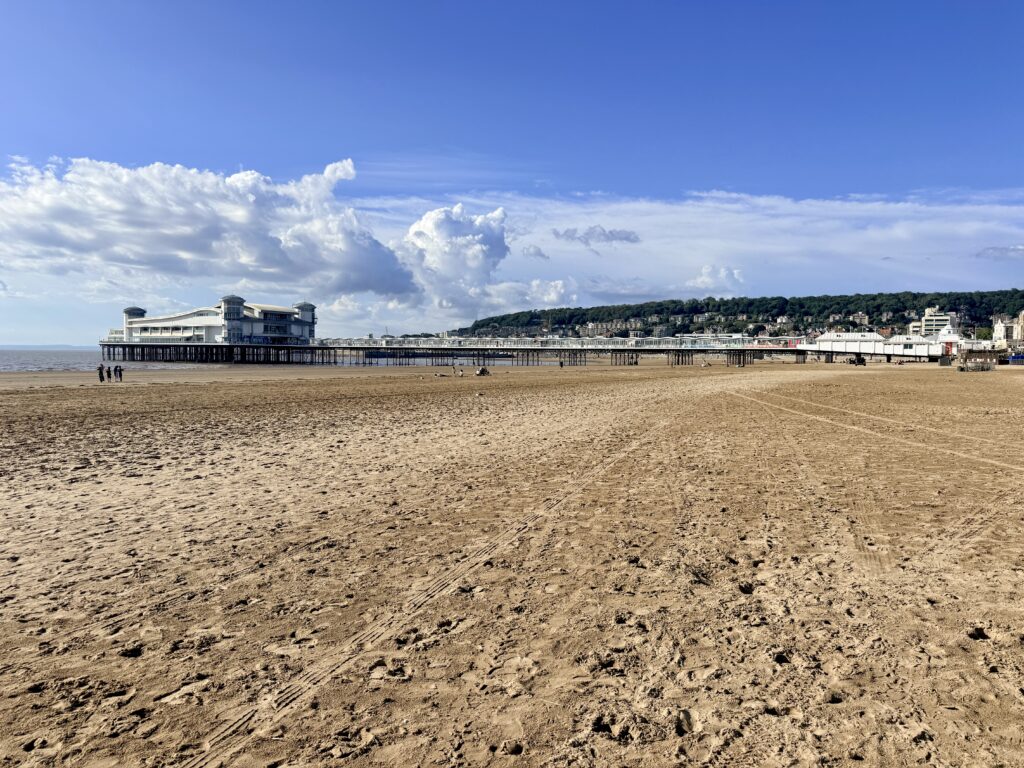
Weston-super-Mare’s story has always been linked to the Bristol Channel and its remarkable tides. At low tide, the sea retreats far across the bay, exposing vast expanses of sand and mudflats that remain one of the town’s most distinctive features today.
For centuries, Weston was a small fishing and farming village clustered around St John the Baptist Church. Everything changed in the late 18th and early 19th centuries, when sea bathing became fashionable, and the Victorians began arriving to enjoy the fresh air and supposed health benefits of the coast.
The arrival of the railway in the 1840s transformed Weston into one of Britain’s leading seaside resorts. Thousands of holidaymakers travelled from Bristol, the Midlands and South Wales, prompting the development of hotels, theatres, attractions and the town’s famous piers. Birnbeck Pier opened in 1867, followed by the Grand Pier in 1904; both became iconic landmarks.

Things to Do and Attractions in Weston-super-Mare, Somerset
The best things to do and attractions in Weston-super-Mare range from its wide sandy beach and Grand Pier to museums, indoor activities and coastal walks. The promenade remains the focus of the resort, while Marine Lake, Birnbeck Pier, Uphill and Weston Woods reveal quieter and more unusual sides of the town.
Along the seafront are several larger venues, including the Winter Gardens Pavilion, which hosts concerts, exhibitions and community events throughout the year. Nearby stands the Tropicana, the former Art Deco outdoor pool complex that later became a major events space and is currently closed while refurbishment plans are underway.
Beyond the promenade, you will also find museums, theatres and coastal walking routes, along with quieter areas such as Uphill, Weston Woods and Sand Bay. Together, they offer a combination of seaside activities, local history, and access to the wider North Somerset coastline.
Visit Weston-super-Mare Beach
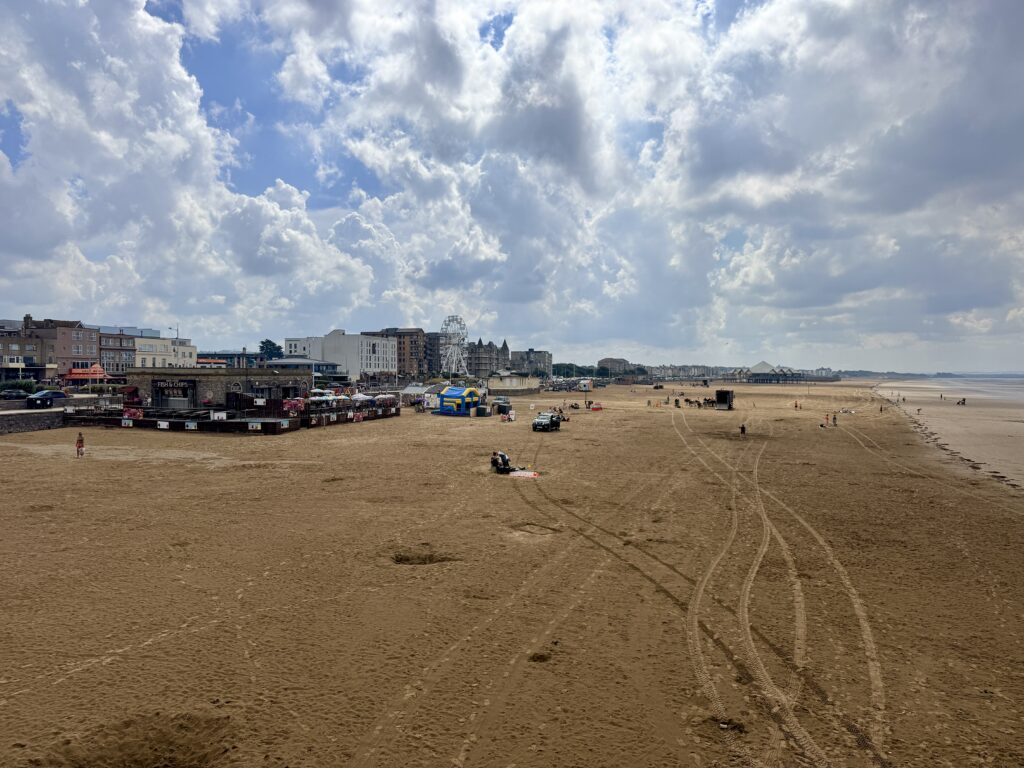
Weston-super-Mare beach stretches for nearly two miles along Weston Bay and remains one of the town’s biggest attractions. The central section beside the Grand Pier offers the classic Weston seaside experience, with a broad sandy shore, donkey rides in summer, and cafés, kiosks, toilets, and other facilities close to the promenade.
The enormous tidal range completely changes the character of the bay during the day. At low tide, the sea can retreat a considerable distance, exposing extensive areas of sand and mud. Weston Main’s latest annual bathing-water classification is Poor, with official advice against bathing, so we would choose Marine Lake if getting into the water is an important part of your visit.
Dogs are allowed on some parts of Weston Beach year-round, while seasonal restrictions apply to the central section. Check the signs when you arrive for the rules applying to the part of the beach you are using.
Want to explore beyond the main seafront? Our guide to Weston-super-Mare beaches compares Weston Beach with Marine Lake, Uphill, Sand Bay, Sand Point, Brean, Berrow and Burnham-on-Sea, including swimming, dog rules, parking, tides and getting there.
Walk the Weston-super-Mare Promenade
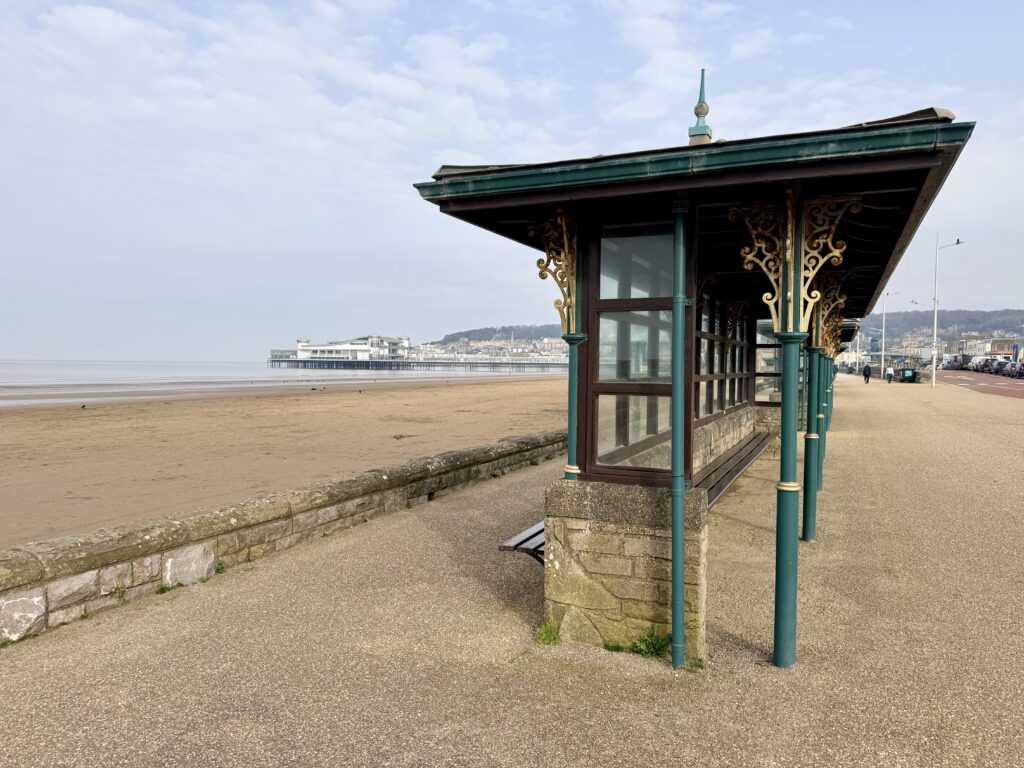
Weston-super-Mare’s promenade runs for more than two miles along the edge of Weston Bay and forms the social heart of the town. Wide, level, and easy to walk, it remains popular year-round with tourists and residents alike.
You can often park along the road beside the promenade at the southern end of Weston Beach (parking charges apply from March to the end of October). This is our favourite starting point for a walk along the seafront towards Birnbeck Pier and back, taking in many of the town’s best-known attractions along the way.
Along the central stretch, amusement arcades, fish and chip shops, cafés, and ice cream kiosks line the promenade, particularly around the Grand Pier and Marine Parade. Benches face the Bristol Channel, offering wide views across the bay towards Steep Holm and Flat Holm.
Several landscaped spaces sit just behind the seafront. Grove Park provides gardens, trees and a small lake, while nearby Marine Lake offers a sheltered tidal pool used for paddling, kayaking and open-water swimming. Public art installations, events and seasonal attractions also appear along the promenade throughout the year.
To the north, the promenade leads towards Knightstone Island and Birnbeck Pier, while to the south it gradually becomes quieter as it approaches Uphill and the mouth of the River Axe. This quieter southern section is particularly popular with walkers and cyclists following the coastal path.
Visit the Grand Pier, Weston-super-Mare
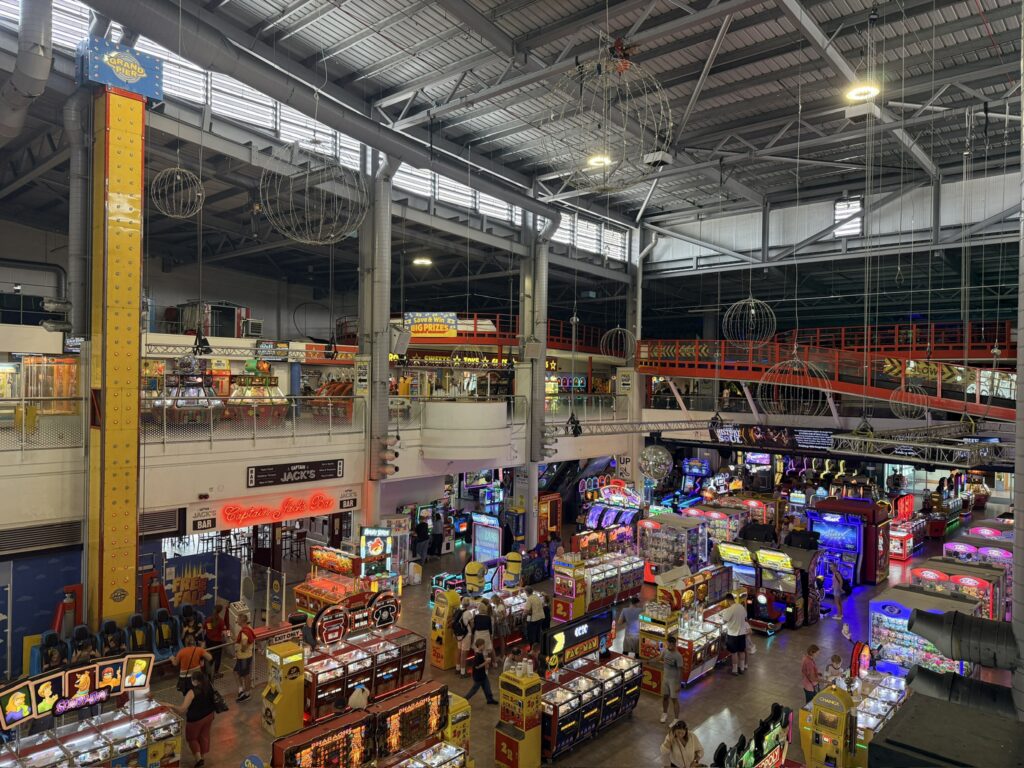
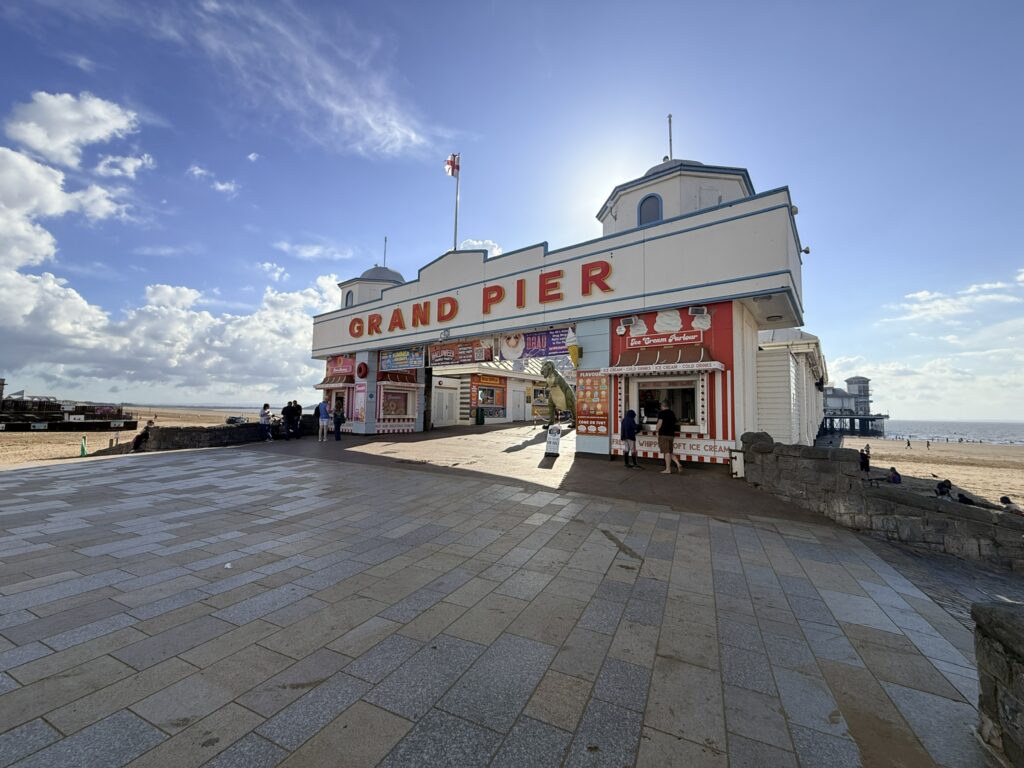
The Grand Pier is one of Weston-super-Mare’s best-known landmarks and one of the most popular things to do. Stretching around 360 metres into Weston Bay, the pier combines the traditional experience of walking above the sea with a large indoor entertainment complex that operates throughout much of the year.
The original Weston-super-Mare Pier opened in 1904, during the height of the town’s popularity as a Victorian and Edwardian seaside resort. Like many piers of the era, it was designed as a place where people could stroll above the water while enjoying amusements, refreshments and entertainment. Fire has played a dramatic role in its history. A blaze destroyed the pavilion in 1930, and a second major fire in 2008 devastated the structure again. The pier reopened in 2010 following a major reconstruction, with a modern pavilion designed to house most attractions indoors.
Today, the Grand Pier is one of Weston-super-Mare’s leading family attractions. Inside the pavilion are hundreds of arcade machines and games, alongside rides and activities, including dodgems, a ghost train, indoor go-karts, mini golf, laser maze challenges, and soft play areas for younger children. Several cafés, bars and restaurants are also found inside the building, making it a reliable destination whatever the weather.
The pier hosts events throughout the year, including live music, themed parties, seasonal activities and private functions. Admission to the pier currently costs around £2 per person, although most rides, games and attractions require additional payment. Opening times vary by season, but the attraction generally opens from around 11 am on weekdays and 10 am at weekends, with extended hours during school holidays and summer. Check the official website before travelling, as opening hours, admission prices, and attraction charges can change.
Swim in the Marine Lake and walk to Knightstone Island
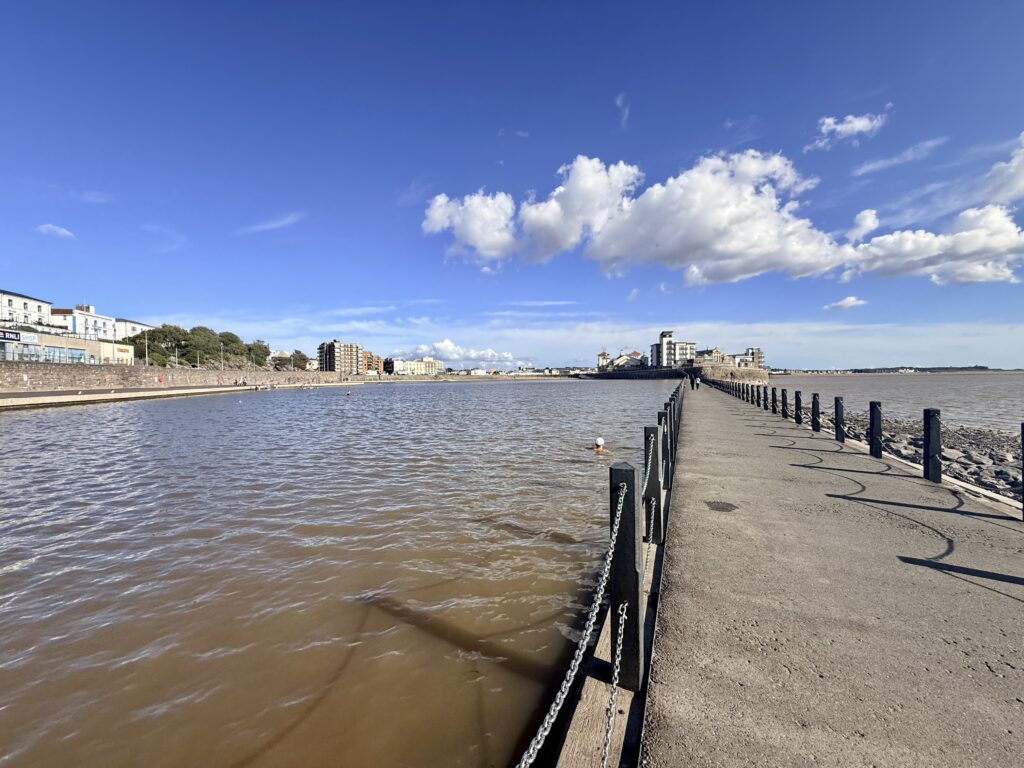
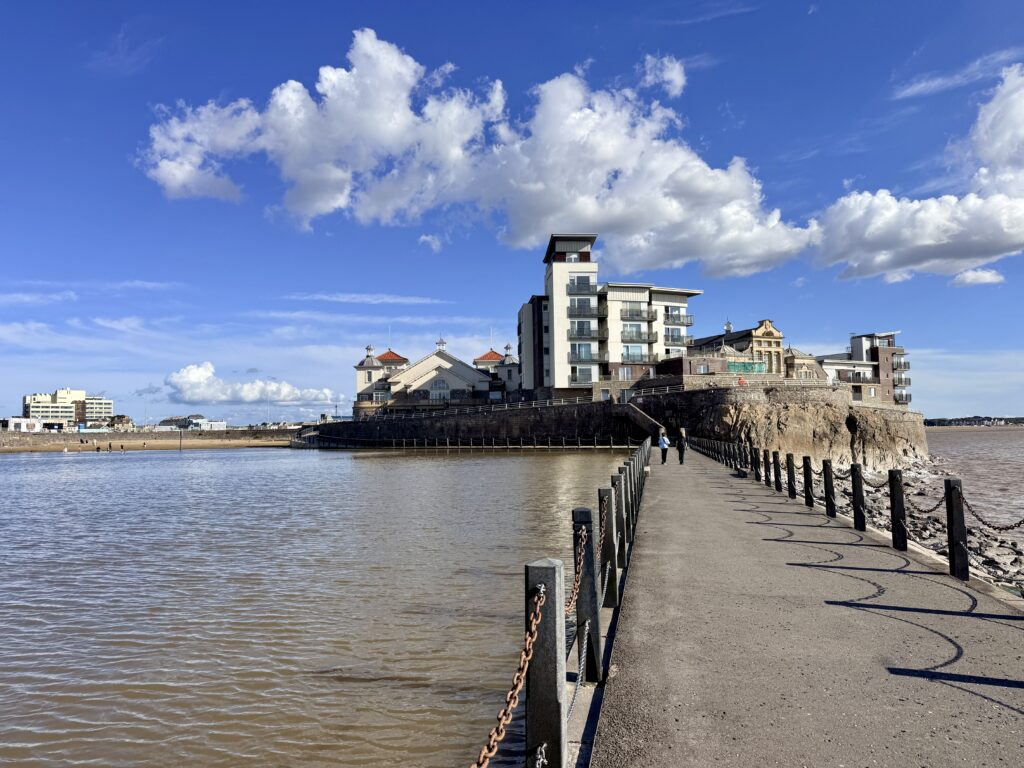
Near the northern end of Weston’s seafront lies Marine Lake, a tidal swimming lagoon created so holidaymakers could bathe even when the sea had retreated far across Weston Bay. The lake was completed in 1929, when a retaining wall was built between the shore and Knightstone Island, enclosing part of the coastline to form a seawater pool. At high tide, the lake fills naturally from the Bristol Channel and retains water as the tide falls, allowing swimming for much longer periods of the day.
More than 200 metres long, the lake has become a well-known spot for open-water swimming, with calmer, enclosed water that suits training and group swims.
One of the most common questions is: “Is Weston-super-Mare Marine Lake open?” The answer is yes. After extensive maintenance and refurbishment, Marine Lake reopened on 22 May 2026. It provides a more sheltered alternative to swimming in the open bay, although there is no lifeguard service and visitors should follow the safety information displayed around the lake.
Just above the lake lies Knightstone Island, a small rocky outcrop connected to the mainland by a causeway. In the early nineteenth century, Dr Edward Long Fox, a physician associated with the nearby Worcester House spa, developed it as part of Weston’s growing sea-bathing and health culture.
Today, the island is largely residential but remains accessible on foot. Enjoy a walk out along the short causeway, where a seafront café and seating areas provide a pleasant place to pause and enjoy views across Weston Bay towards Birnbeck Pier and the Bristol Channel. During the Victorian era, the island also hosted entertainment buildings linked to Birnbeck Pier, forming part of the resort’s northern leisure area.
Discover Birnbeck Pier
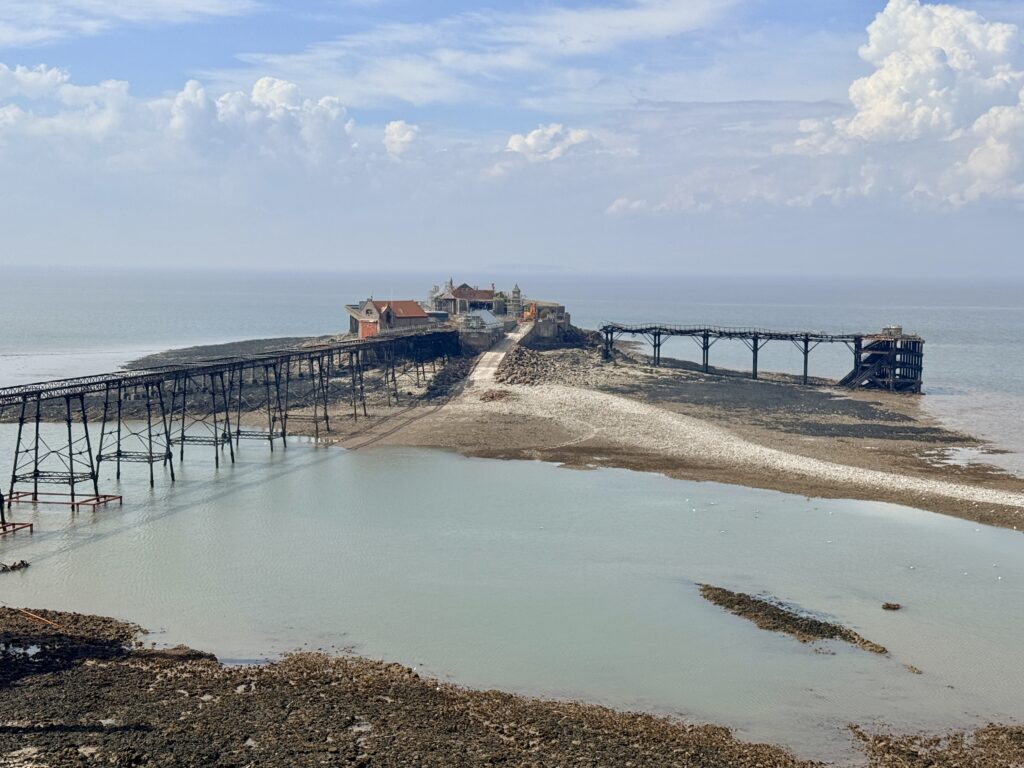
Although currently closed, Birnbeck Pier remains one of Weston-super-Mare’s most iconic landmarks. Opened in 1867 and designed by the Victorian engineer Eugenius Birch, it is unique among British piers, linking the mainland to Birnbeck Island rather than extending directly into the sea.
During its heyday, passenger steamers from Cardiff, Newport and Ilfracombe docked at the island, allowing visitors to walk straight into the resort. Birnbeck Island itself was home to pavilions, refreshment rooms and other attractions, making it a lively part of Weston’s seafront.
As steamship services declined and maintenance costs increased, the pier fell into disrepair and eventually closed to the public in 1994. Years of exposure to the Bristol Channel’s harsh conditions further weakened the structure.
Today, Birnbeck Pier and Island remain closed because parts of the historic structure are unsafe to access. However, progress is finally being made. North Somerset Council acquired the site in 2023 and has since secured funding for restoration and stabilisation works.
The long-term aim is to reopen this unique Victorian landmark. For the latest updates, visit the Birnbeck Regeneration Trust website.
Prince Consort Gardens
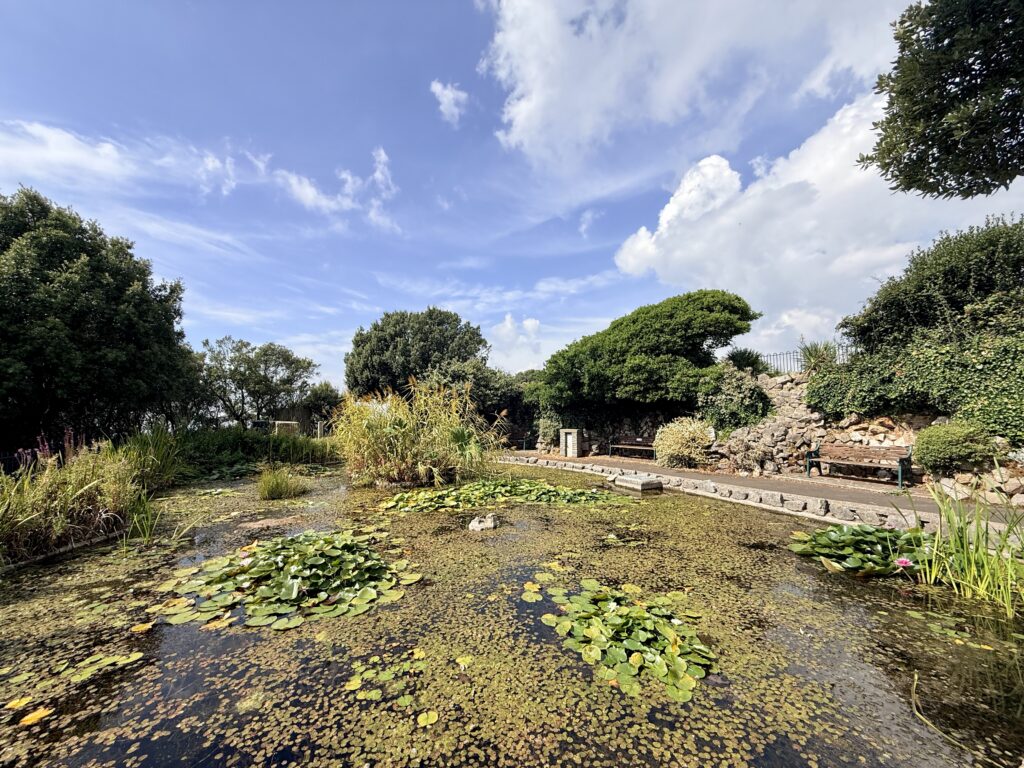
Just above Birnbeck Pier, Prince Consort Gardens are an easy place to miss but well worth the short climb from the seafront. The gardens have wonderful views across Weston Bay and the Bristol Channel, with plenty of benches and quiet corners to sit for a while.
We particularly liked the contrast with the busy promenade. Despite being only a few minutes away, the gardens feel peaceful and surprisingly secluded, with mature planting and a wildlife pond.
There is some interesting local history too. The site was originally known as Flag Staff Hill and was used as a navigation point for passing ships. It became a public garden in the late 19th century, and information boards around the gardens tell more of its story.
Prince Consort Gardens are also a good starting point for a walk towards Weston Woods and Sand Bay. The seasonal bus between Weston-super-Mare and Sand Bay stops nearby, so you can continue on foot through the woods and catch the bus back from Sand Bay.
Weston Woods, Worlebury Hill and the Walk to Sand Bay
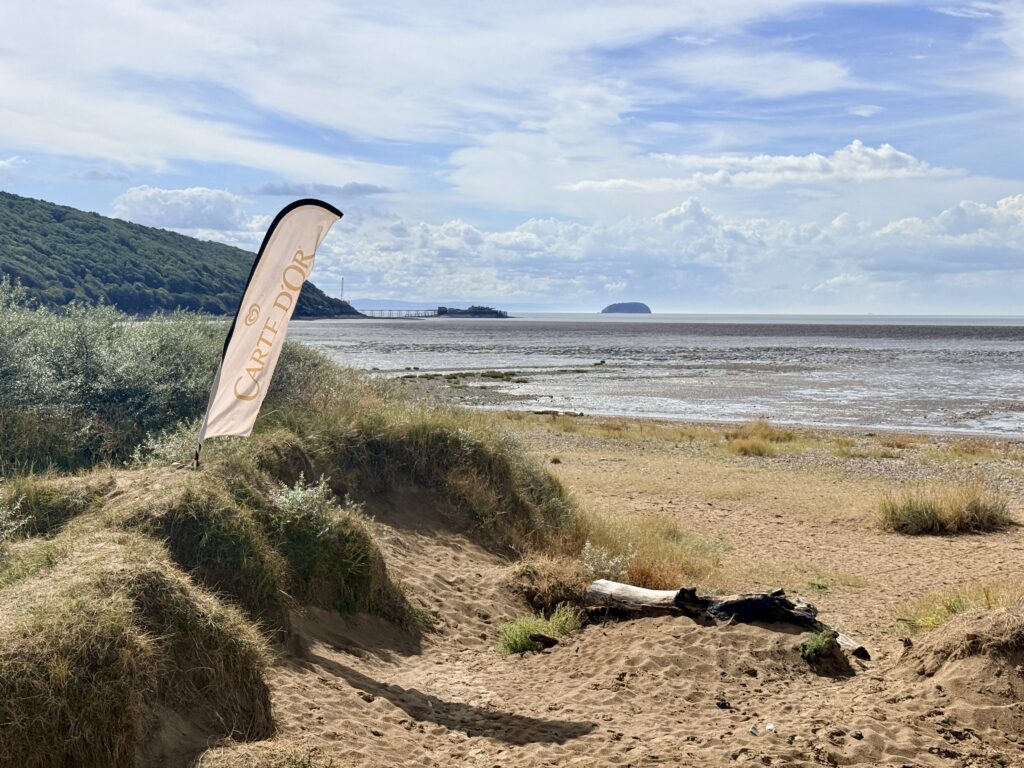
One of our favourite ways to escape the bustle of Weston-super-Mare is to walk north from Birnbeck Pier through Weston Woods to Sand Bay. It offers an enjoyable change from the promenade and gives you a surprisingly varied walk that combines Victorian Weston, woodland, local history, and a much quieter stretch of coast.
From Birnbeck Pier, we walked through Prince Consort Gardens before following the old toll road north. This was once part of the route between Weston-super-Mare and Kewstoke, winding around the steep western side of Worlebury Hill. Take particular care on the initial roadside section.
We then turned right onto a path through Weston Woods, which runs roughly parallel with the road towards Sand Bay. The woods cover the slopes of Worlebury Hill and feel remarkably removed from the busy resort below, with woodland paths, limestone outcrops and occasional glimpses towards Weston Bay and the Bristol Channel.
Higher on Worlebury Hill are the remains of Worlebury Camp, an important Iron Age hillfort. Banks, ditches and other earthworks survive around the hilltop, while archaeological excavations have found evidence of the settlement that once occupied this commanding position above the coast. It is worth exploring separately if you have more time.
Continue north through the woods, and you eventually emerge near Sand Bay. We found it quite a contrast to central Weston-super-Mare. The beach feels much more spacious and less developed, with plenty of room to walk and generally a quieter atmosphere. There are car parks, toilets, and places for refreshments, so it still has enough facilities for an easy day out.
We stopped for an ice cream before catching the open-top double-decker bus back to Weston-super-Mare, which makes this a particularly good one-way walk rather than having to retrace your steps.
Sand Bay is also an excellent starting point for longer walks. Head north to Sand Point and Middle Hope, and to the south to Weston Woods and Worlebury Hill.
You can compare Sand Bay with the other Weston-super-Mare beaches in our dedicated beach guide, or follow our first-hand Sand Point and Middle Hope circular walk for a route map, parking information and practical advice.
Explore Old Town Quarry
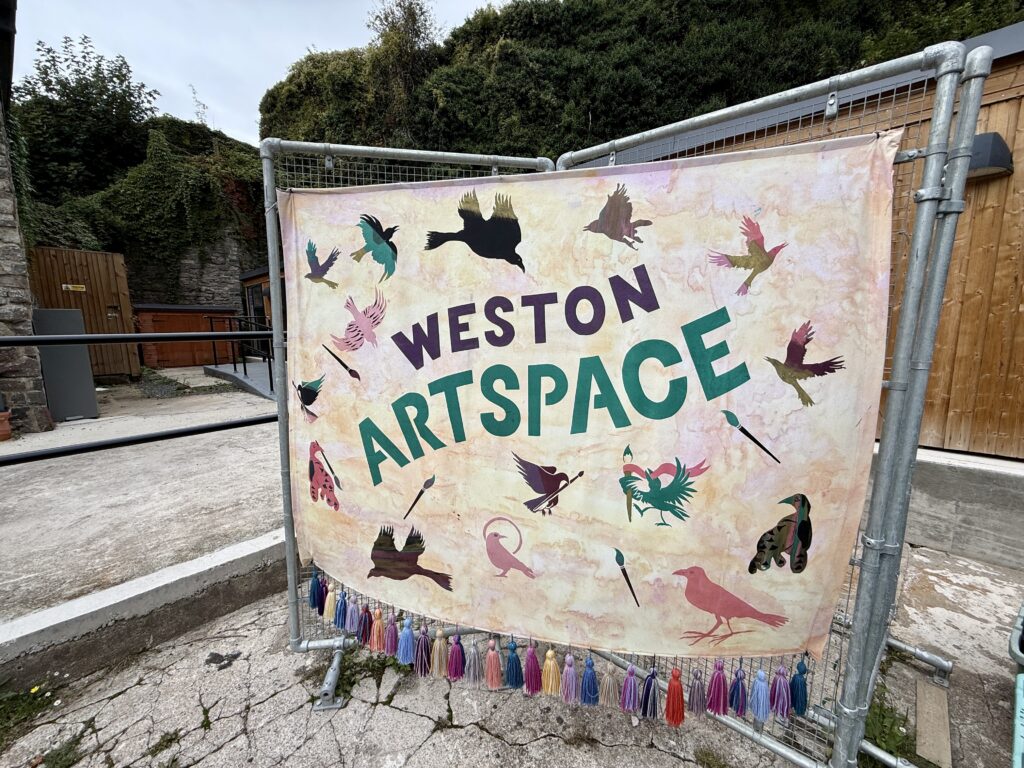
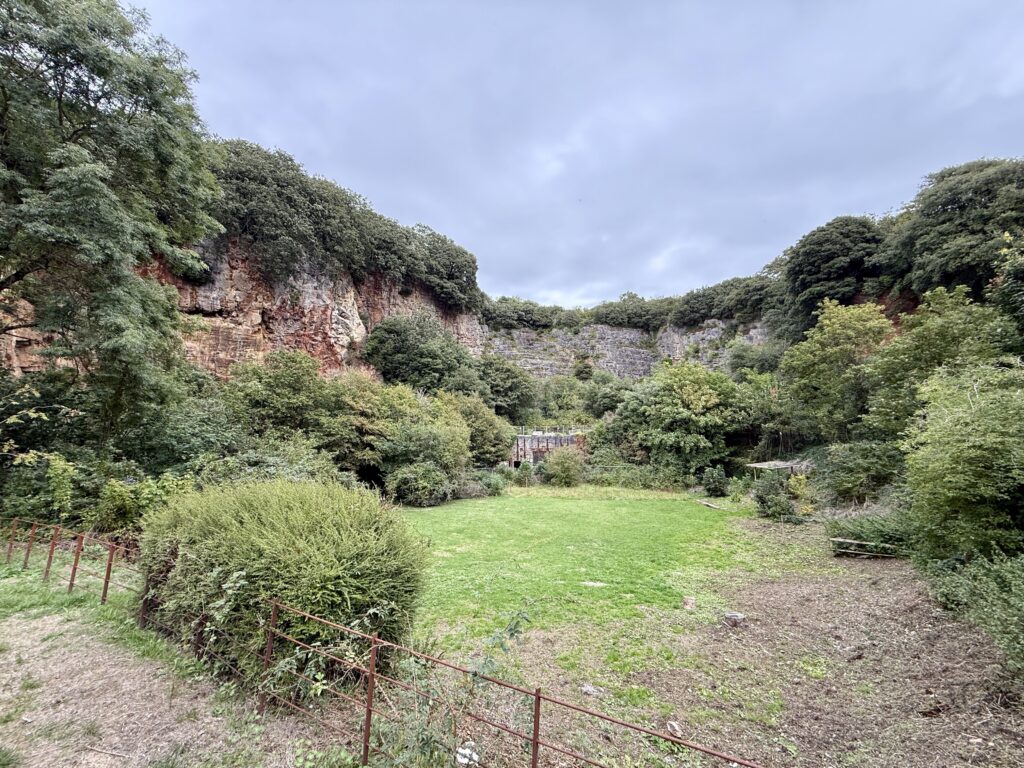
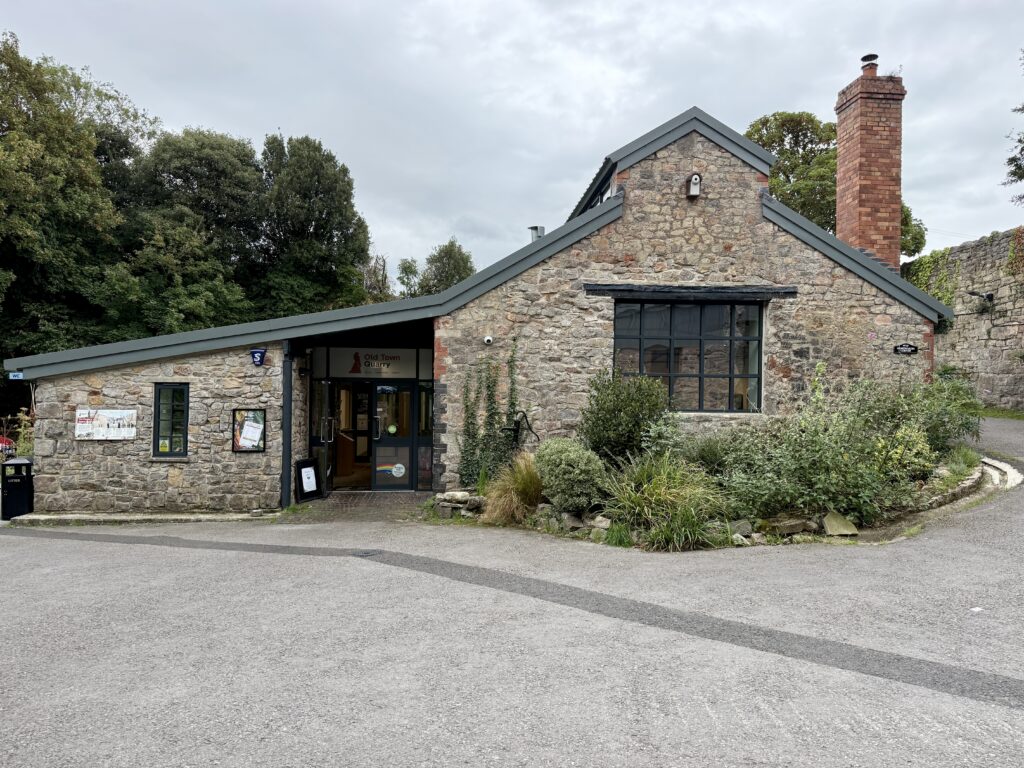
We discovered Old Town Quarry after spotting a small poster on the seafront describing it as one of Weston’s hidden spots. About a mile from the town centre, this former limestone quarry is now a community space combining local history, nature and working artists’ studios.
The quarry itself is impressive, although you can explore the main site in around 15 minutes. Interpretation boards explain how stone quarried here was used in Weston’s buildings and roads, while the small studios are perhaps the more unusual attraction. You may see and meet local artists at work.
We particularly liked Stone & Canvas. This is more than a basic visitor-attraction café; it’s more of a bistro, with an extensive breakfast and lunch menu, a licensed bar, and inviting outdoor seating. Our sandwiches, chips and soft drinks were excellent. We’d happily return just to eat here.
Free parking is available, with additional on-street parking nearby. If you’d like to make more of your visit, the quarry also features on the Nature & Heritage Walk, which links Grove Park with Birnbeck Pier and explores some of Weston’s history and green spaces along the way. We’d recommend the quarry, particularly for its local history, art and excellent café.
Visit Weston Museum
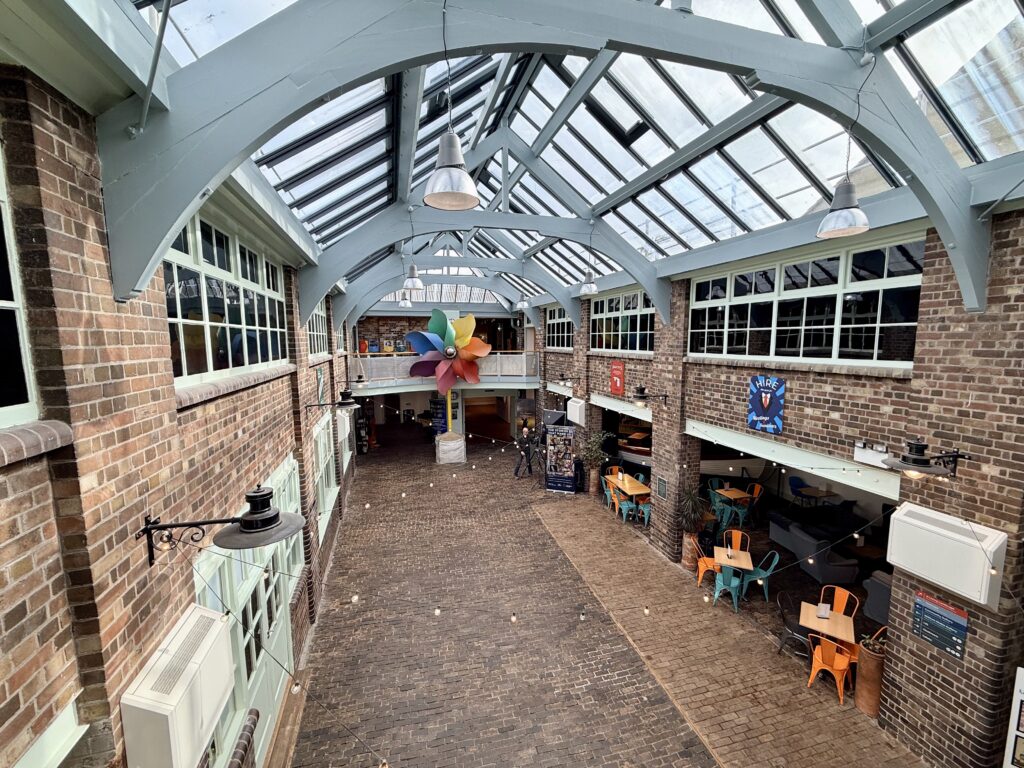
If you’re looking for free things to do in Weston-super-Mare, Weston Museum is one of the town’s best free attractions. Situated in a Grade II-listed building on Burlington Street, the museum tells the story of Weston-super-Mare and the wider North Somerset area through a series of modern, engaging displays.
Exhibitions cover local geology, archaeology, maritime history, and Weston’s growth from a small coastal settlement into one of Britain’s best-known seaside resorts. Historic photographs, seaside memorabilia and objects from the North Somerset collection help bring the area’s past to life.
One highlight is Clara’s Cottage, a recreated Victorian working-class home furnished with original household items and period artefacts. The museum also hosts temporary exhibitions, talks and community events throughout the year.
Admission is free, although donations are welcome. Facilities include a café, gift shop and courtyard, making it a pleasant place to spend an hour or two away from the seafront.
Visit the Helicopter Museum, Weston Airport
Located at the old Weston Airport, a short distance from the town centre, The Helicopter Museum is one of the area’s more unusual things to do in Weston-super-Mare. It holds one of the world’s largest collections of helicopters and rotary-wing aircraft, with more than 80 machines displayed across several large hangars and outdoor areas.
The museum traces the development of helicopter aviation from early experimental designs to modern military, rescue and civilian aircraft. The collection includes a wide range of machines used in search and rescue, offshore transport, policing and military operations. Several rare aircraft are preserved here, including Cold War-era helicopters and prototypes that are no longer in active service.
Inside the hangars, information displays explain how helicopters work and how rotary-wing aviation developed during the twentieth century. You can view many of the aircraft up close, allowing you to see the helicopter’s size and complexity in detail.
The museum also hosts special events throughout the year, including open-cockpit days when you can sometimes sit inside selected aircraft. The site also hosts occasional talks, exhibitions, and aviation-themed events.
Opening hours are limited, and the museum is typically open on weekends and selected weekdays rather than every day. Admission charges apply, with tickets usually around £12 for adults and reduced prices for children and families, though prices can change. Check the museum’s website before travelling to confirm opening times and current admission costs.
Climb the Walls at Rock Up Weston
For those looking for indoor activities in Weston-super-Mare, Rock Up Weston offers an active alternative to the town’s traditional seaside attractions. Found at Dolphin Square on the seafront, the centre features a large indoor climbing arena with more than 20 themed climbing walls designed for a wide range of ages and abilities.
The colourful climbing challenges vary in difficulty and include speed climbs, obstacle-style walls and vertical challenges that test balance, coordination and confidence. Climbers use an automatic belay system, allowing them to climb safely without needing prior experience or specialist training.
One of the attraction’s highlights is the high ropes course, suspended above the climbing arena and featuring a variety of aerial obstacles. The venue also has a soft play area for younger children, making it suitable for families with children of different ages.
Rock Up suits both beginners and experienced climbers. Introductory safety briefings are provided before climbing sessions, and trained staff are available throughout the venue to offer guidance and supervision.
Among the best things to do for families in Weston-super-Mare, the attraction is particularly busy during school holidays and on rainy days, when outdoor activities are less appealing. Climbing sessions are available throughout the week, although booking is recommended during busy periods.
Admission charges vary depending on the activities selected and the session length. Family tickets and combination packages are often available. Check the venue’s website before travelling for the latest opening times, prices and booking information.
See a Show at The Playhouse Theatre
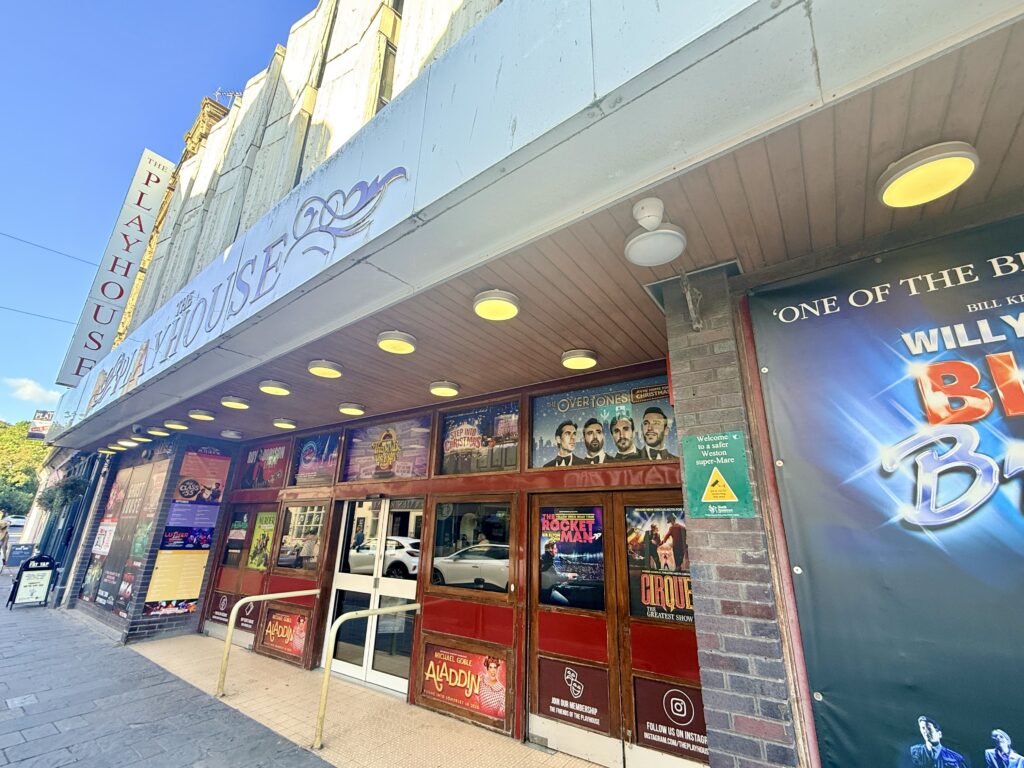
Close to the seafront on High Street, the Playhouse Theatre is Weston-super-Mare’s main performing arts venue and an important part of the town’s cultural life. The theatre stands in a building originally constructed in the nineteenth century, reflecting Weston’s long tradition of entertainment venues that developed alongside its rise as a seaside resort.
Over the years, the building has evolved into a modern theatre while retaining elements of its historic character. Today, the Playhouse provides a professional performance space serving Weston and the wider North Somerset area. The auditorium seats around 650 people, making it one of the largest theatres in the region outside Bristol.
The theatre hosts a wide and varied programme throughout the year. Touring theatre productions regularly visit Weston, alongside stand-up comedy shows, tribute concerts, dance performances and live music events. The venue is also known for its annual pantomime, which draws large local audiences each winter and has become a long-standing seasonal tradition.
Walk the Brean Down Way to Uphill and Walborough Nature Reserve
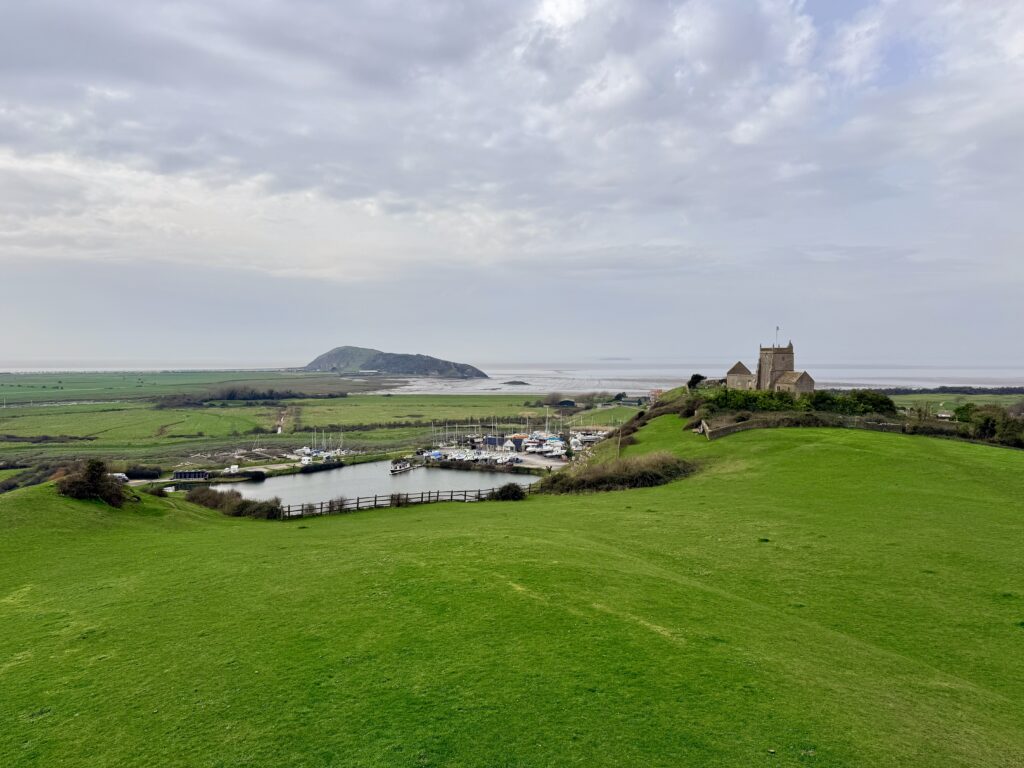
South of Weston-super-Mare, the landscape begins to change as the seafront gradually gives way to the quieter village of Uphill, at the mouth of the River Axe, where the estuary meets the Bristol Channel.
Above the village rises Uphill Hill, a limestone ridge that stands out sharply against the surrounding wetlands and grazing marsh. At the summit are the ruins of St Nicholas Church, a landmark visible for miles along the coast. Nearby stands Uphill Beacon, where you can climb the beacon’s steps to reach the top, where wide views open in all directions across Weston Bay, the Bristol Channel, the Axe estuary and south towards the limestone headland of Brean Down.
The hillside also contains several historic lime kilns, reminders of the area’s industrial past, when locals burnt limestone to produce quicklime for agriculture and construction. Today, the slopes are known for their limestone grassland and wildflowers, particularly during spring and early summer.
The Brean Down Way begins in Weston-super-Mare and follows the coastline south towards Brean. The route passes through Uphill, where walkers will find toilets, pubs, cafés and a beach car park, making it a convenient stopping point. From here, the path continues along the edge of the estuary and across open coastal landscapes before eventually reaching the dramatic limestone ridge of Brean Down.
Nearby lies Walborough Nature Reserve, managed by the Avon Wildlife Trust. The reserve protects areas of limestone grassland and salt marsh that support a wide variety of wildlife, including butterflies, orchids and coastal birds. Walking paths cross the reserve and provide excellent views across the River Axe estuary and out towards the Bristol Channel.
Take a Trip to Puxton Park
For families looking for things to do in Weston-super-Mare, Puxton Park is one of the area’s largest attractions. Found at Hewish, just a few minutes from Junction 21 of the M5, the park combines indoor and outdoor play areas with farm animals, rides and family activities across a large countryside site.
The attraction is designed as a full-day outing, with a wide variety of activities suitable for children of different ages. Kids can explore adventure playgrounds, climbing areas, zip lines, pedal karts, crazy golf, tractor-themed attractions and a miniature railway that runs around parts of the park.
Animal lovers can visit the farm and animal zones, which are home to a range of farm animals and smaller creatures. Regular feeding sessions, animal encounters and demonstrations take place throughout the day, allowing families to learn more about the animals and farming life.
One of the park’s biggest attractions is its extensive indoor soft play centre, making it a good choice during wet weather. Outdoor attractions include adventure play areas, a giant bouncing pillow, climbing challenges and seasonal activities that vary throughout the year.
Among the best family activities in Weston-super-Mare, Puxton Park is open most of the year and offers enough activities to keep families occupied all day. On-site facilities include cafés, a restaurant, a farm shop and picnic areas.
Admission charges apply, with tickets covering most attractions within the park. It is usually best to book online in advance, and we recommend checking the park’s website before travelling for current opening times, ticket prices and special events.
Weston-super-Mare Town Centre: Shops, Markets and Things to Do
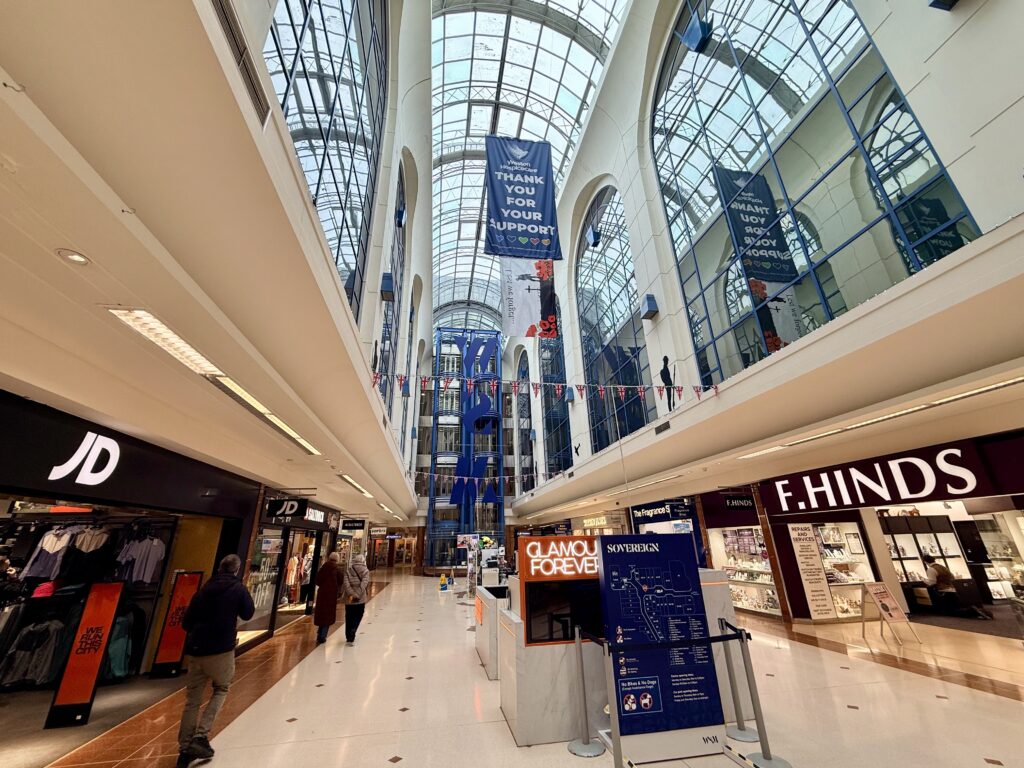
Weston-super-Mare’s town centre is just inland from the seafront and offers a good mixture of shopping, cafés and everyday services. High Street, Regent Street and Orchard Street form the main shopping area, combining well-known high-street brands with independent shops, bakeries and local businesses.
The town centre is compact enough to explore on foot. The Italian Gardens provide an attractive link between the promenade and the shops, while Regent Street’s pedestrianised area is lined with cafés and smaller retailers. The Sovereign Centre adds a covered shopping area with additional stores and indoor walkways.
Markets and seasonal events take place throughout the year, particularly during the summer and Christmas periods. The town centre is a good place to browse, enjoy a coffee or pick up essentials, all within a short walk of the seafront and Grand Pier.
The Tourist Information Centre is on Waterloo Street, a short walk from the seafront.
There is also a substantial amount of out-of-town shopping in Weston-super-Mare. Retail parks and larger stores are clustered in several areas, including around Marchfields Way and the eastern side of the town. These include supermarkets, homeware, furniture, electrical and other larger retailers. If a rainy day of shopping appeals, there is considerably more here than you might expect from a seaside resort, although you will probably want to use a car or local bus to reach these areas from the town centre.
For an even larger shopping trip, Bristol city centre, Cribbs Causeway and Clarks Village are all within reach of Weston-super-Mare.
What’s On in Weston-super-Mare: Festivals and Seasonal Highlights
Weston-super-Mare hosts a busy programme of events throughout the year, with many taking place on the beach, promenade and seafront. From major sporting events and live music festivals to food fairs and community celebrations, there is often something happening beyond the traditional summer holiday season.
One of the town’s best-known events is the Weston Beach Race, one of Europe’s largest beach motocross competitions. The Weston-super-Mare Carnival is another highlight, bringing illuminated floats and thousands of spectators to the town each autumn as part of the wider Somerset Carnival circuit.
Music and entertainment also play a major role in the town’s events calendar. The Weston-super-Mare Sea Shanty and Folk Festival attracts performers from across the UK, while beach concerts, tribute weekends, food festivals and seasonal markets regularly take place throughout the year. The annual Fireworks at Sea display around the Grand Pier is another top attraction.
The Helicopter Museum hosts themed weekends, military history events, and aviation gatherings, while community festivals and family events take place in locations such as Grove Park and the Italian Gardens.
For local festivals, shows and family activities, explore what’s on in Somerset this weekend. Our regularly updated guide also covers upcoming events across Somerset and the wider South West.

Things to do Near Weston-super-Mare
Weston-super-Mare is also well placed for exploring some of Somerset’s best-known attractions.
- Sand Bay: Just north of Weston-super-Mare, Sand Bay offers a quieter and more natural alternative to the main resort beach. Its broad shoreline, dunes and views across the Bristol Channel make it popular with walkers, dog owners and visitors seeking a peaceful coastal escape.
- Brean Down: Just a few miles south of Weston-super-Mare, this dramatic limestone headland offers spectacular coastal walks, historic fortifications and panoramic views across the Bristol Channel. The climb is steep in places, but the views towards Weston Bay, Steep Holm and the Somerset Levels make it well worth the effort.
- Burnham-on-Sea: Around 25 minutes south of Weston-super-Mare, Burnham-on-Sea offers a wide sandy beach, traditional promenade and welcoming town centre. Its best-known landmark is the distinctive Low Lighthouse, which stands on wooden legs near the shoreline.
- Clevedon: Around 30 minutes north of Weston-super-Mare, Clevedon is known for its elegant Victorian pier, attractive seafront and coastal walks beside the Bristol Channel. Marine Lake, independent cafés and the historic buildings around Hill Road make it an enjoyable half-day trip.
- Cheddar Gorge: Around 40 minutes from Weston-super-Mare, Cheddar Gorge is famous for its towering limestone cliffs, spectacular caves and dramatic walking routes. The village of Cheddar also offers cafés, independent shops and opportunities to sample locally made Cheddar cheese.
- Wells: Around 45 minutes from Weston-super-Mare, Wells is England’s smallest cathedral city and makes an excellent day trip. Highlights include Wells Cathedral, the medieval Vicars’ Close, the Bishop’s Palace and the independent shops and cafés around the historic market square.
- Glastonbury: Around 45 minutes from Weston-super-Mare, Glastonbury is known for its abbey ruins, independent shops and connections with Arthurian legend. A walk up Glastonbury Tor rewards visitors with extensive views across the Somerset Levels.
How to Get to Weston-super-Mare and Travel Around
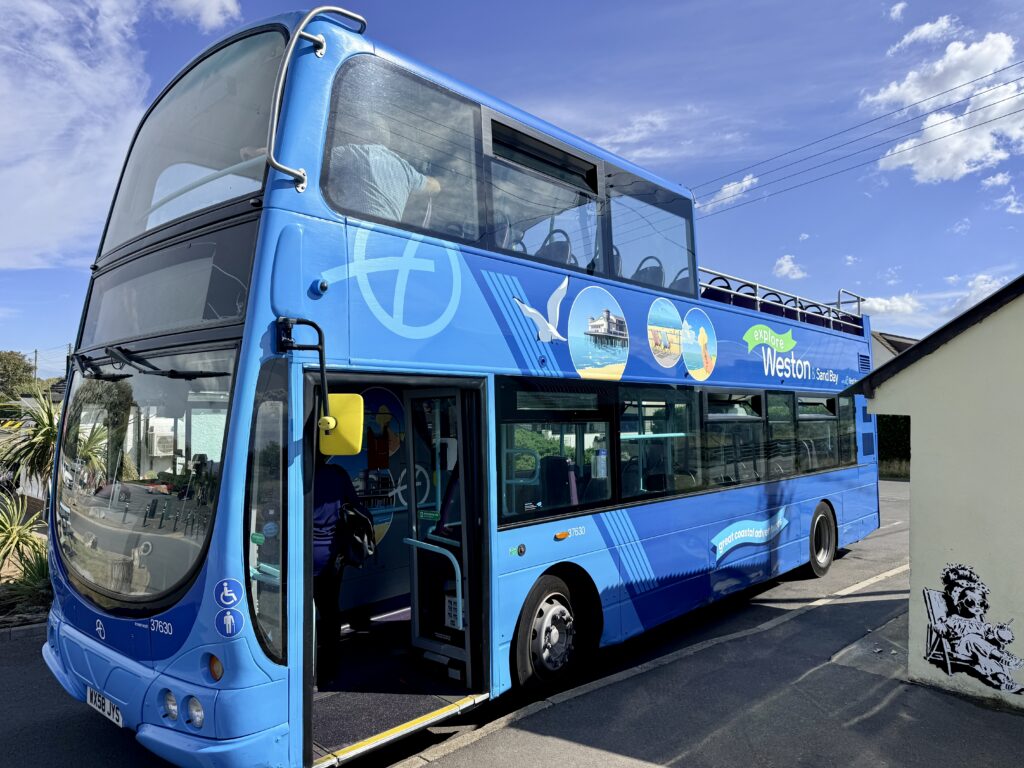
Weston-super-Mare is one of the most accessible seaside towns in the South West. Just off the M5 and well served by rail and bus links, it is easy to reach from Bristol, Exeter, South Wales, the Midlands and much of southern England.
By air
The nearest airport is Bristol Airport, around 14 miles north-east of Weston-super-Mare. The A3 Weston Airport Flyer provides a direct link between the airport, Worle, Weston railway station and the town centre, with journey times of around 40 to 50 minutes. By car, the trip typically takes 30 to 40 minutes via the A38 and M5.
By train
Weston-super-Mare railway station is a walk of 10 to 15 minutes from the seafront. Regular services connect the town with Bristol Temple Meads in about 25 minutes, with onward links to London, Cardiff, Birmingham and the Midlands. Trains also run south towards Taunton, Exeter and Devon.
By bus
Frequent bus services connect Weston with surrounding towns and cities. The X1 and X1a connect Weston-super-Mare with Bristol via Worle, Congresbury, Cleeve and Backwell, with journey times of around 60 to 80 minutes. Other services serve Brean, Burnham-on-Sea, Bridgwater, Taunton and communities across North Somerset.
By coach
National Express operates services linking Weston-super-Mare with London, Birmingham and other major cities, usually stopping close to the town centre.
By car
Weston-super-Mare is just off Junction 21 of the M5. The journey takes around 35 minutes from Bristol and roughly two hours from Birmingham, depending on traffic.
Visiting without a car
Weston-super-Mare works particularly well as a car-free destination. The railway station, town centre and seafront are all within walking distance, while local buses provide seasonal access to Uphill, Sand Bay and Brean. It’s easy to explore the beach, promenade, piers and town centre entirely on foot.
Parking in Weston-super-Mare: A quick guide
Whether you are visiting for a day at the beach, shopping in the town centre or staying longer, Weston-super-Mare has several convenient parking options. Charges vary considerably depending on the location and season, with cheaper long-stay parking available away from the main seafront. During busy summer periods, it is sensible to arrive early or consider parking slightly inland.
Seafront and beach parking
Marine Parade: Promenade parking close to the Grand Pier and main beach. Peak-season charges are currently £3.50 for two hours, £7 for four hours and £12 for the day. Lower winter charges apply. Payment is available through pay and display machines or the MiPermit app.
Royal Sands and Uphill: Weston-super-Mare is unusual in allowing vehicles to park directly on the beach in designated areas. Parking is subject to tides, weather and ground conditions. At both Royal Sands and Uphill Sands, current peak-season charges are £7 for up to four hours and £14 for the day, with lower winter rates. Always check warning signs, tide times and current prices before leaving your vehicle.
Town centre parking
Carlton Street: A centrally located car park within walking distance of the town centre, Grand Pier and seafront. At the time of writing, the upper levels remain closed, so check current availability before travelling.
The Sovereign car park: A covered multistorey car park above the Sovereign shopping centre, with lift access and a short walk to the shops and seafront.
Grove and Melrose car parks: Convenient pay and display options close to Grove Park, the Blakehay Theatre, Marine Lake and the northern end of the seafront.
Long stay and lower cost parking
Locking Road car park: A council-operated long-stay car park with 325 spaces. Parking currently costs £6 for 24 hours, making it a useful option for a full day or longer visit. It is approximately a 10 to 15 minute walk from the seafront.
Weston-super-Mare railway station: APCOA-managed parking is available at the station and may be useful for rail passengers and visitors looking for parking away from the seafront.
Our tip: Parking charges, availability and beach access arrangements can change. Check current signs, parking information and tide conditions before leaving your vehicle.
Where to Eat in Weston-super-Mare
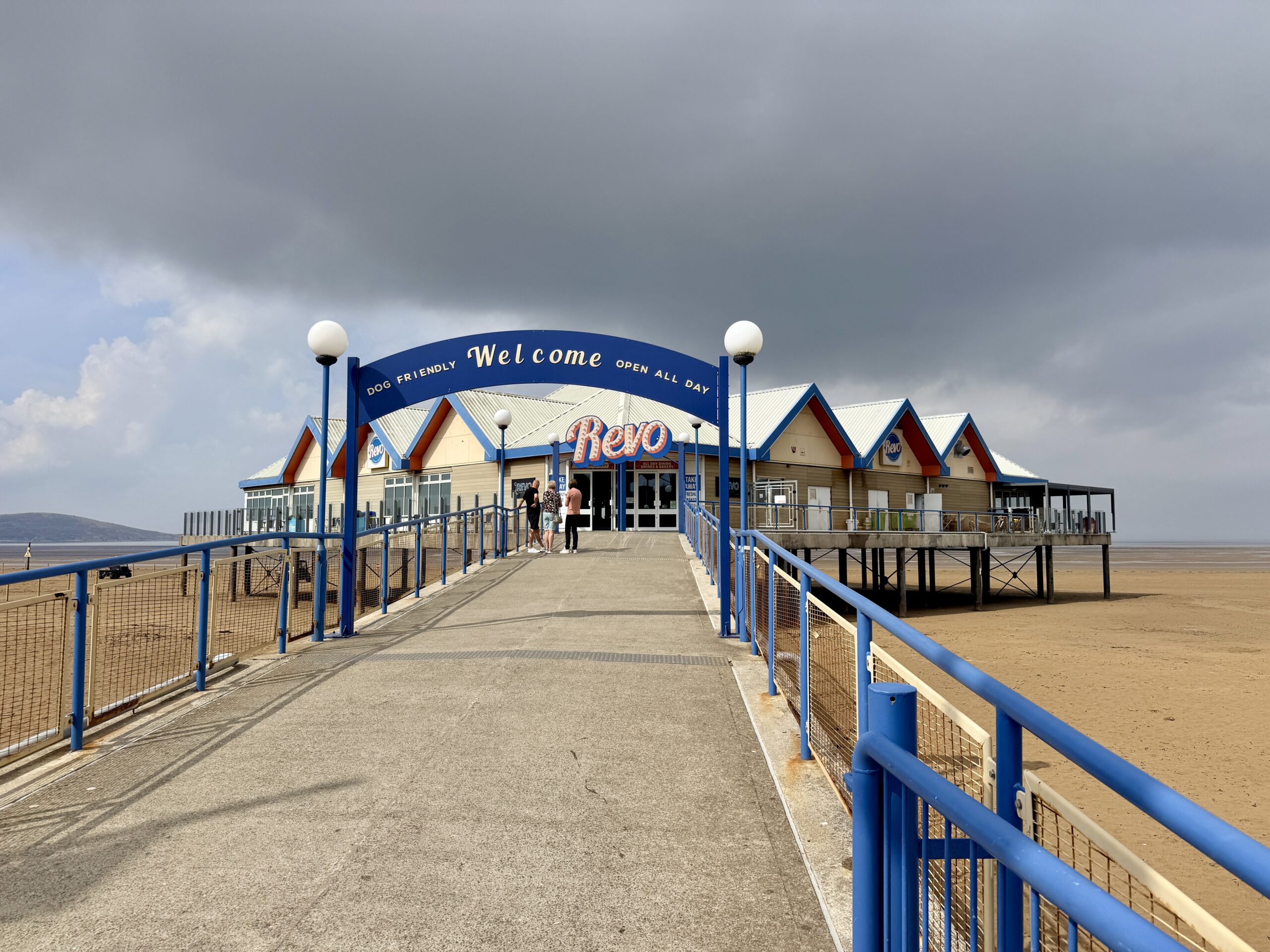
There is no shortage of places to eat in Weston-super-Mare, with everything from cheap and cheerful seaside food to pubs, cafés, international restaurants and smarter places for an evening meal.
Around the seafront and town centre, you will find plenty of traditional favourites, including fish and chips, ice cream, cafés, takeaway food and pub meals. You’ll also find Italian, Indian, Chinese, Japanese, and other international restaurants, alongside familiar national chains. If you are looking for something particular, TripAdvisor and Google Maps are useful for checking current menus, opening times and recent reviews.
We tend to keep things fairly simple when we visit Weston. On our latest trip, we had fish and chips on the Grand Pier, sitting outside overlooking the beach, stopped for coffee at a café near Birnbeck Pier, and finished our walk to Sand Bay with an ice cream. Nothing fancy, but all part of a good day at the seaside.
The Grand Pier and seafront are particularly good if you want something quick without interrupting a day on the beach. Cafés, kiosks, fish-and-chip shops, ice cream outlets, and restaurants are within walking distance, with more options on the streets immediately behind the promenade.
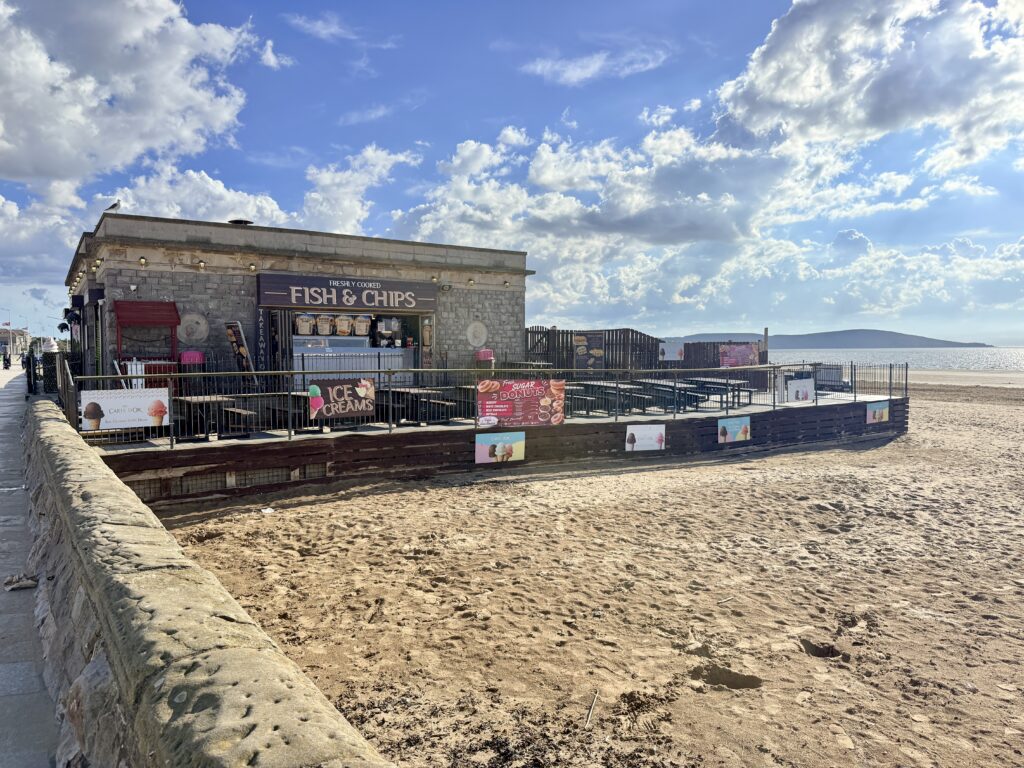
Head into Weston-super-Mare town centre and the choice becomes wider, ranging from inexpensive cafés and takeaways to pubs and independent restaurants. Prices and styles vary considerably, so most budgets should have options.
If you are exploring beyond the main resort, Sand Bay also has places to stop for refreshments. It is much quieter than central Weston, and we enjoyed having an ice cream before catching the bus back into town after our walk through Weston Woods.
For a longer meal or somewhere for dinner, it is worth browsing the latest Weston-super-Mare restaurant reviews before choosing. Restaurants can change hands, menus, and opening hours, so we prefer not to recommend somewhere we haven’t personally tried based solely on an online rating.
Our tip: You don’t necessarily need to plan where to eat before visiting Weston-super-Mare. There are plenty of cafés, pubs, restaurants and traditional seaside food outlets around the centre and seafront. If somewhere catches your eye, check its most recent reviews and opening hours before heading in.
Where to Stay in Weston-super-Mare
Accommodation in Weston-super-Mare is varied and often more affordable than in many coastal resorts farther south. Options range from seafront hotels and independent guesthouses to holiday apartments, campsites and caravan parks.
Seafront Hotels in Weston-super-Mare
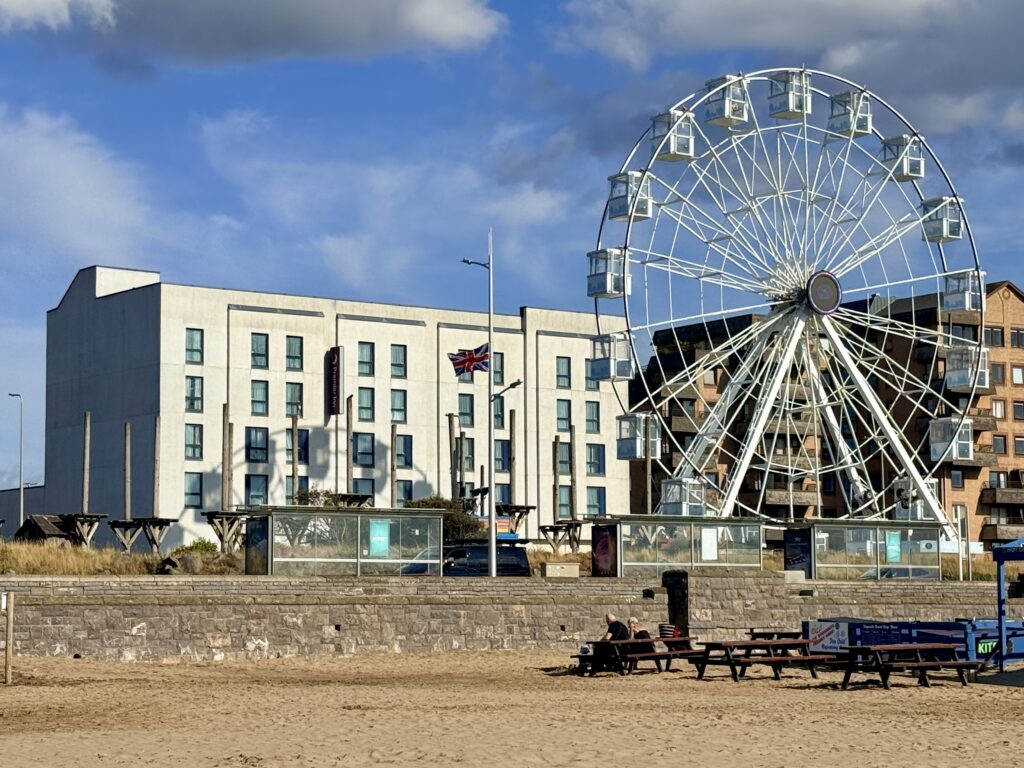
Most Weston-super-Mare seafront hotels are concentrated around Beach Road, Marine Parade, Knightstone Road and the streets immediately behind the promenade. Staying here gives you quick access to the beach, Grand Pier, Marine Lake, restaurants, and the town centre.
The Grand Atlantic Hotel occupies a prominent Victorian building on Beach Road, facing Weston Bay. The Premier Inn Weston-super-Mare Seafront is another particularly convenient choice, close to the promenade, Grand Pier and town centre.
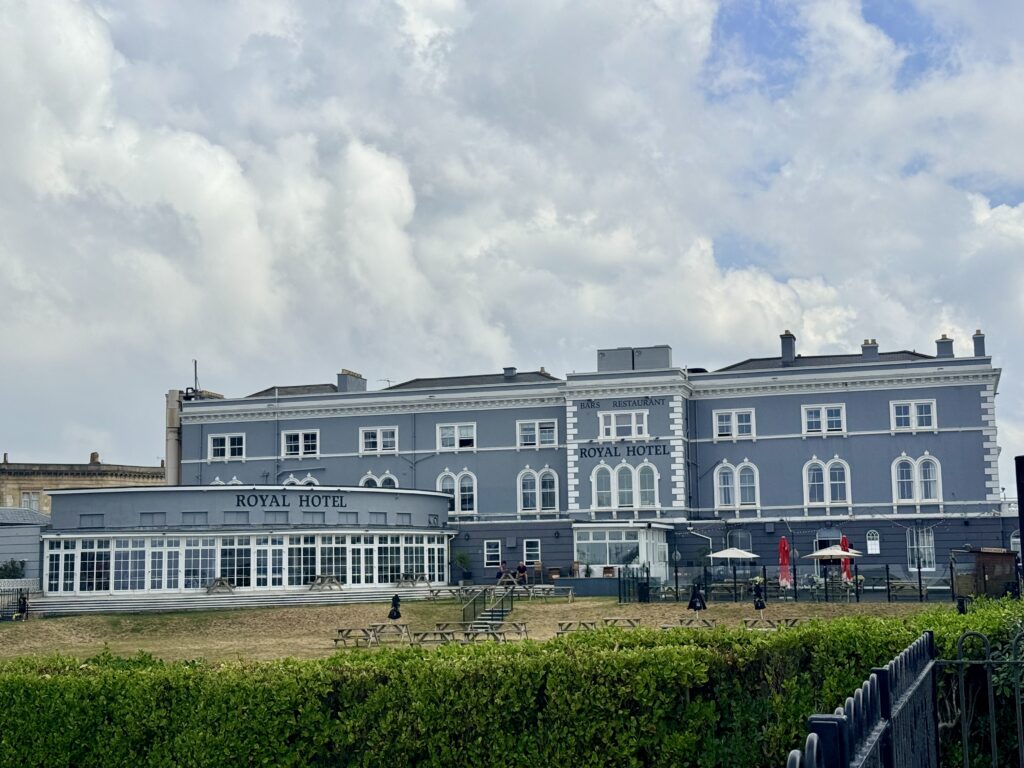
Near the northern end of the main seafront, the Royal Hotel has lawns extending towards the promenade, while the Royal Grosvenor Hotel is just behind the seafront on Knightstone Road. The Sandringham Hotel faces the beach near the Grand Pier, and The York Hotel is also well placed for the pier, promenade and town centre.
Many Victorian and Edwardian terraces along and behind the promenade have been converted into smaller hotels and bed-and-breakfast accommodation. Some offer views across Weston Bay, although these may be limited to particular rooms. Check the individual room description and recent guest reviews before booking.
Weston also has familiar chain accommodation away from the immediate seafront, including Travelodge Weston-super-Mare. This may suit visitors prioritising price, parking or straightforward road access over a sea view.
Weston-super-Mare Holiday Parks and Caravan Sites
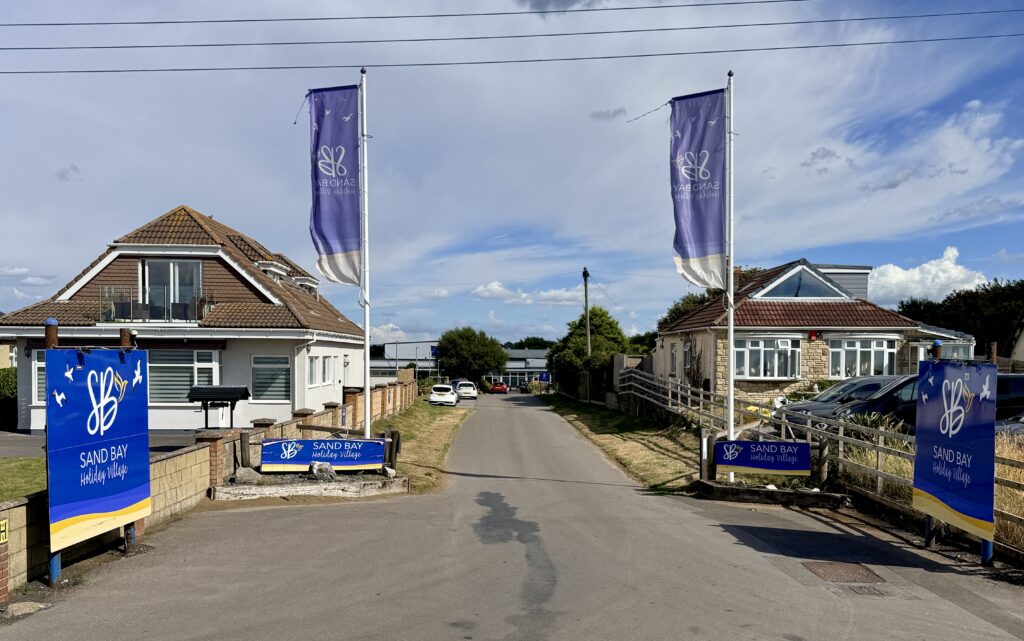
Holiday parks, campsites and caravan sites are mainly found outside central Weston-super-Mare, particularly around Sand Bay, Bleadon and Brean.
Sand Bay Holiday Village is close to Sand Bay Beach and provides half-board accommodation with evening entertainment. It is an adults-only resort, making it more suitable for couples, groups and solo travellers than families with children.
Country View Holiday Park is also near Sand Bay Beach and primarily caters for touring caravans, motorhomes and seasonal pitches. Its quieter setting may appeal to visitors who want coastal walks and countryside within easy reach of Weston.
South of the town, Riverside Holiday Village near Bleadon offers holiday caravans, camping, an indoor swimming pool and family facilities. Farther along the coast at Brean, Unity Beach is a larger family resort with caravans, lodges, entertainment and extensive leisure facilities.
These out-of-town parks can provide more space and easier beach access than central accommodation, although a car is useful at most locations. Book well ahead during school holidays and major events. Outside the main season, availability is generally better, and prices can be more competitive.
Weather in Weston-super-Mare: When to Visit
Weston-super-Mare weather is strongly influenced by its position on the Bristol Channel. Summers are generally mild to warm, while winters can be cool, wet and breezy. Spring and early autumn are often among the best times to visit Weston-super-Mare, with fewer crowds and pleasant conditions for walking along the beach, promenade and coastal paths.
Sea breezes can make the seafront feel cooler than inland areas, even on sunny days. Check the latest Weston-super-Mare weather forecast before travelling, particularly if you are planning a beach day or coastal walk.
Weston-super-Mare Tide Times
Weston-super-Mare has one of the largest tidal ranges in the world, so checking the tide times can make a considerable difference to your visit. At low tide, the sea retreats a long way across Weston Bay, while around high tide the water comes much closer to the promenade.
If you’re planning to swim, paddle or spend time on the beach, check the latest tide times before setting out. Avoid walking far across the exposed mud at low tide, as the incoming tide can move quickly.
Practical Information for Visiting Weston-super-Mare
- 🛍️ Shops & supermarkets – A mix of national chains and independent shops in the town centre, with larger supermarkets including Tesco, Sainsbury’s and Lidl in and around Weston-super-Mare.
- 🏥 Nearest hospital – Weston General Hospital, Grange Road, Uphill, Weston-super-Mare BS23 4TQ. Its Emergency Department is normally open daily from 8 am until 10 pm rather than 24 hours. Call 999 in a life-threatening emergency or use NHS 111 for other urgent medical advice.
- 🚔 Nearest police station – Weston-super-Mare Town Hall Police Station, Town Hall, Walliscote Grove Road, Weston-super-Mare BS23 1UJ. The public enquiry office is normally open Monday to Friday, excluding bank holidays.
- 💊 Pharmacies – Several are located in the town centre, including Boots and independent chemists.
- ✈️ Nearest airport – Bristol Airport, around 14 miles away, with a direct A3 Weston Airport Flyer bus to Weston-super-Mare.
- 🚆 Railway station – Weston-super-Mare railway station is on the Bristol to Taunton line, around 10 to 15 minutes’ walk from the seafront.
- 🚌 Bus services – Regular routes connect Weston-super-Mare with Bristol, Worle, Clevedon, Brean, Burnham-on-Sea and other nearby towns. The X1 and X1a to Bristol and the A3 Airport Flyer are particularly useful for visitors.
- 🅿️ Car parks – Multiple council and private car parks are available in the town and along the seafront, with additional beach parking in designated areas at Royal Sands and Uphill.
- ⛽ Petrol and EV charging – Petrol stations and EV charging points are available in and around the town.
- 💵 Banks and ATMs – Cash machines are available in the town centre and at supermarkets.
- 📮 Post Office – High Street Post Office, 119–123 High Street, Weston-super-Mare BS23 1HN.
- 🚻 Public toilets – Available along the seafront, near the beach and in the town centre.
- 🚶 Visitor information – Visitor Information Centre, 32 Waterloo Street, Weston-super-Mare BS23 1LN. Check current opening hours before visiting.
Other Helpful Links for Visiting Weston-super-Mare
- Booking.com – for most accommodation needs. Look out for options that include free cancellation.
- EasyTide – Free UK tidal prediction service, providing tidal data and tide times for the current day and 6 days into the future.
- Expedia – good for flights and packages.
- GetYourGuide – find and book things to see. Includes unusual things to do.
- Hostelworld – Hostel-focused booking platform that fosters connections among backpackers.
- Met Office – Weather forecasts from the UK’s official meteorological office.
- National Express – UK-based coach operator providing long-distance bus services
- Omio – Book travel tickets by comparing trains, buses and planes in one search.
- Rental Cars – to search out and book hire cars.
- Rome2Rio – Great for comparing local transport options (and for locating bus stops).
- Ticketmaster – What’s On – Major Events – Venues – Bookings
- Trainline.com – our go-to online platform for booking train and bus tickets, offering route planning, price comparisons, seat reservations, and ticket sales.
- Traffic England – for live traffic updates on major roads.
- Traveline SW – Comprehensive public transport information from A to B by bus, coach, train, and ferry in South West England and Great Britain.
- TripAdvisor – for reviews of… pretty much everything. Our go-to before booking anything.
- Vrbo – Great for self-catering and holiday home rentals.
Weston-super-Mare FAQs
Where is Weston-super-Mare?
Weston-super-Mare is on the North Somerset coast, facing the Bristol Channel, around 18 miles south-west of Bristol. It sits in Weston Bay between Worlebury Hill to the north and Brean Down to the south.
What is Weston-super-Mare known for?
Weston-super-Mare is known for the Grand Pier, its long seafront and promenade, Marine Lake, Birnbeck Pier and its history as one of the Bristol Channel’s best-known Victorian seaside resorts.
Is Weston-super-Mare good for families?
Yes. The Grand Pier, promenade, donkey rides in summer, Marine Lake and family attractions around the seafront make Weston-super-Mare a popular destination with children, particularly during the warmer months and school holidays.
What happened to Birnbeck Pier?
Birnbeck Pier closed to the public in 1994 after years of deterioration. It remains one of Weston’s most important historic landmarks and is the subject of long-term restoration plans, although it is currently closed and unsafe to access.
Is the Grand Pier worth visiting?
For many visitors, yes. The Grand Pier combines arcades, rides, indoor attractions, cafés and event spaces, making it one of the main all-weather attractions on Weston’s seafront.
What is Marine Lake?
Marine Lake is a large tidal swimming lagoon near Knightstone Island that was created so visitors could bathe even when the tide had retreated far across Weston Bay. It remains one of the most distinctive features of the northern seafront.
Can you walk onto Knightstone Island?
Yes. Knightstone Island is connected to the mainland by a causeway and remains accessible on foot. It is now largely residential, but visitors can still walk out for views across Weston Bay.
How do I get to Weston-super-Mare from Bristol?
The quickest option is usually the train from Bristol Temple Meads to Weston-super-Mare, which typically takes around 25 minutes. The X1/X1a buses also run between Bristol and Weston-super-Mare, usually taking around 60 to 80 minutes depending on traffic. By car, the journey is about 35 minutes via the M5.
How do I get to Weston-super-Mare by train?
Weston-super-Mare has its own railway station on the Bristol to Taunton line. Regular services connect the town with Bristol Temple Meads in around 25 minutes, with onward connections to London, Cardiff, Birmingham and the South West.
Can I visit Weston-super-Mare without a car?
Yes. The railway station, town centre and seafront are all within easy walking distance of one another, while local buses provide access to places such as Uphill, Sand Bay and Brean.
Is there a bus from Bristol Airport to Weston-super-Mare?
Yes. The A3 Weston Airport Flyer provides a direct link between Bristol Airport and Weston-super-Mare, stopping at places including Worle, Weston railway station and the town centre.
Can you park on the beach at Weston-super-Mare?
Yes, in designated areas at Royal Sands and Uphill. Beach parking is subject to tides, weather and ground conditions, so check local signs and current access arrangements before leaving your vehicle.
What are the best nearby walks?
Popular options include the promenade itself, Weston Woods and Worlebury Hill, the coast path through Uphill, and the Brean Down Way heading south towards Brean Down.
Is Weston-super-Mare worth visiting?
Yes. Weston-super-Mare combines the Grand Pier, Marine Lake, a long promenade, museums, family attractions and coastal walks, while its rail and road links make it easy to reach from Bristol and the Midlands. It is also a useful base for exploring Uphill, Sand Bay, Brean Down and the wider Somerset coast.
When is the best time to visit Weston-super-Mare?
Late spring to early autumn is best for outdoor attractions, events and longer walks, although summer can be busy. Winter is much quieter and can be a good time for promenade walks, photography and exploring the coast.
Is Weston-super-Mare Worth Visiting
We think so. Weston-super-Mare still retains some of the elegance of its Victorian seaside heyday, but it has evolved around it too. Historic buildings, shelters and piers sit alongside modern attractions, cafés and a busy seafront, giving the town a character that feels distinctly its own.
For us, one of the highlights is simply walking along the promenade. There is always something to see, from the Grand Pier and the wide sweep of Weston Bay to Marine Lake, Knightstone Island and the remains of Birnbeck Pier. Look inland and there are reminders of the town’s Victorian and Edwardian past alongside newer developments and attractions. Continue towards Uphill or Weston Woods and the surroundings gradually become quieter and more natural.
Weston also benefits from an excellent location. Bristol and the Midlands are easily reached by road or rail, while Brean Down, the Mendip Hills and the wider Somerset coast provide plenty of possibilities for exploring further.
For anyone who enjoys British seaside towns, coastal walks and places where old and new sit side by side, Weston-super-Mare is well worth visiting. It may have changed considerably since the great days of the Victorian seaside resort, but much of that heritage remains, and the promenade is still a fine place to experience it.
Over to you … have you recently travelled to South West England? What worked for you? What advice would you give to others? Please leave your comments below or join in the discussion in our Facebook Group.
New to South West England or returning after a while? Start with our ‘Travel Basics’ – quick guides packed with tips to help you plan your trip.

